Hermann Schmitt – författare
Visar alla böcker från författaren Hermann Schmitt. Handla med fri frakt och snabb leverans.
19 produkter
19 produkter
Inbunden, Engelska, 1999
1 701 kr
Skickas inom 3-6 vardagar
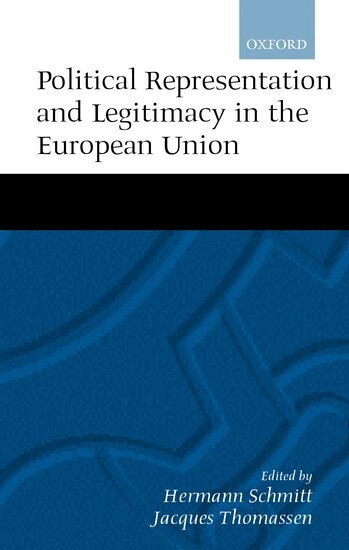
How severe a problem is what many call the 'democratic deficit' of the European Union? Despite a voluminous theoretical literature dealing with this question, there is hardly any systematic empirical investigation of the effectiveness of the system of political representation in the EU and of the legitimacy beliefs of EU citizens that spring from it. This volume elaborates a conceptual framework for the empirical analysis of the alleged democratic deficit. Four dimensions of legitimacy beliefs are identified and analysed: the European political community, the scope of EU government, the institutions and processes of EU government, and EU policies. Based upon large-scale representative surveys among the mass publics, and different strata of the political elite of the EU and its member-states, the book examines the conditions of political representation in the EU. The results demonstrate, by and large, that legitimacy beliefs of EU citizens are the more positive, the less specific the object of identification and evaluations is; and that the process of political representation works pretty well as long as issues other than European Union issues are concerned. These findings are finally discussed in view of familiar strategies for institutional reform of the European Union.
Inbunden, Engelska, 2019
1 217 kr
Skickas inom 5-8 vardagar
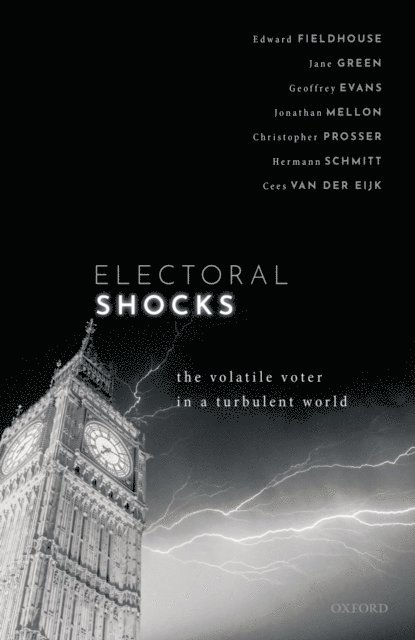
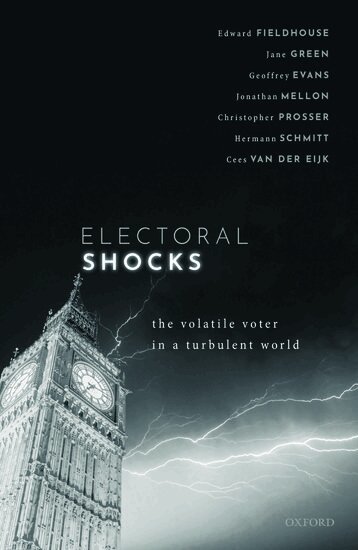
This is an open access title available under the terms of a CC BY-NC-ND 4.0 International licence. It is free to read at Oxford Scholarship Online and offered as a free PDF download from OUP and selected open access locations.Electoral Shocks: The Volatile Voter in a Turbulent World offers a novel perspective on British elections, focusing on the role of electoral shocks in the context of increasing electoral volatility. It demonstrates and explains the long-term trend in volatility, how shocks have contributed to the level of electoral volatility, and also which parties have benefited from the ensuing volatility. It follows in the tradition of British Election Study books, providing a comprehensive account of specific election outcomes- the General Elections of 2015 and 2017-and a more general and novel approach to understanding electoral change. The authors examine five electoral shocks that affected the elections of 2015 and 2017: the rise in immigration after 2004, particularly from Eastern Europe; the Global Financial Crisis prior to 2010; the coalition government of the Conservatives and the Liberal Democrats between 2010 and 2015; the Scottish Independence Referendum in 2014; and the European Union Referendum in 2016.The focus on electoral shocks offers an overarching explanation for the volatility in British elections, alongside the long-term trends that have led to this point. It offers a way to understand the rise and fall of the UK Independence Party (UKIP), Labour's disappointing 2015 performance and its later unexpected gains, the collapse in support for the Liberal Democrats, the dramatic gains of the Scottish National Party (SNP) in 2015, and the continuing period of tumultuous politics that has followed the EU referendum and the General Election of 2017. It provides a new way of understanding electoral choice in Britain, and also beyond, and a better understanding of the outcomes of recent elections.
Häftad, Engelska, 2019
444 kr
Skickas inom 5-8 vardagar
This is an open access title available under the terms of a CC BY-NC-ND 4.0 International licence. It is free to read at Oxford Scholarship Online and offered as a free PDF download from OUP and selected open access locations.Electoral Shocks: The Volatile Voter in a Turbulent World offers a novel perspective on British elections, focusing on the role of electoral shocks in the context of increasing electoral volatility. It demonstrates and explains the long-term trend in volatility, how shocks have contributed to the level of electoral volatility, and also which parties have benefited from the ensuing volatility. It follows in the tradition of British Election Study books, providing a comprehensive account of specific election outcomes- the General Elections of 2015 and 2017-and a more general and novel approach to understanding electoral change. The authors examine five electoral shocks that affected the elections of 2015 and 2017: the rise in immigration after 2004, particularly from Eastern Europe; the Global Financial Crisis prior to 2010; the coalition government of the Conservatives and the Liberal Democrats between 2010 and 2015; the Scottish Independence Referendum in 2014; and the European Union Referendum in 2016.The focus on electoral shocks offers an overarching explanation for the volatility in British elections, alongside the long-term trends that have led to this point. It offers a way to understand the rise and fall of the UK Independence Party (UKIP), Labour's disappointing 2015 performance and its later unexpected gains, the collapse in support for the Liberal Democrats, the dramatic gains of the Scottish National Party (SNP) in 2015, and the continuing period of tumultuous politics that has followed the EU referendum and the General Election of 2017. It provides a new way of understanding electoral choice in Britain, and also beyond, and a better understanding of the outcomes of recent elections.
Inbunden, Engelska, 2011
1 777 kr
Skickas inom 7-10 vardagar
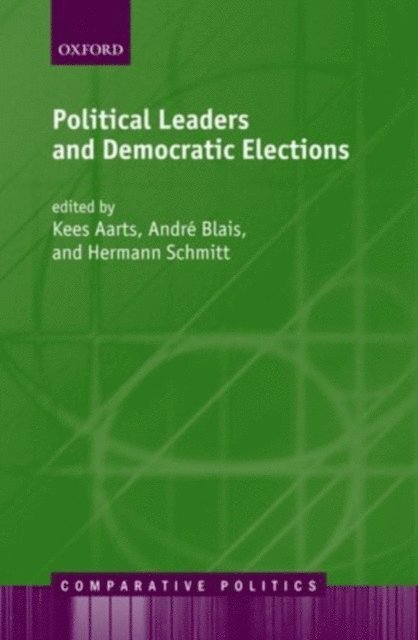
Political Leaders and Democratic Elections unravels and evaluates the importance of political leaders in the vote decision. Outcomes of legislative elections are typically reported in terms of party support: how many votes and seats were obtained by each party? But in fact voters are faced with three choices which must be folded into one. They must decide which party they prefer, but in doing so they also choose among the policies advocated by these parties, and among the leaders who eventually have to enact them. This simple fact raises the question of the relative weight of these dimensions in vote choice, and particularly the relative importance of leaders. Surprisingly, the question has been largely neglected in the vast literature on voting behavior. The dominant traditions in voting behavior focus on political parties and party identification, and on political issues and ideology respectively. This volume systematically assesses the role of political leaders in the vote decision in nine democracies (Australia, Britain, Canada, Germany, the Netherlands, Norway, Spain, Sweden, and the United States), over a period of up to 50 years, using election surveys. It assesses the changes in political communication (particularly the rise of televized politics) over the past decades. It explains how important political leaders are in different types of political systems. It shows that the electoral system and other political institutions do affect the share of leader evaluations in vote choice. And it shows, in contrast with popular wisdom, how unimportant characteristics of the leaders themselves, characteristics of their parties, and characteristics of their voters are for vote choice. Finally, the volume shows that voters tend to let themselves be guided by the leaders they like rather than being pushed away from those they dislike.Comparative Politics is a series for students, teachers, and researchers of political science that deals with contemporary government and politics. Global in scope, books in the series are characterised by a stress on comparative analysis and strong methodological rigour. The series is published in association with the European Consortium for Political Research. For more information visit: www.essex.ac.uk/ecpr The Comparative Politics Series is edited by Professor David M. Farrell, School of Politics and International Relations, University College Dublin, Kenneth Carty, Professor of Political Science, University of British Columbia, and Professor Dirk Berg-Schlosser, Institute of Political Science, Philipps University, Marburg.
Häftad, Engelska, 2013
664 kr
Skickas inom 5-8 vardagar
Outcomes of legislative elections are typically reported in terms of party support: how many votes and seats were obtained by each party? But in fact voters are faced with three choices which must be folded into one. They must decide which party they prefer, but in so doing they must take account of the policies advocated by these parties and the leaders who will eventually have to enact them.This simple fact raises question about the relative weight of these considerations, and espeically the importance granted to the leaders. This issue has been largely neglected in the vast literature on voting behaviour.The dominant traditions in the study of voting behaviour focus on political parties and party identification; and on political issues and ideology, respectively.This volume uses election surveys over the past 50 years to systematically assesses the impact of political leaders on voting decisions in nine democracies (Australia, Britain, Canada, Germany, the Netherlands, Norway, Spain, Sweden, and the United States). It analyses issues such as the changes in political communication (particularly the rise of televized politics), and the relative importance accorded to political leaders in different types of political systems. It demonstrates how electoral systems and other political institutions have a discernible effect on the importance voters accord to actual political leaders. Contrary to popular wisdom, Political Leaders and Democratic Elections shows how unimportant the characteristics of political leaders, parties, and indeed the voters themselves actually are on voting patterns. The volume shows that voters tend to let themselves be guided by the leaders they like rather than being pushed away from those they dislike.Comparative Politics is a series for students, teachers, and researchers of political science that deals with contemporary government and politics. Global in scope, books in the series are characterised by a stress on comparative analysis and strong methodological rigour. The series is published in association with the European Consortium for Political Research. For more information visit: www.ecprnet.eu. The Comparative Politics series is edited by Professor David M. Farrell, School of Politics and International Relations, University College Dublin, Kenneth Carty, Professor of Political Science, University of British Columbia, and Professor Dirk Berg-Schlosser, Institute of Political Science, Philipps University, Marburg.
Inbunden, Engelska, 2020
2 138 kr
Skickas inom 10-15 vardagar
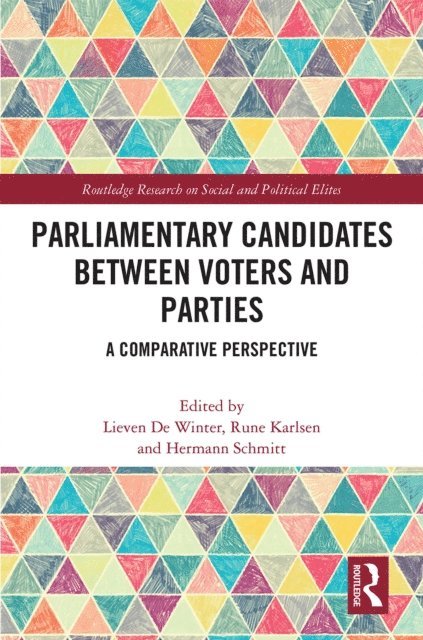
This book offers the first comprehensive, comparative and coherent perspective on parliamentary candidates in contemporary representative democracy. Based on the unique database of the ‘Comparative Candidate Survey' project which interrogated parliamentary candidates in more than 30 countries, it fills a significant lacuna by focusing on the thousands of ordinary candidates that participate in national elections. It examines who the candidates are in terms of their socio-demographic background and political career patterns, how they were selected by their parties, what their policy preference are and whether these are congruent to those held by their voters, who they seek to represent and how they intend to do so once elected, and what their visions are on representative democracy and party government. Last but not least, it investigates how they go about reaching out to their potential voters during the election campaign. This book will be of key interest to scholars and students of political parties and party politics, political elites, political communication, political participation, elections, theories of democracy and representation, legislative studies, voting behaviour and more broadly to European politics, as well as to political and policy professionals throughout Europe.
Häftad, Engelska, 2023
584 kr
Skickas inom 10-15 vardagar
This book offers the first comprehensive, comparative and coherent perspective on parliamentary candidates in contemporary representative democracy. Based on the unique database of the ‘Comparative Candidate Survey' project which interrogated parliamentary candidates in more than 30 countries, it fills a significant lacuna by focusing on the thousands of ordinary candidates that participate in national elections. It examines who the candidates are in terms of their socio-demographic background and political career patterns, how they were selected by their parties, what their policy preference are and whether these are congruent to those held by their voters, who they seek to represent and how they intend to do so once elected, and what their visions are on representative democracy and party government. Last but not least, it investigates how they go about reaching out to their potential voters during the election campaign. This book will be of key interest to scholars and students of political parties and party politics, political elites, political communication, political participation, elections, theories of democracy and representation, legislative studies, voting behaviour and more broadly to European politics, as well as to political and policy professionals throughout Europe.
Häftad, Engelska, 2012
186 kr
Skickas inom 10-15 vardagar
This book reflects on the questions raised by the European Election Study 2004 whose analytical focus was on the legitimacy of EU politics after Eastern enlargement. It also assesses the dynamics and the contents of the campaign, on the determinants of the extremely low turnout in the new countries, and on the reasons of voter choice in West and East.The book also examines the first European Parliament election after the post-communist countries of Eastern Europe joined the European Union. The central question is: what has changed? Are the voters in the new member countries different and if so, why? Did the Union suffer from a loss of democratic legitimacy after Eastern enlargement?Each chapter is empirical-analytical; most are based on the post-election surveys of the group that were conducted in all but one of the 25 member countries, others focus on the results of content analyses of news media and party manifestos.This book was published as a special issue of the Journal of European Integration.
Inbunden, Engelska, 2010
2 138 kr
Skickas inom 10-15 vardagar
This book reflects on the questions raised by the European Election Study 2004 whose analytical focus was on the legitimacy of EU politics after Eastern enlargement. It also assesses the dynamics and the contents of the campaign, on the determinants of the extremely low turnout in the new countries, and on the reasons of voter choice in West and East.The book also examines the first European Parliament election after the post-communist countries of Eastern Europe joined the European Union. The central question is: what has changed? Are the voters in the new member countries different and if so, why? Did the Union suffer from a loss of democratic legitimacy after Eastern enlargement?Each chapter is empirical-analytical; most are based on the post-election surveys of the group that were conducted in all but one of the 25 member countries, others focus on the results of content analyses of news media and party manifestos.This book was published as a special issue of the Journal of European Integration.
Inbunden, Tyska, 2023
386 kr
Skickas inom 5-8 vardagar
Häftad, Tyska, 2023
262 kr
Skickas inom 5-8 vardagar
Inbunden, Engelska, 2026
5 835 kr
Skickas inom 5-8 vardagar
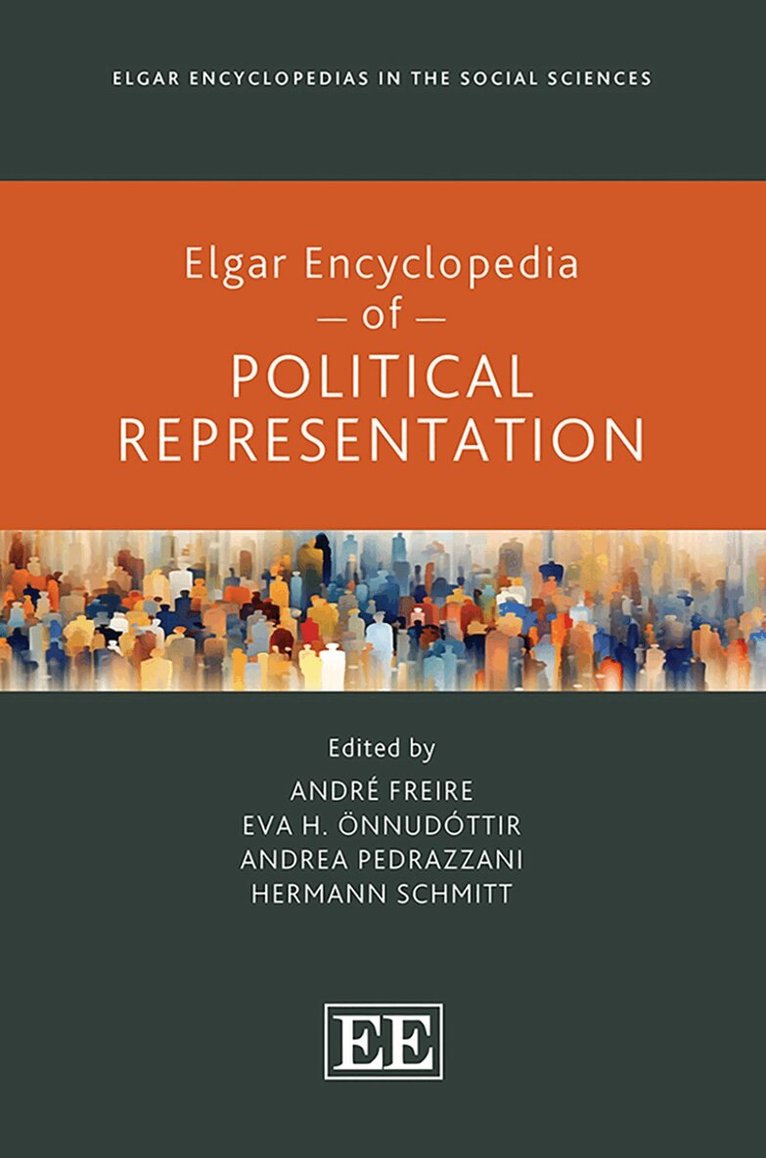
This authoritative Encyclopedia provides a comprehensive overview of political representation, with a particular emphasis on contemporary liberal democratic regimes.Presenting concise entries authored by leading scholars, this Encyclopedia traces the historical origins of political representation, exploring key thinkers, pivotal studies, and significant theoretical developments that have shaped modern understanding of this topic. The Encyclopedia examines the institutional mechanisms that influence political representation, covering electoral systems, party structures, and party systems. It also addresses pressing contemporary challenges such as increasing inequalities, the spread of fake news, the rise of right-wing populism, and the double exit of both citizens and parties from the electoral arena.The Elgar Encyclopedia of Political Representation is a vital resource for scholars and students of politics and public policy, particularly those studying international politics, constitutions studies, leadership studies, public administration and management, and political theory.Key Features:Analyses the findings of a number of landmark studies in the fieldExamines political representation at a national and international levelIncludes over 150 entries by expert contributors from Europe and the Americas Features descriptive and technical entries, as well as analytical and reflective insights
Häftad, Engelska, 2019
681 kr
Skickas inom 10-15 vardagar
Southern Europe has been the EU region most exposed to the Eurozone sovereign debt crisis with consequences for national party systems and political stability. The 2014 European Parliament elections took place at a crucial time for Europe and Southern European societies more generally. This book analyses the Euroelections in Southern Europe, asking whether these followed the usual pattern of low-stimulus contests or whether the crisis context raised the bar. Country chapters on Italy, Greece, Spain, Portugal, Cyprus and Malta investigate the background of the elections, the electoral campaign and the rise of Euroscepticism. The linkage between governments’ economic performance, the Europhile or Eurosceptic stances of political parties, and their electoral performance are at the core of the analysis in each chapter. The findings reveal that the political and electoral consequences of the economic crisis have not fundamentally challenged the second-order character of the 2014 European Parliament elections in Southern Europe. However, electoral behaviour exhibits some indications of a more critical contest in which the EU divide becomes more significant and polarising in determining voting choices. This book was previously published as a special issue of South European Society and Politics.
Inbunden, Engelska, 2016
2 138 kr
Skickas inom 10-15 vardagar
Southern Europe has been the EU region most exposed to the Eurozone sovereign debt crisis with consequences for national party systems and political stability. The 2014 European Parliament elections took place at a crucial time for Europe and Southern European societies more generally. This book analyses the Euroelections in Southern Europe, asking whether these followed the usual pattern of low-stimulus contests or whether the crisis context raised the bar. Country chapters on Italy, Greece, Spain, Portugal, Cyprus and Malta investigate the background of the elections, the electoral campaign and the rise of Euroscepticism. The linkage between governments’ economic performance, the Europhile or Eurosceptic stances of political parties, and their electoral performance are at the core of the analysis in each chapter. The findings reveal that the political and electoral consequences of the economic crisis have not fundamentally challenged the second-order character of the 2014 European Parliament elections in Southern Europe. However, electoral behaviour exhibits some indications of a more critical contest in which the EU divide becomes more significant and polarising in determining voting choices. This book was previously published as a special issue of South European Society and Politics.
Inbunden, Engelska, 2021
1 358 kr
Skickas inom 5-8 vardagar
Häftad, Engelska, 2024
1 022 kr
Skickas inom 5-8 vardagar
Del 163 - Klostermann Rote Reihe
Automat und Existenz
Häftad, Tyska, 2025
308 kr
Skickas inom 3-6 vardagar
Häftad, Tyska, 1987
555 kr
Skickas inom 10-15 vardagar
Häftad, Tyska, 1994
505 kr
Skickas inom 10-15 vardagar
Direkte Wahlen zum Europäischen Parlament sind ein relativ junges Pflänzchen im Garten der europäischen Politik. Entsprechend jung ist die wissenschaftliche Auseinandersetzung mit ihnen. Der vorliegende Band versammelt bundesrepu blikanische und international-vergleichende Analysen aus Anlaß der dritten Di rektwahl des Europäischen Parlamentes vom Juni 1989. Die Einführung dazu ist vielleicht der rechte Ort, um nach den Gegenständen und nach dem Nutzen der Europawahlforschung zu fragen. Europawahlforschung, wie die Wahlforschung überhaupt, beschäftigt sich mit sehr unterschiedlichen Forschungsgegenständen. Da ist einmal das zu wählende Parlament, seine Einbindung in politische Entscheidungsabläufe und seine Ver ankerung im Bewußtsein der Wähler. Will man die politische Bedeutung einer Wahl ergründen, kommt man an einer Klärung dieser institutionellen Fragen nicht vorbei. Dies gilt vermehrt für die Wahl eines Parlamentes, welches dem in stitutionellen Cliche durchaus nicht entspricht. Der erste Teil des vorliegenden Bandes ist deshalb solchen Fragen gewidmet. Otto Schmuck verdeutlicht die auch nach der Ratifizierung des Vertrages von Maastricht noch immer sehr begrenzte Rolle des Europäischen Parlaments im politischen System der Europäischen Ge meinschaft. Dazu paßt der demoskopische Befund von Oskm Niedermayer. Er zeigt, daß auch über ein Jahrzehnt nach Einführung direkter Wahlen die Veranke rung des Europäischen Parlamentes im Bewußtsein der EG-Bürger noch recht dürftig ist. Die Wahlforschung im engeren Sinne ist allerdings dadurch gekennzeichnet, daß sie sich mittels der Erforschung der Motive individuellen Wahlverhaltens der Erklärung des Wahlergebnisses und der Explikation seiner Bedeutung zuwendet. Auch hierbei kann manunterschiedliche Akzente setzen.