Hong Yung Lee – författare
Visar alla böcker från författaren Hong Yung Lee. Handla med fri frakt och snabb leverans.
8 produkter
Colonial Rule and Social Change in Korea, 1910-1945
Av Clark W. Sorensen, Yong-Chool Ha m. fl.
E-bok, 2013
803 kr
Lägg i varukorg
Colonial Rule and Social Change in Korea 1910-1945 highlights the complex interaction between indigenous activity and colonial governance, emphasizing how Japanese rule adapted to Korean and missionary initiatives, as well as how Koreans found space within the colonial system to show agency. Topics …
Colonial Rule and Social Change in Korea, 1910-1945
Av Hong Yung Lee, Yong-Chool Ha m. fl.
Inbunden, 2015
1819 kr
Lägg i varukorg
Colonial Rule and Social Change in Korea 1910-1945 highlights the complex interaction between indigenous activity and colonial governance, emphasizing how Japanese rule adapted to Korean and missionary initiatives, as well as how Koreans found space within the colonial system to show agency. Topics …
Colonial Rule and Social Change in Korea, 1910-1945
Av Hong Yung Lee, Yong-Chool Ha m. fl.
Häftad, 2013
731 kr
Lägg i varukorg
Colonial Rule and Social Change in Korea 1910-1945 highlights the complex interaction between indigenous activity and colonial governance, emphasizing how Japanese rule adapted to Korean and missionary initiatives, as well as how Koreans found space within the colonial system to show agency. Topics …
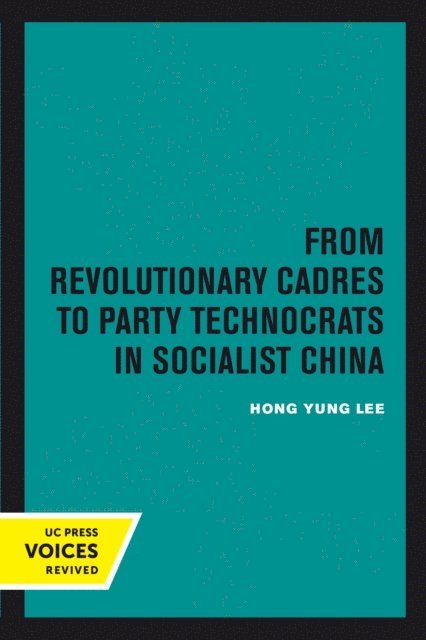
From Revolutionary Cadres to Party Technocrats in Socialist China
Häftad, 2018
632 kr
Lägg i varukorg
Using a wide variety of previously unavailable sources, Hong Yung Lee offers a theoretical and historical perspective on China's ruling elite, examining their politics and the bureaucratic system in which they participate. He traces the evolution of these cadres from the guerrilla fighters who …
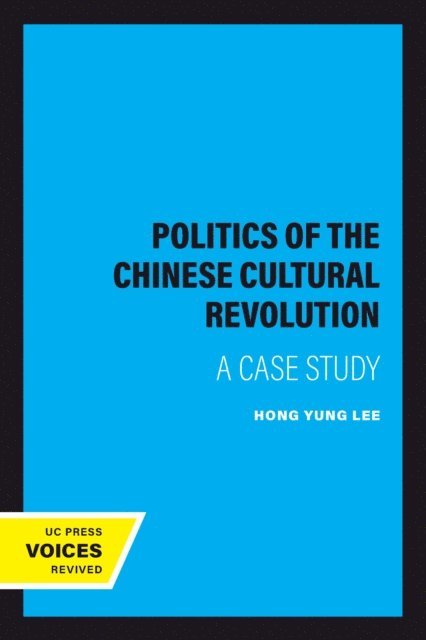
Politics of the Chinese Cultural Revolution
A Case Study
E-bok, 1978
453 kr
Lägg i varukorg
Hong Yung Lee''s account of the Cultural Revolution illuminates its complexities and subtleties to an unprecedented degree. His primary concern is with the behavior of the masses once they were freed from party control, and his analysis of voluminous Red Guard publications highlights the different …
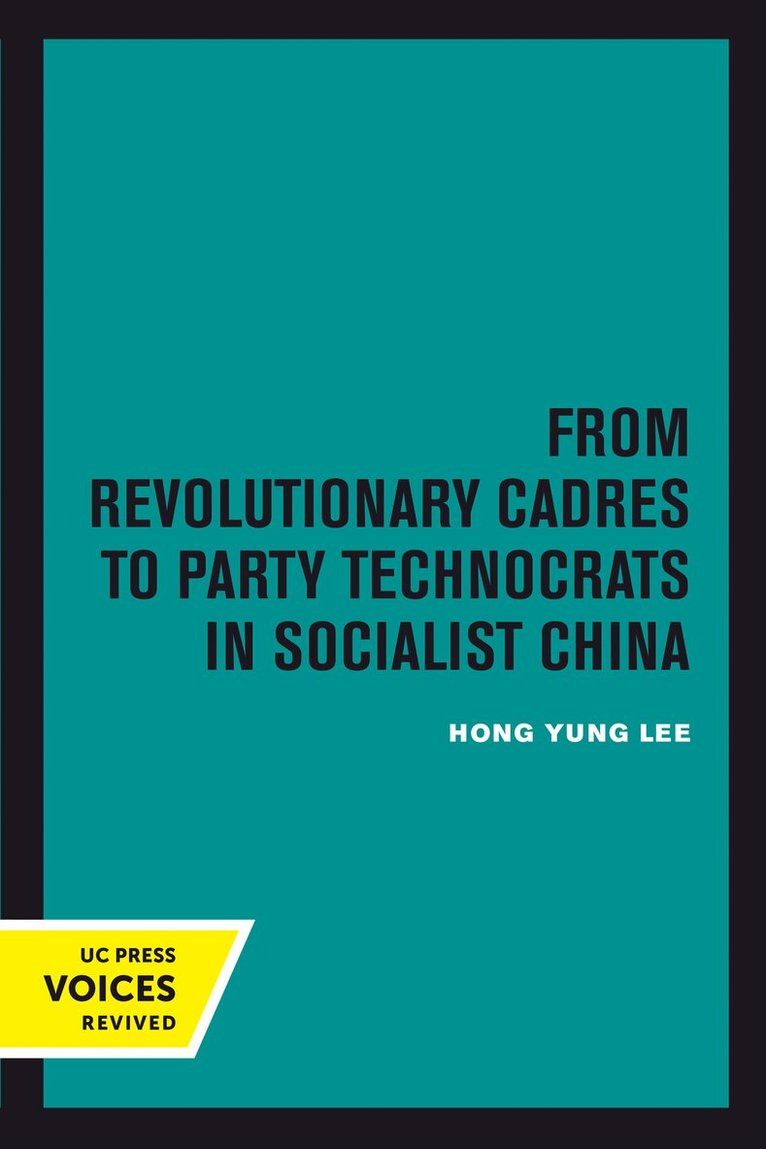
From Revolutionary Cadres to Party Technocrats in Socialist China
E-bok, 2024
437 kr
Lägg i varukorg
Using a wide variety of previously unavailable sources, Hong Yung Lee offers a theoretical and historical perspective on China's ruling elite, examining their politics and the bureaucratic system in which they participate. He traces the evolution of these cadres from the guerrilla fighters who …
From Revolutionary Cadres to Party Technocrats in Socialist China
Inbunden, 2024
847 kr
Lägg i varukorg
Using a wide variety of previously unavailable sources, Hong Yung Lee offers a theoretical and historical perspective on China's ruling elite, examining their politics and the bureaucratic system in which they participate. He traces the evolution of these cadres from the guerrilla fighters who …