Yong-Chool Ha - Böcker
Visar alla böcker från författaren Yong-Chool Ha. Handla med fri frakt och snabb leverans.
8 produkter
8 produkter
648 kr
Skickas inom 7-10 vardagar
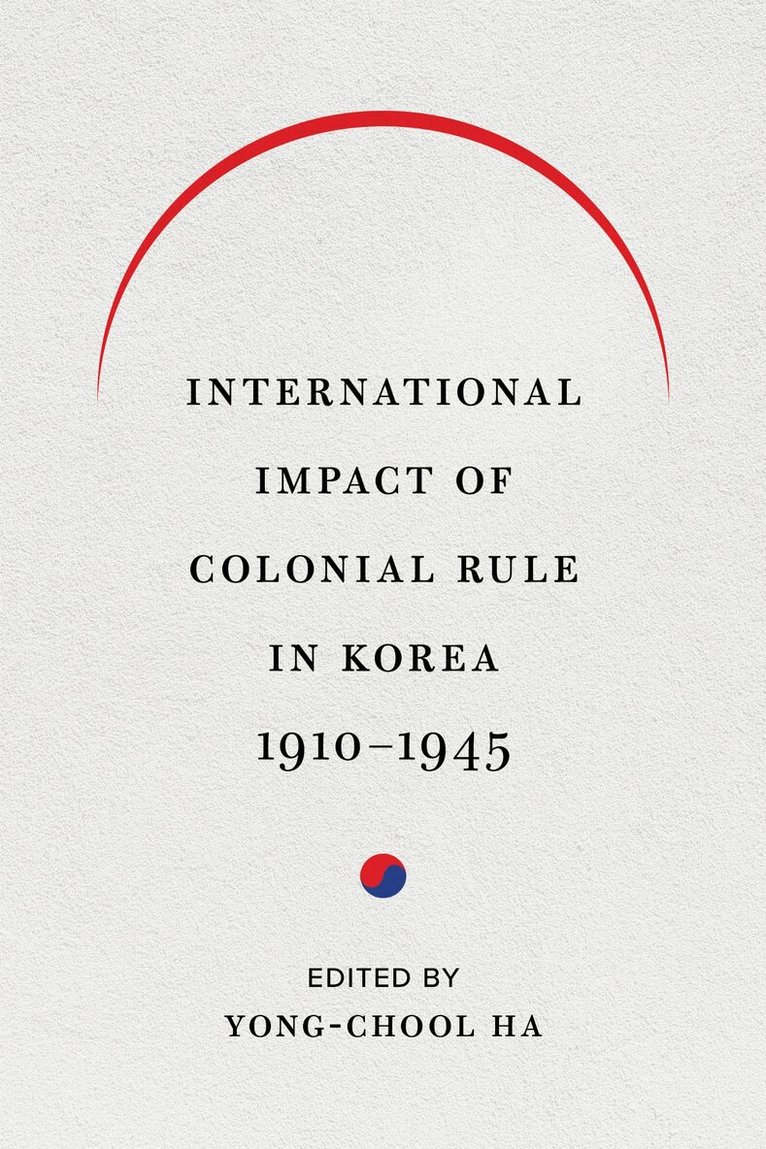
In recent years, discussion of the colonial period in Korea has centered mostly on the degree of exploitation or development that took place domestically, while international aspects have been relatively neglected. Colonial discourse, such as characterization of Korea as a “hermit nation,” was promulgated around the world by Japan and haunts us today. The colonization of Korea also transformed Japan and has had long-term consequences for post–World War II Northeast Asia as a whole.Through sections that explore Japan’s images of Korea, colonial Koreans’ perceptions of foreign societies and foreign relations, and international perceptions of colonial Korea, the essays in this volume show the broad influence of Japanese colonialism not simply on the Korean peninsula, but on how the world understood Japan and how Japan understood itself. When initially incorporated into the Japanese empire, Korea seemed lost to Japan’s designs, yet Korean resistance to colonial rule, along with later international fear of Japanese expansion, led the world to rethink the importance of Korea as a future sovereign nation.
1 789 kr
Skickas inom 7-10 vardagar
In recent years, discussion of the colonial period in Korea has centered mostly on the degree of exploitation or development that took place domestically, while international aspects have been relatively neglected. Colonial discourse, such as characterization of Korea as a “hermit nation,” was promulgated around the world by Japan and haunts us today. The colonization of Korea also transformed Japan and has had long-term consequences for post–World War II Northeast Asia as a whole.Through sections that explore Japan’s images of Korea, colonial Koreans’ perceptions of foreign societies and foreign relations, and international perceptions of colonial Korea, the essays in this volume show the broad influence of Japanese colonialism not simply on the Korean peninsula, but on how the world understood Japan and how Japan understood itself. When initially incorporated into the Japanese empire, Korea seemed lost to Japan’s designs, yet Korean resistance to colonial rule, along with later international fear of Japanese expansion, led the world to rethink the importance of Korea as a future sovereign nation.
1 739 kr
Skickas inom 3-6 vardagar
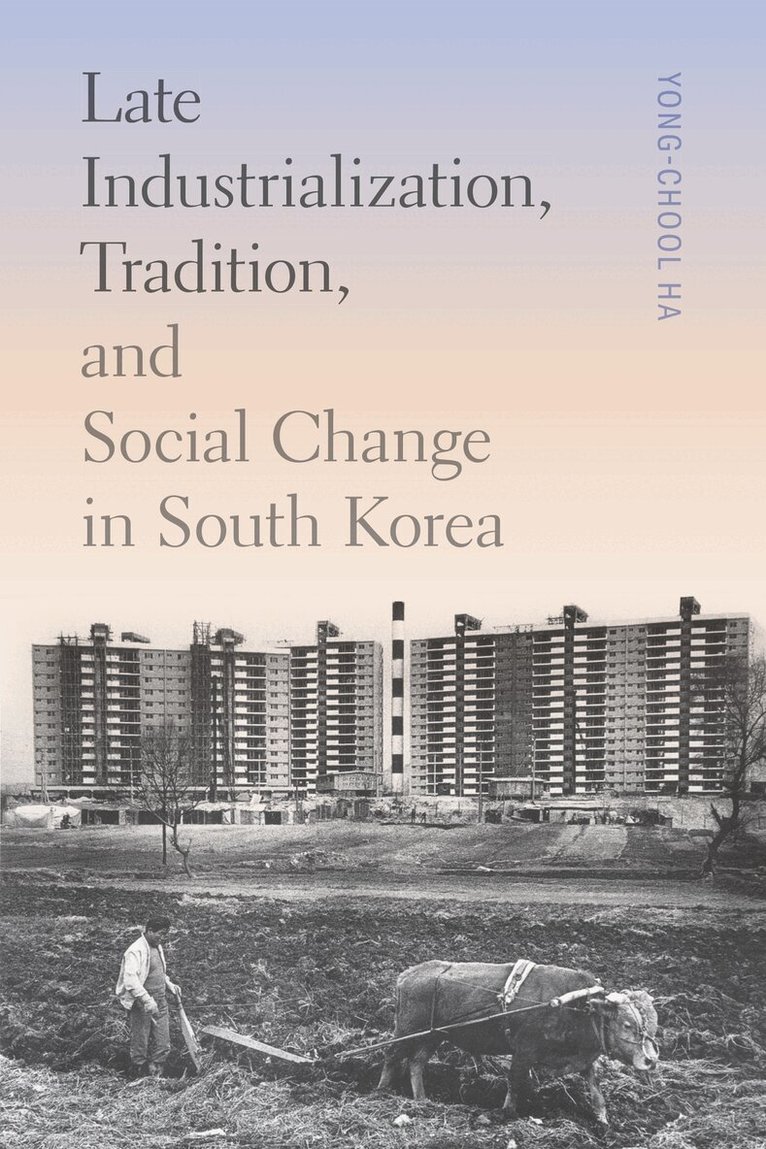
Examines how primary social ties fueled economic growthSouth Korea's rapid industrialization occurred with the rise of powerful chaebǒl (family-owned business conglomerates) that controlled vast swaths of the nation's economy. Leader Park Chung Hee's sense of backwardness and urgency led him to rely on familial, school, and regional ties to expedite the economic transformation. Late Industrialization, Tradition, and Social Change in South Korea elucidates how a country can progress economically while relying on traditional social structures that usually fragment political and economic vitality. The book proposes a new framework for macro social change under late industrialization by analyzing the specific process of interactions between economic tasks and tradition through the state's mediation.Drawing on interviews with bureaucrats in the Ministry of Commerce and Industry as well as workers and others, Yong-Chool Ha demonstrates how the state propelled industrialization by using kinship networks to channel investments and capital into chaebǒl corporations. What Ha calls "neofamilism" was the central force behind South Korea's economic transformation as the state used preindustrial social patterns to facilitate industrialization. Ha's account of bureaucracy, democratization, and the middle class challenges assumptions about the universal outcomes of industrialization.Late Industrialization, Tradition, and Social Change in South Korea is also available in an open access edition, DOI 10.6069/9780295753249
517 kr
Skickas inom 7-10 vardagar
Examines how primary social ties fueled economic growthSouth Korea's rapid industrialization occurred with the rise of powerful chaebǒl (family-owned business conglomerates) that controlled vast swaths of the nation's economy. Leader Park Chung Hee's sense of backwardness and urgency led him to rely on familial, school, and regional ties to expedite the economic transformation. Late Industrialization, Tradition, and Social Change in South Korea elucidates how a country can progress economically while relying on traditional social structures that usually fragment political and economic vitality. The book proposes a new framework for macro social change under late industrialization by analyzing the specific process of interactions between economic tasks and tradition through the state's mediation.Drawing on interviews with bureaucrats in the Ministry of Commerce and Industry as well as workers and others, Yong-Chool Ha demonstrates how the state propelled industrialization by using kinship networks to channel investments and capital into chaebǒl corporations. What Ha calls "neofamilism" was the central force behind South Korea's economic transformation as the state used preindustrial social patterns to facilitate industrialization. Ha's account of bureaucracy, democratization, and the middle class challenges assumptions about the universal outcomes of industrialization.Late Industrialization, Tradition, and Social Change in South Korea is also available in an open access edition, DOI 10.6069/9780295753249
1 739 kr
Skickas inom 3-6 vardagar
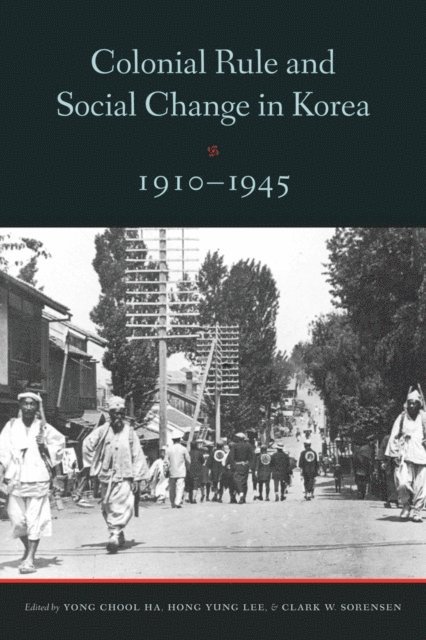
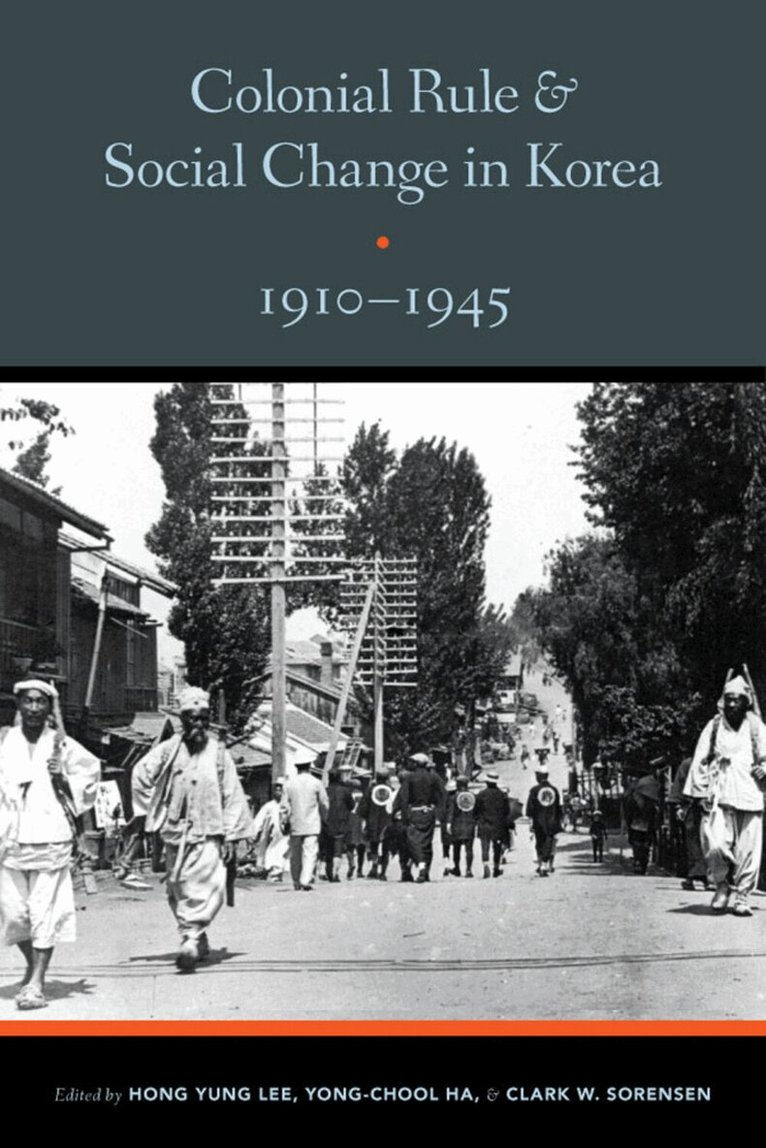
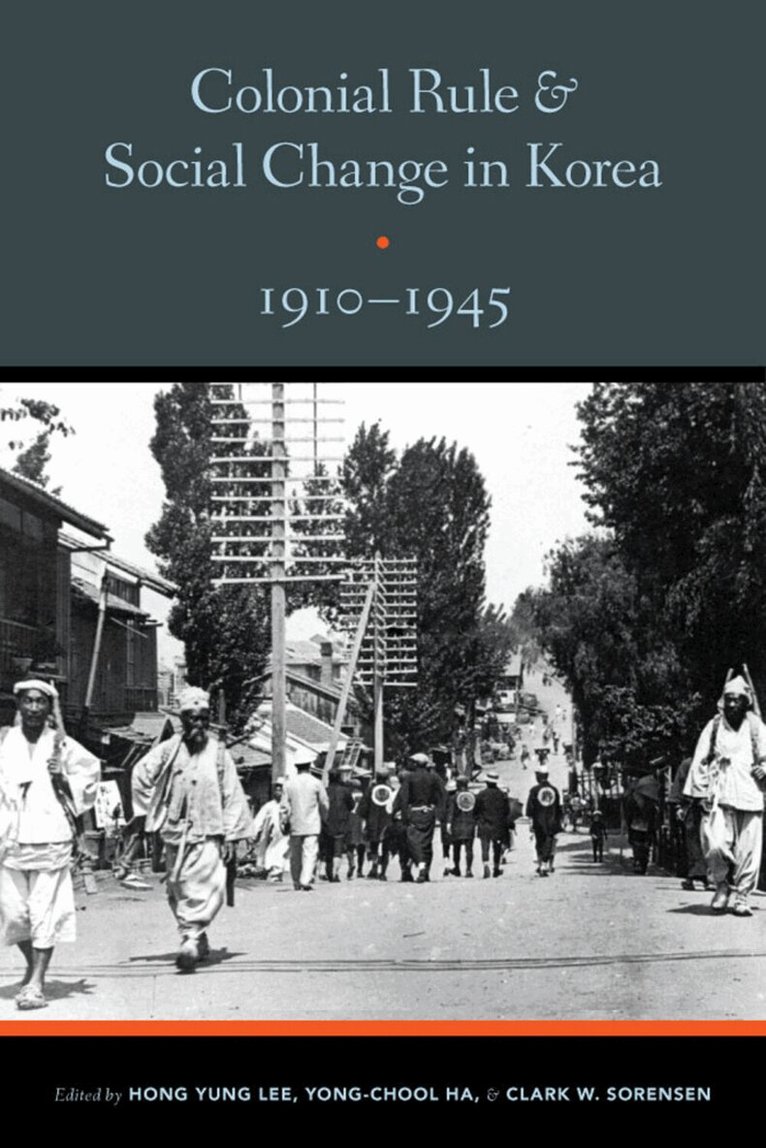
Colonial Rule and Social Change in Korea 1910-1945 highlights the complex interaction between indigenous activity and colonial governance, emphasizing how Japanese rule adapted to Korean and missionary initiatives, as well as how Koreans found space within the colonial system to show agency. Topics covered range from economic development and national identity to education and family; from peasant uprisings and thought conversion to a comparison of missionary and colonial leprosariums. These various new assessments of Japan's colonial legacy may open up new and illuminating approaches to historical memory that will resonate not just in Korean studies, but in colonial and postcolonial studies in general, and will have implications for the future of regional politics in East Asia.
727 kr
Skickas inom 3-6 vardagar
Colonial Rule and Social Change in Korea 1910-1945 highlights the complex interaction between indigenous activity and colonial governance, emphasizing how Japanese rule adapted to Korean and missionary initiatives, as well as how Koreans found space within the colonial system to show agency. Topics covered range from economic development and national identity to education and family; from peasant uprisings and thought conversion to a comparison of missionary and colonial leprosariums. These various new assessments of Japan's colonial legacy may open up new and illuminating approaches to historical memory that will resonate not just in Korean studies, but in colonial and postcolonial studies in general, and will have implications for the future of regional politics in East Asia.
2 088 kr
Skickas inom 10-15 vardagar
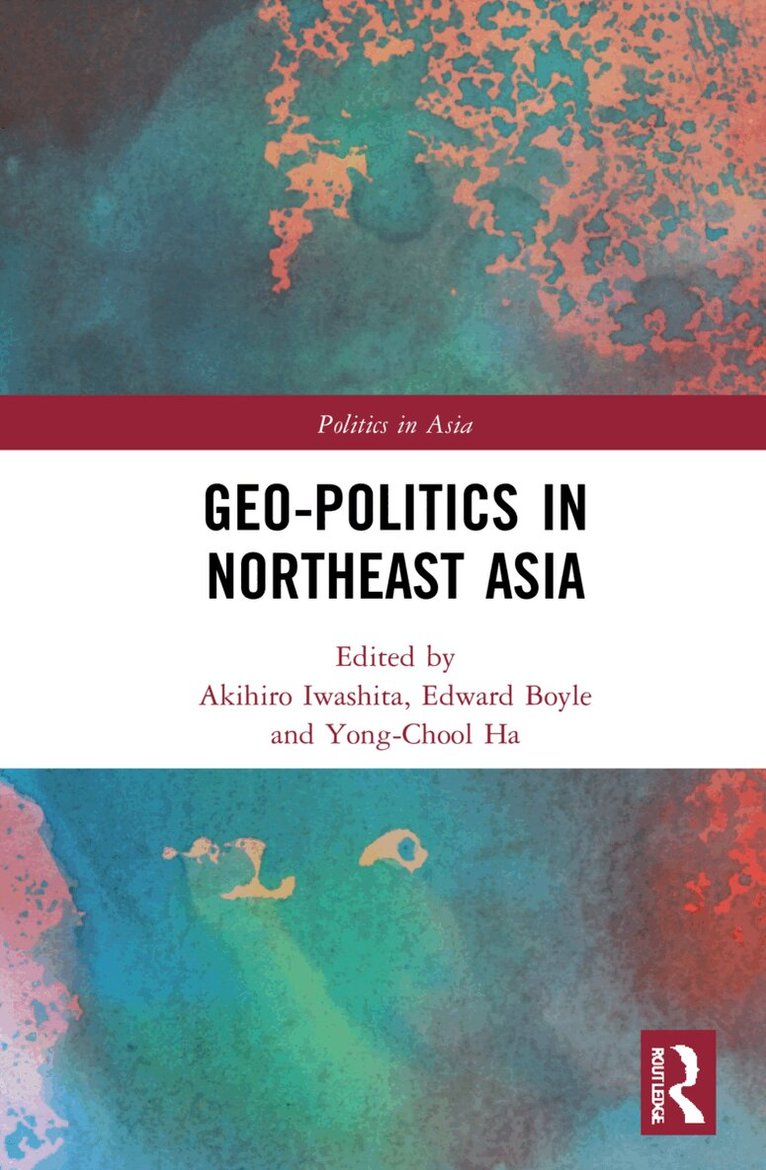
Geo-Politics in Northeast Asia focuses on the dynamics of Northeast Asia as a region. The chapters in this book offer a nuanced approach for understanding the geo-politics of this strategically critical area of the world. Focusing on China, Japan, Russia, and the Koreas, as well as the involvement of the United States, the contributors to the volume offer a timely and critical analysis of Northeast Asia. They collectively emphasize the different scales at which the region holds significance, and particularly note how the region is often granted significance by local political forces as well as national interests. Borderlands and sub-regions are especially important in this perspective, and the contributors show both how regionalism influences the people living in these areas and how they in turn shape the political priorities of states. At the same time, the worsening of relations between Japan and the Koreas and the increasing assertiveness of both China and Russia make it essential to understand the dynamics of the region, as well as how they have changed during and following the Trump era.Geo-Politics in Northeast Asia is essential reading for students and scholars of Political Geography, International Relations and Strategic Studies, as well as for those with a research focus on Northeast Asia, or the wider Asia-Pacific and Indo-Pacific regions.
576 kr
Skickas inom 10-15 vardagar
Geo-Politics in Northeast Asia focuses on the dynamics of Northeast Asia as a region. The chapters in this book offer a nuanced approach for understanding the geo-politics of this strategically critical area of the world. Focusing on China, Japan, Russia, and the Koreas, as well as the involvement of the United States, the contributors to the volume offer a timely and critical analysis of Northeast Asia. They collectively emphasize the different scales at which the region holds significance, and particularly note how the region is often granted significance by local political forces as well as national interests. Borderlands and sub-regions are especially important in this perspective, and the contributors show both how regionalism influences the people living in these areas and how they in turn shape the political priorities of states. At the same time, the worsening of relations between Japan and the Koreas and the increasing assertiveness of both China and Russia make it essential to understand the dynamics of the region, as well as how they have changed during and following the Trump era.Geo-Politics in Northeast Asia is essential reading for students and scholars of Political Geography, International Relations and Strategic Studies, as well as for those with a research focus on Northeast Asia, or the wider Asia-Pacific and Indo-Pacific regions.