Humberto Sossa-Azuela – författare
Visar alla böcker från författaren Humberto Sossa-Azuela. Handla med fri frakt och snabb leverans.
5 produkter
5 produkter
E-bok
PDF, Engelska, 20262 864 kr
Läs direkt efter köp
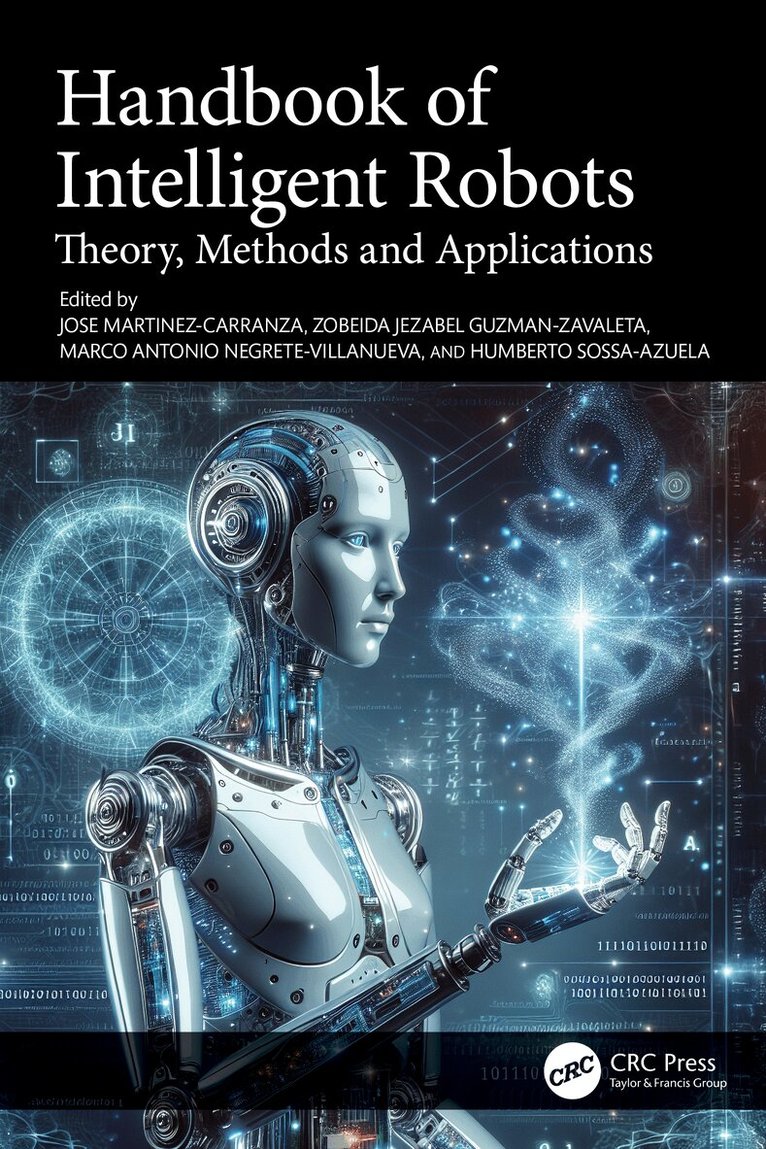
This handbook introduces some of the most relevant techniques used to develop intelligent robotic systems and provides several examples of applications where robots equipped with AI are deployed to solve a task.Handbook of Intelligent Robots: Theory, Methods and Applications is split into two main parts. The first part reviews key methods for developing intelligent robots implemented across various robotic systems, including service robots, micro aerial vehicles, manipulators, and humanoids, among others, deployed in diverse applications. The second part of the book provides several examples of applications where robotics systems are leveraged by AI and machine learning techniques to address real life applications, thus providing insights into the challenges and limitations of deploying robotic systems outside the laboratory. The main goal of the book is to familiarize the reader with the most recent concepts and techniques that are enabling robots to update their learned models online, to perform them efficiently on embedded processors, and to enable sophisticated interaction with the environment using spatial AI techniques such as visual simultaneous localization and mapping. To this end, the reader will delve into techniques such as continual learning, binary neural networks, neural controllers, fuzzy controllers, generation of time-optimal trajectories, generative models, natural language processing for robotics, and robot audition.This book is intended for electrical, computer and mechanical engineers interested in robotics and AI as well as those interested in robots deployed in real life scenarios. It will be useful to postgraduate students seeking reviews of the state of the art regarding AI methods for robotics such as visual SLAM, continual learning, neural networks, and transformers.
E-bok
Engelska, 20262 839 kr
Läs direkt efter köp
This handbook introduces some of the most relevant techniques used to develop intelligent robotic systems and provides several examples of applications where robots equipped with AI are deployed to solve a task.Handbook of Intelligent Robots: Theory, Methods and Applications is split into two main parts. The first part reviews key methods for developing intelligent robots implemented across various robotic systems, including service robots, micro aerial vehicles, manipulators, and humanoids, among others, deployed in diverse applications. The second part of the book provides several examples of applications where robotics systems are leveraged by AI and machine learning techniques to address real life applications, thus providing insights into the challenges and limitations of deploying robotic systems outside the laboratory. The main goal of the book is to familiarize the reader with the most recent concepts and techniques that are enabling robots to update their learned models online, to perform them efficiently on embedded processors, and to enable sophisticated interaction with the environment using spatial AI techniques such as visual simultaneous localization and mapping. To this end, the reader will delve into techniques such as continual learning, binary neural networks, neural controllers, fuzzy controllers, generation of time-optimal trajectories, generative models, natural language processing for robotics, and robot audition.This book is intended for electrical, computer and mechanical engineers interested in robotics and AI as well as those interested in robots deployed in real life scenarios. It will be useful to postgraduate students seeking reviews of the state of the art regarding AI methods for robotics such as visual SLAM, continual learning, neural networks, and transformers.
Inbunden, Engelska, 2026
2 456 kr
Skickas inom 10-15 vardagar
This handbook introduces some of the most relevant techniques used to develop intelligent robotic systems and provides several examples of applications where robots equipped with AI are deployed to solve a task.Handbook of Intelligent Robots: Theory, Methods and Applications is split into two main parts. The first part reviews key methods for developing intelligent robots implemented across various robotic systems, including service robots, micro aerial vehicles, manipulators, and humanoids, among others, deployed in diverse applications. The second part of the book provides several examples of applications where robotics systems are leveraged by AI and machine learning techniques to address real life applications, thus providing insights into the challenges and limitations of deploying robotic systems outside the laboratory. The main goal of the book is to familiarize the reader with the most recent concepts and techniques that are enabling robots to update their learned models online, to perform them efficiently on embedded processors, and to enable sophisticated interaction with the environment using spatial AI techniques such as visual simultaneous localization and mapping. To this end, the reader will delve into techniques such as continual learning, binary neural networks, neural controllers, fuzzy controllers, generation of time-optimal trajectories, generative models, natural language processing for robotics, and robot audition.This book is intended for electrical, computer and mechanical engineers interested in robotics and AI as well as those interested in robots deployed in real life scenarios. It will be useful to postgraduate students seeking reviews of the state of the art regarding AI methods for robotics such as visual SLAM, continual learning, neural networks, and transformers.
Häftad, Engelska, 2020
569 kr
Skickas inom 10-15 vardagar
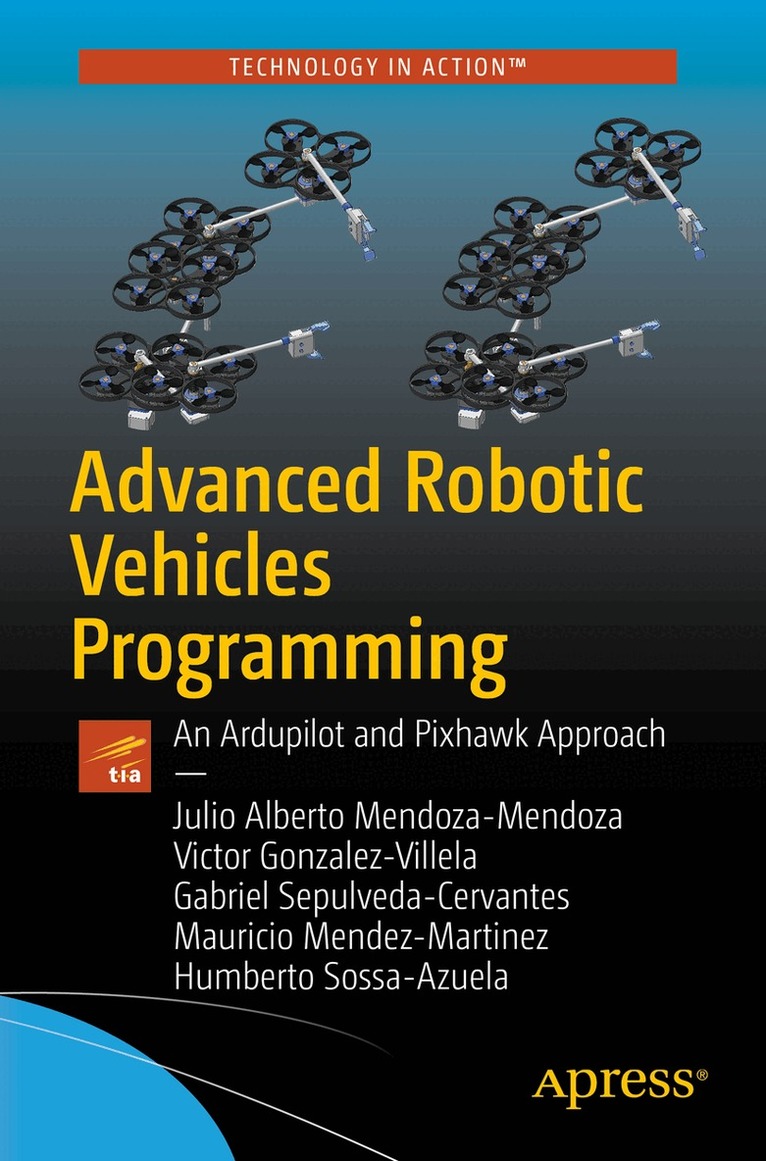
Learn how to program robotic vehicles with ardupilot libraries and pixhawk autopilot, both of which are open source technologies with a global scope. This book is focused on quadcopters but the knowledge is easily extendable to three-dimensional vehicles such as drones, submarines, and rovers.Pixhawk and the ardupilot libraries have grown dramatically in popularity due to the fact that the hardware and software offer a real-time task scheduler, huge data processing capabilities, interconnectivity, low power consumption, and a global developer support. This book shows you how take your robotic programming skills to the next level. From hardware to software, Advanced Robotic Vehicles Programming links theory with practice in the development of unmanned vehicles. By the end of this book, you’ll learn the pixhawk software and ardupilot libraries to develop your own autonomous vehicles. What You'll LearnModel and implement elementary controls in any unmanned vehicleSelect hardware and software components during the design process of an unmanned vehicleUse other compatible hardware and software development packagesUnderstand popular scientific and technical nomenclature in the field Identify relevant complexities and processes for the operation of an unmanned vehicleWho This Book Is ForUndergraduate and graduate students, researchers, makers, hobbyists, and those who want to go beyond basic programming of an Arduino for any kind of robotic vehicle.
E-bok
Engelska, 2020786 kr
Läs direkt efter köp
Learn how to program robotic vehicles with ardupilot libraries and pixhawk autopilot, both of which are open source technologies with a global scope. This book is focused on quadcopters but the knowledge is easily extendable to three-dimensional vehicles such as drones, submarines, and rovers.
Pixhawk and the ardupilot libraries have grown dramatically in popularity due to the fact that the hardware and software offer a real-time task scheduler, huge data processing capabilities, interconnectivity, low power consumption, and a global developer support.
This book shows you how take your robotic programming skills to the next level. From hardware to software, Advanced Robotic Vehicles Programming links theory with practice in the development of unmanned vehicles. By the end of this book, you’ll learn the pixhawk software and ardupilot libraries to develop your own autonomous vehicles.What You''ll Learn
Model and implement elementary controls in any unmanned vehicle Select hardware and software components during the design process of an unmanned vehicle Use other compatible hardware and software development packages Understand popular scientific and technical nomenclature in the field Identify relevant complexities and processes for the operation of an unmanned vehicleWho This Book Is For
Undergraduate and graduate students, researchers, makers, hobbyists, and those who want to go beyond basic programming of an Arduino for any kind of robotic vehicle.