Ipke Wachsmuth – författare
Visar alla böcker från författaren Ipke Wachsmuth. Handla med fri frakt och snabb leverans.
11 produkter
11 produkter
Inbunden, Engelska, 2008
1 904 kr
Skickas inom 5-8 vardagar
When people communicate face to face they don't just exchange verbal information. Rather, communication encompasses the whole body. Communication partners synchronize their body sway, and mimic or imitate each other's body postures and actions. They produce a multitude of manual and facial gestures that help to illustrate what is being said, show how communication partners feel, or or reveal verbal deception. Moreover, face-to-face communication takes place in shared contexts where partners jointly attend and refer to the same objects, often while working on joint tasks such as carrying a table or repairing a car together.Traditionally, communication research has neglected these parts of communication using the engineering model of signal transmission as the main theoretical metaphor. This book takes a new look at recent empirical findings in the cognitive and neurosciences, showing that the traditional approach is insufficient, and presenting a new interdisciplinary perspective, the Embodied Communication perspective. The core claim of the Embodied Communication perspective is that human communication involves parallel and highly interactive couplings between communication partners. These couplings range from low-level systems for performing and understanding instrumental actions, like the mirror system, to higher-systems that interpret symbols in a cultural context. The book can also serve as a guide for engineers who construct artificial agents and robots that should be able to interact with humans.
Inbunden, Engelska, 2006
2 767 kr
Skickas inom 5-8 vardagar
This volume presents important results of the Collaborative Research Center (Sonderforschungsbereich) "Situated Artificial Communicators," which was funded by grants from the German Research Foundation (Deutsche Forschungsgemeinschaft) for more than twelve years.The contributions focus on different aspects of human-human and human-machine interaction in situations which closely model everyday workplace demands. The authors are linguists, psycho- und neurolinguists, psychologists and computer scientists at Bielefeld University. They jointly tackle questions of information processing in task-oriented communication. The role of key notions such as context, integration (of multimodal information), reference, coherence, and robustness is explored in great depth.Some remarkable findings and recurrent phenomena reveal that communication is, to a large extent, a matter of joint activity. The interdisciplinary approach integrates theory, description and experimentation with simulation and evaluation.
Häftad, Engelska, 2002
542 kr
Skickas inom 10-15 vardagar
The international gesture workshops are interdisciplinary events for those - searching gesture-based communication and wishing to meet and exchange ideas across disciplines. A focus of these events is a shared interest in using gesture and sign language in human-computer interaction. Since 1996 international g- ture workshops have been held roughly every second year,with fully reviewed post-proceedings typically published by Springer-Verlag. Held at City University,London,April 18 - 20,2001,and attended by more than 70 participants from all over the world,Gesture Workshop 2001 was the fourth in a highly successful workshop series. It was organized in association with the British HCI Group,a specialist group of the British Computer Society. As its predecessors in 1999 (Gif-sur-Yvette),1997 (Bielefeld),and 1996 (York),GW 2001 aimed to encourage multidisciplinary collaboration by providing a platform for participants to share,discuss,and criticize both research in progress and more complete research with a multidisciplinary audience.Consistent with the steady growth of research activity in this area,a large number of high-quality submissions were received,which made GW 2001 an exciting and important event for anyone interested in gesture-related and te- nological research relevant to human-computer interaction. In line with the pr- tice of previous gesture workshops,presenters were invited to submit their papers for publication in a subsequent peer-reviewed publication of high quality. The present book is the outcome of this e?ort. Representing the research work from 10 countries,it contains a selection of 25 articles,and 8 short papers re?ecting work in progress.
Häftad, Engelska, 1995
558 kr
Skickas inom 10-15 vardagar
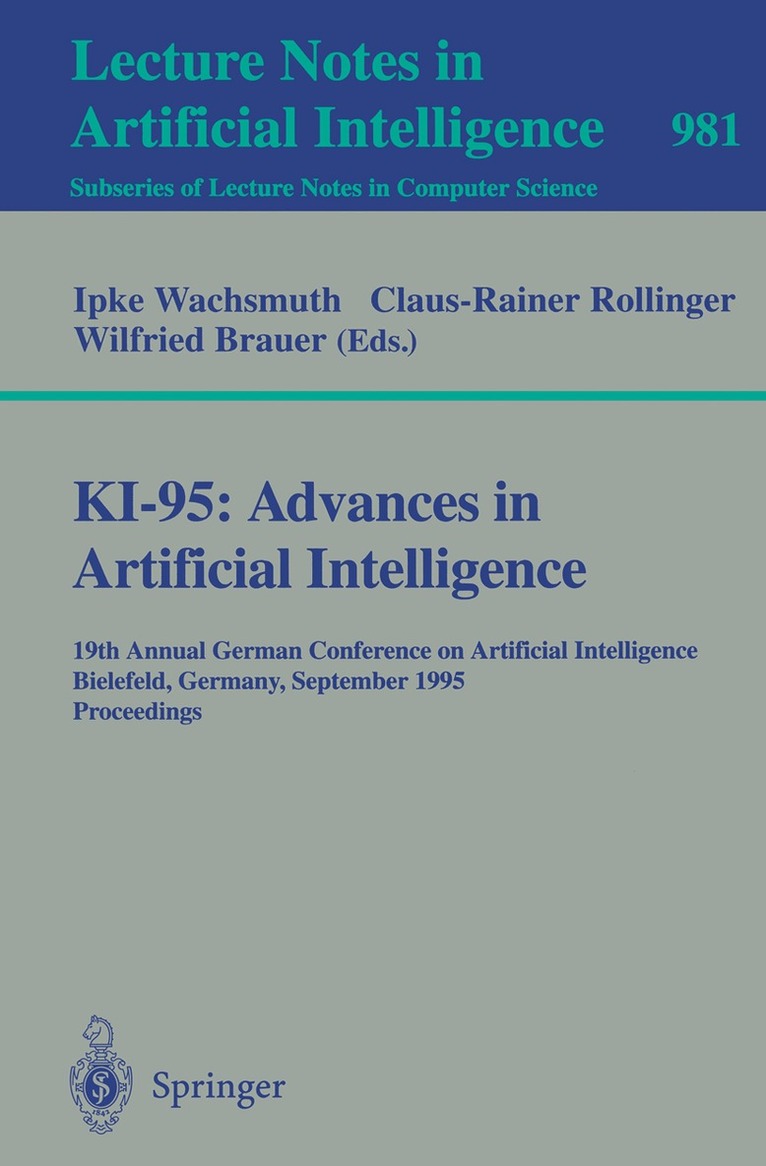
This book constitutes the proceedings of the 19th Annual German Conference on Artificial Intelligence, KI-95, held in Bielefeld in September 1995.The volume opens with full versions of four invited papers devoted to the topic "From Intelligence Models to Intelligent Systems". The main part of the book consists of 17 refereed full papers carefully relected by the program committee; these papers are organized in sections on knowledge organization and optimization, logic and reasoning, nonmonotonicity, action and change, and spatial reasoning.
Häftad, Engelska, 1998
558 kr
Skickas inom 10-15 vardagar
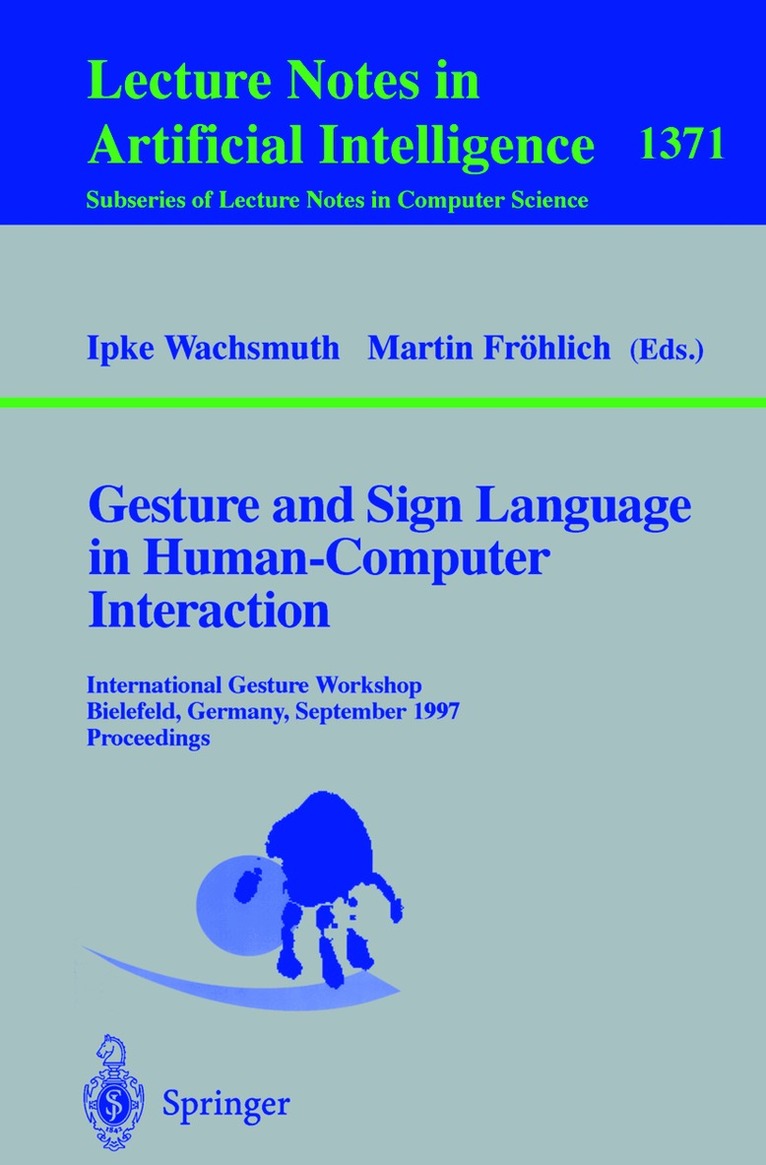
This book presents the thoroughly refereed post-workshop proceedings of an International Workshop on Gesture and Sign Language in Human-Computer Interaction held in Bielefeld, Germany, in 1997. The book presents 25 revised papers together with two invited lectures. Recently, gesture and sign language have become key issues for advanced interface design in the humanization of computer interaction: AI, neural networks, pattern recognition, and agent techniques are having a significant impact on this area of research and development. The papers are organized in sections on semiotics for gesture movement, hidden Markov models, motion analysis and synthesis, multimodal interfaces, neural network methods, and applications.
558 kr
Skickas inom 10-15 vardagar
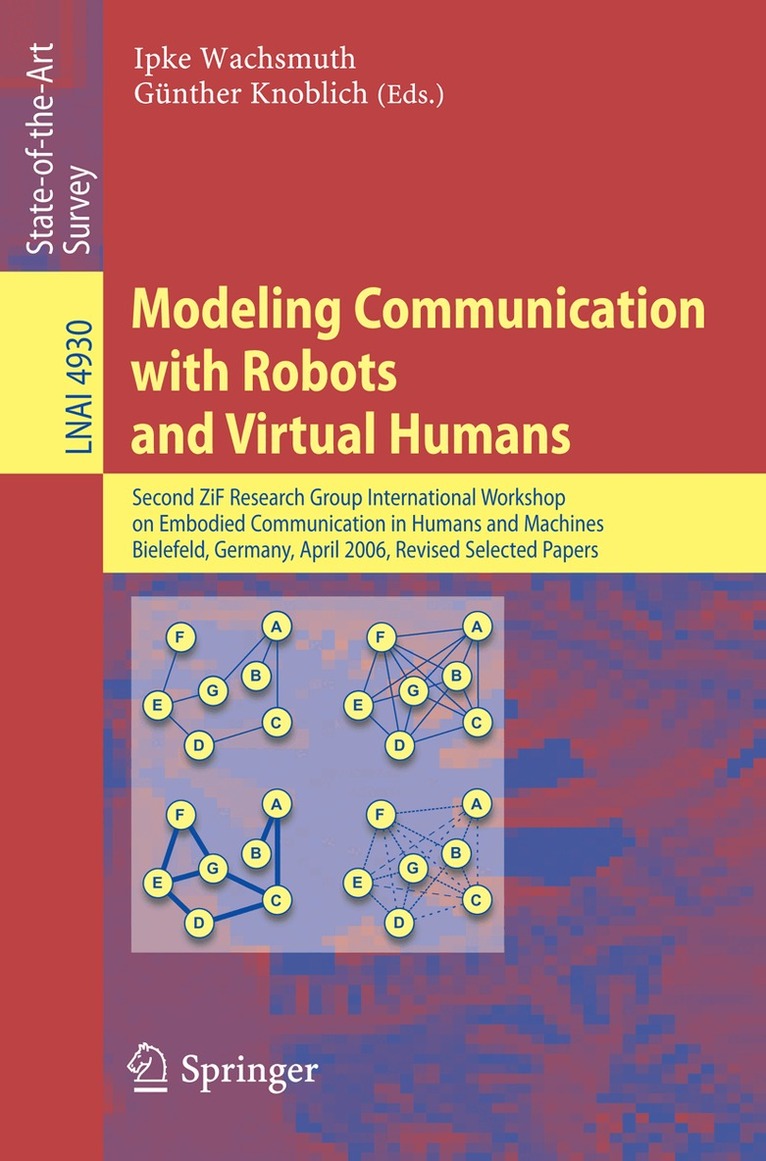
Embodied agents play an increasingly important role in cognitive interaction technology. The two main types of embodied agents are virtual humans inhabiting simulated environments and humanoid robots inhabiting the real world. So far research on embodied communicative agents has mainly explored their potential for practical applications. However, the design of communicative artificial agents can also be of great heuristic value for the scientific study of communication. It allows researchers to isolate, implement, and test essential properties of inter-agent communications in operational models. Modeling communication with robots and virtual humans thus involves the vision of using communicative machines as research tools. Artificial systems that reproduce certain aspects of natural, multimodal communication help to elucidate the internal mechanisms that give rise to different aspects of communication. In short, constructing embodied agents who are able to communicate may help us to understand the principles of human communication. As a comprehensive theme, “Embodied Communication in Humans and Machines” was taken up by an international research group hosted by Bielefeld University’s Center for Interdisciplinary Research (ZiF – Zentrum für interdisziplinäre Forschung) from October 2005 through September 2006. The overarching goal of this research year was to develop an integrated perspective of embodiment in communication, establishing bridges between lower-level, sensorimotor functions and a range of higher-level, communicative functions involving language and bodily action. The present volume grew out of a workshop that took place during April 5–8, 2006 at the ZiF as a part of the research year on embodied communication.
Häftad, Engelska, 2010
558 kr
Skickas inom 10-15 vardagar
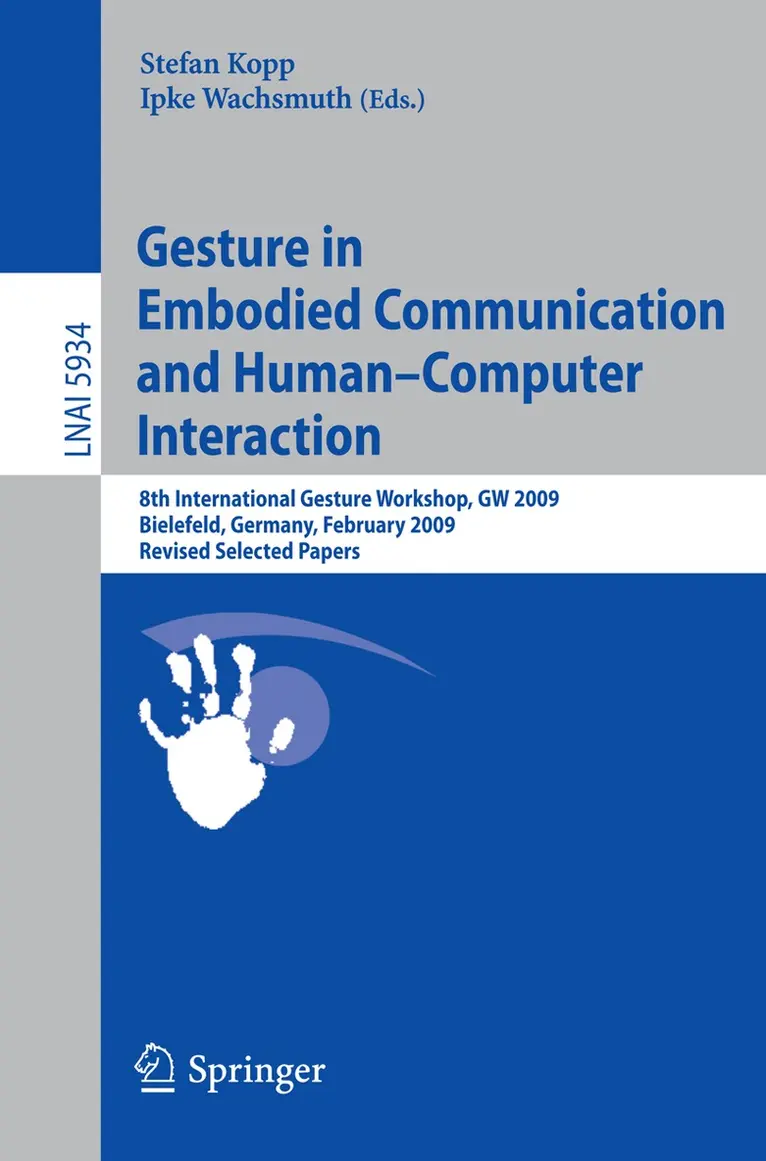
The International Gesture Workshops (GW) are interdisciplinary events for those researching gesture-based communication across the disciplines. The focus of these events is a shared interest in understanding gestures and sign language in their many facets, and using them for advancing human–machine interaction. Since 1996, International Gesture Workshops have been held roughly every second year, with fully reviewed proceedings published by Springer. The International Gesture Workshop GW 2009 was hosted by Bielefeld University’s Center for Interdisciplinary Research (ZiF – Zentrum für interdisziplinäre Forschung) during February 25–27, 2009. Like its predecessors, GW 2009 aimed to provide a platform for participants to share, discuss, and criticize recent and novel research with a multidisciplinary audience. More than 70 computer scientists, linguistics, psychologists, neuroscientists as well as dance and music scientists from 16 countries met to present and exchange their newest results under the umbrella theme “Gesture in Embodied Communication and Human–Computer Interaction. ” Consistent with the steady growth of research activity in this area, a large number of high-quality submissions were received, which made GW 2009 an exciting and important event for anyone interested in gesture-related technological research relevant to human–computer interaction. In line with the practice of previous gesture workshops, presenters were invited to submit theirs papers for publication in a subsequent peer-reviewed publication of high quality. The present book is the outcome of this effort. Representing the research work from eight countries, it contains a selection of 28 thoroughly reviewed articles.
Häftad, Tyska, 2026
130 kr
Skickas inom 3-6 vardagar
Häftad, Tyska, 2020
192 kr
Skickas inom 5-8 vardagar
Häftad, Tyska, 2023
187 kr
Skickas inom 3-6 vardagar
206 kr
Skickas inom 5-8 vardagar