J. Mark Ramseyer – författare
Visar alla böcker från författaren J. Mark Ramseyer. Handla med fri frakt och snabb leverans.
21 produkter
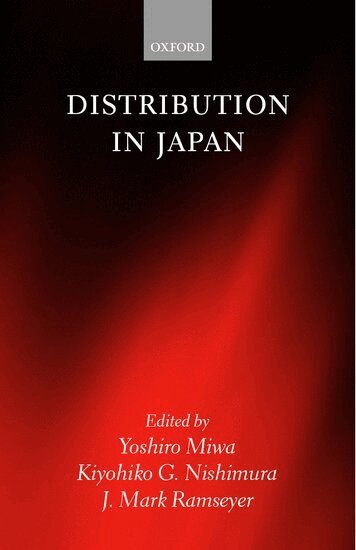
Distribution in Japan
Av Yoshiro Miwa, Kiyohiko G. Nishimura m. fl.
Inbunden, 2002
3429 kr
Lägg i varukorg
Several years have passed since the 'store wars' over barriers to foreign products at Japanese distribution firms. Yet among English-speaking readers, how these firms operate remains a puzzle. In this book, the best Japanese scholars in their fields attempt to unravel that puzzle. Avoiding …
Second-Best Justice
The Virtues of Japanese Private Law
E-bok, 2015
941 kr
Lägg i varukorg
It’s long been known that Japanese file fewer lawsuits per capita than Americans do. Yet explanations for the difference have tended to be partial and unconvincing, ranging from circular arguments about Japanese culture to suggestions that the slow-moving Japanese court system acts as a deterrent. …
Fable of the Keiretsu
Urban Legends of the Japanese Economy
Av Yoshiro Miwa, J. Mark Ramseyer
Inbunden, 2006
437 kr
Lägg i varukorg
For Western economists and journalists, the most distinctive facet of the post-war Japanese business world has been the keiretsu, or the insular business alliances among powerful corporations. Within keiretsu groups, argue these observers, firms preferentially trade, lend money, take and receive …
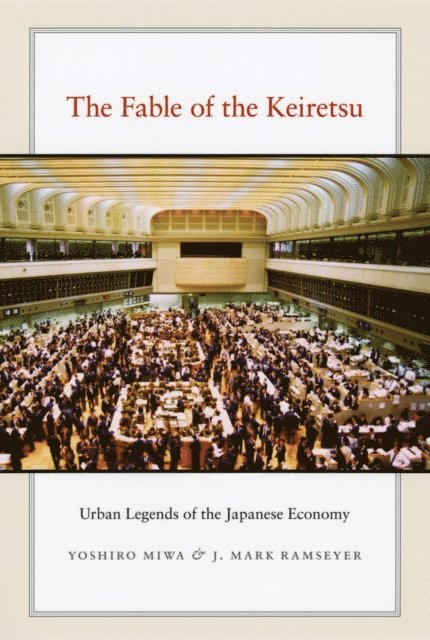
Fable of the Keiretsu
Urban Legends of the Japanese Economy
Av J. Mark Ramseyer, Yoshiro Miwa
E-bok, 2010
956 kr
Lägg i varukorg
For Western economists and journalists, the most distinctive facet of the post-war Japanese business world has been the keiretsu, or the insular business alliances among powerful corporations. Within keiretsu groups, argue these observers, firms preferentially trade, lend money, take and receive …
Japanese Law
An Economic Approach
Av J. Mark Ramseyer, Minoru Nakazato
Häftad, 2000
320 kr
Lägg i varukorg
In this introduction to Japanese law, J. Mark Ramseyer and Minoru Nakazato present an economic approach to the law, to challenge commonly held ideas about the law. Where many studies assume that Japanese law differs fundamentally from law in the United States, this work shows the essential …
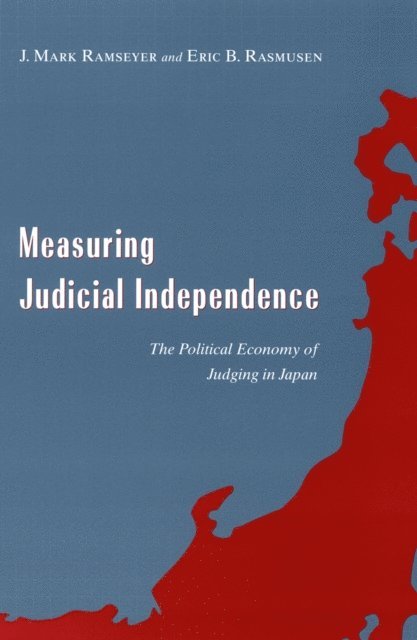
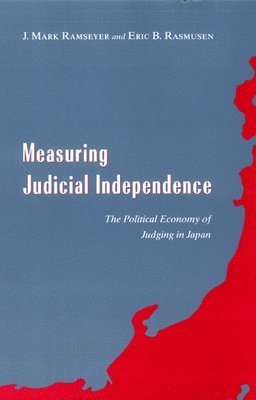
Measuring Judicial Independence
The Political Economy of Judging in Japan
Av Eric B. Rasmusen, J. Mark Ramseyer
E-bok, 2010
1116 kr
Lägg i varukorg
The role of the U.S. Supreme Court in the aftermath of the 2000 presidential election raised questions in the minds of many Americans about the relationships between judges and political influence; the following years saw equally heated debates over the appropriate role of political ideology in …
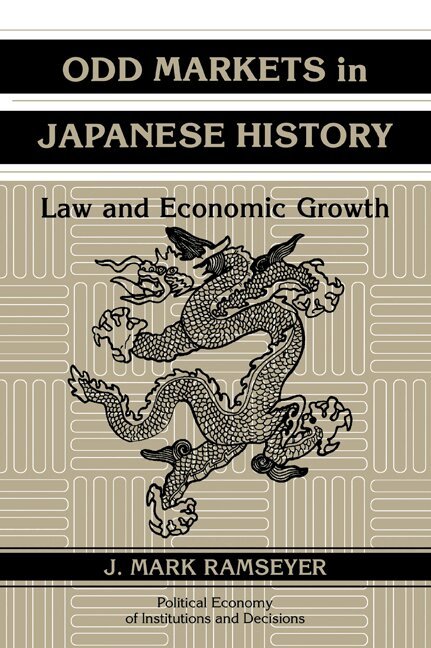
Odd Markets in Japanese History
Law and Economic Growth
Häftad, 2008
586 kr
Lägg i varukorg
Employing a rational-choice approach, Professor Ramseyer studies the impact of Japanese law on economic growth in Japan. Toward that end, the author investigates the way law governed various markets and the way that people negotiated contracts within those markets. For much of the period at stake, …
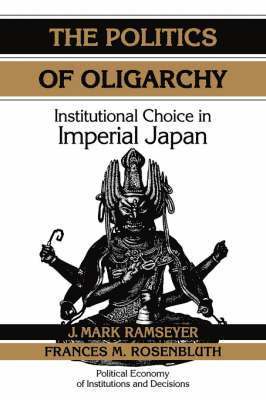
The Politics of Oligarchy
Institutional Choice in Imperial Japan
Av J. Mark Ramseyer, Frances McCall Rosenbluth m. fl.
Inbunden, 1995
787 kr
Lägg i varukorg
In the latter-half of the nineteenth century and the first half of the twentieth century, Japan underwent two major shifts in political control. In the 1910s, the power of the oligarchy was eclipsed by that of a larger group of professional politicians; in the 1930s, the focus of power shifted …
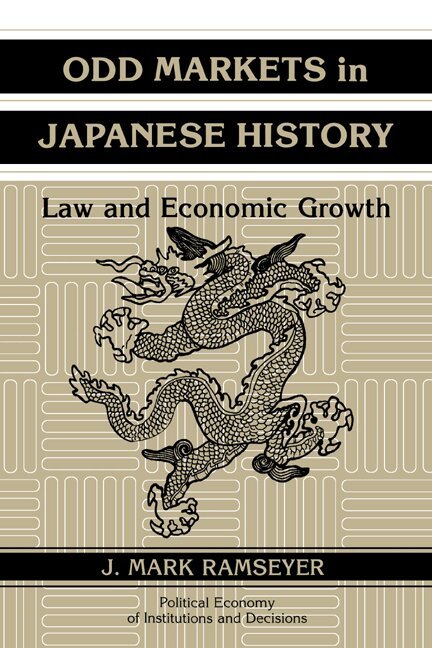
Odd Markets in Japanese History
Law and Economic Growth
Av J. Mark Ramseyer, Randall Calvert m. fl.
Inbunden, 1996
1641 kr
Lägg i varukorg
Employing a rational-choice approach, Professor Ramseyer studies the impact of Japanese law on economic growth in Japan. Toward that end, the author investigates the way law governed various markets and the way that people negotiated contracts within those markets. For much of the period at stake, …
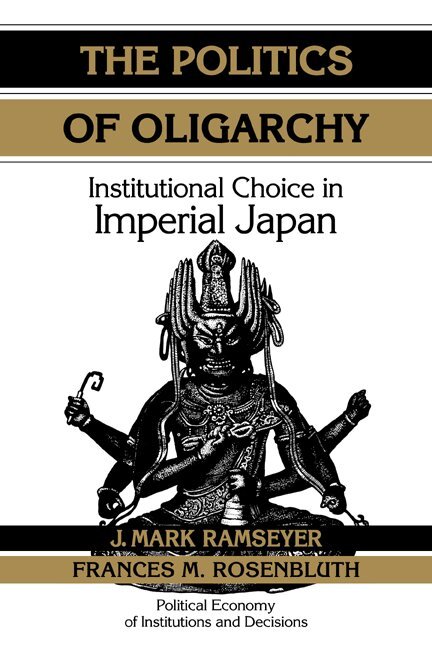
The Politics of Oligarchy
Institutional Choice in Imperial Japan
Av J. Mark Ramseyer, Frances McCall Rosenbluth m. fl.
Häftad, 1998
468 kr
Lägg i varukorg
In the latter-half of the nineteenth century and the first half of the twentieth century, Japan underwent two major shifts in political control. In the 1910s, the power of the oligarchy was eclipsed by that of a larger group of professional politicians; in the 1930s, the focus of power shifted …
Japan’s Political Marketplace
With a New Preface
Av J. Mark Ramseyer, Frances McCall Rosenbluth
Häftad, 1997
510 kr
Lägg i varukorg
Mark Ramseyer and Frances McCall Rosenbluth show how rational-choice theory can be applied to Japanese politics. Using the concept of principal and agent, Ramseyer and Rosenbluth construct a persuasive account of political relationships in Japan. In doing so, they demonstrate that political …
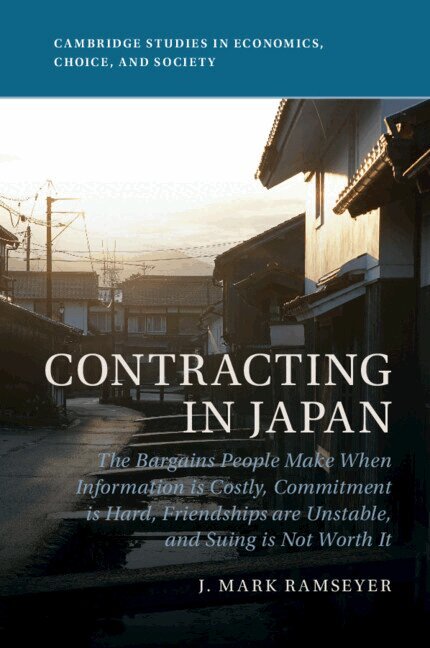
Contracting in Japan
The Bargains People Make When Information is Costly, Commitment is Hard, Friendships are Unstable, and Suing is Not Worth It
Häftad, 2023
446 kr
Lägg i varukorg
Economic arrangements, Ramseyer writes, are structured and implemented with the intent and hope that they will be carried out with 'care, intelligence, discretion, and effort.' Yet entrepreneurs work with partial information about the products, and people, they are dealing with. Contracting in …
Contracting in Japan
The Bargains People Make When Information is Costly, Commitment is Hard, Friendships are Unstable, and Suing is Not Worth It
Inbunden, 2023
1213 kr
Lägg i varukorg
Economic arrangements, Ramseyer writes, are structured and implemented with the intent and hope that they will be carried out with 'care, intelligence, discretion, and effort.' Yet entrepreneurs work with partial information about the products, and people, they are dealing with. Contracting in …
Contracting in Japan
The Bargains People Make When Information is Costly, Commitment is Hard, Friendships are Unstable, and Suing is Not Worth It
E-bok, 2023
360 kr
Lägg i varukorg
Contracting in Japan
The Bargains People Make When Information is Costly, Commitment is Hard, Friendships are Unstable, and Suing is Not Worth It
E-bok, 2023
360 kr
Lägg i varukorg
Remilitarized Zone
How a Communist Hoax about Comfort Women Canceled Academic Freedom, Shredded the Ties Between Japan and South Korea, and Upended both of Our Lives
Av J. Mark Ramseyer, Jason M. Morgan
Inbunden, 2024
304 kr
Lägg i varukorg
During World War II, the Japanese military extended Japan’s civilian licensing regime for domestic brothels to those next to its overseas bases. It did so for a simple reason: to impose the strenuous health standards necessary to control the venereal disease that had debilitated its troops in …
Comfort Women Hoax
A Fake Memoir, North Korean Spies, and Hit Squads in the Academic Swamp
Av Jason M. Morgan, J. Mark Ramseyer
E-bok, 2024
485 kr
Lägg i varukorg
During World War II, the Japanese military extended Japan’s civilian licensing regime for domestic brothels to those next to its overseas bases. It did so for a simple reason: to impose the strenuous health standards necessary to control the venereal disease that had debilitated its troops in …
Second-Best Justice
The Virtues of Japanese Private Law
Inbunden, 2015
429 kr
Tillfälligt slut
It's long been known that fewer lawsuits are filed in Japan per capita than in the United States. Yet explanations for the difference have tended to be partial and unconvincing, ranging from circular arguments about Japanese culture to suggestions that the slow-moving Japanese court system acts as …
Japanese Law
An Economic Approach
Av J. Mark Ramseyer, Minoru Nakazato
Inbunden, 1999
702 kr
Tillfälligt slut
In this introduction to Japanese law, J. Mark Ramseyer and Minoru Nakazato present an economic approach to the law, to challenge commonly held ideas about the law. Where many studies assume that Japanese law differs fundamentally from law in the United States, this work shows the essential …
Measuring Judicial Independence
The Political Economy of Judging in Japan
Av J. Mark Ramseyer, Eric B. Rasmusen
Inbunden, 2003
508 kr
Tillfälligt slut
Article 76 of the Japanese Constitution requires that all judges be "independent in the exercise of their conscience and bound only by this Constitution and its laws. Consistent with this requirement, Japanese courts have long enjoyed a reputation for vigilant independence. Only leftists have …