113 kr
James A. Millward – författare
- Häftad, Engelska, 2013The phrase "silk road" evokes vivid images: of merchants leading camel caravans over deserts and steppes to trade exotic goods in the bazaars of glittering Oriental cities, of pilgrims braving bandits and frozen mountain passes to gather scriptures and spread their faith across continental expanses. Beyond the exotica, however, this VSI will be a sketch of the historical background against which the silk road flourished, and an essay on the significance of old-world intercultural exchange to Eurasian and world history generally. On the one hand, Millward treats the silk road broadly, as a metonym for the cross-fertilizing communication between peoples across the Eurasian continent since at least the Neolithic era. On the other, he highlights specific examples of goods and ideas exchanged between the Mediterranean, Persian, Indian, and Chinese regions, along with the significance of these exchanges. While including silks, spices, travelers' tales of colorful locales, the main focus of the book is to outline the dynamics of Central Eurasian history that promoted silk road interactions, especially the role of nomad empires; and to highlight the importance of the biological, technological, artistic, intellectual, and religious interchanges across the continent. Millward shows that these exchanges had a profound effect on the old world that was akin to, if not yet on the scale of, modern globalization. Millward also considers some of the more abstract contemporary uses to which the silk road concept has been put. It is, of course, a popular marketing device for boutiques, museums, restaurants, and tour operators from Venice to Kyoto. More than that, however, the silk road has ideological connotations, used sometimes to soften the face of Chinese expansion in Central Asia, or, in the US culture wars, as a challenge to the "clash of civilizations" understanding of intersocietal relations. Finally, while it has often been argued that the silk road declined or closed after the collapse of the Mongol empire or the opening of direct maritime communications from Europe to Asia, Millard disputes this view, showing how silk road phenomena continued through the early modern and modern expansion of Russian and Chinese states across Central Asia. ABOUT THE SERIES: The Very Short Introductions series from Oxford University Press contains hundreds of titles in almost every subject area. These pocket-sized books are the perfect way to get ahead in a new subject quickly. Our expert authors combine facts, analysis, perspective, new ideas, and enthusiasm to make interesting and challenging topics highly readable.
- E-bokEngelska, 2013
92 kr
Läs direkt efter köp
The phrase "silk road" evokes vivid scenes of merchants leading camel caravans across vast stretches to trade exotic goods in glittering Oriental bazaars, of pilgrims braving bandits and frozen mountain passes to spread their faith across Asia. Looking at the reality behind these images, this Very Short Introduction illuminates the historical background against which the silk road flourished, shedding light on the importance of old-world cultural exchange to Eurasian and world history. On the one hand, historian James A. Millward treats the silk road broadly, to stand in for the cross-cultural communication between peoples across the Eurasian continent since at least the Neolithic era. On the other, he highlights specific examples of goods and ideas exchanged between the Mediterranean, Persia, India, and China, along with the significance of these exchanges. While including silks, spices, and travelers'' tales of colorful locales, the book explains the dynamics of Central Eurasian history that promoted Silk Road interactions--especially the role of nomad empires--highlighting the importance of the biological, technological, artistic, intellectual, and religious interchanges across the continent. Millward shows that these exchanges had a profound effect on the old world that was akin to, if not on the scale of, modern globalization. He also disputes the idea that the silk road declined after the collapse of the Mongol empire or the opening of direct sea routes from Europe to Asia, showing how silk road phenomena continued through the early modern and modern expansion of the Russian and Chinese states across Central Asia.Millward concludes that the idea of the silk road has remained powerful, not only as a popular name for boutiques and restaurants, but also in modern politics and diplomacy, such as U.S. Secretary of State Hilary Clinton''s "Silk Road Initiative" for India, Pakistan, and Afghanistan. - E-bokPDF, Engelska, 2013
92 kr
Läs direkt efter köp
The phrase "silk road" evokes vivid scenes of merchants leading camel caravans across vast stretches to trade exotic goods in glittering Oriental bazaars, of pilgrims braving bandits and frozen mountain passes to spread their faith across Asia. Looking at the reality behind these images, this Very Short Introduction illuminates the historical background against which the silk road flourished, shedding light on the importance of old-world cultural exchange to Eurasian and world history. On the one hand, historian James A. Millward treats the silk road broadly, to stand in for the cross-cultural communication between peoples across the Eurasian continent since at least the Neolithic era. On the other, he highlights specific examples of goods and ideas exchanged between the Mediterranean, Persia, India, and China, along with the significance of these exchanges. While including silks, spices, and travelers'' tales of colorful locales, the book explains the dynamics of Central Eurasian history that promoted Silk Road interactions--especially the role of nomad empires--highlighting the importance of the biological, technological, artistic, intellectual, and religious interchanges across the continent. Millward shows that these exchanges had a profound effect on the old world that was akin to, if not on the scale of, modern globalization. He also disputes the idea that the silk road declined after the collapse of the Mongol empire or the opening of direct sea routes from Europe to Asia, showing how silk road phenomena continued through the early modern and modern expansion of the Russian and Chinese states across Central Asia.Millward concludes that the idea of the silk road has remained powerful, not only as a popular name for boutiques and restaurants, but also in modern politics and diplomacy, such as U.S. Secretary of State Hilary Clinton''s "Silk Road Initiative" for India, Pakistan, and Afghanistan. - Inbunden, Engelska, 2004
2 495 kr
Skickas inom 10-15 vardagar
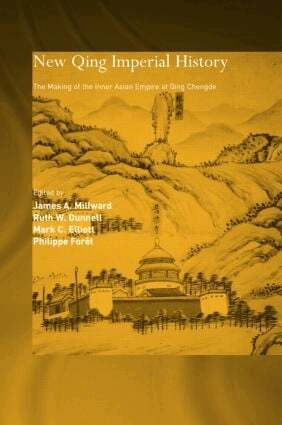
New Qing Imperial History uses the Manchu summer capital of Chengde and associated architecture, art and ritual activity as the focus for an exploration of the importance of Inner Asia and Tibet to the Qing Empire (1636-1911). Well-known contributors argue that the Qing was not simply another Chinese dynasty, but was deeply engaged in Inner Asia not only militarily, but culturally, politically and ideologically. Emphasizing the diverse range of peoples in the Qing empire, this book analyzes the importance to Chinese history of Manchu relations with Tibetan prelates, Mongolian chieftains, and the Turkic elites of Xinjiang. In offering a new appreciation of a culturally and politically complex period, the authors discuss the nature and representation of emperorship, especially under Qianlong (r. 1736-1795), and examine the role of ritual in relations with Inner Asia, including the vaunted (but overrated) tribute system. By using a specific artifact or text as a starting point for analysis in each chapter, the contributors not only include material previously unavailable in English but allow the reader an intimate knowledge of life at Chengde and its significance to the Qing period as a whole. - Häftad, Engelska, 2011
904 kr
Skickas inom 10-15 vardagar
New Qing Imperial History uses the Manchu summer capital of Chengde and associated architecture, art and ritual activity as the focus for an exploration of the importance of Inner Asia and Tibet to the Qing Empire (1636-1911). Well-known contributors argue that the Qing was not simply another Chinese dynasty, but was deeply engaged in Inner Asia not only militarily, but culturally, politically and ideologically. Emphasizing the diverse range of peoples in the Qing empire, this book analyzes the importance to Chinese history of Manchu relations with Tibetan prelates, Mongolian chieftains, and the Turkic elites of Xinjiang. In offering a new appreciation of a culturally and politically complex period, the authors discuss the nature and representation of emperorship, especially under Qianlong (r. 1736-1795), and examine the role of ritual in relations with Inner Asia, including the vaunted (but overrated) tribute system. By using a specific artifact or text as a starting point for analysis in each chapter, the contributors not only include material previously unavailable in English but allow the reader an intimate knowledge of life at Chengde and its significance to the Qing period as a whole. - Inbunden, Engelska, 1998
1 587 kr
Skickas inom 5-8 vardagar
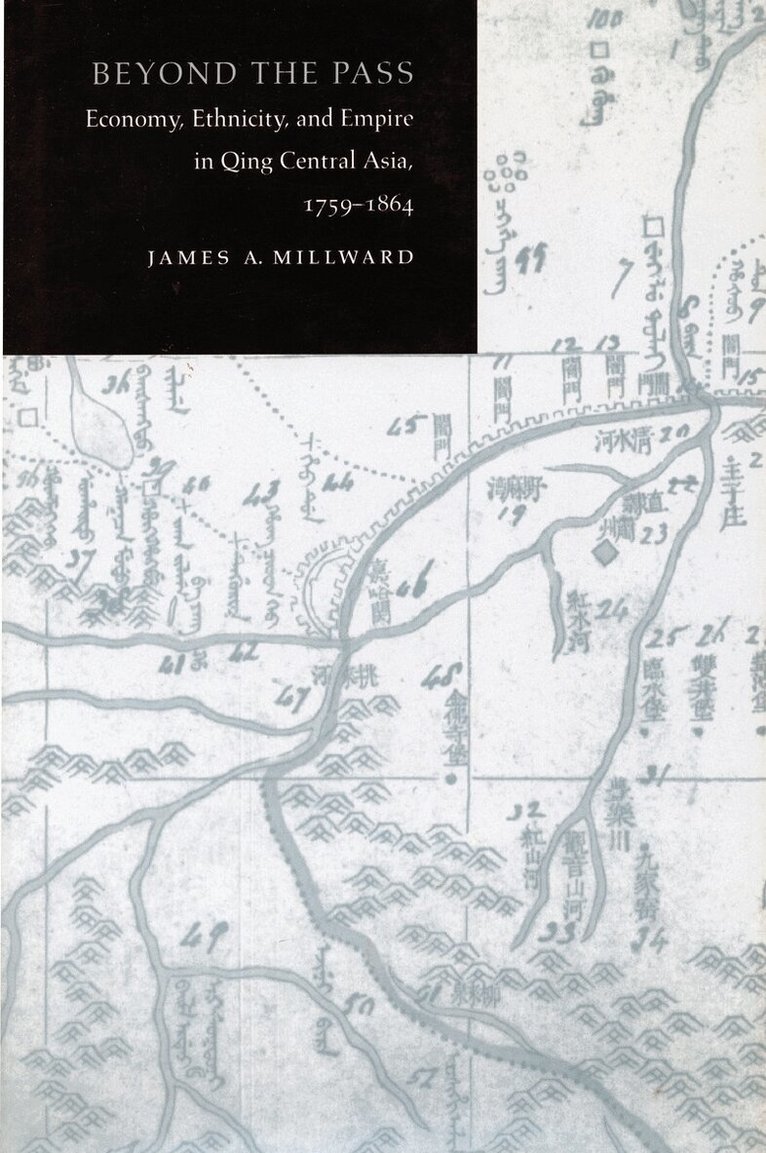
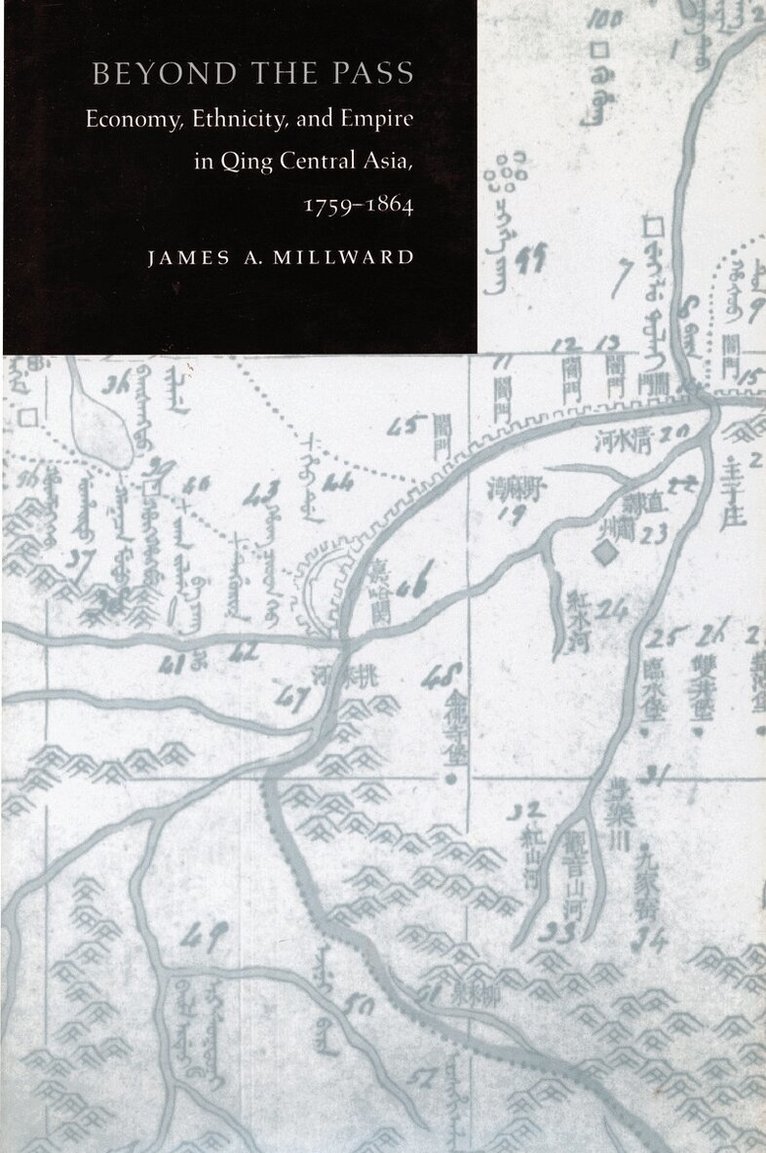
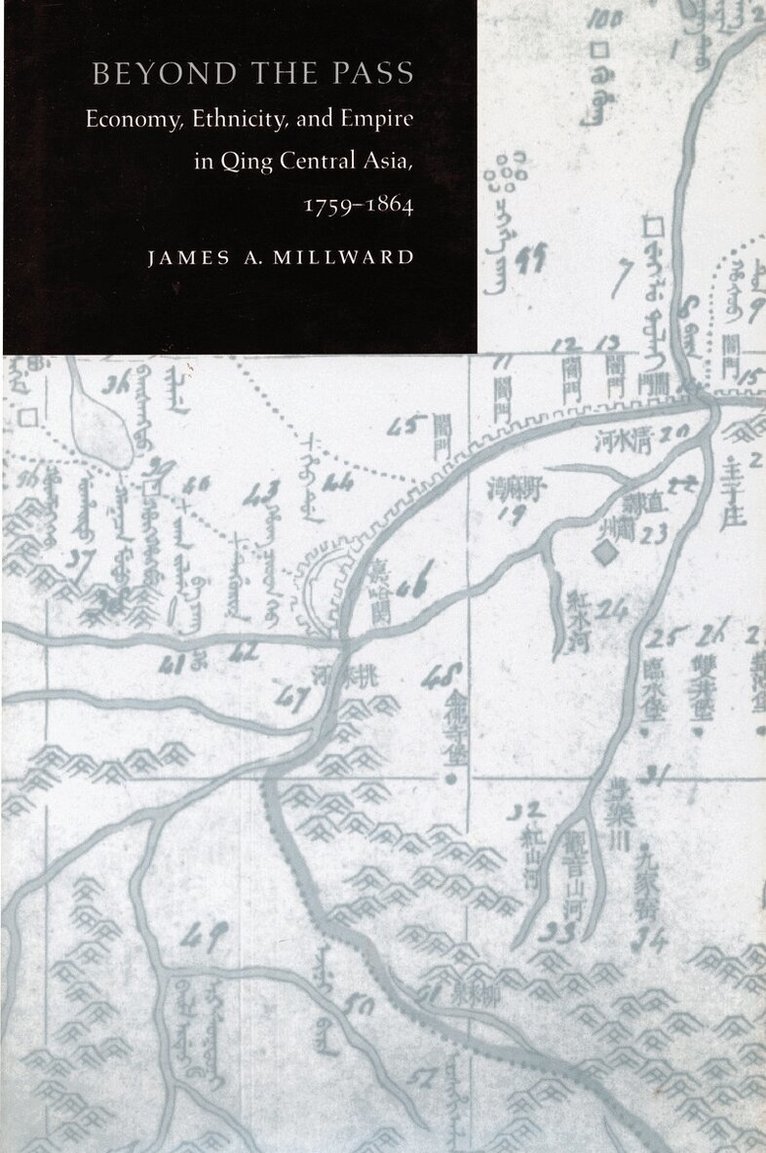
As analysis of the revenue available to Qing garrisons in Xinjiang reveals, imperial control over the region in the eighteenth and nineteenth centuries depended upon sizeable yearly subsidies from China. In an effort to satisfy criticism of their expansion into Xinjiang and make the territory pay for itself, the Qing court permitted local authorities great latitude in fiscal matters and encouraged the presence of Han and Chinese Muslim merchants. At the same time, the court recognized the potential for unrest posed by Chinese mercantile penetration of this Muslim, Turkic-speaking area. They consequently attempted, through administrative and legal means, to defend the native Uyghur population against economic depredation. This ethnic policy reflected a conception of the realm that was not Sinocentric, but rather placed the Uyghur on a par with Han Chinese.Both this ethnic policy and Xinjiang's place in the realm shifted following a series of invasions from western Turkestan starting in the 1820's. Because of the economic importance of Chinese merchants and the efficacy of merchant militia in Xinjiang, the Qing court revised its policies in their favor, for the first time allowing permanent Han settlement in the area. At the same time, the court began to advocate provincehood and the Sinicization of Xinjiang as a resolution to the perennial security problem. These shifts, the author argues, marked the beginning of a reconception of China to include Inner Asian lands and peoples—a notion that would, by the twentieth century, become a deeply held tenet of Chinese nationalism. - E-bokPDF, Engelska, 2015
449 kr
Läs direkt efter köp
As analysis of the revenue available to Qing garrisons in Xinjiang reveals, imperial control over the region in the eighteenth and nineteenth centuries depended upon sizeable yearly subsidies from China. In an effort to satisfy criticism of their expansion into Xinjiang and make the territory pay for itself, the Qing court permitted local authorities great latitude in fiscal matters and encouraged the presence of Han and Chinese Muslim merchants. At the same time, the court recognized the potential for unrest posed by Chinese mercantile penetration of this Muslim, Turkic-speaking area. They consequently attempted, through administrative and legal means, to defend the native Uyghur population against economic depredation. This ethnic policy reflected a conception of the realm that was not Sinocentric, but rather placed the Uyghur on a par with Han Chinese.Both this ethnic policy and Xinjiang's place in the realm shifted following a series of invasions from western Turkestan starting in the 1820's. Because of the economic importance of Chinese merchants and the efficacy of merchant militia in Xinjiang, the Qing court revised its policies in their favor, for the first time allowing permanent Han settlement in the area. At the same time, the court began to advocate provincehood and the Sinicization of Xinjiang as a resolution to the perennial security problem. These shifts, the author argues, marked the beginning of a reconception of China to include Inner Asian lands and peoples—a notion that would, by the twentieth century, become a deeply held tenet of Chinese nationalism. - E-bokEngelska, 2004
1 071 kr
Läs direkt efter köp
New Qing Imperial History uses the Manchu summer capital of Chengde and associated architecture, art and ritual activity as the focus for an exploration of the importance of Inner Asia and Tibet to the Qing Empire (1636-1911). Well-known contributors argue that the Qing was not simply another Chinese dynasty, but was deeply engaged in Inner Asia not only militarily, but culturally, politically and ideologically. Emphasizing the diverse range of peoples in the Qing empire, this book analyzes the importance to Chinese history of Manchu relations with Tibetan prelates, Mongolian chieftains, and the Turkic elites of Xinjiang. In offering a new appreciation of a culturally and politically complex period, the authors discuss the nature and representation of emperorship, especially under Qianlong (r. 1736-1795), and examine the role of ritual in relations with Inner Asia, including the vaunted (but overrated) tribute system. By using a specific artifact or text as a starting point for analysis in each chapter, the contributors not only include material previously unavailable in English but allow the reader an intimate knowledge of life at Chengde and its significance to the Qing period as a whole.
- E-bokPDF, Engelska, 2004
1 028 kr
Läs direkt efter köp
New Qing Imperial History uses the Manchu summer capital of Chengde and associated architecture, art and ritual activity as the focus for an exploration of the importance of Inner Asia and Tibet to the Qing Empire (1636-1911). Well-known contributors argue that the Qing was not simply another Chinese dynasty, but was deeply engaged in Inner Asia not only militarily, but culturally, politically and ideologically. Emphasizing the diverse range of peoples in the Qing empire, this book analyzes the importance to Chinese history of Manchu relations with Tibetan prelates, Mongolian chieftains, and the Turkic elites of Xinjiang. In offering a new appreciation of a culturally and politically complex period, the authors discuss the nature and representation of emperorship, especially under Qianlong (r. 1736-1795), and examine the role of ritual in relations with Inner Asia, including the vaunted (but overrated) tribute system. By using a specific artifact or text as a starting point for analysis in each chapter, the contributors not only include material previously unavailable in English but allow the reader an intimate knowledge of life at Chengde and its significance to the Qing period as a whole.
- Häftad, Engelska, 2016
388 kr
Skickas inom 5-8 vardagar
As analysis of the revenue available to Qing garrisons in Xinjiang reveals, imperial control over the region in the eighteenth and nineteenth centuries depended upon sizeable yearly subsidies from China. In an effort to satisfy criticism of their expansion into Xinjiang and make the territory pay for itself, the Qing court permitted local authorities great latitude in fiscal matters and encouraged the presence of Han and Chinese Muslim merchants. At the same time, the court recognized the potential for unrest posed by Chinese mercantile penetration of this Muslim, Turkic-speaking area. They consequently attempted, through administrative and legal means, to defend the native Uyghur population against economic depredation. This ethnic policy reflected a conception of the realm that was not Sinocentric, but rather placed the Uyghur on a par with Han Chinese.Both this ethnic policy and Xinjiang's place in the realm shifted following a series of invasions from western Turkestan starting in the 1820's. Because of the economic importance of Chinese merchants and the efficacy of merchant militia in Xinjiang, the Qing court revised its policies in their favor, for the first time allowing permanent Han settlement in the area. At the same time, the court began to advocate provincehood and the Sinicization of Xinjiang as a resolution to the perennial security problem. These shifts, the author argues, marked the beginning of a reconception of China to include Inner Asian lands and peoples—a notion that would, by the twentieth century, become a deeply held tenet of Chinese nationalism. - E-bokEngelska, 2021
173 kr
Läs direkt efter köp
Xinjiang, the vast northwestern region comprising one sixth of the PRC today, borders on India, Pakistan, Afghanistan, Tajikistan, Kyrgyzstan, Kazakstan, Russia and Mongolia. Since antiquity it has stood at the crossroads between China, India, the Mediterranean and Russia. In recent decades its historic silk road linkages have grown increasingly global, with issues of energy, development, separatism and terrorism bringing the region into the news. James Millward draws on primary sources and scholarly research in several European and Asian languages to provide the first general account in English of the history of Xinjiang and its peoples from earliest times to the present.
He discusses Xinjiang’s world historical role as a commercial entrepot and cultural conduit by which Buddhism, Christianity and Islam entered China and its interactions with Tibetan, Mongol and other Inner Asian empires as well as with Chinese dynasties. Eurasian Crossroads also examines the competing Chinese and Turkic nationalist visions of the region’s status in modern times and the recurring dissent and rapid development under the PRC. Within the broad perspective of this book it emerges that the factors underlying historical change in the region – its natural environment and geography, its physical location at the overlap of cultural realms and its legacy of ethno-linguistic diversity – remain as relevant to Xinjiang’s future as to its past.
- Inbunden, Engelska, 2014
1 086 kr
Skickas inom 10-15 vardagar
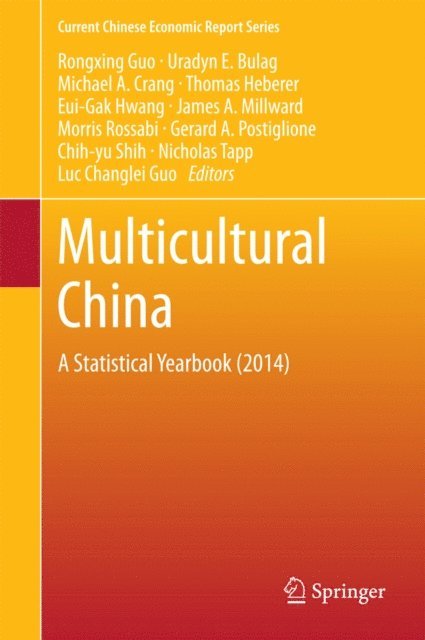
With its easy-to-use format, this book provides a collection of annual data on China’s 56 ethnic groups. It is a resource book that profiles the demography, employment and wages, livelihood, agriculture, industry, education, science and technology, culture, sports, and public health for each of these ethnic groups. This material, which is compiled from a variety of sources, will be of great value to researchers, businesses, government agencies, and news media. In this book, data are presented on an ethnic group-by-ethnic group basis, and the ethnic groups are ordered alphabetically, from the Achang to the Zhuang. Though most of the data are as of 2011 – the latest year when our research was conducted, we also provide some historical data for a few of indicators. This is intended to help readers to conduct time-series comparisons and analyses. - E-bokPDF, Engelska, 2014
1 413 kr
Läs direkt efter köp
With its easy-to-use format, this book provides a collection of annual data on China’s 56 ethnic groups. It is a resource book that profiles the demography, employment and wages, livelihood, agriculture, industry, education, science and technology, culture, sports, and public health for each of these ethnic groups. This material, which is compiled from a variety of sources, will be of great value to researchers, businesses, government agencies, and news media. In this book, data are presented on an ethnic group-by-ethnic group basis, and the ethnic groups are ordered alphabetically, from the Achang to the Zhuang. Though most of the data are as of 2011 – the latest year when our research was conducted, we also provide some historical data for a few of indicators. This is intended to help readers to conduct time-series comparisons and analyses. - Häftad, Engelska, 2016
1 086 kr
Skickas inom 10-15 vardagar
With its easy-to-use format, this book provides a collection of annual data on China’s 56 ethnic groups. It is a resource book that profiles the demography, employment and wages, livelihood, agriculture, industry, education, science and technology, culture, sports, and public health for each of these ethnic groups. This material, which is compiled from a variety of sources, will be of great value to researchers, businesses, government agencies, and news media. In this book, data are presented on an ethnic group-by-ethnic group basis, and the ethnic groups are ordered alphabetically, from the Achang to the Zhuang. Though most of the data are as of 2011 – the latest year when our research was conducted, we also provide some historical data for a few of indicators. This is intended to help readers to conduct time-series comparisons and analyses.