Del 14 - SAGE Series in Interpersonal Communication
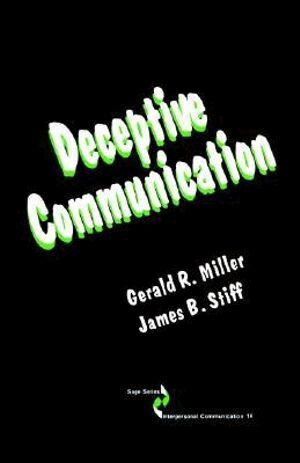
Deceptive Communication
Häftad, Engelska, 1993
2 286 kr
Skickas inom 3-6 vardagar
What types of communication are considered deceptive? What characteristics do researchers look for when investigating deceptive communication? The culmination of more than 15 years of collaborative research, Deceptive Communication explores the flip-side of "truth" in 20th century society. Synthesizing their own research and recent findings from other scholars, Miller and Stiff highlight nonverbal cues and other deception detection devices, situational factors affecting detection accuracy, and ethical considerations in the conduct of deception research. In addition, they clearly describe the methods employed in conducting research on deception and provide suggestions for future investigations. Deceptive Communication will serve as a useful resource for students and scholars interested in interpersonal communication and persuasion. "To say this book addresses one of the most significant and pervasive social phenomena of our age is not hyperbole. . . . The subject of this book is more than a treatise on an important social issue; it is a book that goes to the very heart of communication studies. . . . Miller and Stiff have done a superb job of critically reviewing the theoretical perspectives and research findings, but more important, this book makes the reader think hard about difficult issues. . . . A book which asks us to consider this perplexing co-existence of two seemingly contrary forces like truth and deception performs a valuable service. . . . It weighs the value of past theories and research methods and sets an agenda for future work." --from the Introduction by Mark L. Knapp