James D. Ramsay – författare
2 182 kr
Skickas inom 10-15 vardagar
568 kr
Skickas inom 10-15 vardagar
2 182 kr
Skickas inom 10-15 vardagar
649 kr
Läs direkt efter köp
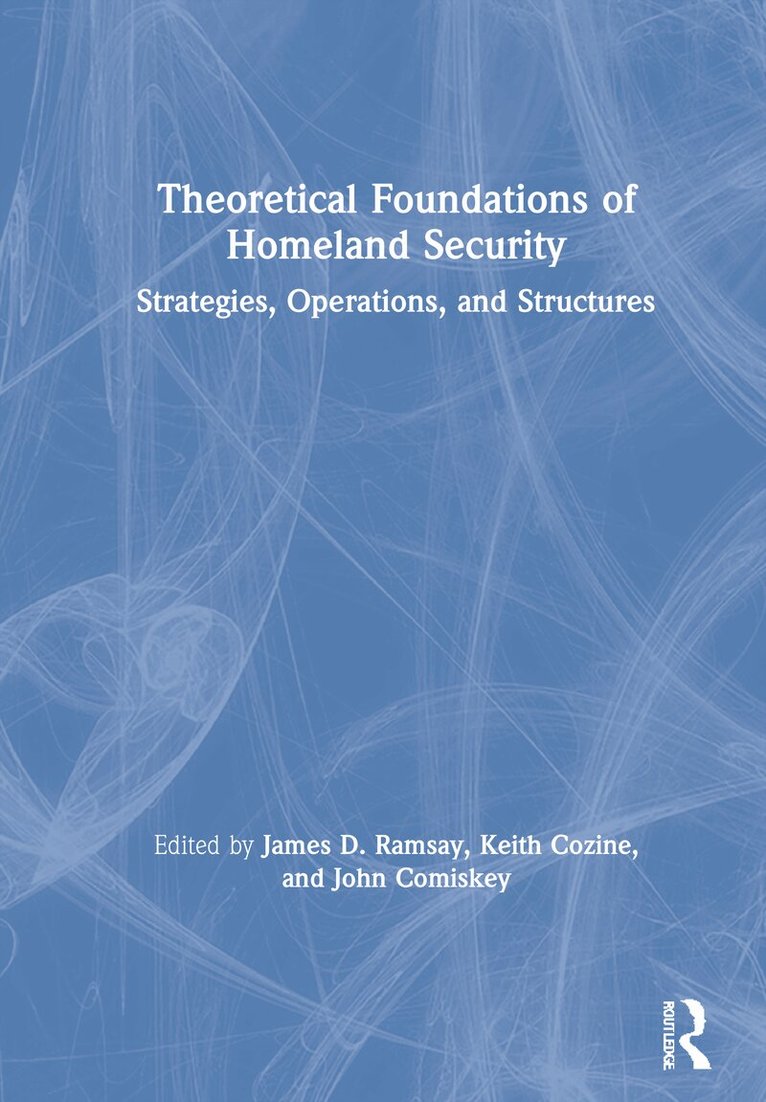
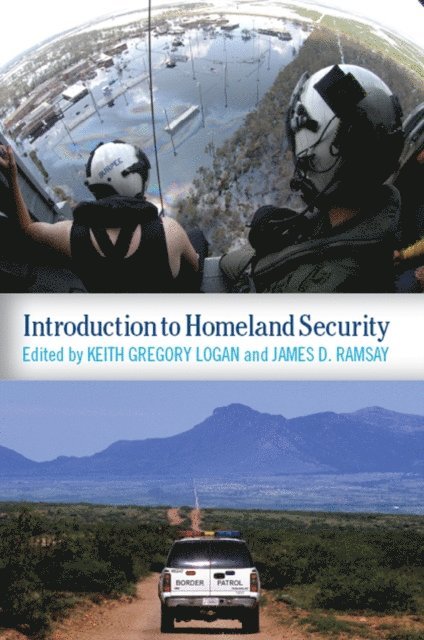
This new textbook outlines the main theories and concepts from a variety of disciplines that support homeland security operations, structures and strategies.
Following the terrorist attacks of September 11th, "homeland security" (HLS) grew in importance within the U.S. government (and around the world) and matured from a concept discussed among a relatively small cadre of policymakers and strategic thinkers to a broadly discussed issue in Congress and society with a growing academic presence. Yet the ability to discern a theory of homeland security that would support overall security strategy has been more elusive to both scholars and policymakers. This textbook aims to elucidate a grand theory of homeland security by leveraging the theoretical underpinnings of the disciplines that comprise the strategies, operations and structures of the HLS enterprise. In this way, each chapter contributes to a grand theory of homeland security as it explores a different discipline that influences or supports a domain of the homeland security enterprise. These chapters cover intelligence systems, terrorism origins and ideologies, emergency management, environmental and human security, cybersecurity policy, crime and security, global governance, risk management, public health, law and policy, technology, interagency collaboration and the sociology of security.
This book will be essential reading for students of Homeland Security and Emergency Response, and recommended reading for students of terrorism, intelligence, cybersecurity, risk management and national security.
649 kr
Läs direkt efter köp
This new textbook outlines the main theories and concepts from a variety of disciplines that support homeland security operations, structures and strategies.
Following the terrorist attacks of September 11th, "homeland security" (HLS) grew in importance within the U.S. government (and around the world) and matured from a concept discussed among a relatively small cadre of policymakers and strategic thinkers to a broadly discussed issue in Congress and society with a growing academic presence. Yet the ability to discern a theory of homeland security that would support overall security strategy has been more elusive to both scholars and policymakers. This textbook aims to elucidate a grand theory of homeland security by leveraging the theoretical underpinnings of the disciplines that comprise the strategies, operations and structures of the HLS enterprise. In this way, each chapter contributes to a grand theory of homeland security as it explores a different discipline that influences or supports a domain of the homeland security enterprise. These chapters cover intelligence systems, terrorism origins and ideologies, emergency management, environmental and human security, cybersecurity policy, crime and security, global governance, risk management, public health, law and policy, technology, interagency collaboration and the sociology of security.
This book will be essential reading for students of Homeland Security and Emergency Response, and recommended reading for students of terrorism, intelligence, cybersecurity, risk management and national security.
633 kr
Läs direkt efter köp
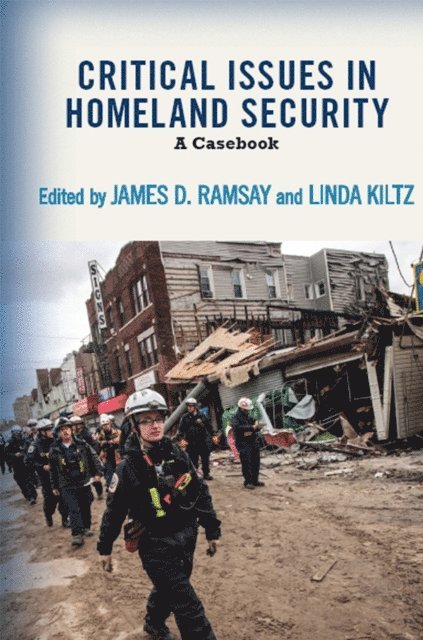
Critical Issues in Homeland Security: A Casebook encourages analytical and careful examination of practical homeland security problems through the presentation of contemporary cases involving major state or national events. Case studies demonstrate the complexity of challenges within the domain of homeland security policy and administration. Editors James D. Ramsay and Linda Kiltz carefully curated fourteen cases, all from top scholars and practitioners, to cover a broad range of legal, policy, and operational challenges within the field of homeland security. Timely and interesting cases on such issues as arctic security, the use of drones in targeted killings, cyber security, and the emergency management lessons of the 2010 Haiti earthquake give students a deeper understanding of the relationship between the theories and the practices of homeland security. Discussion questions at the end of each case and an online instructor''s manual make Critical Issues in Homeland Security an even more effective learning tool for any homeland security program.
892 kr
Läs direkt efter köp
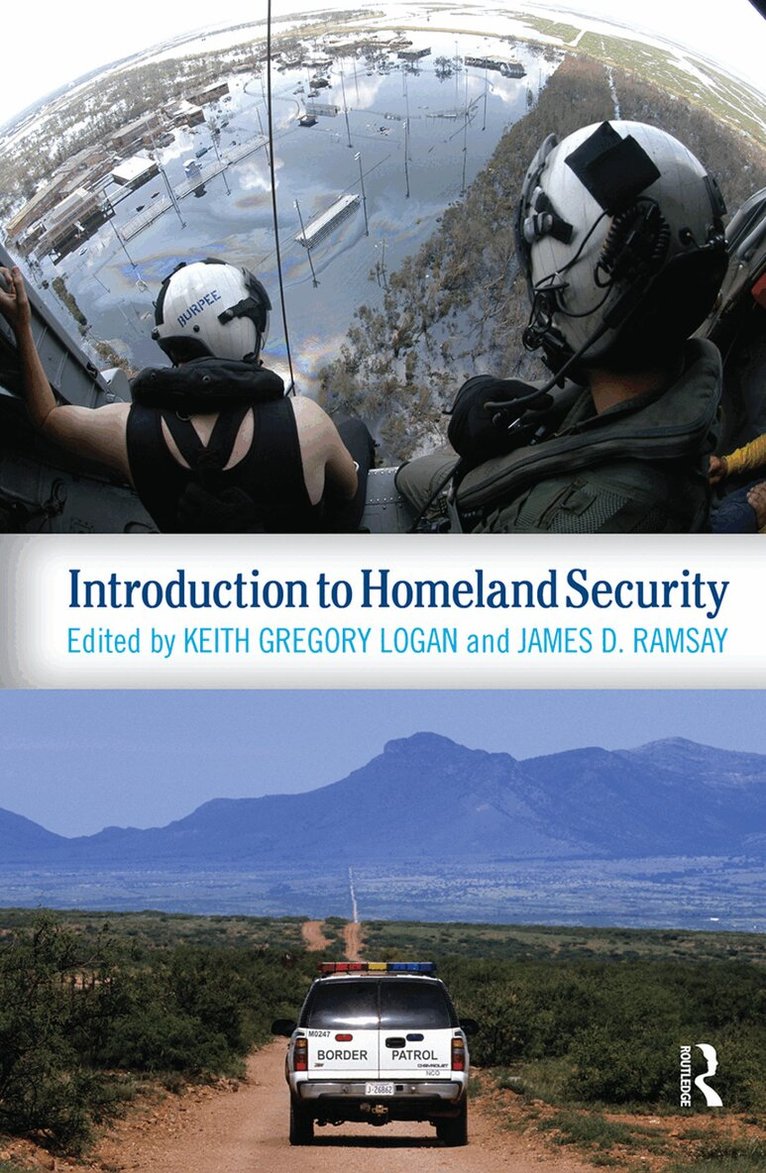
This book introduces students to the dynamic and complex enterprise that is homeland security. Using a broad lens, the authors explore key operational and content areas, as well as the practices and policies that are part of an effective homeland security program. With original essays from academics and practitioners, the book encapsulates the breadth of homeland security as it exists today. Topical coverage includes: administration, intelligence, critical infrastructure protection, emergency management, terrorism and counterterrorism, law and policy, technology and systems, strategic planning, strategic communication, civil-military affairs, private sector involvement, environmental security, and public health. Accessible, engaging, and comprehensive, this is an essential resource for courses on homeland security.
633 kr
Läs direkt efter köp
Critical Issues in Homeland Security: A Casebook encourages analytical and careful examination of practical homeland security problems through the presentation of contemporary cases involving major state or national events. Case studies demonstrate the complexity of challenges within the domain of homeland security policy and administration. Editors James D. Ramsay and Linda Kiltz carefully curated fourteen cases, all from top scholars and practitioners, to cover a broad range of legal, policy, and operational challenges within the field of homeland security. Timely and interesting cases on such issues as arctic security, the use of drones in targeted killings, cyber security, and the emergency management lessons of the 2010 Haiti earthquake give students a deeper understanding of the relationship between the theories and the practices of homeland security. Discussion questions at the end of each case and an online instructor''s manual make Critical Issues in Homeland Security an even more effective learning tool for any homeland security program.
892 kr
Läs direkt efter köp
This book introduces students to the dynamic and complex enterprise that is homeland security. Using a broad lens, the authors explore key operational and content areas, as well as the practices and policies that are part of an effective homeland security program. With original essays from academics and practitioners, the book encapsulates the breadth of homeland security as it exists today. Topical coverage includes: administration, intelligence, critical infrastructure protection, emergency management, terrorism and counterterrorism, law and policy, technology and systems, strategic planning, strategic communication, civil-military affairs, private sector involvement, environmental security, and public health. Accessible, engaging, and comprehensive, this is an essential resource for courses on homeland security.
802 kr
Skickas inom 10-15 vardagar
554 kr
Skickas inom 10-15 vardagar
2 042 kr
Skickas inom 10-15 vardagar
652 kr
Skickas inom 10-15 vardagar
891 kr
Läs direkt efter köp
This unique book captures state of the art thinking and methodologies designed to advance intelligence education to produce a capable and qualified intelligence workforce.
Intelligence is evolving because it must keep pace with the many wicked threats that face open democracies. Public health threats such as the COVID-19 pandemic, threats emanating from regional instabilities from climate change, cyber-based threats from artificial intelligence, and the spread of disinformation have all shown how traditional intelligence education must evolve. Tomorrow’s workforce simply needs better education and training – which arguably are better provided by institutions of higher education that have the capacity and time to do it appropriately. While some “on the job” training will always be required, and while the profession will always need specialists in linguistics, engineering, sociology, international relations, religious studies, and the like, it is increasingly obvious that the role of a degree in intelligence studies has never been more important to the intelligence community, and by extension, to the peace and civility of the world. Put simply, intelligence education is critical to preserving democracy.
This book will be of great interest to all students, scholars and practitioners of intelligence studies, data science literacy and machine learning, ethics, security studies, foreign policy and international relations. The chapters in this book were originally published as a special issue of Journal of Policing, Intelligence and Counter Terrorism.
883 kr
Läs direkt efter köp
This unique book captures state of the art thinking and methodologies designed to advance intelligence education to produce a capable and qualified intelligence workforce.
Intelligence is evolving because it must keep pace with the many wicked threats that face open democracies. Public health threats such as the COVID-19 pandemic, threats emanating from regional instabilities from climate change, cyber-based threats from artificial intelligence, and the spread of disinformation have all shown how traditional intelligence education must evolve. Tomorrow’s workforce simply needs better education and training – which arguably are better provided by institutions of higher education that have the capacity and time to do it appropriately. While some “on the job” training will always be required, and while the profession will always need specialists in linguistics, engineering, sociology, international relations, religious studies, and the like, it is increasingly obvious that the role of a degree in intelligence studies has never been more important to the intelligence community, and by extension, to the peace and civility of the world. Put simply, intelligence education is critical to preserving democracy.
This book will be of great interest to all students, scholars and practitioners of intelligence studies, data science literacy and machine learning, ethics, security studies, foreign policy and international relations. The chapters in this book were originally published as a special issue of Journal of Policing, Intelligence and Counter Terrorism.
2 182 kr
Skickas inom 10-15 vardagar
349 kr
Tillfälligt slut