James L McClelland - Böcker
Visar alla böcker från författaren James L McClelland. Handla med fri frakt och snabb leverans.
7 produkter
7 produkter
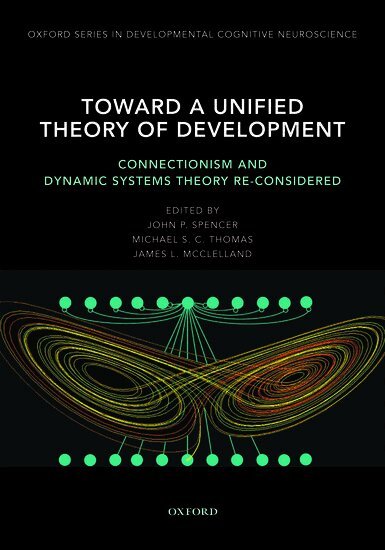
Toward a Unified Theory of Development
Connectionism and Dynamic System Theory Re-Considered
Inbunden, Engelska, 2009
1 287 kr
Skickas inom 5-8 vardagar
From William James to Sigmund Freud to Jean Piaget to B.F. Skinner, scholars (and parents!) have wondered how children move from the blooming, buzzing confusion of infancy, through the tumult of childhood and adolescence, into adulthood. Does development occur continuously over time or in a series of dramatic stages? Is development driven by learning or by biological maturational processes? What is the nature of experience, and how does it generate change? The study of development has always been organized around these big questions. And answers to these questions have a profound influence on daily life, forming a framework for how parents think about their own children, and influencing both national policy and educational curricula. This book defines and refines two major theoretical approaches within developmental science that address the central issues of development-connectionism and dynamical systems theory. Spencer, Thomas, and McClelland have brought together chapters that provide an introduction, overview, and critical evaluation of each approach, including three sets of case studies that illustrate how both approaches have been used to study topics ranging from early motor development to the acquisition of grammar. They also present a collection of commentaries by leading scholars, which offer a critical view from both an "outsiders" and an "insiders" perspective. The book is unique in the range of its treatment-it begins to delineate how developmental science can incorporate advances within neuroscience and computational modeling, and brings the new ideas of connectionism and dynamic systems theory into sharper focus, clarifying their usefulness and explanatory power.
Attention and Performance XVI
Information Integration in Perception and Communication
Inbunden, Engelska, 1996
895 kr
Tillfälligt slut
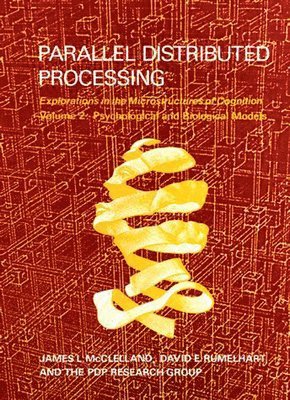
Parallel Distributed Processing, Volume 2: Explorations in the Microstructure of Cognition: Psychological and Biological Models
Häftad, Engelska, 1987
681 kr
Skickas inom 5-8 vardagar
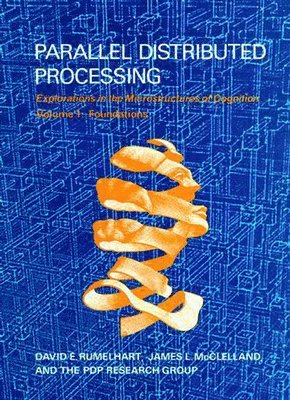
Parallel Distributed Processing, Volume 1: Explorations in the Microstructure of Cognition: Foundations
Häftad, Engelska, 1987
814 kr
Skickas inom 5-8 vardagar
718 kr
Skickas inom 3-6 vardagar
1 353 kr
Tillfälligt slut
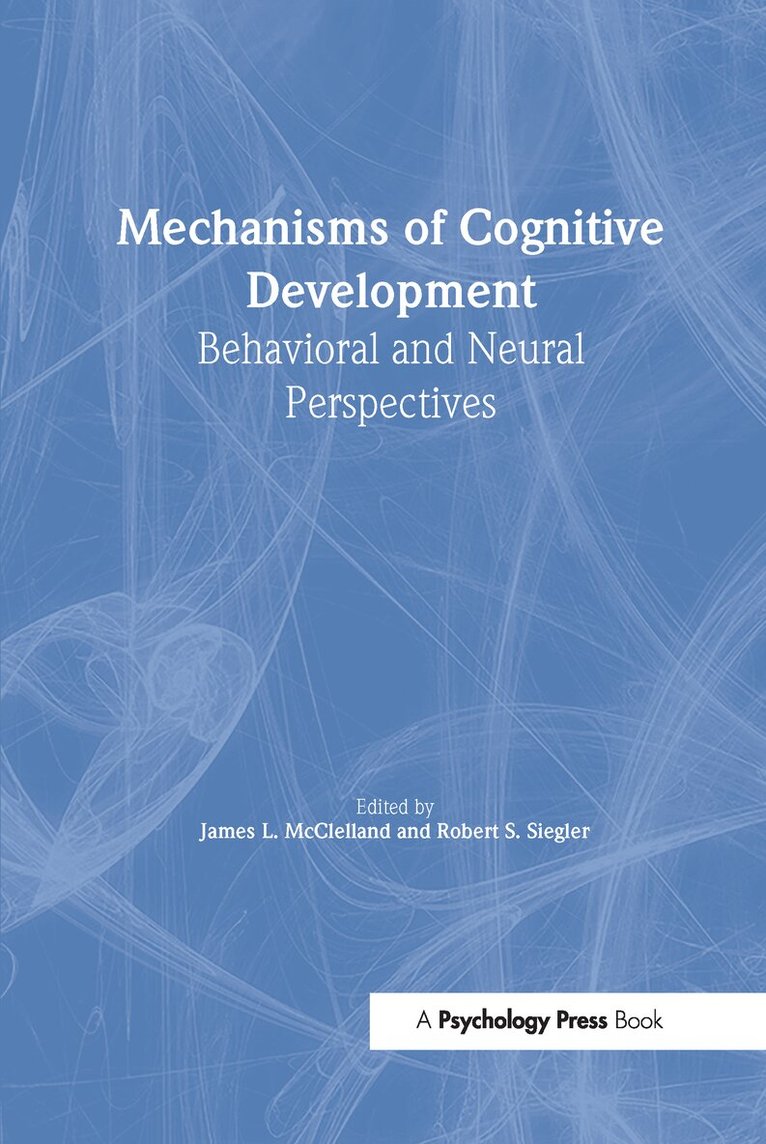
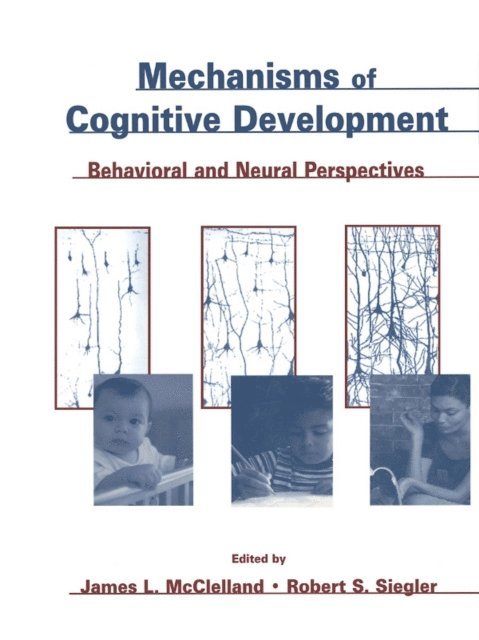
This volume considers how children's thinking evolves during development, with a focus on the role of experience in causing change. It brings together cutting-edge research by leaders in the psychology and neurobiology of child development to examine the processes by which children learn and those that make children ready and able to learn at particular points in development.Behavioral approaches include research on the "microgenesis" of cognitive change over short time periods (e.g., several hour-long sessions) in specific task situations. Research on cognitive change over longer time scales (months and years) is also presented, as well as research that uses computational modeling and dynamical systems approaches to understand learning and development.Neural approaches include the study of how neuronal activity and connectivity change during acquisition of cognitive skills in children and adults. Other investigations consider the possible emergence of cognitive abilities through the maturation of brain structures and the effects of experience on the organization of functions in the brain. Developmental anomalies, such as autism and attention deficit disorder are also examined as windows on normal development.Four questions drive the volume:*Why do cognitive abilities emerge when they do during development? *What are the sources of developmental and individual differences, and of developmental anomalies in learning? *What happens in the brain when people learn? *How can experiences be ordered and timed to optimize learning? The answers to these questions have strong implications for how we educate children and remediate deficits that have impeded the development of thinking abilities. These implications are explored in several chapters in the volume, as well as in the commentaries by leading discussants.
1 200 kr
Skickas inom 5-8 vardagar
This volume considers how children's thinking evolves during development, with a focus on the role of experience in causing change. It brings together cutting-edge research by leaders in the psychology and neurobiology of child development to examine the processes by which children learn and those that make children ready and able to learn at particular points in development.Behavioral approaches include research on the "microgenesis" of cognitive change over short time periods (e.g., several hour-long sessions) in specific task situations. Research on cognitive change over longer time scales (months and years) is also presented, as well as research that uses computational modeling and dynamical systems approaches to understand learning and development.Neural approaches include the study of how neuronal activity and connectivity change during acquisition of cognitive skills in children and adults. Other investigations consider the possible emergence of cognitive abilities through the maturation of brain structures and the effects of experience on the organization of functions in the brain. Developmental anomalies, such as autism and attention deficit disorder are also examined as windows on normal development.Four questions drive the volume:*Why do cognitive abilities emerge when they do during development? *What are the sources of developmental and individual differences, and of developmental anomalies in learning? *What happens in the brain when people learn? *How can experiences be ordered and timed to optimize learning? The answers to these questions have strong implications for how we educate children and remediate deficits that have impeded the development of thinking abilities. These implications are explored in several chapters in the volume, as well as in the commentaries by leading discussants.