James L. Watson - Böcker
Visar alla böcker från författaren James L. Watson. Handla med fri frakt och snabb leverans.
12 produkter
12 produkter
577 kr
Skickas inom 3-6 vardagar
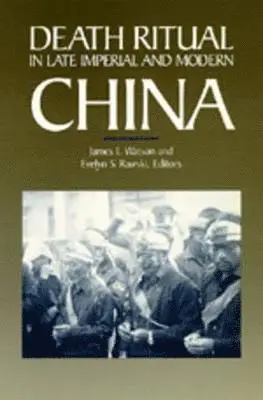
During the late imperial era (1500-1911), China, though divided by ethnic, linguistic, and regional differences at least as great as those prevailing in Europe, enjoyed a remarkable solidarity. What held Chinese society together for so many centuries? Some scholars have pointed to the institutional control over the written word as instrumental in promoting cultural homogenization; others, the manipulation of the performing arts. This volume, comprised of essays by both anthropologists and historians, furthers this important discussion by examining the role of death rituals in the unification of Chinese culture.
Del 5 - Studies on China
Kinship Organization in Late Imperial China, 1000-1940
Häftad, Engelska, 2018
684 kr
Skickas inom 3-6 vardagar
One of the most important questions facing scholars of China is how Chinese society is held together. It is now well known that China has been marked by great diversity. In the realm of social customs, not only were there broad regional or class differences, but also, at a local level, the people in one village might adopt a different set of practices from those of neighboring communities. Yet the majority of these varied practices seems to have fit within a frame that was distinctly Chinese. Thus scholars must also ask how people of dissimilar occupations and economic interests, living in widely separated parts of the country, came to recognize and act on a common set of cultural beliefs. Explaining the variations in Chinese society requires minute knowledge of local conditions. Explaining the uniformities requires historical understanding of the processes involved in the spread of ideas and practices and the ways by which some came to be considered standard. Given the available sources on Chinese society, neither of these tasks is simple. The study of kinship and kinship organizations provides one of the best ways to approach the coexisting uniformities and variations of Chinese society. This edited volume is the collaboration of historians and social scientists, and this collaboration is required if we are to learn enough about kinship in Chinese society to explain both the uniformities and the variations. The substantive papers are all written by historians, but these historians have raided the stock of anthropological terms, models, and theories, tried to use technical terms in a consistent and well-defined way, implicitly addressed anthropologists on the issues that seem to fascinate them, and responded to the suggestions and criticisms of the anthropologists who have read their papers. At the same time, however, they remain historians and do not ignore the types of issues (such as historical context and change over time) with which historians have always dealt. The editors believe that this type of collaboration has distinct advantages over the more usual approach to transcending disciplinary boundaries by placing articles by historians and social scientists side by side in the same volume. If we have been successful, social scientists should find issues of interest in the chapters, and historians should find them full of the substance of history and not too long-winded in the belaboring the obvious. This title is part of UC Press's Voices Revived program, which commemorates University of California Press’s mission to seek out and cultivate the brightest minds and give them voice, reach, and impact. Drawing on a backlist dating to 1893, Voices Revived makes high-quality, peer-reviewed scholarship accessible once again using print-on-demand technology. This title was originally published in 1986.
Del 5 - Studies on China
Kinship Organization in Late Imperial China, 1000-1940
Inbunden, Engelska, 2024
1 513 kr
Skickas inom 3-6 vardagar
One of the most important questions facing scholars of China is how Chinese society is held together. It is now well known that China has been marked by great diversity. In the realm of social customs, not only were there broad regional or class differences, but also, at a local level, the people in one village might adopt a different set of practices from those of neighboring communities. Yet the majority of these varied practices seems to have fit within a frame that was distinctly Chinese. Thus scholars must also ask how people of dissimilar occupations and economic interests, living in widely separated parts of the country, came to recognize and act on a common set of cultural beliefs. Explaining the variations in Chinese society requires minute knowledge of local conditions. Explaining the uniformities requires historical understanding of the processes involved in the spread of ideas and practices and the ways by which some came to be considered standard. Given the available sources on Chinese society, neither of these tasks is simple. The study of kinship and kinship organizations provides one of the best ways to approach the coexisting uniformities and variations of Chinese society. This edited volume is the collaboration of historians and social scientists, and this collaboration is required if we are to learn enough about kinship in Chinese society to explain both the uniformities and the variations. The substantive papers are all written by historians, but these historians have raided the stock of anthropological terms, models, and theories, tried to use technical terms in a consistent and well-defined way, implicitly addressed anthropologists on the issues that seem to fascinate them, and responded to the suggestions and criticisms of the anthropologists who have read their papers. At the same time, however, they remain historians and do not ignore the types of issues (such as historical context and change over time) with which historians have always dealt. The editors believe that this type of collaboration has distinct advantages over the more usual approach to transcending disciplinary boundaries by placing articles by historians and social scientists side by side in the same volume. If we have been successful, social scientists should find issues of interest in the chapters, and historians should find them full of the substance of history and not too long-winded in the belaboring the obvious. This title is part of UC Press's Voices Revived program, which commemorates University of California Press’s mission to seek out and cultivate the brightest minds and give them voice, reach, and impact. Drawing on a backlist dating to 1893, Voices Revived makes high-quality, peer-reviewed scholarship accessible once again using print-on-demand technology. This title was originally published in 1986.
428 kr
Skickas inom 7-10 vardagar
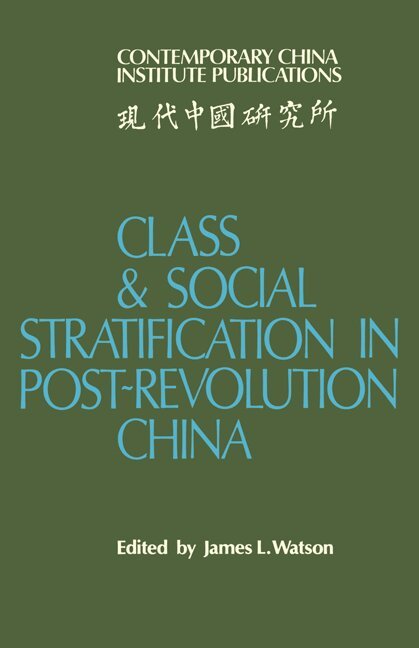
This 1984 book deals with those social transformations which occurred in Chinese society since the revolution in 1949. During the 1950s the Chinese Communist Party introduced a rigid system of class labels (e.g. landlord, rich peasant, middle peasant, landless labourer) based on pre-revolutionary notions of exploitation and property ownership. The class label system was a source of much social discontent during the 1960s and mid-1970s; the official use of labels ceased by the time of this book's publication, but the effects of the system are still felt by millions of Chinese. The book will be of interest to a wide range of readers, not just those who specialise in Chinese social history. Contributors include two anthropologists, one historian, three political scientists, and three sociologists.
1 517 kr
Skickas inom 7-10 vardagar
The Cultural Politics of Food and Eating offers an ethnographically informed perspective on the ways in which people use food to make sense of life in an increasingly interconnected world. Uses food as a central idiom for teaching about culture and addresses broad themes such as globalization, capitalism, market economies, and consumption practices Spanning 5 continents, features studies from 11 countries—Japan, China, Russia, Ukraine, Germany, France, Burkina Faso, Chile, Trinidad, Mexico, and the United States Offers discussion of such hot topics as sushi, fast food, gourmet foods, and food scares and contamination
474 kr
Skickas inom 7-10 vardagar
The Cultural Politics of Food and Eating offers an ethnographically informed perspective on the ways in which people use food to make sense of life in an increasingly interconnected world. Uses food as a central idiom for teaching about culture and addresses broad themes such as globalization, capitalism, market economies, and consumption practices Spanning 5 continents, features studies from 11 countries—Japan, China, Russia, Ukraine, Germany, France, Burkina Faso, Chile, Trinidad, Mexico, and the United States Offers discussion of such hot topics as sushi, fast food, gourmet foods, and food scares and contamination
1 127 kr
Skickas inom 10-15 vardagar
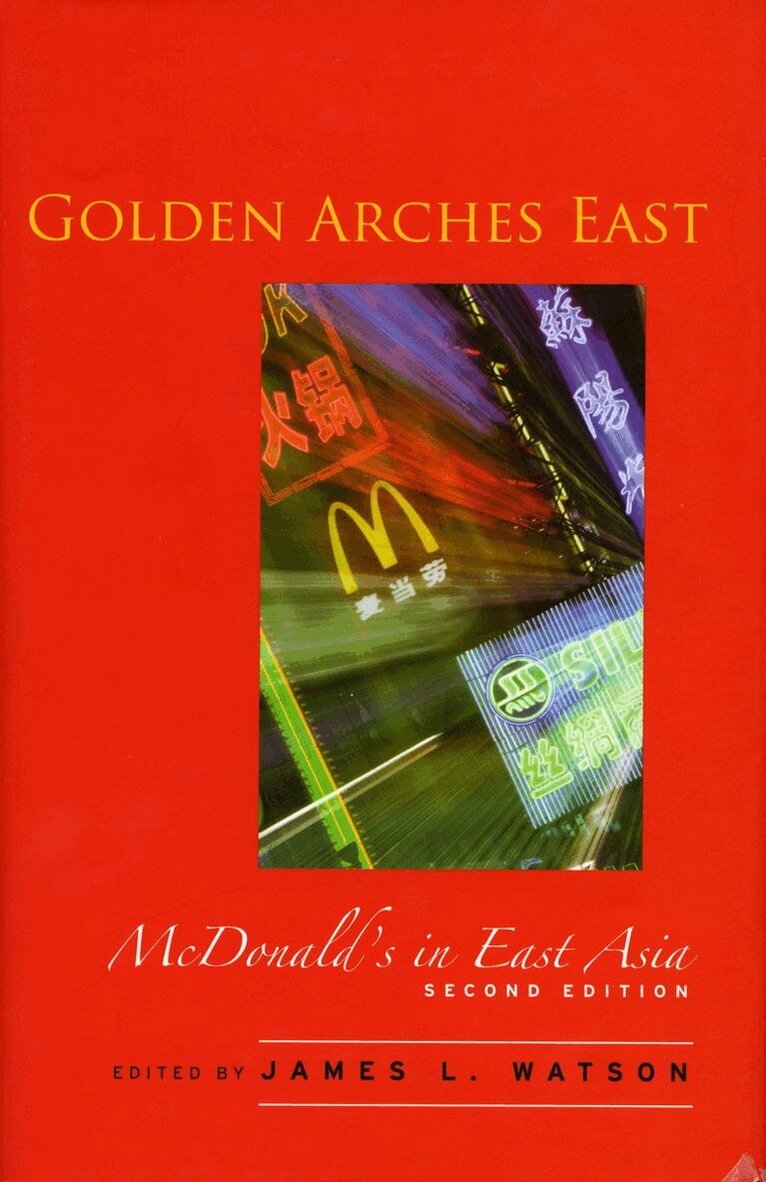
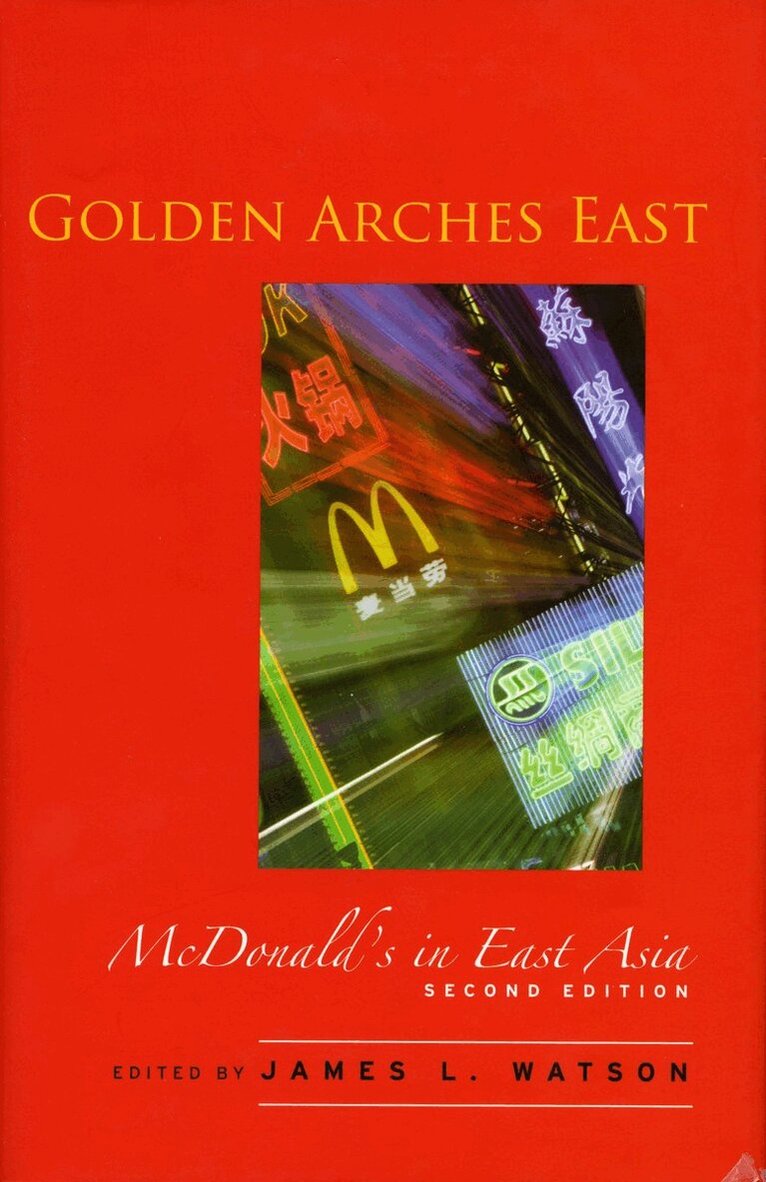
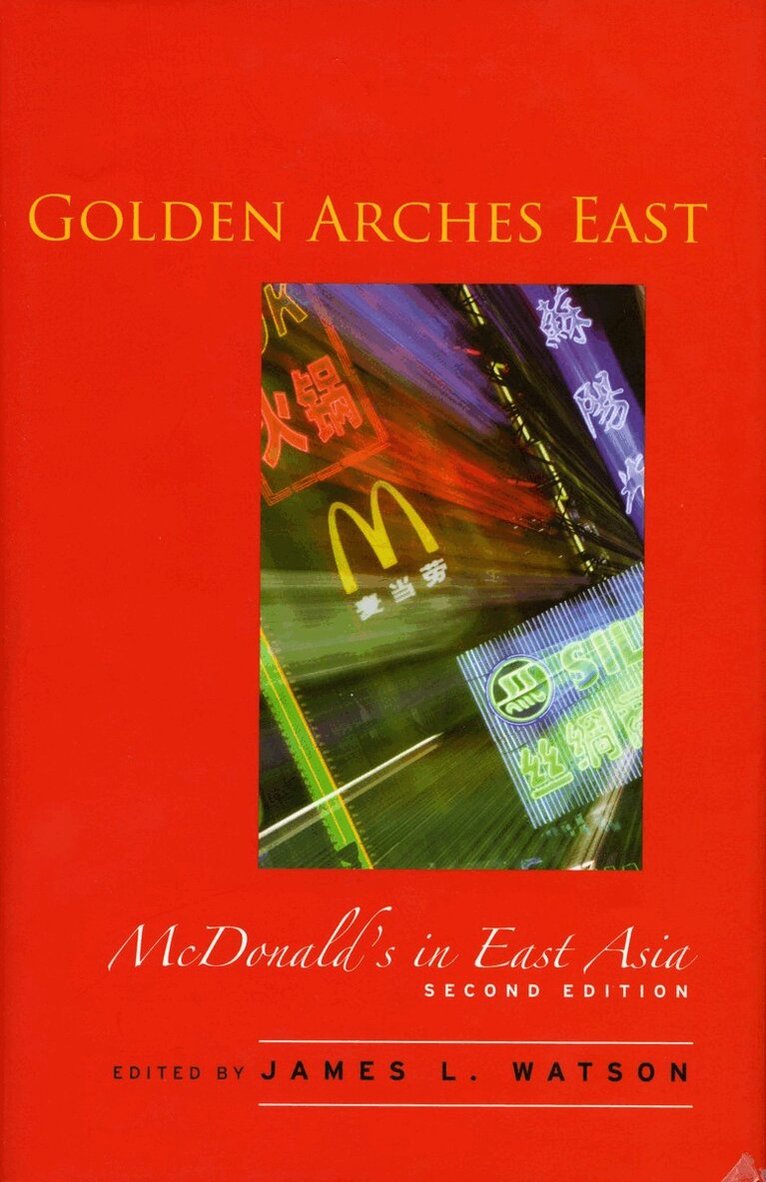
McDonald's restaurants are found in over 100 countries, serving tens of millions of people each day. What are the cultural implications of this phenomenal success? The widely read—and widely acclaimed—Golden Arches East argues that McDonald's has largely become divorced from its American roots and become a "local" institution for an entire generation of affluent consumers in Hong Kong, Beijing, Taipei, Seoul, and Tokyo. In the second edition, James L. Watson also covers recent attacks on the fast-food chain as a symbol of American imperialism, and the company's role in the obesity controversy currently raging in the U.S. food industry, bringing the story of East Asian franchises into the twenty-first century.Praise for the First Edition:"Golden Arches East is a fascinating study that explores issues of globalization by focusing on the role of McDonald's in five Asian economies and [concludes] that in many countries McDonald's has been absorbed by local communities and become assimilated, so that it is no longer thought of as a foreign restaurant and in some ways no longer functions as one." —Nicholas Kristof, New York Times Book Review"This is an important book because it shows accurately and with subtlety how transnational culture emerges. It must be read by anyone interested in globalization. It is concise enough to be used for courses in anthropology and Asian studies." —Joseph Bosco, China Journal"The strength of this book is that the contributors contextualize not just the food side of McDonald's, but the social and cultural activity on which this culture is embedded. These are culturally rich stories from the anthropology of everyday life." —Paul Noguchi, Journal of Asian Studies"Here is the rare academic study that belongs in every library."—Library Journal
274 kr
Skickas inom 10-15 vardagar
McDonald's restaurants are found in over 100 countries, serving tens of millions of people each day. What are the cultural implications of this phenomenal success? The widely read—and widely acclaimed—Golden Arches East argues that McDonald's has largely become divorced from its American roots and become a "local" institution for an entire generation of affluent consumers in Hong Kong, Beijing, Taipei, Seoul, and Tokyo. In the second edition, James L. Watson also covers recent attacks on the fast-food chain as a symbol of American imperialism, and the company's role in the obesity controversy currently raging in the U.S. food industry, bringing the story of East Asian franchises into the twenty-first century.Praise for the First Edition:"Golden Arches East is a fascinating study that explores issues of globalization by focusing on the role of McDonald's in five Asian economies and [concludes] that in many countries McDonald's has been absorbed by local communities and become assimilated, so that it is no longer thought of as a foreign restaurant and in some ways no longer functions as one." —Nicholas Kristof, New York Times Book Review"This is an important book because it shows accurately and with subtlety how transnational culture emerges. It must be read by anyone interested in globalization. It is concise enough to be used for courses in anthropology and Asian studies." —Joseph Bosco, China Journal"The strength of this book is that the contributors contextualize not just the food side of McDonald's, but the social and cultural activity on which this culture is embedded. These are culturally rich stories from the anthropology of everyday life." —Paul Noguchi, Journal of Asian Studies"Here is the rare academic study that belongs in every library."—Library Journal
1 106 kr
Skickas inom 10-15 vardagar
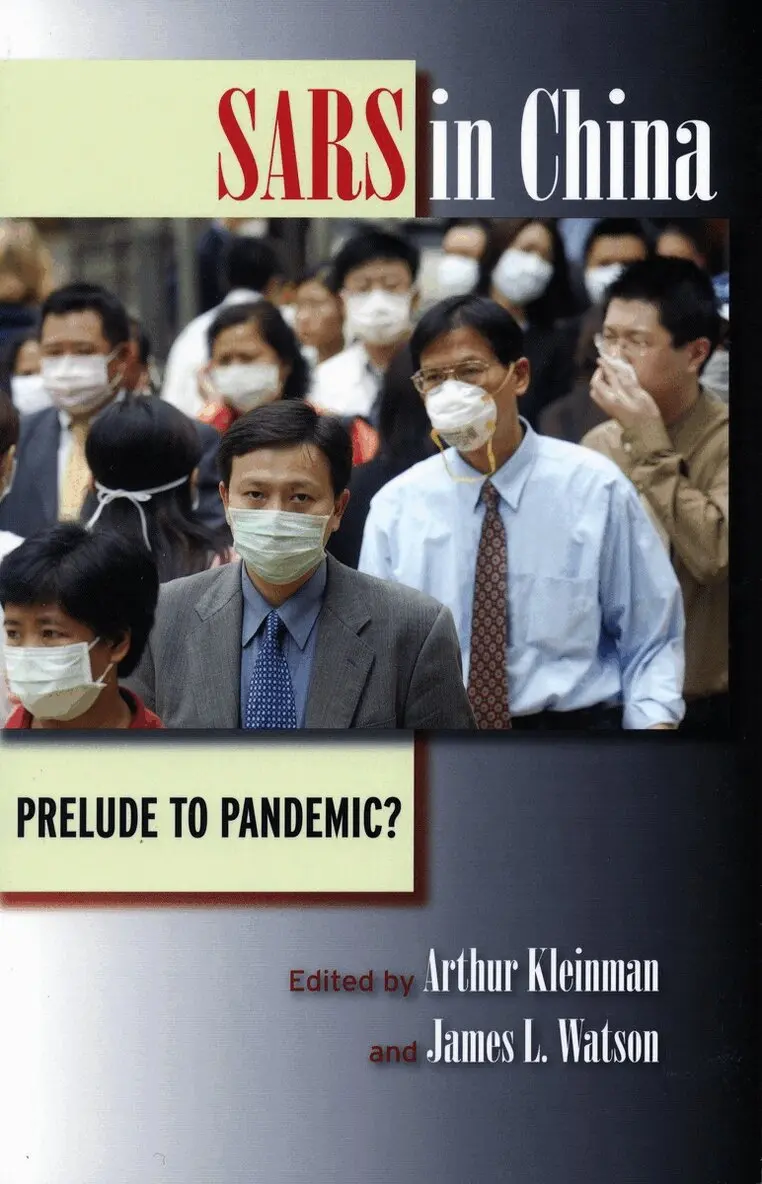
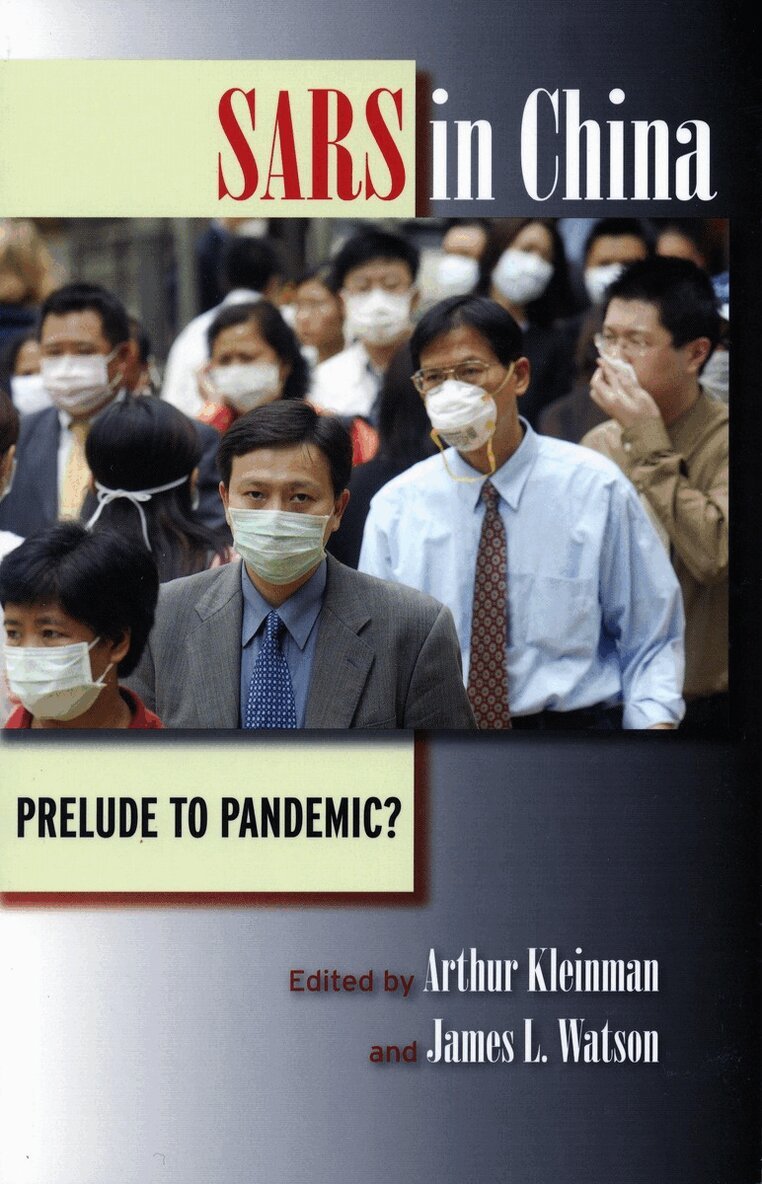
The SARS epidemic of 2003 was one of the most serious public health crises of our times. The event, which lasted only a few months, is best seen as a warning shot, a wake-up call for public health professionals, security officials, economic planners, and policy makers everywhere.SARS in China addresses the structure and impact of the epidemic and its short and medium range implications for an interconnected, globalized world. Warnings from the World Health Organization (WHO) and the Centers for Disease Control and Prevention (CDC) made it clear that SARS may have been a prelude to bigger things. The authors of this volume focus on specific aspects of the SARS outbreak—epidemiological, political, economic, social, cultural, and moral. They analyze SARS as a form of social suffering and raise questions about the relevance of national sovereignty in the face of such global threats. Taken together, these essays demonstrate that SARS had the potential of becoming a major turning point in human history. This book forces us to ask what we have learned from SARS as we go on to face newer, and farther-reaching pandemics. The current case of the COVID-19 outbreak amplifies the urgency of this question, and illuminates the strengths and shortcomings of different national responses to such pandemics.Contributors:Erik EckholmJoan KaufmanArthur Kleinman Dominic Lee Sing LeeMegan Murray Thomas G. RawskiTony Saich Alan Schnur James L. Watson Hong ZhangYun Kwok Wing
264 kr
Skickas inom 7-10 vardagar
The SARS epidemic of 2003 was one of the most serious public health crises of our times. The event, which lasted only a few months, is best seen as a warning shot, a wake-up call for public health professionals, security officials, economic planners, and policy makers everywhere.SARS in China addresses the structure and impact of the epidemic and its short and medium range implications for an interconnected, globalized world. Warnings from the World Health Organization (WHO) and the Centers for Disease Control and Prevention (CDC) made it clear that SARS may have been a prelude to bigger things. The authors of this volume focus on specific aspects of the SARS outbreak—epidemiological, political, economic, social, cultural, and moral. They analyze SARS as a form of social suffering and raise questions about the relevance of national sovereignty in the face of such global threats. Taken together, these essays demonstrate that SARS had the potential of becoming a major turning point in human history. This book forces us to ask what we have learned from SARS as we go on to face newer, and farther-reaching pandemics. The current case of the COVID-19 outbreak amplifies the urgency of this question, and illuminates the strengths and shortcomings of different national responses to such pandemics.Contributors:Erik EckholmJoan KaufmanArthur Kleinman Dominic Lee Sing LeeMegan Murray Thomas G. RawskiTony Saich Alan Schnur James L. Watson Hong ZhangYun Kwok Wing
How to Represent yourself in Court Against 3 Bad Bears And win A Settlement: Win A Settlement Against Trans Union, Experian, Equifax
Häftad, Engelska, 2016
376 kr
Skickas inom 3-6 vardagar
448 kr
Skickas
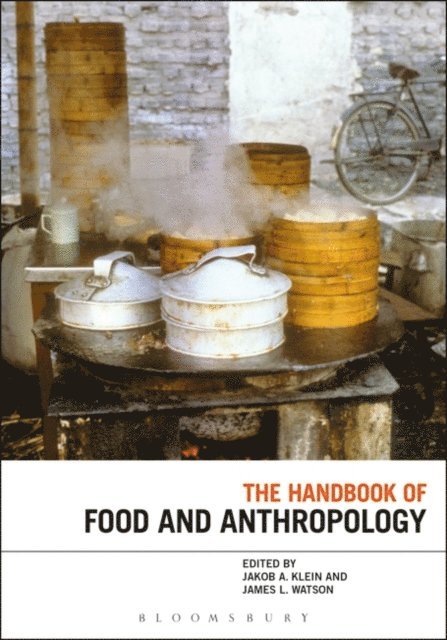
Named a Choice Outstanding Academic Title of the Year 2017This Handbook features 20 original essays by leading figures in the discipline, which examine traditional areas of research as well as cutting-edge areas of inquiry. Divided into three parts – Food, Self and Other; Food Security, Nutrition and Food Safety; Food as Craft, Industry and Ethics – the book covers topics such as identity, commensality, locality, migration, ethical consumption, artisanal foods and children’s food. Each chapter features rich ethnography alongside wider analysis of the subject. Internationally renowned scholars offer insights into their core areas of specialty including Michael Herzfeld on culinary stereotypes, David Sutton on how to conductan anthropology of cooking, Johan Pottier on food insecurity and Melissa L. Caldwell on practising food anthropology.Now available in paperback, this is a field-defining survey of the area and its key themes. A new afterword by Cristina Grasseni adds a reflection on the original essays and how the field has continued to develop.