Jan Baedke - Böcker
Visar alla böcker från författaren Jan Baedke. Handla med fri frakt och snabb leverans.
6 produkter
6 produkter
753 kr
Skickas inom 7-10 vardagar
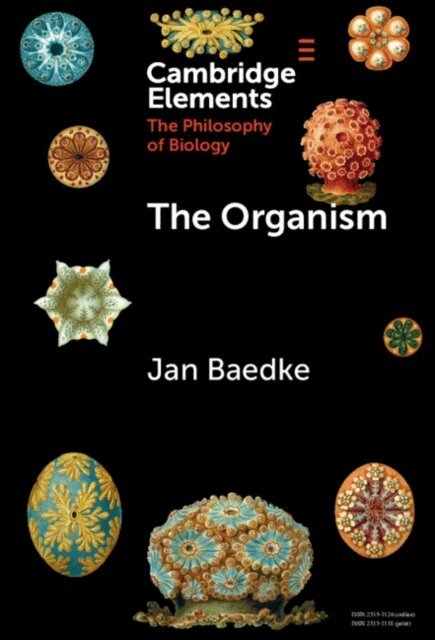
Organisms are central for biology. However, conceptualizing the unit of the organism is not easy. This Element discusses challenges to base biological reasoning and practice on the concept of organism. After many decades dominated by the paradigm of the gene, the organism is making a comeback in the bio- and biomedical sciences. It is again recognized as a causally efficacious, autonomous, and active unit that transcends the properties of genes and affects its own development and evolution - especially in fields like epigenetics, niche construction theory, and evolutionary developmental biology. This Element investigates these developments from a perspective of integrated history and philosophy of science. It focuses on conceptual, biotheoretical, and historical dimensions, as well as sociopolitical and anthropological aspects of today's 'return of the organism.' In particular, it discusses solutions for challenges of organism-centered biosciences in the 21st century. This title is also available as Open Access on Cambridge Core.
234 kr
Skickas inom 7-10 vardagar
Organisms are central for biology. However, conceptualizing the unit of the organism is not easy. This Element discusses challenges to base biological reasoning and practice on the concept of organism. After many decades dominated by the paradigm of the gene, the organism is making a comeback in the bio- and biomedical sciences. It is again recognized as a causally efficacious, autonomous, and active unit that transcends the properties of genes and affects its own development and evolution - especially in fields like epigenetics, niche construction theory, and evolutionary developmental biology. This Element investigates these developments from a perspective of integrated history and philosophy of science. It focuses on conceptual, biotheoretical, and historical dimensions, as well as sociopolitical and anthropological aspects of today's 'return of the organism.' In particular, it discusses solutions for challenges of organism-centered biosciences in the 21st century. This title is also available as Open Access on Cambridge Core.
2 088 kr
Skickas inom 10-15 vardagar
This volume considers the exchange between the Neo-Kantian tradition in German philosophy and the sciences from the last third of the nineteenth century to the Great war and partly beyond. During this period, various scientific disciplines underwent modernisation processes characterised by an increasing empirical inclination and a decline in the influence of metaphysics, the pluralisation of theories, and the historical and pragmatic revitalisation of scientific claims against philosophy. The various contributions look at the ways in which a certain ‘Kantian orthodoxy’ was influenced by these new developments and whether (and how) itself had some impact on the development of the sciences. The volume is not limited to the 'exact sciences' of mathematics and physics, which are particularly important for the Kantian tradition, but also takes into account less recognised disciplines such as biology, chemistry, technology and psychology. It is complemented by contributions that contrast Neo-Kantianism with other 'scientific philosophies' of the period in question.
631 kr
Skickas inom 10-15 vardagar
This volume considers the exchange between the Neo-Kantian tradition in German philosophy and the sciences from the last third of the nineteenth century to the Great war and partly beyond. During this period, various scientific disciplines underwent modernisation processes characterised by an increasing empirical inclination and a decline in the influence of metaphysics, the pluralisation of theories, and the historical and pragmatic revitalisation of scientific claims against philosophy. The various contributions look at the ways in which a certain ‘Kantian orthodoxy’ was influenced by these new developments and whether (and how) itself had some impact on the development of the sciences. The volume is not limited to the 'exact sciences' of mathematics and physics, which are particularly important for the Kantian tradition, but also takes into account less recognised disciplines such as biology, chemistry, technology and psychology. It is complemented by contributions that contrast Neo-Kantianism with other 'scientific philosophies' of the period in question.
2 088 kr
Skickas inom 10-15 vardagar
The Riddle of Organismal Agency brings together historians, philosophers, and scientists for an interdisciplinary re-assessment of one of the long-standing problems in the scientific understanding of life.Marshalling insights from diverse sciences including physiology, comparative psychology, developmental biology, and evolutionary biology, the book provides an up-to-date survey of approaches to non-human organisms as agents, capable of performing activities serving their own goals such as surviving or reproducing, and whose doings in the world are thus to be explained teleologically. From an Integrated History and Philosophy of Science perspective, the book contributes to a better conceptual and theoretical understanding of organismal agency, advancing some suggestions on how to study it empirically and how to frame it in relation to wider scientific and philosophical traditions. It also provides new historical entry points for examining the deployment, trajectories, and challenges of agential views of organisms in the history of biology and philosophy.This book will be of interest to philosophers of biology; historians of science; biologists interested in analysing the active roles of organisms in development, ecological interactions, and evolution; philosophers and practitioners of the cognitive sciences; and philosophers and historians of philosophy working on purposiveness and teleology.
631 kr
Skickas inom 10-15 vardagar
The Riddle of Organismal Agency brings together historians, philosophers, and scientists for an interdisciplinary re-assessment of one of the long-standing problems in the scientific understanding of life.Marshalling insights from diverse sciences including physiology, comparative psychology, developmental biology, and evolutionary biology, the book provides an up-to-date survey of approaches to non-human organisms as agents, capable of performing activities serving their own goals such as surviving or reproducing, and whose doings in the world are thus to be explained teleologically. From an Integrated History and Philosophy of Science perspective, the book contributes to a better conceptual and theoretical understanding of organismal agency, advancing some suggestions on how to study it empirically and how to frame it in relation to wider scientific and philosophical traditions. It also provides new historical entry points for examining the deployment, trajectories, and challenges of agential views of organisms in the history of biology and philosophy.This book will be of interest to philosophers of biology; historians of science; biologists interested in analysing the active roles of organisms in development, ecological interactions, and evolution; philosophers and practitioners of the cognitive sciences; and philosophers and historians of philosophy working on purposiveness and teleology.