Jan Chomicki – författare
Visar alla böcker från författaren Jan Chomicki. Handla med fri frakt och snabb leverans.
6 produkter
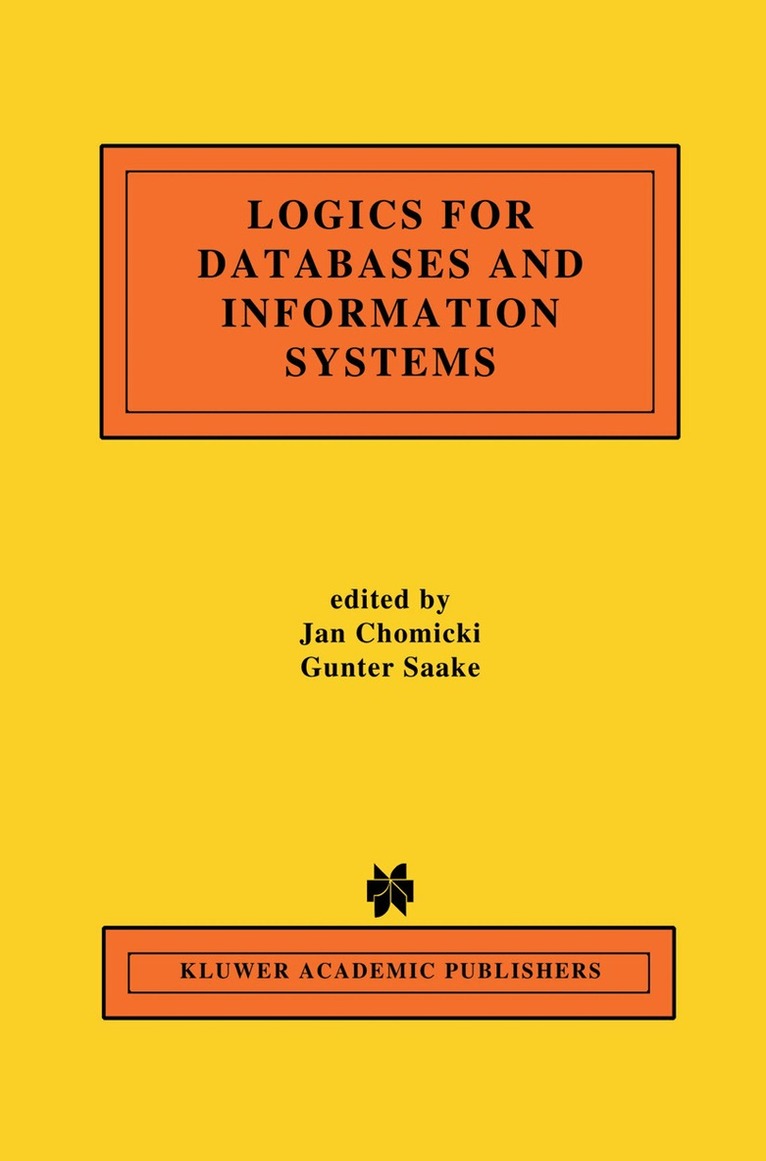
Logics for Databases and Information Systems
Inbunden, 1998
2249 kr
Lägg i varukorg
Time is ubiquitous in information systems. Almost every enterprise faces the problem of its data becoming out of date. However, such data is often valu able, so it should be archived and some means to access it should be provided. Also, some data may be inherently historical, e.g., medical, …
Logics for Databases and Information Systems
Häftad, 2012
2249 kr
Lägg i varukorg
Time is ubiquitous in information systems. Almost every enterprise faces the problem of its data becoming out of date. However, such data is often valu able, so it should be archived and some means to access it should be provided. Also, some data may be inherently historical, e.g., medical, …
Logics for Databases and Information Systems
E-bok, 2012
3013 kr
Lägg i varukorg
Time is ubiquitous in information systems. Almost every enterprise faces the problem of its data becoming out of date. However, such data is often valu able, so it should be archived and some means to access it should be provided. Also, some data may be inherently historical, e.g., medical, …
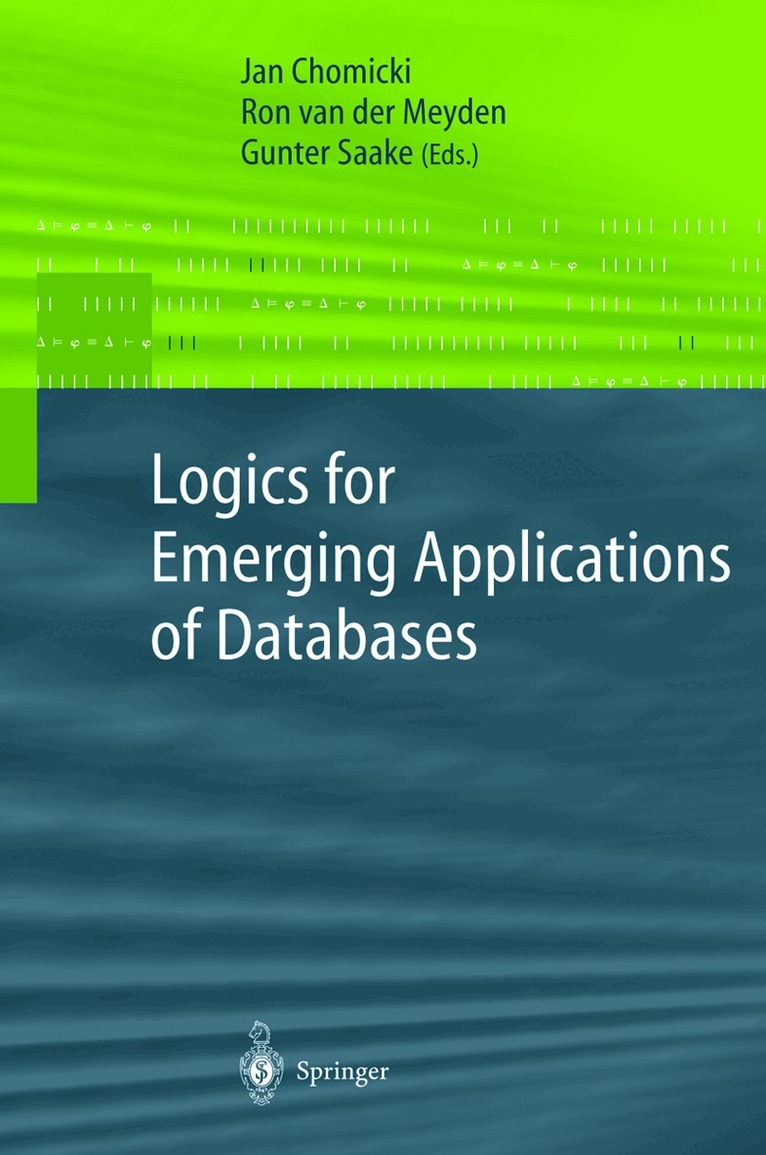
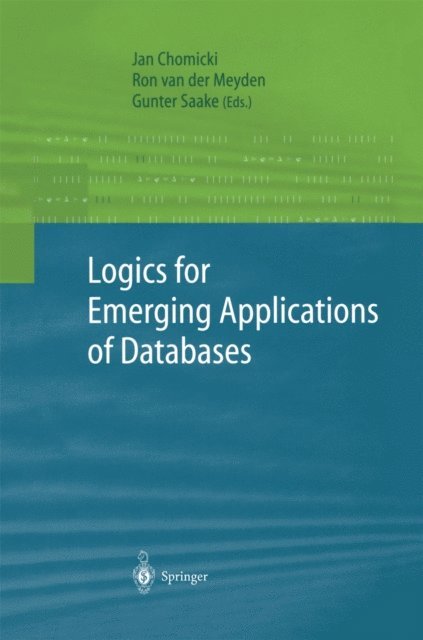
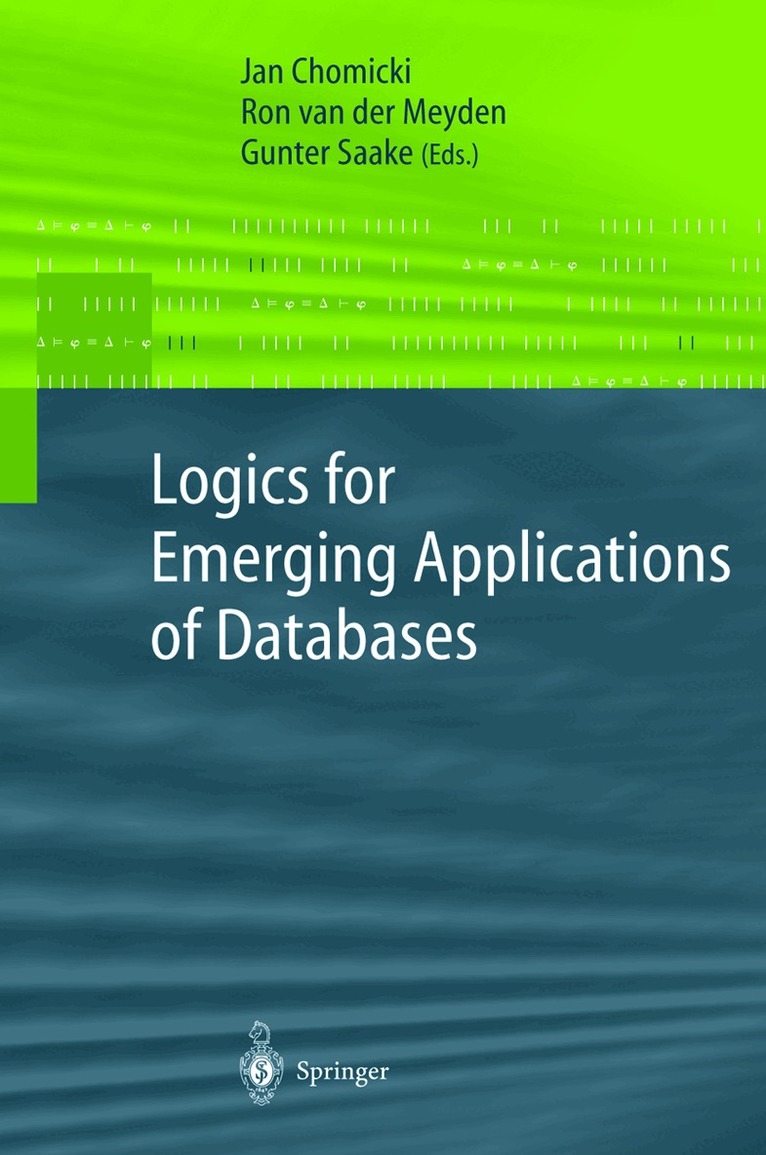
Logics for Emerging Applications of Databases
Av Jan Chomicki, Ron van der Meyden m. fl.
Inbunden, 2003
1128 kr
Lägg i varukorg
In this era of heterogeneous and distributed data sources, ranging from semistructured documents to knowledge about coordination processes or workflows, logic provides a rich set of tools and techniques with which to address the questions of how to represent, query and reason about complex …
Logics for Emerging Applications of Databases
Av Gunter Saake, Ron van der Meyden m. fl.
E-bok, 2011
1502 kr
Lägg i varukorg
In this era of heterogeneous and distributed data sources, ranging from semistructured documents to knowledge about coordination processes or workflows, logic provides a rich set of tools and techniques with which to address the questions of how to represent, query and reason about complex data. …
Logics for Emerging Applications of Databases
Av Jan Chomicki, Ron van der Meyden m. fl.
Häftad, 2012
1128 kr
Lägg i varukorg
In this era of heterogeneous and distributed data sources, ranging from semistructured documents to knowledge about coordination processes or workflows, logic provides a rich set of tools and techniques with which to address the questions of how to represent, query and reason about complex …