Jan Priest – författare
Visar alla böcker från författaren Jan Priest. Handla med fri frakt och snabb leverans.
5 produkter
5 produkter
719 kr
Skickas inom 7-10 vardagar
This unique book explains the central role that research paradigms play in the design and conduct of social research. The authors argue that social research should not just describe or confirm a social problem but should seek to find an explanation for it and to do so requires research with �eyes philosophically wide open�.Important philosophical and practice elements of three widely recognized paradigms Neo-Positive, Interpretive and Critical Realist are carefully elaborated and their use in action illustrated with detailed examples. The authors show that the philosophical assumptions of a chosen paradigm must match those embedded in a characterization of a research problem and its context. This paradigm orientation is shown to be fundamental to appropriately framing a problem, formulating research questions, deciding on a logic of inquiry and selecting and using methods to investigate it.Ultimately, an appropriate paradigm orientation to social research provides a dispassionate, rigorous and effective basis for the production of new social scientific knowledge. Following on from Blaikie�s Approaches to Social Enquiry and Designing Social Research, this innovative book will be invaluable to upper-level and research students, their lecturers and supervisors, and researchers across the social sciences.
271 kr
Skickas inom 7-10 vardagar
This unique book explains the central role that research paradigms play in the design and conduct of social research. The authors argue that social research should not just describe or confirm a social problem but should seek to find an explanation for it and to do so requires research with �eyes philosophically wide open�.Important philosophical and practice elements of three widely recognized paradigms Neo-Positive, Interpretive and Critical Realist are carefully elaborated and their use in action illustrated with detailed examples. The authors show that the philosophical assumptions of a chosen paradigm must match those embedded in a characterization of a research problem and its context. This paradigm orientation is shown to be fundamental to appropriately framing a problem, formulating research questions, deciding on a logic of inquiry and selecting and using methods to investigate it.Ultimately, an appropriate paradigm orientation to social research provides a dispassionate, rigorous and effective basis for the production of new social scientific knowledge. Following on from Blaikie�s Approaches to Social Enquiry and Designing Social Research, this innovative book will be invaluable to upper-level and research students, their lecturers and supervisors, and researchers across the social sciences.
901 kr
Skickas inom 10-15 vardagar
Business and Management Research combines the philosophy and practicalities of research into one accessible volume. 3 popular approaches are demonstrated through case studies and reliable mental models, providing readers with applied knowledge - a crucial advantage when undertaking high profile projects.Key Features:- Detailed graphics, life-cycle illustrations and 'helicopter' treatment of key ideas make this the ideal starting point to a research project- Case studies demonstrate the concepts and methodologies of research- Strong focus on methodology, a central aspect of successful research design
839 kr
Skickas inom 7-10 vardagar
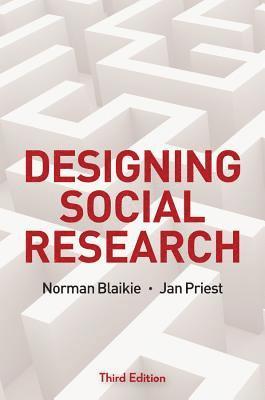
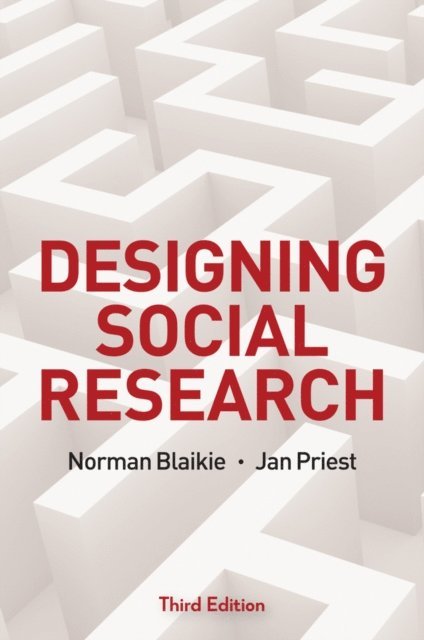
Designing Social Research is a uniquely comprehensive and student-friendly guide to the core knowledge and types of skills required for planning social research.The authors organize the book around four major steps in social research – focusing, framing, selecting and distilling – placing particular emphasis on the formulation of research questions and the choice of appropriate 'logics of inquiry' to answer them. The requirements for research designs and proposals are laid out at the beginning of the book, followed by a discussion of key design issues and research ethics. Four sample research designs on environmental issues illustrate the role of research questions and the application of the four logics of inquiry, and this third edition includes new material dedicated to social research in a digital, networked age.Fully revised and updated, Designing Social Research continues to be an invaluable resource to demystify the research process for advanced undergraduate and graduate students. Together with the authors' Social Research: Paradigms in Action and Blaikie's Approaches to Social Enquiry, it offers social scientists an informative guide to designing social research.

440 kr
Skickas inom 7-10 vardagar
Designing Social Research is a uniquely comprehensive and student-friendly guide to the core knowledge and types of skills required for planning social research.The authors organize the book around four major steps in social research – focusing, framing, selecting and distilling – placing particular emphasis on the formulation of research questions and the choice of appropriate 'logics of inquiry' to answer them. The requirements for research designs and proposals are laid out at the beginning of the book, followed by a discussion of key design issues and research ethics. Four sample research designs on environmental issues illustrate the role of research questions and the application of the four logics of inquiry, and this third edition includes new material dedicated to social research in a digital, networked age.Fully revised and updated, Designing Social Research continues to be an invaluable resource to demystify the research process for advanced undergraduate and graduate students. Together with the authors' Social Research: Paradigms in Action and Blaikie's Approaches to Social Enquiry, it offers social scientists an informative guide to designing social research.