Jane Swafford – författare
Visar alla böcker från författaren Jane Swafford. Handla med fri frakt och snabb leverans.
6 produkter
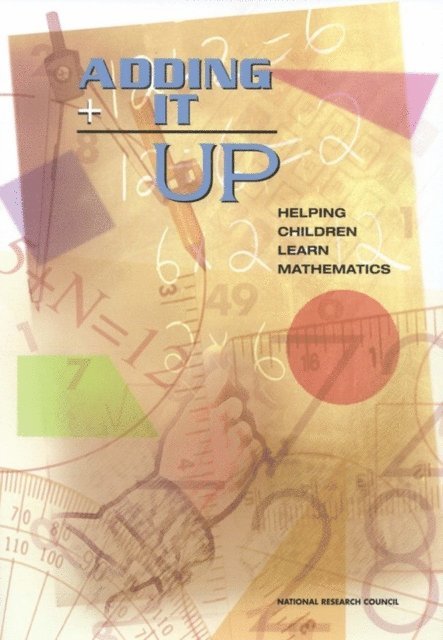
Adding It Up
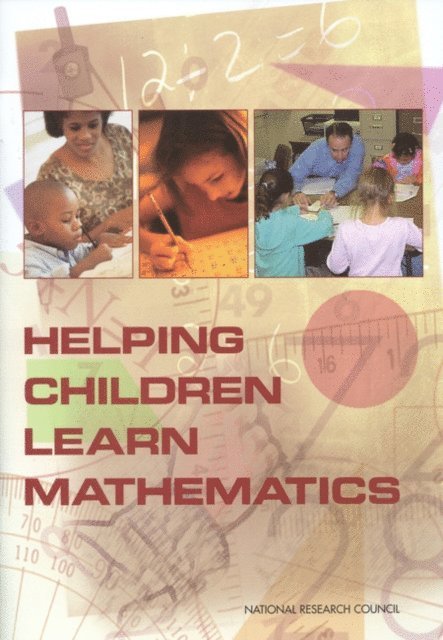
Helping Children Learn Mathematics
Av Mathematics Learning Study Committee, Center for Education m. fl.
E-bok, 2001
673 kr
Lägg i varukorg
Adding It Up explores how students in pre-K through 8th grade learn mathematics and recommends how teaching, curricula, and teacher education should change to improve mathematics learning during these critical years. The committee identifies five interdependent components of mathematical …
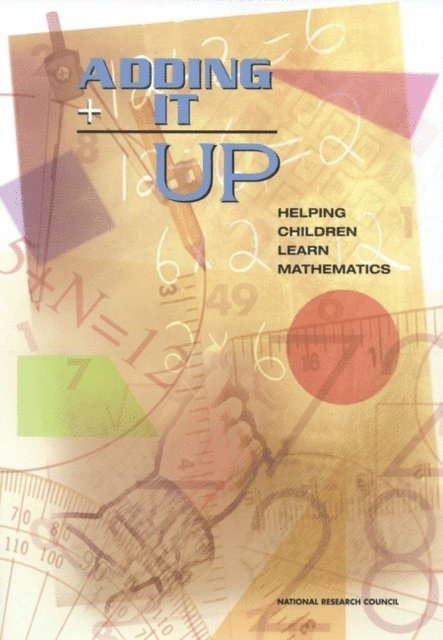
Adding It Up
Helping Children Learn Mathematics
Av Mathematics Learning Study Committee, Center for Education m. fl.
E-bok, 2001
442 kr
Lägg i varukorg
Adding It Up explores how students in pre-K through 8th grade learn mathematics and recommends how teaching, curricula, and teacher education should change to improve mathematics learning during these critical years. The committee identifies five interdependent components of mathematical …
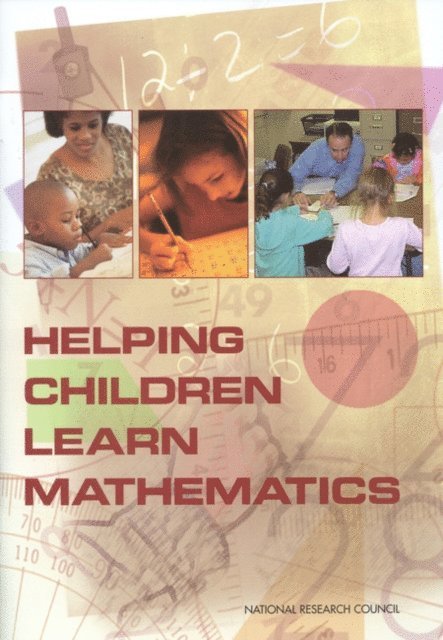
Helping Children Learn Mathematics
Av Mathematics Learning Study Committee, Center for Education m. fl.
E-bok, 2002
253 kr
Lägg i varukorg
Results from national and international assessments indicate that school children in the United States are not learning mathematics well enough. Many students cannot correctly apply computational algorithms to solve problems. Their understanding and use of decimals and fractions are especially …
Adding It Up
Helping Children Learn Mathematics
Av National Research Council, Division of Behavioral and Social Sciences and Education m. fl.
Häftad, 2001
458 kr
Lägg i varukorg
Adding It Up explores how students in pre-K through 8th grade learn mathematics and recommends how teaching, curricula, and teacher education should change to improve mathematics learning during these critical years. The committee identifies five interdependent components of mathematical …
Helping Children Learn Mathematics
Av Mathematics Learning Study Committee, Center for Education m. fl.
E-bok, 2002
135 kr
Lägg i varukorg
Results from national and international assessments indicate that school children in the United States are not learning mathematics well enough. Many students cannot correctly apply computational algorithms to solve problems. Their understanding and use of decimals and fractions are especially …
Helping Children Learn Mathematics
Av National Research Council, Division of Behavioral and Social Sciences and Education m. fl.
Häftad, 2002
170 kr
Tillfälligt slut
Results from national and international assessments indicate that school children in the United States are not learning mathematics well enough. Many students cannot correctly apply computational algorithms to solve problems. Their understanding and use of decimals and fractions are especially …