Jaroslav Mysiak - Böcker
Visar alla böcker från författaren Jaroslav Mysiak. Handla med fri frakt och snabb leverans.
7 produkter
7 produkter
1 963 kr
Skickas inom 10-15 vardagar
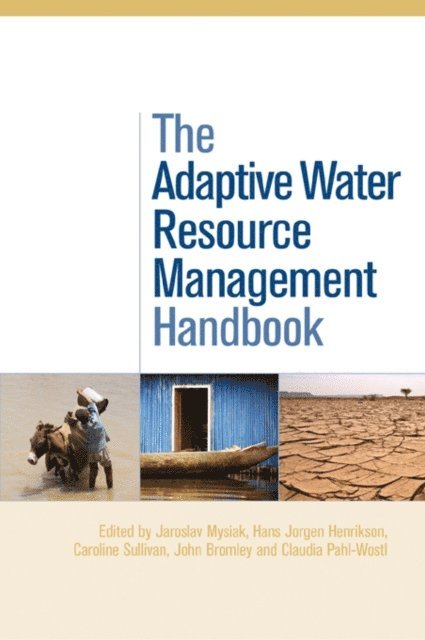
The complexity of current water resource management poses many challenges. Water managers need to solve a range of interrelated water dilemmas, such as balancing water quantity and quality, flooding, drought, maintaining biodiversity and ecological functions and services, in a context where human beliefs, actions and values play a central role. Furthermore, the growing uncertainties of global climate change and the long term implications of management actions make the problems even more difficult. This book explains the benefits, outcomes and lessons learned from adaptive water management (AWM). In essence AWM is a way of responding to uncertainty by designing policy measures which are provisional and incremental, subject to subsequent modification in response to environmental change and other variables. Included are illustrative case studies from seven river basins from across Europe, West Asia and Africa: the Elbe, Rhine, Guadiana, Tisza, Orange, Nile and Amudarya. These exemplify the key challenges of adaptive water management, especially when rivers cross national boundaries, creating additional problems of governance.
538 kr
Skickas inom 10-15 vardagar
This open access book focuses on an issue only marginally tackled by this literature: the still existing gap between adaptation science and modelling and the possibility to effectively access and exploit the information produced by policy making at different levels, international, national and local. To do so, the book presents the proceedings of a high-level expert workshop on adaptation modelling, integrated with main results from the “Study on Adaptation Modelling” (SAM-PS) commissioned by the European Commission's Directorate-General for Climate Action (DG CLIMA) and implemented by the CMCC Foundation – Euro-Mediterranean Centre on Climate Change, in collaboration with the Institute for Environmental Studies (IVM), Deltares, and Paul Watkiss Associates (PWA).What is the latest development in adaptation modelling? Which tools and information are available for adaptation assessment? How much are they practically usable by the policy community? How their uptake by practitioners can be improved? What are the major research gaps in adaptation modelling that needs to be covered in the next future? How? This book addresses these questions presenting the results of a study on adaptation modelling commissioned by the European Commission's Directorate-General for Climate Action (DG CLIMA) enriched by the outcomes of a high-level expert workshop on adaptation also part of the research. This book aspires to provide a useful support to academics, policy makers and practitioners in the field of adaptation to orient them in the expanding adaptation modelling assessment literature and suggest practical ways for its application. This book, mainly addressed to academics, policy makers and practitioners in the field of adaptation, aims to providing orientation in the large and expanding methodological/quantitative literature, presenting novelties, guiding in the practical application of adaptation assessments and suggesting lines for future research. This open access book focuses on an issue only marginally tackled by this literature: the still existing gap between adaptation science and modelling and the possibility to effectively access and exploit the information produced by policy making at different levels, international, national and local. To do so, the book presents the proceedings of a high-level expert workshop on adaptation modelling, integrated with main results from the “Study on Adaptation Modelling” (SAM-PS) commissioned by the European Commission's Directorate-General for Climate Action (DG CLIMA) and implemented by the CMCC Foundation – Euro-Mediterranean Centre on Climate Change, in collaboration with the Institute for Environmental Studies (IVM), Deltares, and Paul Watkiss Associates (PWA).
432 kr
Skickas inom 10-15 vardagar
This open access book focuses on an issue only marginally tackled by this literature: the still existing gap between adaptation science and modelling and the possibility to effectively access and exploit the information produced by policy making at different levels, international, national and local. To do so, the book presents the proceedings of a high-level expert workshop on adaptation modelling, integrated with main results from the “Study on Adaptation Modelling” (SAM-PS) commissioned by the European Commission's Directorate-General for Climate Action (DG CLIMA) and implemented by the CMCC Foundation – Euro-Mediterranean Centre on Climate Change, in collaboration with the Institute for Environmental Studies (IVM), Deltares, and Paul Watkiss Associates (PWA).What is the latest development in adaptation modelling? Which tools and information are available for adaptation assessment? How much are they practically usable by the policy community? How their uptake by practitioners can be improved? What are the major research gaps in adaptation modelling that needs to be covered in the next future? How? This book addresses these questions presenting the results of a study on adaptation modelling commissioned by the European Commission's Directorate-General for Climate Action (DG CLIMA) enriched by the outcomes of a high-level expert workshop on adaptation also part of the research. This book aspires to provide a useful support to academics, policy makers and practitioners in the field of adaptation to orient them in the expanding adaptation modelling assessment literature and suggest practical ways for its application. This book, mainly addressed to academics, policy makers and practitioners in the field of adaptation, aims to providing orientation in the large and expanding methodological/quantitative literature, presenting novelties, guiding in the practical application of adaptation assessments and suggesting lines for future research. This open access book focuses on an issue only marginally tackled by this literature: the still existing gap between adaptation science and modelling and the possibility to effectively access and exploit the information produced by policy making at different levels, international, national and local. To do so, the book presents the proceedings of a high-level expert workshop on adaptation modelling, integrated with main results from the “Study on Adaptation Modelling” (SAM-PS) commissioned by the European Commission's Directorate-General for Climate Action (DG CLIMA) and implemented by the CMCC Foundation – Euro-Mediterranean Centre on Climate Change, in collaboration with the Institute for Environmental Studies (IVM), Deltares, and Paul Watkiss Associates (PWA).
Del 14 - Global Issues in Water Policy
Use of Economic Instruments in Water Policy
Insights from International Experience
Inbunden, Engelska, 2015
983 kr
Skickas inom 10-15 vardagar
This book assesses both the effectiveness and efficiency of implemented Economic Policy Instruments (EPIs) in order to achieve water policy goals and identifies the preconditions under which they outperform alternative (e.g. regulatory) policy instruments and/or can complement them as part of complex policy mixes. The development of a consolidated assessment framework helps clarify (and where possible, quantify) the effectiveness of each EPI on the basis of different criteria. Outcome-oriented criteria describe how the EPIs perform. They include intended and unintended economic and environmental outcomes and the distribution of benefits and costs among the affected parties. These steps consider the application of cost effectiveness and cost benefits analysis, e.g. to assess ex-post performance of the EPI. Process criteria describe the institutional conditions (legislative, political, cultural, etc.) affecting the formation and operation of the EPI studied (particularly relevant for assessing the possible impacts of using economic instruments), the transaction costs involved in implementing and enforcing the instruments and the process of implementation.Case studies from Cyprus, Denmark, France, Germany, Hungary, Italy, the Netherlands, Spain and the United Kingdom, as well as from Australia, Chile, Israel and the USA are presented in this book. A wide variety of EPIs are also covered, including water-pricing schemes (tariffs, environmental taxes, environmental charges or fees, subsidies on products and practices), trading schemes (tradable permits for abstraction and pollution) and cooperation mechanisms.
Del 14 - Global Issues in Water Policy
Use of Economic Instruments in Water Policy
Insights from International Experience
Häftad, Engelska, 2016
983 kr
Skickas inom 10-15 vardagar
This book assesses both the effectiveness and efficiency of implemented Economic Policy Instruments (EPIs) in order to achieve water policy goals and identifies the preconditions under which they outperform alternative (e.g. regulatory) policy instruments and/or can complement them as part of complex policy mixes. The development of a consolidated assessment framework helps clarify (and where possible, quantify) the effectiveness of each EPI on the basis of different criteria. Outcome-oriented criteria describe how the EPIs perform. They include intended and unintended economic and environmental outcomes and the distribution of benefits and costs among the affected parties. These steps consider the application of cost effectiveness and cost benefits analysis, e.g. to assess ex-post performance of the EPI. Process criteria describe the institutional conditions (legislative, political, cultural, etc.) affecting the formation and operation of the EPI studied (particularly relevant for assessing the possible impacts of using economic instruments), the transaction costs involved in implementing and enforcing the instruments and the process of implementation.Case studies from Cyprus, Denmark, France, Germany, Hungary, Italy, the Netherlands, Spain and the United Kingdom, as well as from Australia, Chile, Israel and the USA are presented in this book. A wide variety of EPIs are also covered, including water-pricing schemes (tariffs, environmental taxes, environmental charges or fees, subsidies on products and practices), trading schemes (tradable permits for abstraction and pollution) and cooperation mechanisms.
1 941 kr
Skickas inom 10-15 vardagar
Mathematical modelling has become in recent years an essential tool for the prediction of environmental change and for the development of sustainable policies. Yet, many of the uncertainties associated with modelling efforts appear poorly understood by many, especially by policy makers. This book attempts for the first time to cover the full range of issues related to model uncertainties, from the subjectivity of setting up a conceptual model of a given system, all the way to communicating the nature of model uncertainties to non-scientists and accounting for model uncertainties in policy decisions. Theoretical chapters, providing background information on specific steps in the modelling process and in the adoption of models by end-users, are complemented by illustrative case studies dealing with soils and global climate change. All the chapters are authored by recognized experts in their respective disciplines, and provide a timely and uniquely comprehensive coverage of an important field.
1 941 kr
Skickas inom 10-15 vardagar
Mathematical modelling has become in recent years an essential tool for the prediction of environmental change and for the development of sustainable policies. Yet, many of the uncertainties associated with modelling efforts appear poorly understood by many, especially by policy makers. This book attempts for the first time to cover the full range of issues related to model uncertainties, from the subjectivity of setting up a conceptual model of a given system, all the way to communicating the nature of model uncertainties to non-scientists and accounting for model uncertainties in policy decisions. Theoretical chapters, providing background information on specific steps in the modelling process and in the adoption of models by end-users, are complemented by illustrative case studies dealing with soils and global climate change. All the chapters are authored by recognized experts in their respective disciplines, and provide a timely and uniquely comprehensive coverage of an important field.