Philippe Baveye - Böcker
Visar alla böcker från författaren Philippe Baveye. Handla med fri frakt och snabb leverans.
8 produkter
8 produkter
565 kr
Skickas inom 10-15 vardagar
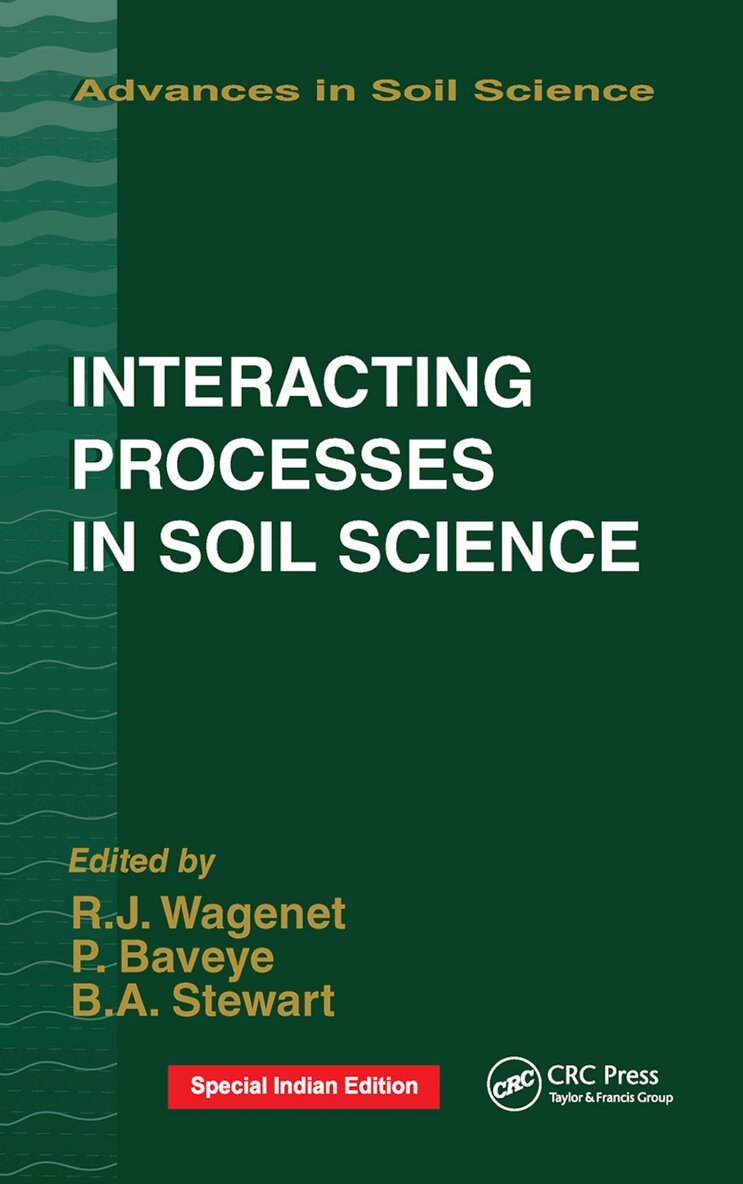
Interacting Processes in Soil Science focuses on coupled processes in soil. Topics covered in this important volume include the effects of inorganic salts upon water flow, modeling of sorption, transport and transformation of organic solutes, and the effects of microorganisms on silicate clay minerals. The book presents studies and approaches that can be extended and complemented by innovative work in the future.Interacting Processes in Soil Science will be an essential reference for all researchers and students in soil science, soil and water engineering, civil and environmental engineering, earth sciences, and hydrology.
2 300 kr
Skickas inom 10-15 vardagar
Interacting Processes in Soil Science focuses on coupled processes in soil. Topics covered in this important volume include the effects of inorganic salts upon water flow, modeling of sorption, transport and transformation of organic solutes, and the effects of microorganisms on silicate clay minerals. The book presents studies and approaches that can be extended and complemented by innovative work in the future.Interacting Processes in Soil Science will be an essential reference for all researchers and students in soil science, soil and water engineering, civil and environmental engineering, earth sciences, and hydrology.
3 681 kr
Skickas inom 10-15 vardagar
The application of fractals and fractal geometry in soil science has become increasingly important over the last few years. This self-contained and timely book was designed to provide detailed and comprehensive information on the current status of the application of fractal geometry in soil science, and on prospects for its future use. With a detailed and specific introductory chapter, particular attention is paid to comparing and contrasting "fractal" and "fragmentation" concepts. Some uses of fractals, such as to quantify the retention and transport properties of soils, to describe the intricate geometry of pore surfaces and macropore networks, or to elucidate the rooting patterns of various plants, are discussed. Applications of fractals in soil science are both relatively recent and in constant evolution. This book reflects accurately existing trends, by allowing sharp differences among the viewpoints expressed in contributed chapters to be presented to the reader in one self-contained volume.
1 042 kr
Skickas inom 10-15 vardagar
The application of fractals and fractal geometry in soil science has become increasingly important over the last few years. This self-contained and timely book was designed to provide detailed and comprehensive information on the current status of the application of fractal geometry in soil science, and on prospects for its future use. With a detailed and specific introductory chapter, particular attention is paid to comparing and contrasting "fractal" and "fragmentation" concepts. Some uses of fractals, such as to quantify the retention and transport properties of soils, to describe the intricate geometry of pore surfaces and macropore networks, or to elucidate the rooting patterns of various plants, are discussed. Applications of fractals in soil science are both relatively recent and in constant evolution. This book reflects accurately existing trends, by allowing sharp differences among the viewpoints expressed in contributed chapters to be presented to the reader in one self-contained volume.
3 162 kr
Skickas inom 10-15 vardagar
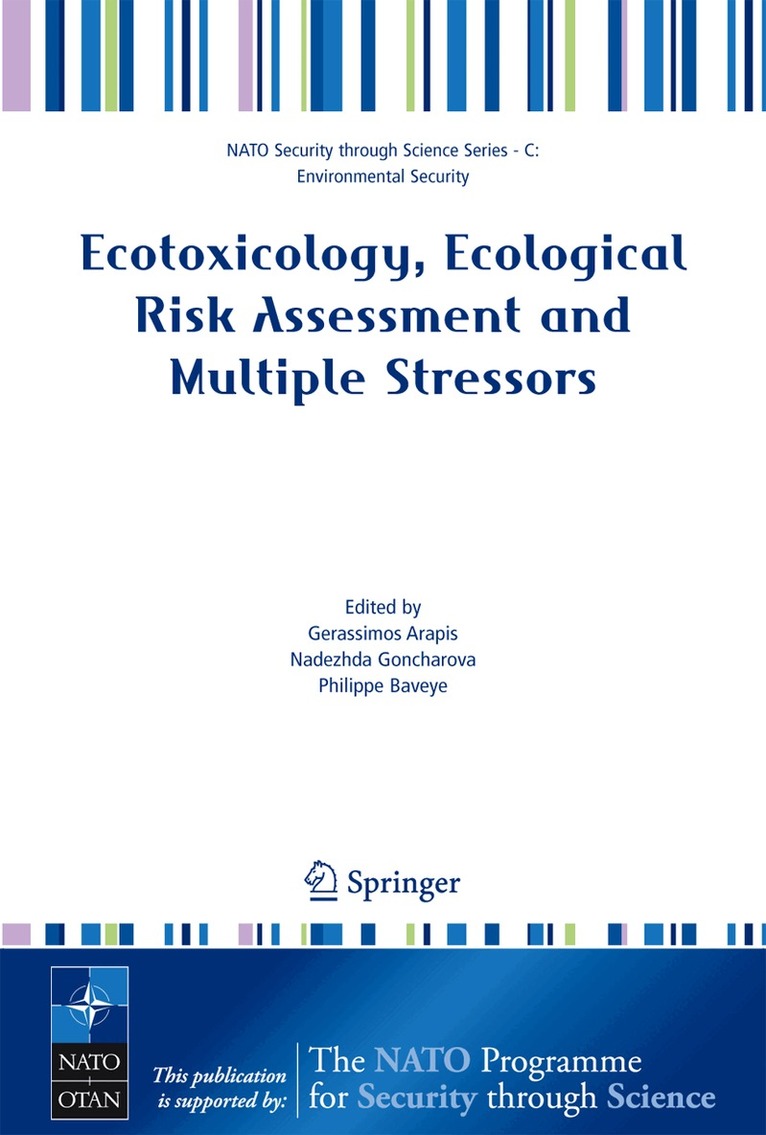
The science of ecotoxicology and the practice of ecological risk assessment are evolving rapidly. Ecotoxicology as a subject area came into prominence in the 1960s after the publication of Rachel Carson's book on the impact of pesticides on the environment. The rise of public and scientific concern for the effects of chemical pollutants on the environment in the 1960s and 1970s led to the development of the discipline of ecotoxicology, a science that takes into account the effects of chemicals in the context of ecology. Until the early 1980s, in spite of public concern and interest among scientists, the assessment of ecological risks associated with natural or synthetic pollutants was not considered a priority issue by most government. However, as the years passed, a better understanding of the importance of ecotoxicology emerged and with it, in some countries, the progressive formalization of an ecological risk assessment process. Ecological risk assessment is a conceptual tool for organizing and analyzing data and information to evaluate the likelihood that one or more stressors are causing or will cause adverse ecological effects. Ecological risk assessment allows risk managers to consider available scientific information when selecting a course of action, in addition to other factors that may affect their decision (e. g. , social, legal, political, or economic). Ecological risk assessment includes three phases (problem formulation, analysis, and risk characterization).
3 162 kr
Skickas inom 10-15 vardagar
The science of ecotoxicology and the practice of ecological risk assessment are evolving rapidly. Ecotoxicology as a subject area came into prominence in the 1960s after the publication of Rachel Carson's book on the impact of pesticides on the environment. The rise of public and scientific concern for the effects of chemical pollutants on the environment in the 1960s and 1970s led to the development of the discipline of ecotoxicology, a science that takes into account the effects of chemicals in the context of ecology. Until the early 1980s, in spite of public concern and interest among scientists, the assessment of ecological risks associated with natural or synthetic pollutants was not considered a priority issue by most government. However, as the years passed, a better understanding of the importance of ecotoxicology emerged and with it, in some countries, the progressive formalization of an ecological risk assessment process. Ecological risk assessment is a conceptual tool for organizing and analyzing data and information to evaluate the likelihood that one or more stressors are causing or will cause adverse ecological effects. Ecological risk assessment allows risk managers to consider available scientific information when selecting a course of action, in addition to other factors that may affect their decision (e. g. , social, legal, political, or economic). Ecological risk assessment includes three phases (problem formulation, analysis, and risk characterization).
1 941 kr
Skickas inom 10-15 vardagar
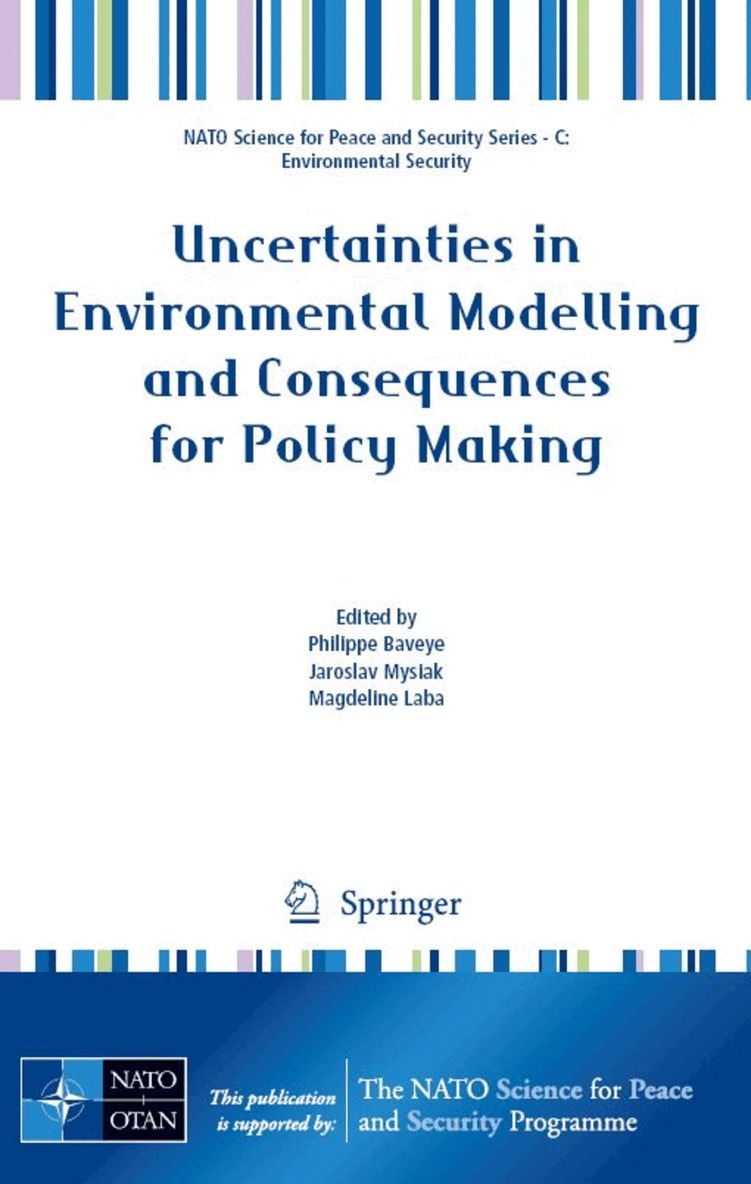
Mathematical modelling has become in recent years an essential tool for the prediction of environmental change and for the development of sustainable policies. Yet, many of the uncertainties associated with modelling efforts appear poorly understood by many, especially by policy makers. This book attempts for the first time to cover the full range of issues related to model uncertainties, from the subjectivity of setting up a conceptual model of a given system, all the way to communicating the nature of model uncertainties to non-scientists and accounting for model uncertainties in policy decisions. Theoretical chapters, providing background information on specific steps in the modelling process and in the adoption of models by end-users, are complemented by illustrative case studies dealing with soils and global climate change. All the chapters are authored by recognized experts in their respective disciplines, and provide a timely and uniquely comprehensive coverage of an important field.
1 941 kr
Skickas inom 10-15 vardagar
Mathematical modelling has become in recent years an essential tool for the prediction of environmental change and for the development of sustainable policies. Yet, many of the uncertainties associated with modelling efforts appear poorly understood by many, especially by policy makers. This book attempts for the first time to cover the full range of issues related to model uncertainties, from the subjectivity of setting up a conceptual model of a given system, all the way to communicating the nature of model uncertainties to non-scientists and accounting for model uncertainties in policy decisions. Theoretical chapters, providing background information on specific steps in the modelling process and in the adoption of models by end-users, are complemented by illustrative case studies dealing with soils and global climate change. All the chapters are authored by recognized experts in their respective disciplines, and provide a timely and uniquely comprehensive coverage of an important field.