Jean Clottes – författare
Visar alla böcker från författaren . Handla med fri frakt och snabb leverans.
4 produkter
4 produkter
Häftad, Engelska, 2016
196 kr
Skickas inom 5-8 vardagar
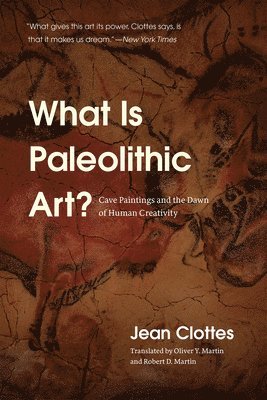
Was it a trick of the light that drew our Stone Age ancestors into caves to paint in charcoal and red hematite, to watch the heads of lions, likenesses of bison, horses, and aurochs in the reliefs of the walls, as they flickered by firelight? Or was it something deeper—a creative impulse, a spiritual dawn, a shamanistic conception of the world efflorescing in the dark, dank spaces beneath the surface of the earth where the spirits were literally at hand?In this book, Jean Clottes, one of the most renowned figures in the study of cave paintings, pursues an answer to this “why” of Paleolithic art. While other books focus on particular sites and surveys, Clottes’s work is a contemplative journey across the world, a personal reflection on how we have viewed these paintings in the past, what we learn from looking at them across geographies, and what these paintings may have meant—what function they may have served—for their artists. Steeped in Clottes’s shamanistic theories of cave painting, What Is Paleolithic Art? travels from well-known Ice Age sites like Chauvet, Altamira, and Lascaux to visits with contemporary aboriginal artists, evoking a continuum between the cave paintings of our prehistoric past and the living rock art of today. Clottes’s work lifts us from the darkness of our Paleolithic origins to reveal, by firelight, how we think, why we create, why we believe, and who we are.
Del 2108 - BAR International Series
Session C74: Methods of Art History Tested against Prehistory; Session C81: Spirals and Circular Forms: the Most Common Rock Art in the World Session
Häftad, Engelska, 2010
391 kr
Skickas inom 3-6 vardagar
E-bok
PDF, Engelska, 2010459 kr
Läs direkt efter köp
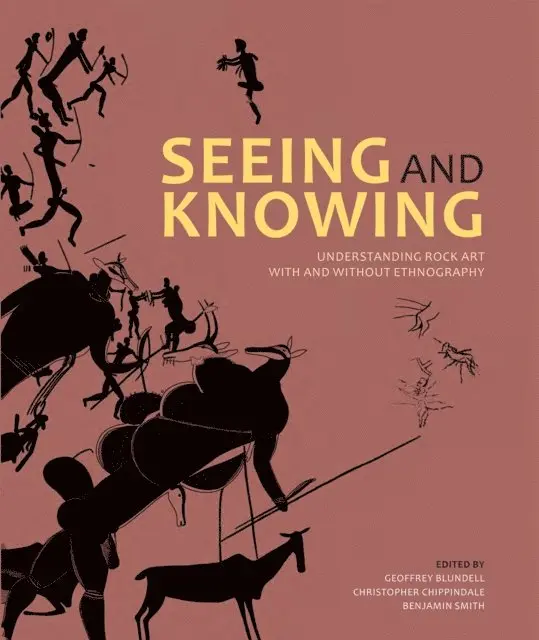
It is largely through the work of David Lewis-Williams that San rock art has come to be understood so well, as a complex symbolic and metaphoric representation of San religious beliefs and practices. The purpose of this volume is to demonstrate the depth and wide geographical impact of Lewis-Williams’ contribution, with particular emphasis on the use of theory and methodology drawn from ethnography that he has used with inspirational effect in understanding the meaning and context of rock art in various parts of the world. Seeing and Knowing explores how to understand and learn from rock art with and without ethnography. Because many of the chapters are based on solid fieldwork and ethnographic research, they offer a new body of work that provides the evidence for differentiation between knowing and simply seeing. This volume is unique in that it focuses exclusively on rock art and ethnography, and covers such a wide geographic range of examples on this topic, from southern Africa, to Scandinavia, to the United States. Many of the chapters explore studies in rock art regions of the world where variation and constancy can be observed and explored across distances both in space and in time. The editors have entitled the book Seeing and Knowing to echo Lewis-Williams’ Believing and Seeing published almost thirty years ago; they say ‘seeing’ again because looking at rock art is and will always be central, and then what is seen when human eyes and minds look; they say ‘knowing’ in recognition that, by his work and by his example, archaeologists now know a little more than they knew before. Even so, as Lewis-Williams will be the first to say, we still know only a fraction.
E-bok
Engelska, 2010459 kr
Läs direkt efter köp
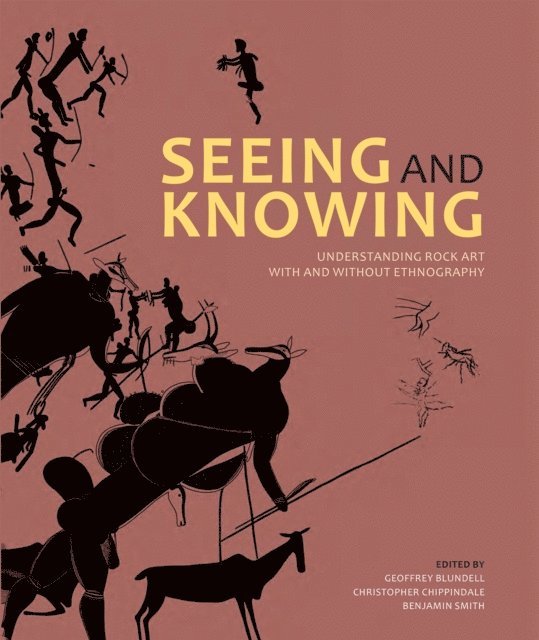
It is largely through the work of David Lewis-Williams that San rock art has come to be understood so well, as a complex symbolic and metaphoric representation of San religious beliefs and practices. The purpose of this volume is to demonstrate the depth and wide geographical impact of Lewis-Williams’ contribution, with particular emphasis on the use of theory and methodology drawn from ethnography that he has used with inspirational effect in understanding the meaning and context of rock art in various parts of the world. Seeing and Knowing explores how to understand and learn from rock art with and without ethnography. Because many of the chapters are based on solid fieldwork and ethnographic research, they offer a new body of work that provides the evidence for differentiation between knowing and simply seeing. This volume is unique in that it focuses exclusively on rock art and ethnography, and covers such a wide geographic range of examples on this topic, from southern Africa, to Scandinavia, to the United States. Many of the chapters explore studies in rock art regions of the world where variation and constancy can be observed and explored across distances both in space and in time. The editors have entitled the book Seeing and Knowing to echo Lewis-Williams’ Believing and Seeing published almost thirty years ago; they say ‘seeing’ again because looking at rock art is and will always be central, and then what is seen when human eyes and minds look; they say ‘knowing’ in recognition that, by his work and by his example, archaeologists now know a little more than they knew before. Even so, as Lewis-Williams will be the first to say, we still know only a fraction.