Jeffrey Kenworthy – författare
Visar alla böcker från författaren Jeffrey Kenworthy. Handla med fri frakt och snabb leverans.
4 produkter
4 produkter
Häftad, Engelska, 2020
466 kr
Skickas inom 10-15 vardagar
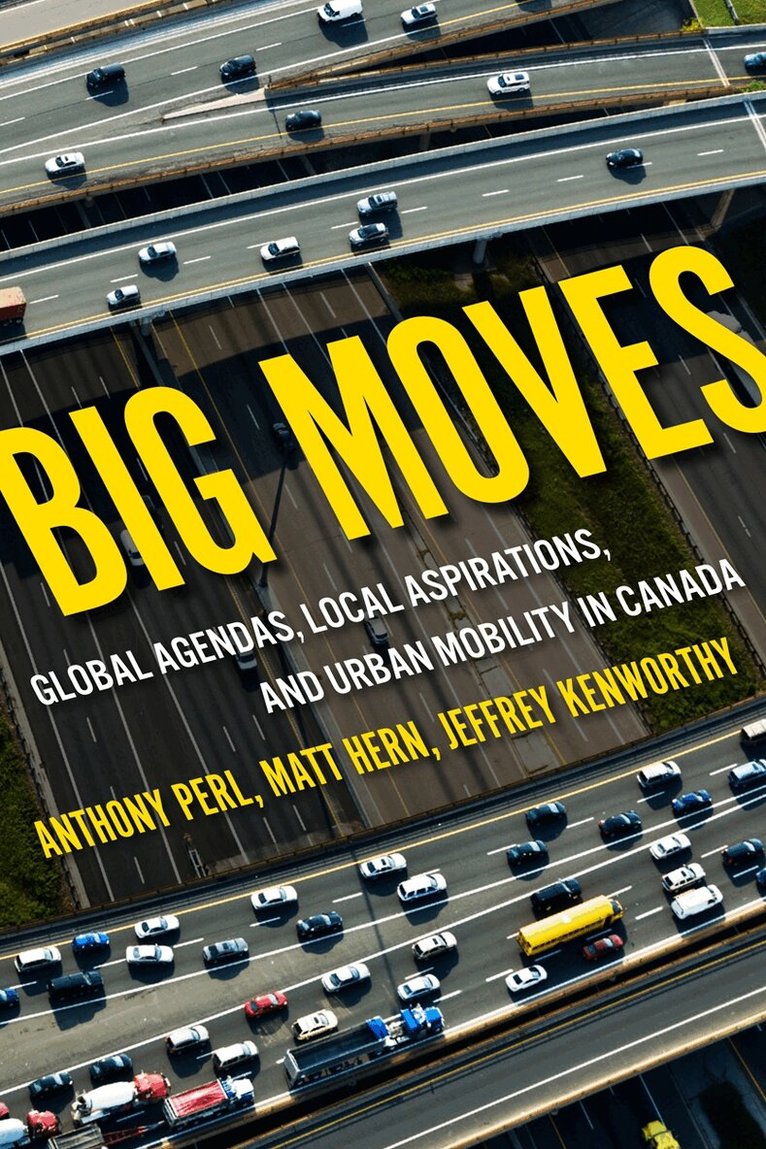
All countries have distinctive urban regions, but Canadian cities especially differ from one another in culture, structure, and history. Anthony Perl, Matt Hern, and Jeffrey Kenworthy reveal that despite the peculiarities and singular traits that each city embodies, a common logic has guided the development of transportation infrastructure across the country. Big Moves analyzes how Canada's three largest urban regions - Montreal, Toronto, and Vancouver - have been shaped by the interplay of globalized imperatives, aspirations, activism, investment, and local development initiatives, both historically and in a contemporary context. Canadian urban development follows a distinct pattern that involves compromise between local viewpoints and values and the pursuit of global capital at particular historical junctures. As the authors show, the success or failure of each city to construct major mobility infrastructure has always depended on the timing of investments and the specific ways that cities have gained access to necessary capital. Drawing on urban mobility history and global city theory, this book delves into the details of the big moves that have affected transport infrastructure in major Canadian cities. Knowing where urban development will head in the twenty-first century requires understanding how cities' major mobility infrastructures were built. Big Moves explains the shape of Canada's three biggest cities and how their mix of expressways and rapid transit emerged.
Inbunden, Engelska, 2017
2 614 kr
Skickas inom 10-15 vardagar
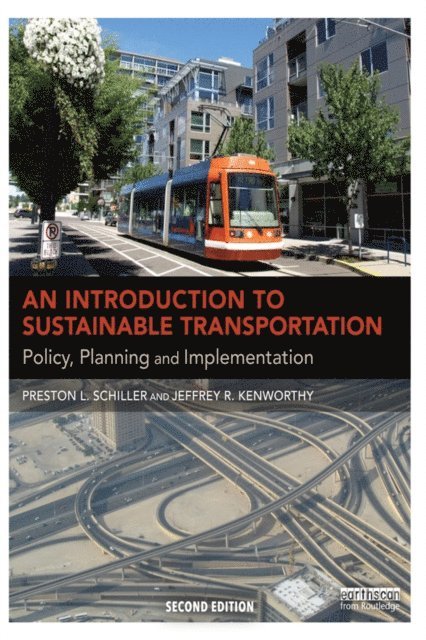
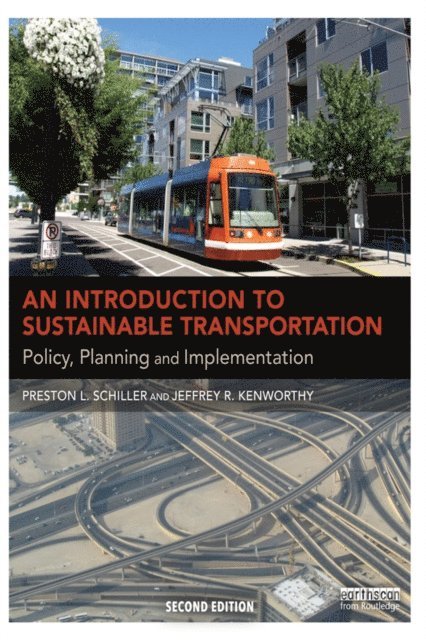
Cities around the globe struggle to create better and more equitable access to important destinations and services, all the while reducing the energy consumption and environmental impacts of mobility. An Introduction to Sustainable Transportation illustrates a new planning paradigm for sustainable transportation through case studies from around the world with hundreds of valuable resources and references, color photos, graphics and tables.The second edition builds and expands upon the highly acclaimed first edition, with new chapters on urban design and urban, regional and intercity public transportation, as well as expanded chapters on automobile dependence and equity issues; automobile cities and the car culture; the history of sustainable and unsustainable transportation; the interrelatedness of technologies, infrastructure energy and functionalities; and public policy and public participation and exemplary places, people and programs around the globe. Among the many valuable additions are discussions of autonomous vehicles (AVs), electric vehicles (EVs), airport cities, urban fabrics, urban heat island effects and mobility as a service (MaaS). New case studies show global exemplars of sustainable transportation, including several from Asia, a case study of participative and deliberative public involvement, as well as one describing life in the Vauban ecologically planned community of Freiburg, Germany. Students in affiliated sustainability disciplines, planners, policymakers and concerned citizens will find many provides practical techniques to innovate and transform transportation.
Häftad, Engelska, 2017
816 kr
Skickas inom 10-15 vardagar
Cities around the globe struggle to create better and more equitable access to important destinations and services, all the while reducing the energy consumption and environmental impacts of mobility. An Introduction to Sustainable Transportation illustrates a new planning paradigm for sustainable transportation through case studies from around the world with hundreds of valuable resources and references, color photos, graphics and tables.The second edition builds and expands upon the highly acclaimed first edition, with new chapters on urban design and urban, regional and intercity public transportation, as well as expanded chapters on automobile dependence and equity issues; automobile cities and the car culture; the history of sustainable and unsustainable transportation; the interrelatedness of technologies, infrastructure energy and functionalities; and public policy and public participation and exemplary places, people and programs around the globe. Among the many valuable additions are discussions of autonomous vehicles (AVs), electric vehicles (EVs), airport cities, urban fabrics, urban heat island effects and mobility as a service (MaaS). New case studies show global exemplars of sustainable transportation, including several from Asia, a case study of participative and deliberative public involvement, as well as one describing life in the Vauban ecologically planned community of Freiburg, Germany. Students in affiliated sustainability disciplines, planners, policymakers and concerned citizens will find many provides practical techniques to innovate and transform transportation.
Häftad, Engelska, 2015
385 kr
Skickas inom 11-20 vardagar
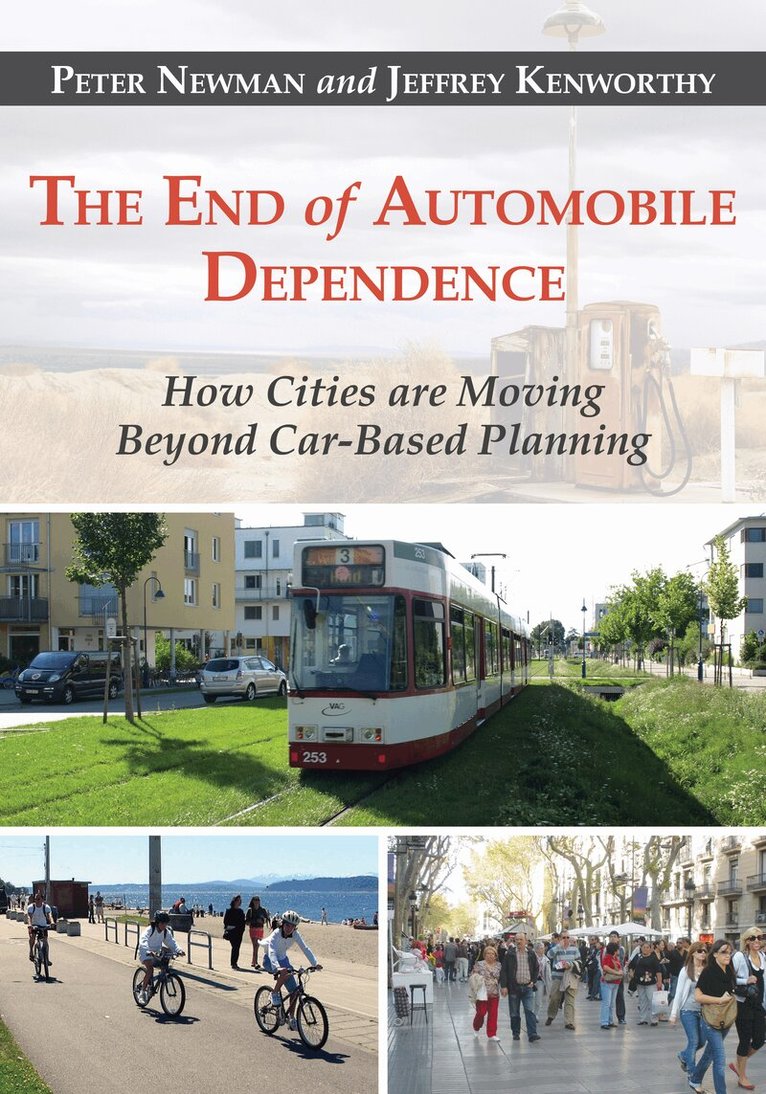
This book offers new guidance for urban and transportation planners and urban policy makers on how to accelerate development of cities away from automobile dependence. In The End of Automobile Dependence, Newman and Kenworthy look at how we can accelerate a planning approach to designing urban environments that can function reliably and conveniently on alternative modes, with a refined and more civilized automobile playing a very much reduced and manageable role in urban transportation. The authors examine the rise and fall of automobile dependence using updated data on 44 global cities to better understand how to facilitate and guide cities to the most productive and sustainable outcomes. This is the final volume in a trilogy by Newman and Kenworthy on automobile dependence (Cities and Automobile Dependence in 1989 and Sustainability and Cities: Overcoming Automobile Dependence in 1999). Like all good trilogies, this one shows the rise of an empire, in this case that of the automobile, the peak of its power, and the decline of that empire.