273 kr
Skickas inom 5-8 vardagar
273 kr
Skickas inom 5-8 vardagar
235 kr
Läs direkt efter köp
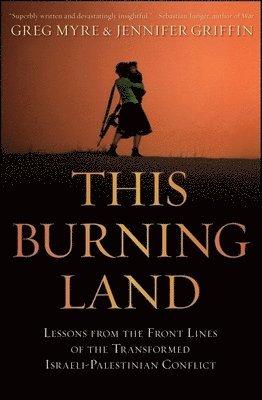
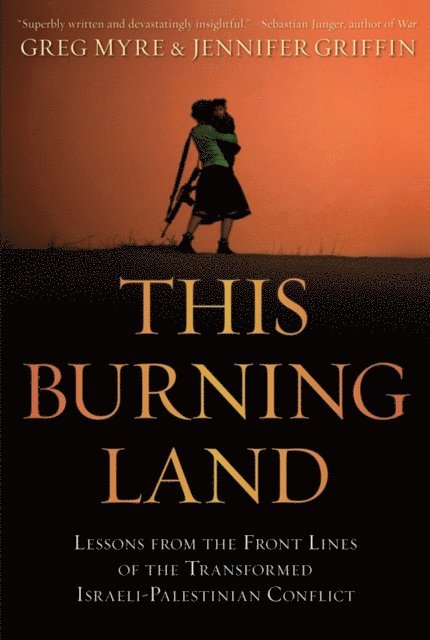
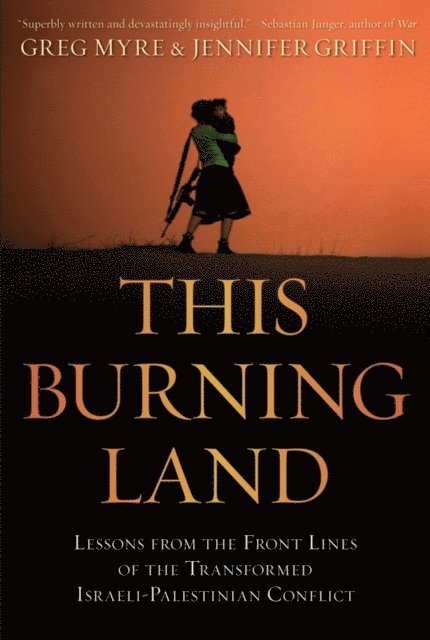
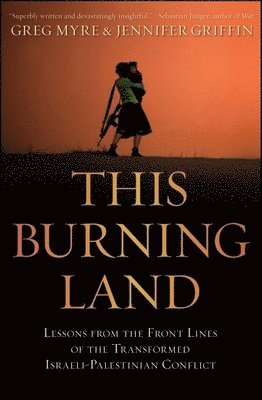
Reporting from Jerusalem for The New York Times and Fox News respectively, Greg Myre and Jennifer Griffin, witnessed a decades-old conflict transformed into a completely new war. The West has learned a lot about asymmetrical war in the past decade. At the same time, many strategists have missed that the Israeli-Palestinian conflict has become one of them. This book shows the importance of applying these hard-won lessons to the longest running, most closely watched occupation and uprising in the world.
The entire conflict can seem irrational -- and many commentators see it that way. While raising their own family in Jerusalem at the height of the violence, Myre and Griffin look at the lives of individuals caught up in the struggles to reveal how these actions make perfect sense to the participants. Extremism can become a virtue; moderation a vice. Factions develop within factions. Propaganda becomes an important weapon, and perseverance an essential defense. While the Israelis and the Palestinians have failed to achieve their goals after years of fighting, people on both sides are prepared to make continued sacrifices in the belief that they will eventually emerge triumphant.
This book goes straight to the heart of the conflict: into the minds of suicide bombers and inside Israeli tanks. We hear from Palestinian informants who help the Israeli military track down and kill Palestinian militants. Israeli settlers in isolated outposts explain why they are there, and we hear the frustrations of a Palestinian farmer who has had his olive grove cut in half by Israel''s security barrierShows the important lessons that can be learned by viewing the Israeli-Palestinian conflict as an example of modern, asymmetrical warAuthored by long-time reporters on the Middle East, the book provides a balanced and detailed look at the fighting based on first-hand experience and hundreds of interviewsExplains how the landscape of the conflict changed and why the traditional approach to peacemaking is no longer validWith a new perspective on what''s really going on in Israel and the Palestinian territories, The Familiar War is a book that will inform the debate on the Middle East and the future of the peace process, as well as our understanding of other conflicts around the world.
235 kr
Läs direkt efter köp
Reporting from Jerusalem for The New York Times and Fox News respectively, Greg Myre and Jennifer Griffin, witnessed a decades-old conflict transformed into a completely new war. The West has learned a lot about asymmetrical war in the past decade. At the same time, many strategists have missed that the Israeli-Palestinian conflict has become one of them. This book shows the importance of applying these hard-won lessons to the longest running, most closely watched occupation and uprising in the world.
The entire conflict can seem irrational -- and many commentators see it that way. While raising their own family in Jerusalem at the height of the violence, Myre and Griffin look at the lives of individuals caught up in the struggles to reveal how these actions make perfect sense to the participants. Extremism can become a virtue; moderation a vice. Factions develop within factions. Propaganda becomes an important weapon, and perseverance an essential defense. While the Israelis and the Palestinians have failed to achieve their goals after years of fighting, people on both sides are prepared to make continued sacrifices in the belief that they will eventually emerge triumphant.
This book goes straight to the heart of the conflict: into the minds of suicide bombers and inside Israeli tanks. We hear from Palestinian informants who help the Israeli military track down and kill Palestinian militants. Israeli settlers in isolated outposts explain why they are there, and we hear the frustrations of a Palestinian farmer who has had his olive grove cut in half by Israel''s security barrier Shows the important lessons that can be learned by viewing the Israeli-Palestinian conflict as an example of modern, asymmetrical war Authored by long-time reporters on the Middle East, the book provides a balanced and detailed look at the fighting based on first-hand experience and hundreds of interviews Explains how the landscape of the conflict changed and why the traditional approach to peacemaking is no longer validWith a new perspective on what''s really going on in Israel and the Palestinian territories, The Familiar War is a book that will inform the debate on the Middle East and the future of the peace process, as well as our understanding of other conflicts around the world.
160 kr
Skickas inom 5-8 vardagar
479 kr
Skickas inom 5-8 vardagar
883 kr
Skickas inom 5-8 vardagar
339 kr
Läs direkt efter köp
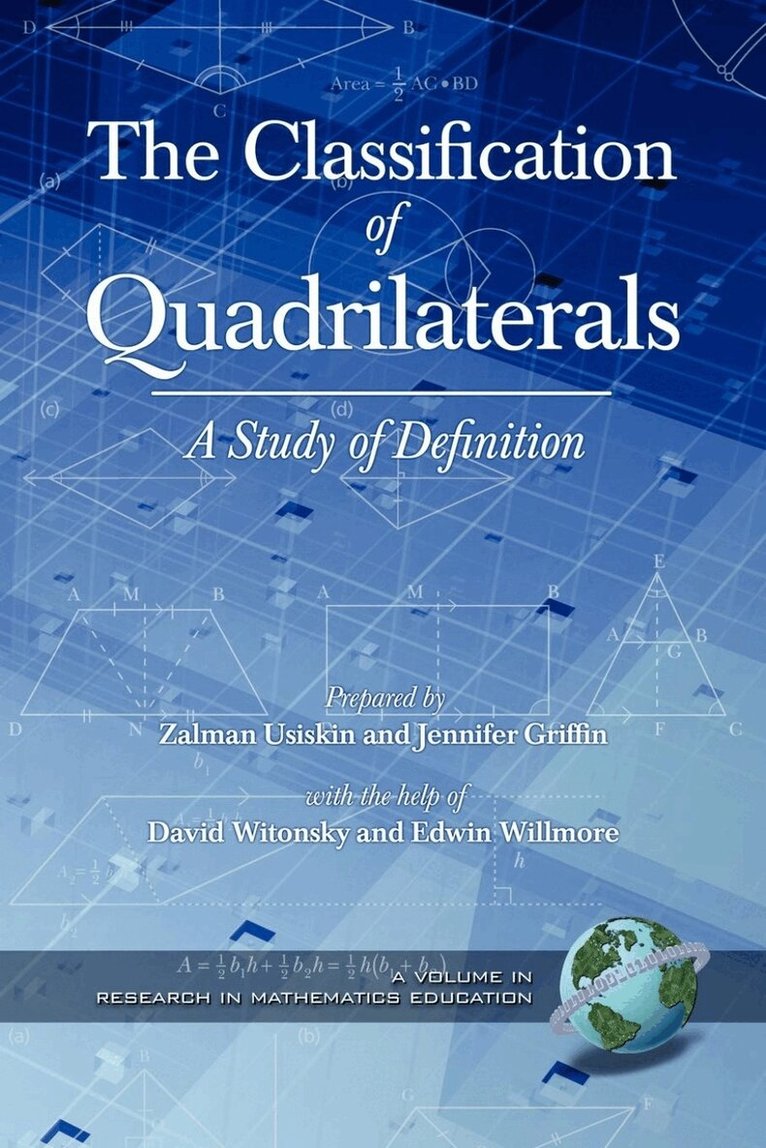
This monograph reports on an analysis of a small part of the mathematics curriculum, the definitions given to quadrilaterals. This kind of research, which we call micro-curricular analysis, is often undertaken by those who create curriculum, but it is not usually done systematically and it is rarely published.
Many terms in mathematics education can be found to have different definitions in mathematics books. Among these are “natural number,” “parallel lines” and “congruent triangles,” “trapezoid” and “isosceles trapezoid,” the formal definitions of the trigonometric functions and absolute value, and implicit definitions of the arithmetic operations addition, subtraction, multiplication, and division.
Yet many teachers and students do not realize there is a choice of definitions for mathematical terms. And even those who realize there is a choice may not know who decides which definition of any mathematical term is better, and under what criteria. Finally, rarely are the mathematical implications of various choices discussed. As a result, many students misuse and otherwise do not understand the role of definition in mathematics.
We have chosen in this monograph to examine a bit of mathematics for its definitions: the quadrilaterals. We do so because there is some disagreement in the definitions and, consequently, in the ways in which quadrilaterals are classified and relate to each other. The issues underlying these differences have engaged students, teachers, mathematics educators, and mathematicians. There have been several articles and a number of essays on the definitions and classification of quadrilaterals. But primarily we chose this specific area of definition in mathematics because it demonstrates how broad mathematical issues revolving around definitions become reflected in curricular materials. While we were undertaking this research, we found that the area of quadrilaterals supplied grist for broader and richer discussions than we had first anticipated.
The intended audience includes curriculum developers, researchers, teachers, teacher trainers, and anyone interested in language and its use.
172 kr
Skickas inom 5-8 vardagar
504 kr
Läs direkt efter köp
219 kr
Tillfälligt slut
273 kr
Skickas inom 5-8 vardagar
235 kr
Läs direkt efter köp
Reporting from Jerusalem for The New York Times and Fox News respectively, Greg Myre and Jennifer Griffin, witnessed a decades-old conflict transformed into a completely new war. The West has learned a lot about asymmetrical war in the past decade. At the same time, many strategists have missed that the Israeli-Palestinian conflict has become one of them. This book shows the importance of applying these hard-won lessons to the longest running, most closely watched occupation and uprising in the world.
The entire conflict can seem irrational -- and many commentators see it that way. While raising their own family in Jerusalem at the height of the violence, Myre and Griffin look at the lives of individuals caught up in the struggles to reveal how these actions make perfect sense to the participants. Extremism can become a virtue; moderation a vice. Factions develop within factions. Propaganda becomes an important weapon, and perseverance an essential defense. While the Israelis and the Palestinians have failed to achieve their goals after years of fighting, people on both sides are prepared to make continued sacrifices in the belief that they will eventually emerge triumphant.
This book goes straight to the heart of the conflict: into the minds of suicide bombers and inside Israeli tanks. We hear from Palestinian informants who help the Israeli military track down and kill Palestinian militants. Israeli settlers in isolated outposts explain why they are there, and we hear the frustrations of a Palestinian farmer who has had his olive grove cut in half by Israel''s security barrierShows the important lessons that can be learned by viewing the Israeli-Palestinian conflict as an example of modern, asymmetrical warAuthored by long-time reporters on the Middle East, the book provides a balanced and detailed look at the fighting based on first-hand experience and hundreds of interviewsExplains how the landscape of the conflict changed and why the traditional approach to peacemaking is no longer validWith a new perspective on what''s really going on in Israel and the Palestinian territories, The Familiar War is a book that will inform the debate on the Middle East and the future of the peace process, as well as our understanding of other conflicts around the world.
235 kr
Läs direkt efter köp
Reporting from Jerusalem for The New York Times and Fox News respectively, Greg Myre and Jennifer Griffin, witnessed a decades-old conflict transformed into a completely new war. The West has learned a lot about asymmetrical war in the past decade. At the same time, many strategists have missed that the Israeli-Palestinian conflict has become one of them. This book shows the importance of applying these hard-won lessons to the longest running, most closely watched occupation and uprising in the world.
The entire conflict can seem irrational -- and many commentators see it that way. While raising their own family in Jerusalem at the height of the violence, Myre and Griffin look at the lives of individuals caught up in the struggles to reveal how these actions make perfect sense to the participants. Extremism can become a virtue; moderation a vice. Factions develop within factions. Propaganda becomes an important weapon, and perseverance an essential defense. While the Israelis and the Palestinians have failed to achieve their goals after years of fighting, people on both sides are prepared to make continued sacrifices in the belief that they will eventually emerge triumphant.
This book goes straight to the heart of the conflict: into the minds of suicide bombers and inside Israeli tanks. We hear from Palestinian informants who help the Israeli military track down and kill Palestinian militants. Israeli settlers in isolated outposts explain why they are there, and we hear the frustrations of a Palestinian farmer who has had his olive grove cut in half by Israel''s security barrier Shows the important lessons that can be learned by viewing the Israeli-Palestinian conflict as an example of modern, asymmetrical war Authored by long-time reporters on the Middle East, the book provides a balanced and detailed look at the fighting based on first-hand experience and hundreds of interviews Explains how the landscape of the conflict changed and why the traditional approach to peacemaking is no longer validWith a new perspective on what''s really going on in Israel and the Palestinian territories, The Familiar War is a book that will inform the debate on the Middle East and the future of the peace process, as well as our understanding of other conflicts around the world.
160 kr
Skickas inom 5-8 vardagar
479 kr
Skickas inom 5-8 vardagar
883 kr
Skickas inom 5-8 vardagar
339 kr
Läs direkt efter köp
This monograph reports on an analysis of a small part of the mathematics curriculum, the definitions given to quadrilaterals. This kind of research, which we call micro-curricular analysis, is often undertaken by those who create curriculum, but it is not usually done systematically and it is rarely published.
Many terms in mathematics education can be found to have different definitions in mathematics books. Among these are “natural number,” “parallel lines” and “congruent triangles,” “trapezoid” and “isosceles trapezoid,” the formal definitions of the trigonometric functions and absolute value, and implicit definitions of the arithmetic operations addition, subtraction, multiplication, and division.
Yet many teachers and students do not realize there is a choice of definitions for mathematical terms. And even those who realize there is a choice may not know who decides which definition of any mathematical term is better, and under what criteria. Finally, rarely are the mathematical implications of various choices discussed. As a result, many students misuse and otherwise do not understand the role of definition in mathematics.
We have chosen in this monograph to examine a bit of mathematics for its definitions: the quadrilaterals. We do so because there is some disagreement in the definitions and, consequently, in the ways in which quadrilaterals are classified and relate to each other. The issues underlying these differences have engaged students, teachers, mathematics educators, and mathematicians. There have been several articles and a number of essays on the definitions and classification of quadrilaterals. But primarily we chose this specific area of definition in mathematics because it demonstrates how broad mathematical issues revolving around definitions become reflected in curricular materials. While we were undertaking this research, we found that the area of quadrilaterals supplied grist for broader and richer discussions than we had first anticipated.
The intended audience includes curriculum developers, researchers, teachers, teacher trainers, and anyone interested in language and its use.
172 kr
Skickas inom 5-8 vardagar
504 kr
Läs direkt efter köp
219 kr
Tillfälligt slut