Jennifer Rhee - Böcker
Visar alla böcker från författaren Jennifer Rhee. Handla med fri frakt och snabb leverans.
7 produkter
7 produkter
174 kr
Skickas inom 7-10 vardagar
This issue provides an overview of the emerging interdisciplinary field of Critical AI, which seeks to demystify artificial intelligence; counter its mythologizing as a marvelous and impenetrable black box; and translate, interpret, and critique its operations, from data collection and model architecture to decision making. Artists and researchers are developing new methods, practices, and concepts for this critical project, which is both historicist and attentive to the institutional, technological, and epistemic transformations still underway. Contributors to this special issue collectively articulate and evince just such a critical approach to AI, one that combines humanistic and technical inquiry in its exploration of disciplinary and epistemological questions on the one hand, and the techniques of machine learning on the other. Featured contributions articulate some of the social, cultural, and ethicopolitical dimensions of machine learning in domains such as ecologies, art, poetics, race, warfare, pedagogy, and speculative fiction.Contributors. Ranjodh Singh Dhaliwal, Evan Donahue, Michele Elam, Seb Franklin, Christopher Grobe, N. Katherine Hayles, Tung-Hui Hu, Patrick Jagoda, Melody Jue, Fabian Offert, Rita Raley, Jennifer Rhee, R. Joshua Scannell, J.D. Schnepf, Tyler Shoemaker, Avery Slater, Luke Stark, Lindsay Thomas, Sherryl Vint
1 059 kr
Skickas inom 7-10 vardagar
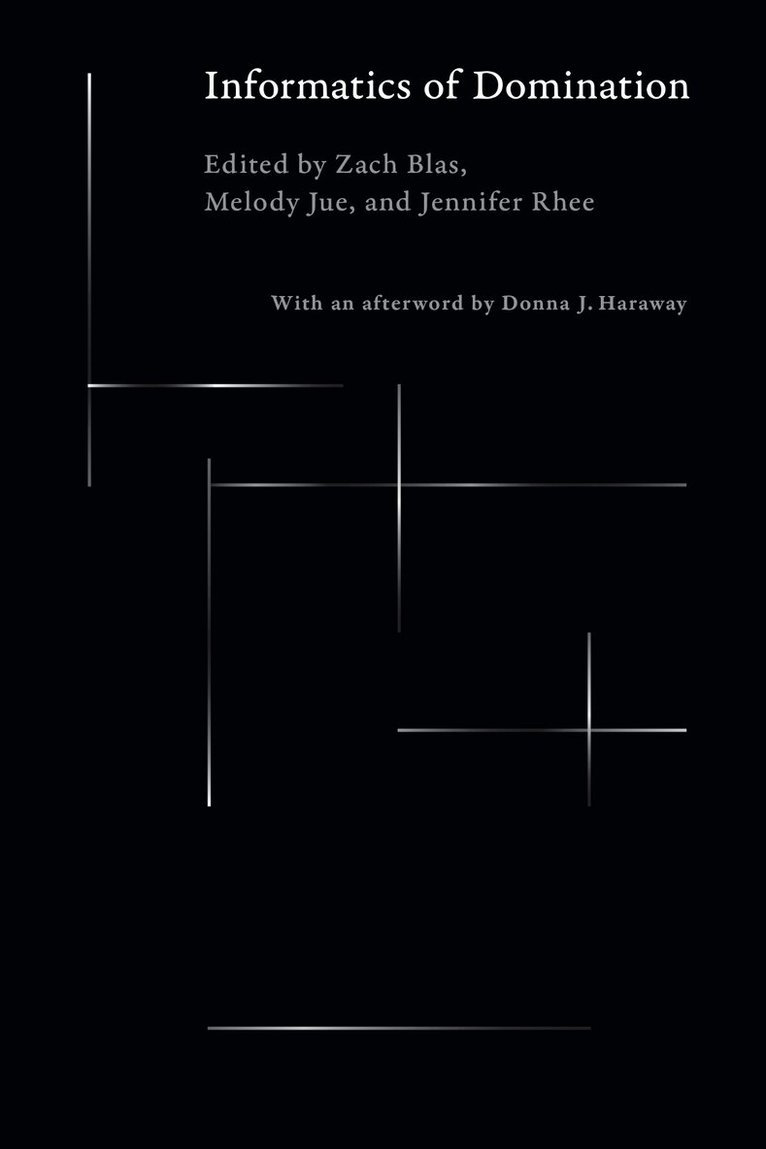
Informatics of Domination is an experimental collection addressing formations of power that manifest through technical systems and white capitalist patriarchy in the twenty-first century. The volume takes its name from a chart in Donna J. Haraway’s canonical 1985 essay “A Manifesto for Cyborgs.” Haraway theorizes the informatics of domination as a feminist, diagrammatic concept for situating power and a world system from which the figure of the cyborg emerges. Informatics of Domination builds on Haraway’s chart as an open structure for thought, inviting fifty scholars, artists, and creative writers to unfold new perspectives. Their writings take on a variety of forms, such as essays on artificial intelligence, disability and protest, and transpacific imaginaries; conversations with an AI trained on Black oral history; a three-dimensional response to Mexico-US border tensions; hand-drawn images on queer autotheory; ecological fictions about gut microbiomes and wet markets; and more. Together, the writings take up the unfinished structure of the chart in order to proliferate critiques of white capitalist patriarchal power with the study of information systems, networks, and computation today. This volume includes an afterword by Haraway.Contributors. Dalida MarÍa Benfield, Zach Blas, Ama Josephine Budge Johnstone, micha cÁrdenas, Amy Sara Carroll, Shu Lea Cheang, Jian Neo Chen, Heather Dewey-Hagborg, Ranjodh Singh Dhaliwal, Stephanie Dinkins, Ricardo Dominguez, Ashley Ferro-Murray, Matthew Fuller, Jacob Gaboury, Jennifer Gabrys, Alexander R. Galloway, Jennifer Mae Hamilton, Donna J. Haraway, Eva Hayward, Stefan Helmreich, Kathy High, Leon J. Hilton, Ho Rui An, Hi'ilei Julia Kawehipuaakahaopulani Hobart, Tung-Hui Hu, Caroline A. Jones, Melody Jue, Homay King, Larissa Lai, Lawrence Lek, Esther Leslie, Alexis Lothian, Isadora Neves Marques, Radha May (Elisa Giardina-Papa, Nupur Mathur, and Bathsheba Okwenje), Shaka McGlotten, Mahan Moalemi, madison moore, Astrida Neimanis, Bahar Noorizadeh, Luciana Parisi, Thao Phan, Ana Teixeira Pinto, Luiza Prado de O. Martins, Rita Raley, Patricia Reed, Jennifer Rhee, Bassem Saad, Ashkan Sepahvand, Justin Talplacido Shoulder, Lucy Suchman, Ollie Zhang
270 kr
Skickas inom 7-10 vardagar
Informatics of Domination is an experimental collection addressing formations of power that manifest through technical systems and white capitalist patriarchy in the twenty-first century. The volume takes its name from a chart in Donna J. Haraway’s canonical 1985 essay “A Manifesto for Cyborgs.” Haraway theorizes the informatics of domination as a feminist, diagrammatic concept for situating power and a world system from which the figure of the cyborg emerges. Informatics of Domination builds on Haraway’s chart as an open structure for thought, inviting fifty scholars, artists, and creative writers to unfold new perspectives. Their writings take on a variety of forms, such as essays on artificial intelligence, disability and protest, and transpacific imaginaries; conversations with an AI trained on Black oral history; a three-dimensional response to Mexico-US border tensions; hand-drawn images on queer autotheory; ecological fictions about gut microbiomes and wet markets; and more. Together, the writings take up the unfinished structure of the chart in order to proliferate critiques of white capitalist patriarchal power with the study of information systems, networks, and computation today. This volume includes an afterword by Haraway.Contributors. Dalida MarÍa Benfield, Zach Blas, Ama Josephine Budge Johnstone, micha cÁrdenas, Amy Sara Carroll, Shu Lea Cheang, Jian Neo Chen, Heather Dewey-Hagborg, Ranjodh Singh Dhaliwal, Stephanie Dinkins, Ricardo Dominguez, Ashley Ferro-Murray, Matthew Fuller, Jacob Gaboury, Jennifer Gabrys, Alexander R. Galloway, Jennifer Mae Hamilton, Donna J. Haraway, Eva Hayward, Stefan Helmreich, Kathy High, Leon J. Hilton, Ho Rui An, Hi'ilei Julia Kawehipuaakahaopulani Hobart, Tung-Hui Hu, Caroline A. Jones, Melody Jue, Homay King, Larissa Lai, Lawrence Lek, Esther Leslie, Alexis Lothian, Isadora Neves Marques, Radha May (Elisa Giardina-Papa, Nupur Mathur, and Bathsheba Okwenje), Shaka McGlotten, Mahan Moalemi, madison moore, Astrida Neimanis, Bahar Noorizadeh, Luciana Parisi, Thao Phan, Ana Teixeira Pinto, Luiza Prado de O. Martins, Rita Raley, Patricia Reed, Jennifer Rhee, Bassem Saad, Ashkan Sepahvand, Justin Talplacido Shoulder, Lucy Suchman, Ollie Zhang
1 167 kr
Skickas inom 10-15 vardagar
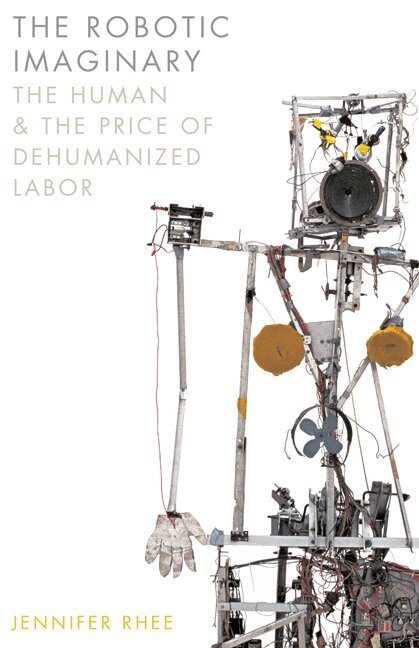
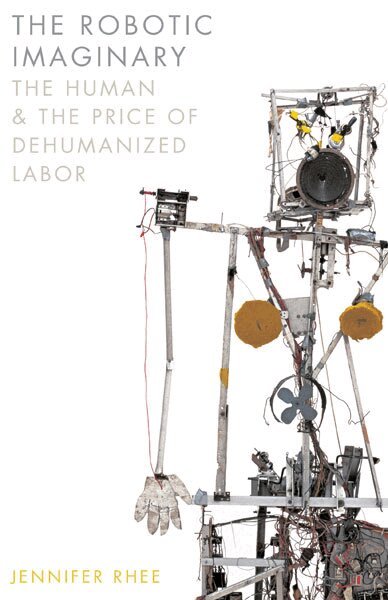
Tracing the connections between human-like robots and AI at the site of dehumanization and exploited laborThe word robot-introduced in Karel Čapek’s 1920 play R.U.R.-derives from rabota, the Czech word for servitude or forced labor. A century later, the play’s dystopian themes of dehumanization and exploited labor are being played out in factories, workplaces, and battlefields. In The Robotic Imaginary, Jennifer Rhee traces the provocative and productive connections of contemporary robots in technology, film, art, and literature. Centered around the twinned processes of anthropomorphization and dehumanization, she analyzes the coevolution of cultural and technological robots and artificial intelligence, arguing that it is through the conceptualization of the human and, more important, the dehumanized that these multiple spheres affect and transform each other.Drawing on the writings of Alan Turing, Sara Ahmed, and Arlie Russell Hochschild; such films and novels as Her and The Stepford Wives; technologies like Kismet (the pioneering “emotional robot”); and contemporary drone art, this book explores anthropomorphic paradigms in robot design and imagery in ways that often challenge the very grounds on which those paradigms operate in robotics labs and industry. From disembodied, conversational AI and its entanglement with care labor; embodied mobile robots as they intersect with domestic labor; emotional robots impacting affective labor; and armed military drones and artistic responses to drone warfare, The Robotic Imaginary ultimately reveals how the human is made knowable through the design of and discourse on humanoid robots that are, paradoxically, dehumanized.
283 kr
Skickas inom 7-10 vardagar
Tracing the connections between human-like robots and AI at the site of dehumanization and exploited laborThe word robot-introduced in Karel Čapek’s 1920 play R.U.R.-derives from rabota, the Czech word for servitude or forced labor. A century later, the play’s dystopian themes of dehumanization and exploited labor are being played out in factories, workplaces, and battlefields. In The Robotic Imaginary, Jennifer Rhee traces the provocative and productive connections of contemporary robots in technology, film, art, and literature. Centered around the twinned processes of anthropomorphization and dehumanization, she analyzes the coevolution of cultural and technological robots and artificial intelligence, arguing that it is through the conceptualization of the human and, more important, the dehumanized that these multiple spheres affect and transform each other.Drawing on the writings of Alan Turing, Sara Ahmed, and Arlie Russell Hochschild; such films and novels as Her and The Stepford Wives; technologies like Kismet (the pioneering “emotional robot”); and contemporary drone art, this book explores anthropomorphic paradigms in robot design and imagery in ways that often challenge the very grounds on which those paradigms operate in robotics labs and industry. From disembodied, conversational AI and its entanglement with care labor; embodied mobile robots as they intersect with domestic labor; emotional robots impacting affective labor; and armed military drones and artistic responses to drone warfare, The Robotic Imaginary ultimately reveals how the human is made knowable through the design of and discourse on humanoid robots that are, paradoxically, dehumanized.
Palgrave Handbook of Twentieth and Twenty-First Century Literature and Science
Inbunden, Engelska, 2020
2 646 kr
Skickas inom 10-15 vardagar
This handbook illustrates the evolution of literature and science, in collaboration and contestation, across the twentieth and twenty-first centuries. The essays it gathers question the charged rhetoric that pits science against the humanities while also demonstrating the ways in which the convergence of literary and scientific approaches strengthens cultural analyses of colonialism, race, sex, labor, state formation, and environmental destruction.The broad scope of this collection explores the shifting relations between literature and science that have shaped our own cultural moment, sometimes in ways that create a problematic hierarchy of knowledge and other times in ways that encourage fruitful interdisciplinary investigations, innovative modes of knowledge production, and politically charged calls for social justice. Across units focused on epistemologies, techniques and methods, ethics and politics, and forms and genres, the chapters address problems rangingacross epidemiology and global health, genomics and biotechnology, environmental and energy sciences, behaviorism and psychology, physics, and computational and surveillance technologies.Chapter 19 is available open access under a Creative Commons Attribution 4.0 International License via link.springer.com.
Palgrave Handbook of Twentieth and Twenty-First Century Literature and Science
Häftad, Engelska, 2021
2 646 kr
Skickas inom 10-15 vardagar
This handbook illustrates the evolution of literature and science, in collaboration and contestation, across the twentieth and twenty-first centuries. The essays it gathers question the charged rhetoric that pits science against the humanities while also demonstrating the ways in which the convergence of literary and scientific approaches strengthens cultural analyses of colonialism, race, sex, labor, state formation, and environmental destruction.The broad scope of this collection explores the shifting relations between literature and science that have shaped our own cultural moment, sometimes in ways that create a problematic hierarchy of knowledge and other times in ways that encourage fruitful interdisciplinary investigations, innovative modes of knowledge production, and politically charged calls for social justice. Across units focused on epistemologies, techniques and methods, ethics and politics, and forms and genres, the chapters address problems rangingacross epidemiology and global health, genomics and biotechnology, environmental and energy sciences, behaviorism and psychology, physics, and computational and surveillance technologies.Chapter 19 is available open access under a Creative Commons Attribution 4.0 International License via link.springer.com.