Jerry M. Burger – författare
Visar alla böcker från författaren Jerry M. Burger. Handla med fri frakt och snabb leverans.
10 produkter
10 produkter
E-bok
Engelska, 20171 986 kr
Läs direkt efter köp
The study of social influence has been central to social psychology since its inception. In fact, research on social influence predated the coining of the term social psychology. Its influence continued through the 1960s, when it made seminal contributions to the beginning of social psychology''s golden age. However, by the mid-1980s, interest in this area waned, while at the same time, and perhaps not coincidentally, interest in social cognition waxed. Now the pendulum is swinging back, as seen in growing interest in non-cognitive, motivational accounts.The Oxford Handbook of Social Influence will contribute to a resurgence of interest in social influence that will restore it to its once preeminent position. Written by leading scholars, the chapters cover a variety of topics related to social influence, incorporating a range of levels of analysis (intrapersonal, interpersonal, and intragroup) and both source (the influencers) and target (the influenced) effects. The volume also examines theories that are most relevant to social infl uence, as well as social influence in applied settings.The chapters contribute to the renaissance of interest in social influence by showing that it is time to reexamine classic topics in social influence; by illustrating how integrations/ elaborations that advance our understanding of social influence processes are now possible; by revealing gaps in the social influence literature; and by suggesting future lines of research. Perhaps the most important of these lines of work will take into account the change from traditional social influence that occurs face-to-face to social media-mediated influence that is likely to characterize many of our interactions in the future.
Inbunden, Engelska, 2017
2 215 kr
Skickas inom 5-8 vardagar
The study of social influence has been central to social psychology since its inception. In fact, research on social influence began all the way back to the late 1800s, predating the term 'social psychology' as we know it today. And while the area's influence continued through the beginning of social psychology's golden age, by the mid-1980s, interest declined while interest in social cognition increased. Today, however, the pendulum is swinging back, and is evident from the growing interest in non-cognitive, motivational accounts of the field.Edited by Stephen G. Harkins, Kipling D. Williams, and Jerry M. Burger, The Oxford Handbook of Social Influence is a landmark contribution to the resurging interest in social influence, restoring this important field to its once preeminent position within social psychology. In this volume, Harkins, Williams, and Burger lead a team of leading scholars as they explore a variety of topics within social influence, seamlessly incorporating a range of analyses (including intrapersonal, interpersonal, and intragroup), and examine critical theories and the role of social influence in applied settings today.The Oxford Handbook of Social Influence contributes to emerging interest in social influence in a variety of ways. Chapters cover classic topics in the context of what has been learned since the original research was conducted, while other contributions showcase how integrations and elaborations that initially advanced our understanding of social influence processes are now within reach. Additional chapters also reveal the gaps in social influence literature, and go on to suggest future lines of research and exploration.
E-bok
PDF, Engelska, 20171 986 kr
Läs direkt efter köp
The study of social influence has been central to social psychology since its inception. In fact, research on social influence predated the coining of the term social psychology. Its influence continued through the 1960s, when it made seminal contributions to the beginning of social psychology''s golden age. However, by the mid-1980s, interest in this area waned, while at the same time, and perhaps not coincidentally, interest in social cognition waxed. Now the pendulum is swinging back, as seen in growing interest in non-cognitive, motivational accounts.The Oxford Handbook of Social Influence will contribute to a resurgence of interest in social influence that will restore it to its once preeminent position. Written by leading scholars, the chapters cover a variety of topics related to social influence, incorporating a range of levels of analysis (intrapersonal, interpersonal, and intragroup) and both source (the influencers) and target (the influenced) effects. The volume also examines theories that are most relevant to social infl uence, as well as social influence in applied settings.The chapters contribute to the renaissance of interest in social influence by showing that it is time to reexamine classic topics in social influence; by illustrating how integrations/ elaborations that advance our understanding of social influence processes are now possible; by revealing gaps in the social influence literature; and by suggesting future lines of research. Perhaps the most important of these lines of work will take into account the change from traditional social influence that occurs face-to-face to social media-mediated influence that is likely to characterize many of our interactions in the future.
Inbunden, Engelska, 1992
1 116 kr
Skickas inom 10-15 vardagar
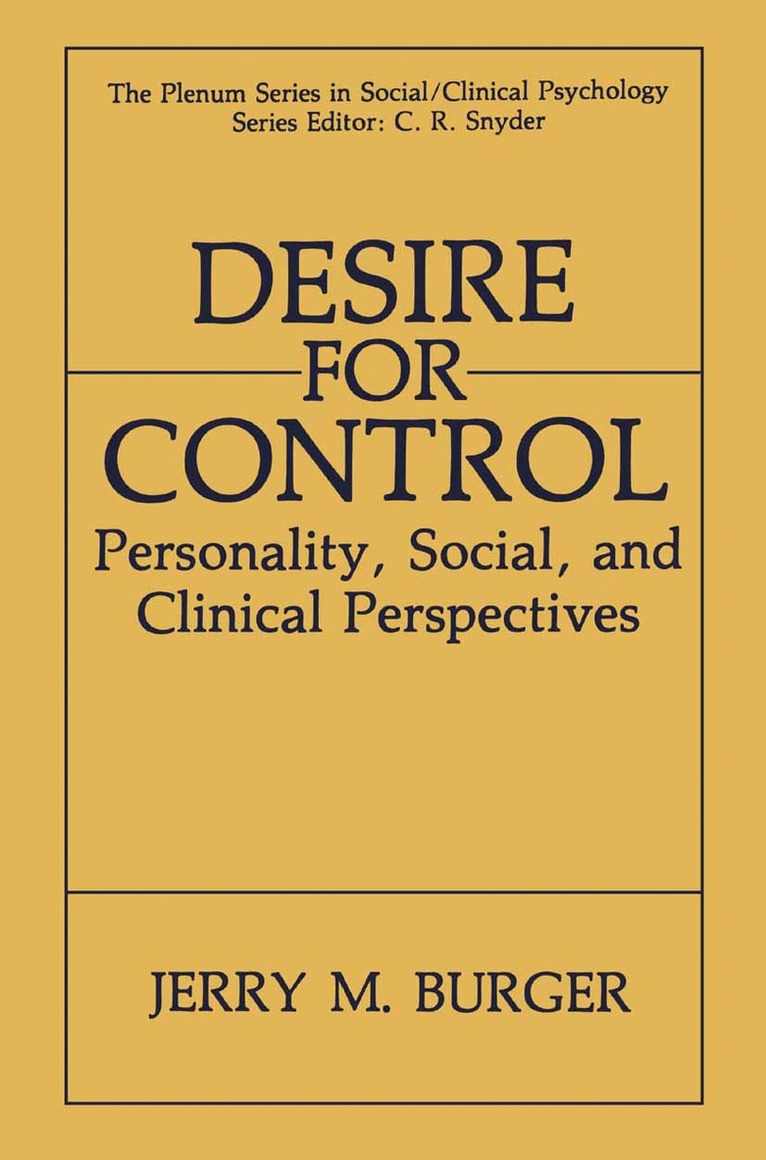
This book is a cumulation of a research program that began in the sum mer of 1978, when I was a doctoral student at the University of Missouri. What started as a graduate student' s curiosity about individual differ ences in need for personal control led to a personality scale, a few pub lications, some additional questions, and additional research. For reasons I no longer recall, I named this personality trait desire for control. One study led to another, and questions by students and colleagues often spurred me to apply desire for control to new areas and new questions. At the same time, researchers around the globe began using the scale and sending me reprints of articles and copies of papers describing work they had done on desire for contro!. In the past decade or so, I have talked or corresponded with dozens of students who have used the scale in their doctoral dissertation and master's thesis research. I have heard of or seen translations of the Desirability of Control Scale into German, Polish, Japanese, and French. There is also a children's version of the scale. I estirnate that there have now been more than a hundred studies conducted on desire for contro!.
Inbunden, Engelska, 2017
2 754 kr
Skickas inom 10-15 vardagar
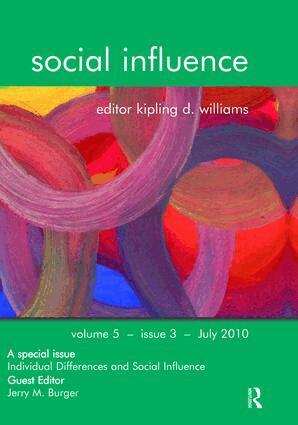
Despite widespread acknowledgment that both personal and situational factors influence behavior, researchers in the area of social influence have been slow to examine individual differences in their work. Indeed, social influence investigators often point to their findings to illustrate the power of situational variables relative to personal causes of behavior. However, as the articles in this volume demonstrate, social influence researchers can obtain a greater understanding of the phenomena they study by incorporating individual difference variables into their research.
Inbunden, Engelska, 2011
683 kr
Skickas inom 10-15 vardagar
Each year millions of American adults visit a childhood home. Few can anticipate the effect it will have on them. Often serving several important psychological needs, these trips are not intended as visits with people from their past. Rather, those returning to their homes have a strong desire to visit the places that comprised the landscape of their childhood. Approximately one third of American adults over the age of thirty have visited a childhood home. This book describes some of their experiences and the psychology behind the journeys.Most people who visit a childhood home are motivated by a desire to connect with their past. Seeing the buildings, schools, parks, and playgrounds from their youth helps to establish the psychological and emotional link between the child in the black-and-white photographs and the person they are today. Many people use the trip to get in touch with the values and principles they were taught as children, often as a means to get their lives back on track. Others use that journey to strengthen emotional bonds between themselves and loved ones. Still others return to former homes to work through psychological issues left over from sad or traumatic childhoods. No matter the reason, there are few experiences in one's life that can move a person as deeply and unpredictably as returning home.
Häftad, Engelska, 2017
304 kr
Skickas inom 10-15 vardagar
Each year millions of American adults visit a childhood home. Few can anticipate the effect it will have on them. Often serving several important psychological needs, these trips are not intended as visits with people from their past. Rather, those returning to their homes have a strong desire to visit the places that comprised the landscape of their childhood. Approximately one third of American adults over the age of thirty have visited a childhood home. This book describes some of their experiences and the psychology behind the journeys.Most people who visit a childhood home are motivated by a desire to connect with their past. Seeing the buildings, schools, parks, and playgrounds from their youth helps to establish the psychological and emotional link between the child in the black-and-white photographs and the person they are today. Many people use the trip to get in touch with the values and principles they were taught as children, often as a means to get their lives back on track. Others use that journey to strengthen emotional bonds between themselves and loved ones. Still others return to former homes to work through psychological issues left over from sad or traumatic childhoods. No matter the reason, there are few experiences in one's life that can move a person as deeply and unpredictably as returning home.
E-bok
PDF, Engelska, 20131 459 kr
Läs direkt efter köp
This book is a cumulation of a research program that began in the sum mer of 1978, when I was a doctoral student at the University of Missouri. What started as a graduate student'' s curiosity about individual differ ences in need for personal control led to a personality scale, a few pub lications, some additional questions, and additional research. For reasons I no longer recall, I named this personality trait desire for control. One study led to another, and questions by students and colleagues often spurred me to apply desire for control to new areas and new questions. At the same time, researchers around the globe began using the scale and sending me reprints of articles and copies of papers describing work they had done on desire for contro!. In the past decade or so, I have talked or corresponded with dozens of students who have used the scale in their doctoral dissertation and master''s thesis research. I have heard of or seen translations of the Desirability of Control Scale into German, Polish, Japanese, and French. There is also a children''s version of the scale. I estirnate that there have now been more than a hundred studies conducted on desire for contro!.
Häftad, Engelska, 2013
1 116 kr
Skickas inom 10-15 vardagar
This book is a cumulation of a research program that began in the sum mer of 1978, when I was a doctoral student at the University of Missouri. What started as a graduate student' s curiosity about individual differ ences in need for personal control led to a personality scale, a few pub lications, some additional questions, and additional research. For reasons I no longer recall, I named this personality trait desire for control. One study led to another, and questions by students and colleagues often spurred me to apply desire for control to new areas and new questions. At the same time, researchers around the globe began using the scale and sending me reprints of articles and copies of papers describing work they had done on desire for contro!. In the past decade or so, I have talked or corresponded with dozens of students who have used the scale in their doctoral dissertation and master's thesis research. I have heard of or seen translations of the Desirability of Control Scale into German, Polish, Japanese, and French. There is also a children's version of the scale. I estirnate that there have now been more than a hundred studies conducted on desire for contro!.
Häftad, Engelska, 2010
762 kr
Skickas inom 10-15 vardagar
Despite widespread acknowledgment that both personal and situational factors influence behavior, researchers in the area of social influence have been slow to examine individual differences in their work. Indeed, social influence investigators often point to their findings to illustrate the power of situational variables relative to personal causes of behavior. However, as the articles in this volume demonstrate, social influence researchers can obtain a greater understanding of the phenomena they study by incorporating individual difference variables into their research.