Joe W. Huseby – Författare
Visar alla böcker från författaren Joe W. Huseby. Handla med fri frakt och snabb leverans.
3 produkter
3 produkter
1 080 kr
Skickas inom 10-15 vardagar
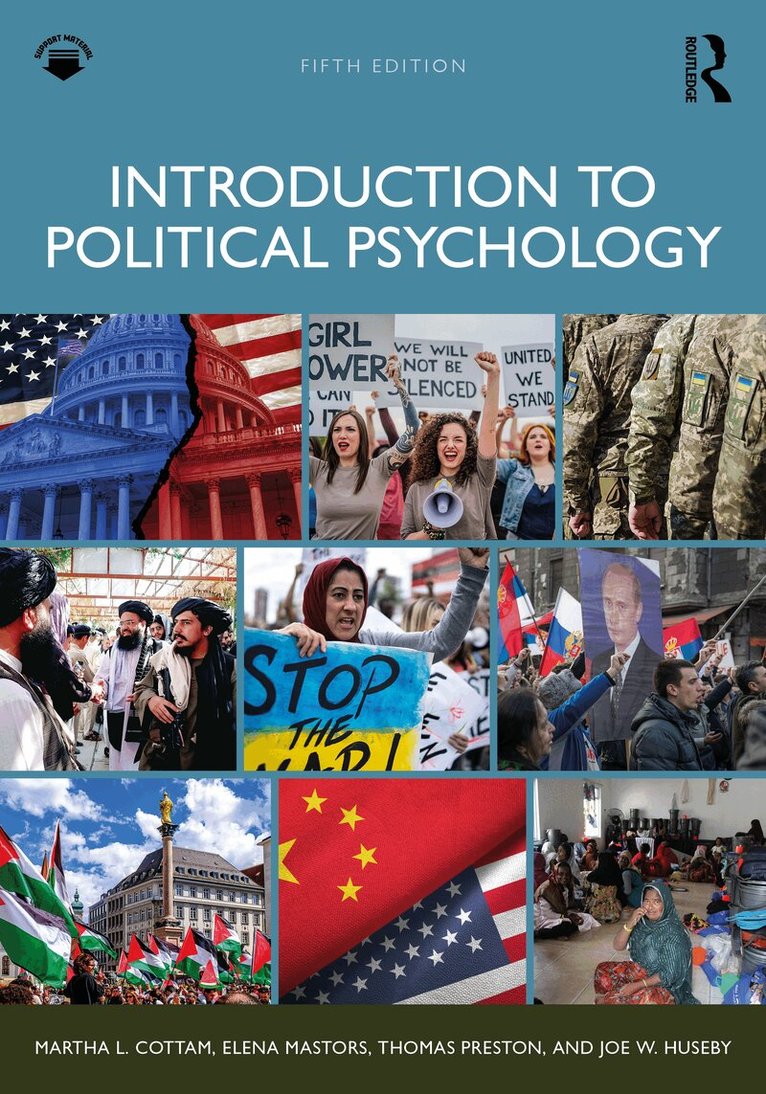
This fifth edition of Introduction to Political Psychology explores the many psychological patterns that influence individual political behavior. The authors introduce readers to a broad range of theories, concepts, and case studies of political activity, arguing that individuals are driven or motivated to act in accordance with personality characteristics, values, beliefs, and attachments to groups. The book explains many aspects of political behavior—whether seemingly pathological actions or normal decision-making practices, which sometimes work optimally, and sometimes fail.Thoroughly updated throughout, the book examines patterns of political behavior in areas including leadership, group behavior, voting, race, nationalism, terrorism, and war. This edition features:Detailed coverage of political polarization, and the psychology behind it;Up-to-date topics and case studies focused on the 2024 US election, the war in Ukraine, and the Israel–Palestine conflict, as well as social movements such as climate change activism, Black Lives Matter, and #MeToo;A robust suite of timesaving support material.Accessibly written and comprehensive in scope, it is an essential companion for all graduate and upper-level undergraduate students of psychology, political science, and political psychology. It will also be of interest to those in the policy-making community, especially those looking to learn more about the extent to which perceptions, personality, and group dynamics affect the policy-making arena.
2 045 kr
Skickas inom 10-15 vardagar
This fifth edition of Introduction to Political Psychology explores the many psychological patterns that influence individual political behavior. The authors introduce readers to a broad range of theories, concepts, and case studies of political activity, arguing that individuals are driven or motivated to act in accordance with personality characteristics, values, beliefs, and attachments to groups. The book explains many aspects of political behavior—whether seemingly pathological actions or normal decision-making practices, which sometimes work optimally, and sometimes fail.Thoroughly updated throughout, the book examines patterns of political behavior in areas including leadership, group behavior, voting, race, nationalism, terrorism, and war. This edition features:Detailed coverage of political polarization, and the psychology behind it;Up-to-date topics and case studies focused on the 2024 US election, the war in Ukraine, and the Israel–Palestine conflict, as well as social movements such as climate change activism, Black Lives Matter, and #MeToo;A robust suite of timesaving support material.Accessibly written and comprehensive in scope, it is an essential companion for all graduate and upper-level undergraduate students of psychology, political science, and political psychology. It will also be of interest to those in the policy-making community, especially those looking to learn more about the extent to which perceptions, personality, and group dynamics affect the policy-making arena.
695 kr
Skickas inom 10-15 vardagar
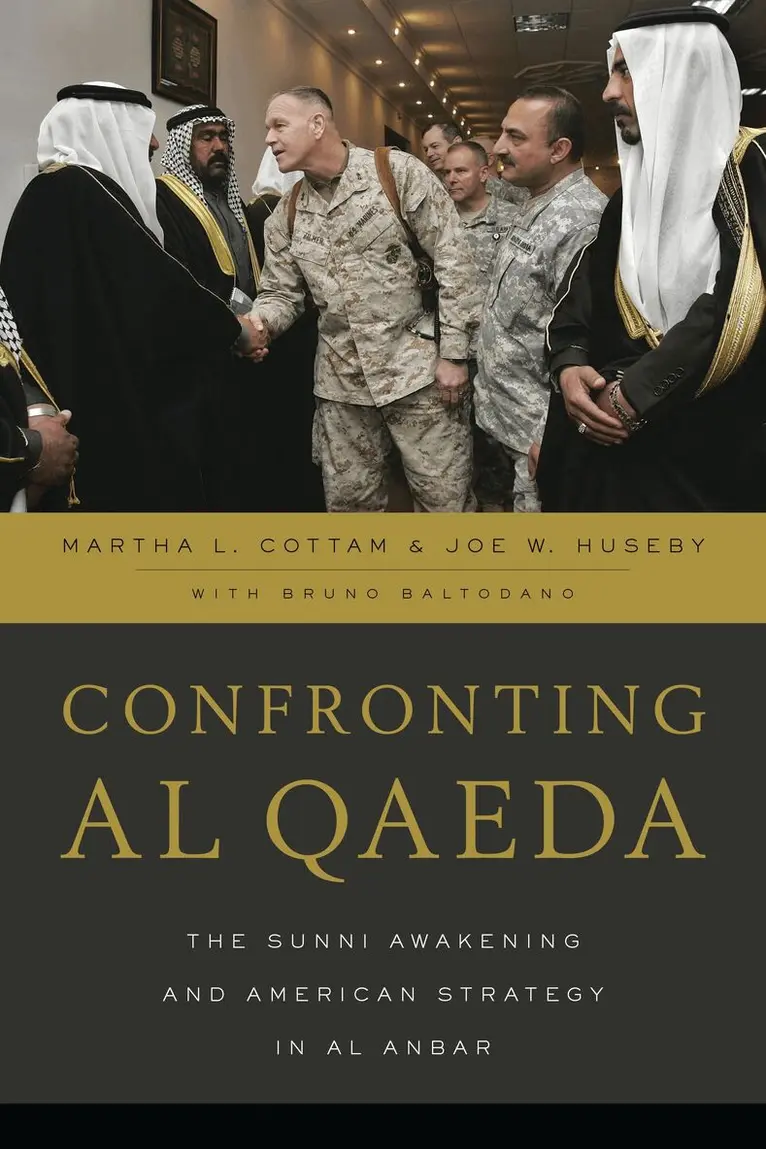
Based on in-depth interviews with tribal Sheiks involved in the Awakening and their American military counterparts, Confronting al Qaeda is a study of decision-making processes and the political psychology of the Sunni Awakening in al Anbar. It traces the change in American military strategy that made the Awakening collaboration between the Sunni tribes and the U.S. forces possible. It explains how the evolution of the tribal leaders’ perspective and of the American military strategy led to defeat al Qaeda in al Anbar. The process of these changing mutual images is detailed as well as how the cooperation between groups led to further evolution of perceptions. Political and military realities urgently forced these perceptual and social identity shifts initially, but the process of cooperation and engagement accelerated these shifts through increasingly mutually beneficial cooperation and interaction during the battle with al Qaeda in Iraq.