Martha L. Cottam – Författare
Visar alla böcker från författaren Martha L. Cottam. Handla med fri frakt och snabb leverans.
7 produkter
7 produkter
1 009 kr
Skickas inom 10-15 vardagar
As the field of political psychology has grown, so has the study of foreign policy behavior and motivation. This collection of essays offers the metaphor of drama to pull together the conceptual and behavioral elements of current concepts in the field. The volume uses a common political framework to examine the impact of perceptual changes resulting from the end of the Cold War on the organization and interpretation of international issues. Exploring trends in the superpowers, Europe, Africa and Asia, and examining issues ranging from security to political and human rights matters, the analyses point out a number of trends in policy and strategy that are associated with patterns of perceptual change.In general these essays take a more pessimistic view of post-Cold War policy trends than one finds in the field at the moment. The articles examine the confusion and potential for continued international conflict that result from the end of the Cold War and they argue that cooperation in international politics in not an inevitable outcome of the new relationship between the United States and the Soviet Union. They argue that there is much greater opportunity for new directions in conflict resolution but that without careful attention to the reformulation of perceptions and policy, those opportunities could be lost.
Role of Female Combatants in the Nicaraguan Revolution and Counter Revolutionary War
Inbunden, Engelska, 2019
847 kr
Skickas inom 10-15 vardagar
The revolution in Nicaragua was unique in that a large percentage of the combatants were women. The Role of Female Combatants in the Nicaraguan Revolution and Counter Revolutionary War is a study of these women and those who fought in the Contra counter revolution on the Atlantic Coast. This book is a qualitative study based on 85 interviews with female ex-combatants in the revolution and counter revolution from the 1960s to the end of the 1980s, as well as field observations in Nicaragua and the autonomous regions of the Atlantic Coast. It explores the reasons why women fought, the sacrifices they made, their treatment by male combatants, and their insights into the impact of the revolution and counter-revolution on today’s Nicaragua. The analytical approach draws from political psychology, social identity dynamics such as nationalism and indigenous identities, and the role of liberation theology in the willingness of the female revolutionaries to risk their lives. Researchers and students of Gender Studies, Latin American and Latino Studies, and Political History will find this an illuminating account of the Nicaraguan Revolution and counter revolution, which until now has been rarely shared.
1 067 kr
Skickas
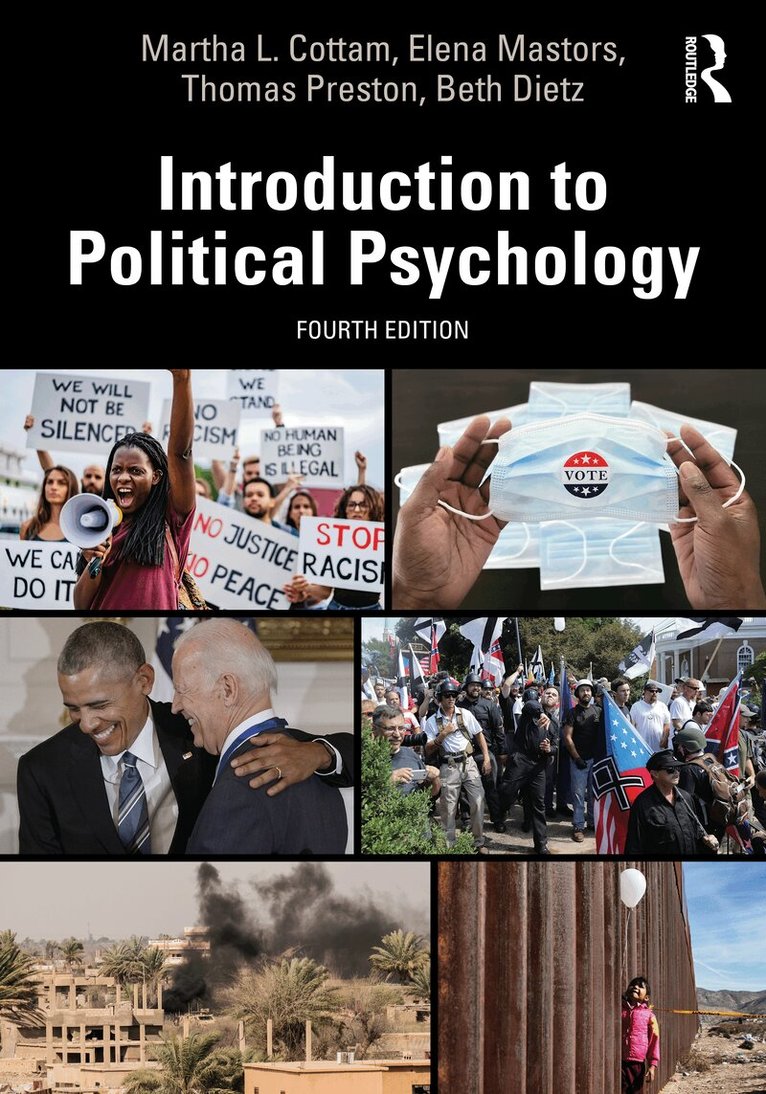
Introduction to Political Psychology explores the many psychological patterns that influence individual political behavior. The authors introduce readers to a broad range of theories, concepts, and case studies of political activity, arguing that individuals are driven or motivated to act in accordance with personality characteristics, values, beliefs, and attachments to groups. The book explains many aspects of political behavior—whether seemingly pathological actions or normal decision-making practices, which sometimes work optimally, and sometimes fail.Thoroughly updated throughout, the book examines patterns of political behavior in areas including leadership, group behavior, voting, race, nationalism, terrorism, and war. This edition features coverage of the 2016 election and profiles former U.S. President Donald Trump, while also including updated data on race relations and extremist groups in the United States. Global issues are also considered, with case studies focused on Myanmar and Syria, alongside coverage of social issues including Black Lives Matter and the #MeToo movement.Accessibly written and comprehensive in scope, it is an essential companion for all graduate and upper-level undergraduate students of psychology, political science, and political psychology. It will also be of interest to those in the policy-making community, especially those looking to learn more about the extent to which perceptions, personality, and group dynamics affect the policy-making arena.It is accompanied by a set of online instructor resources.
Role of Female Combatants in the Nicaraguan Revolution and Counter Revolutionary War
Häftad, Engelska, 2020
357 kr
Skickas inom 10-15 vardagar
The revolution in Nicaragua was unique in that a large percentage of the combatants were women. The Role of Female Combatants in the Nicaraguan Revolution and Counter Revolutionary War is a study of these women and those who fought in the Contra counter revolution on the Atlantic Coast. This book is a qualitative study based on 85 interviews with female ex-combatants in the revolution and counter revolution from the 1960s to the end of the 1980s, as well as field observations in Nicaragua and the autonomous regions of the Atlantic Coast. It explores the reasons why women fought, the sacrifices they made, their treatment by male combatants, and their insights into the impact of the revolution and counter-revolution on today’s Nicaragua. The analytical approach draws from political psychology, social identity dynamics such as nationalism and indigenous identities, and the role of liberation theology in the willingness of the female revolutionaries to risk their lives. Researchers and students of Gender Studies, Latin American and Latino Studies, and Political History will find this an illuminating account of the Nicaraguan Revolution and counter revolution, which until now has been rarely shared.
1 080 kr
Skickas inom 10-15 vardagar
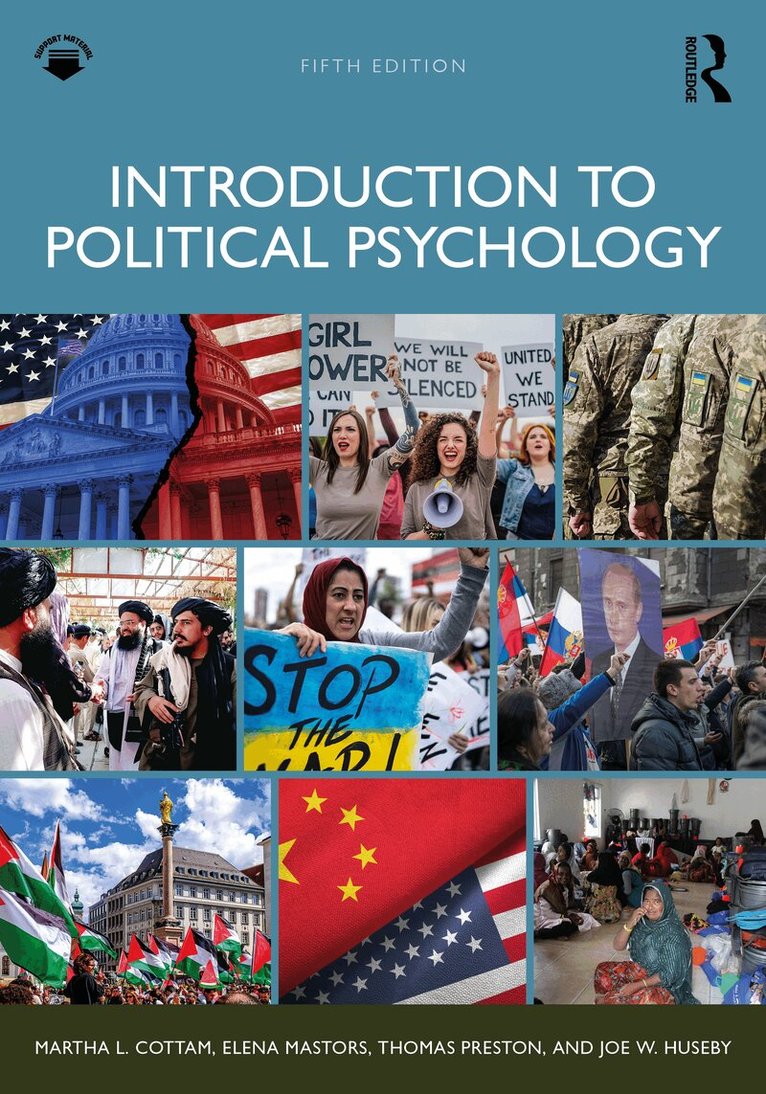
This fifth edition of Introduction to Political Psychology explores the many psychological patterns that influence individual political behavior. The authors introduce readers to a broad range of theories, concepts, and case studies of political activity, arguing that individuals are driven or motivated to act in accordance with personality characteristics, values, beliefs, and attachments to groups. The book explains many aspects of political behavior—whether seemingly pathological actions or normal decision-making practices, which sometimes work optimally, and sometimes fail.Thoroughly updated throughout, the book examines patterns of political behavior in areas including leadership, group behavior, voting, race, nationalism, terrorism, and war. This edition features:Detailed coverage of political polarization, and the psychology behind it;Up-to-date topics and case studies focused on the 2024 US election, the war in Ukraine, and the Israel–Palestine conflict, as well as social movements such as climate change activism, Black Lives Matter, and #MeToo;A robust suite of timesaving support material.Accessibly written and comprehensive in scope, it is an essential companion for all graduate and upper-level undergraduate students of psychology, political science, and political psychology. It will also be of interest to those in the policy-making community, especially those looking to learn more about the extent to which perceptions, personality, and group dynamics affect the policy-making arena.
2 045 kr
Skickas inom 10-15 vardagar
This fifth edition of Introduction to Political Psychology explores the many psychological patterns that influence individual political behavior. The authors introduce readers to a broad range of theories, concepts, and case studies of political activity, arguing that individuals are driven or motivated to act in accordance with personality characteristics, values, beliefs, and attachments to groups. The book explains many aspects of political behavior—whether seemingly pathological actions or normal decision-making practices, which sometimes work optimally, and sometimes fail.Thoroughly updated throughout, the book examines patterns of political behavior in areas including leadership, group behavior, voting, race, nationalism, terrorism, and war. This edition features:Detailed coverage of political polarization, and the psychology behind it;Up-to-date topics and case studies focused on the 2024 US election, the war in Ukraine, and the Israel–Palestine conflict, as well as social movements such as climate change activism, Black Lives Matter, and #MeToo;A robust suite of timesaving support material.Accessibly written and comprehensive in scope, it is an essential companion for all graduate and upper-level undergraduate students of psychology, political science, and political psychology. It will also be of interest to those in the policy-making community, especially those looking to learn more about the extent to which perceptions, personality, and group dynamics affect the policy-making arena.
695 kr
Skickas inom 10-15 vardagar
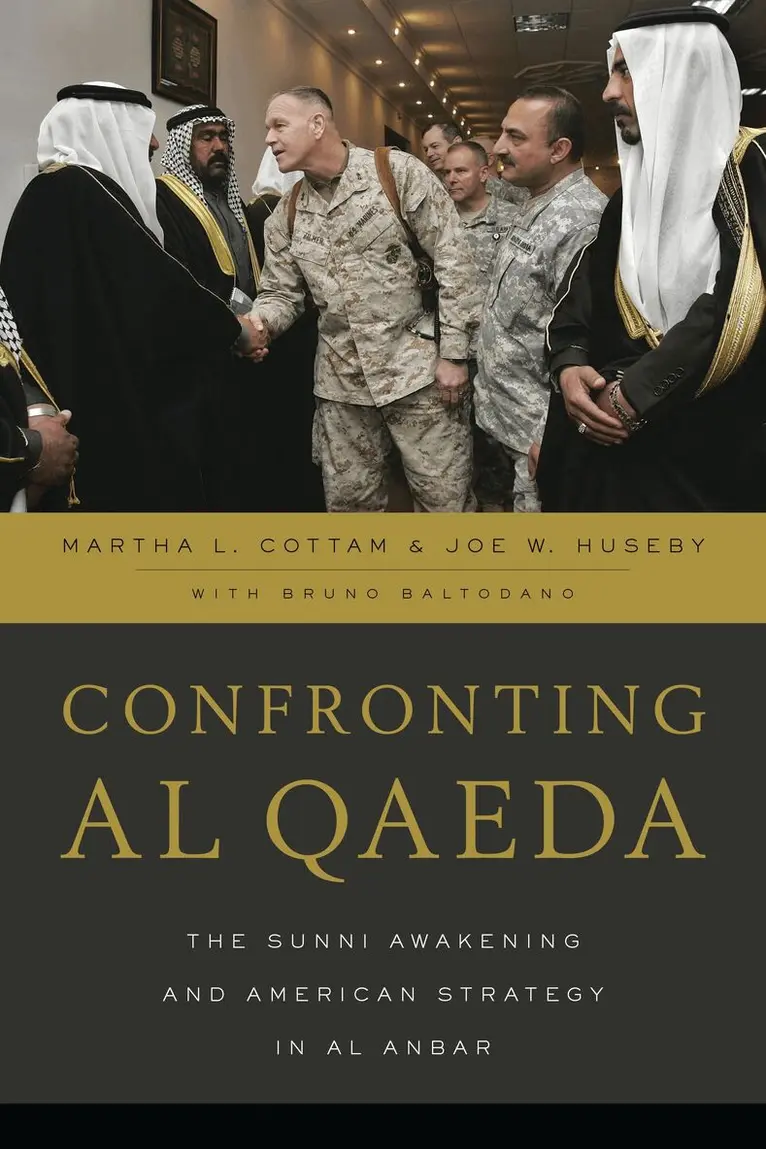
Based on in-depth interviews with tribal Sheiks involved in the Awakening and their American military counterparts, Confronting al Qaeda is a study of decision-making processes and the political psychology of the Sunni Awakening in al Anbar. It traces the change in American military strategy that made the Awakening collaboration between the Sunni tribes and the U.S. forces possible. It explains how the evolution of the tribal leaders’ perspective and of the American military strategy led to defeat al Qaeda in al Anbar. The process of these changing mutual images is detailed as well as how the cooperation between groups led to further evolution of perceptions. Political and military realities urgently forced these perceptual and social identity shifts initially, but the process of cooperation and engagement accelerated these shifts through increasingly mutually beneficial cooperation and interaction during the battle with al Qaeda in Iraq.