John Armour - Böcker
Visar alla böcker från författaren John Armour. Handla med fri frakt och snabb leverans.
8 produkter
8 produkter
542 kr
Skickas inom 5-8 vardagar
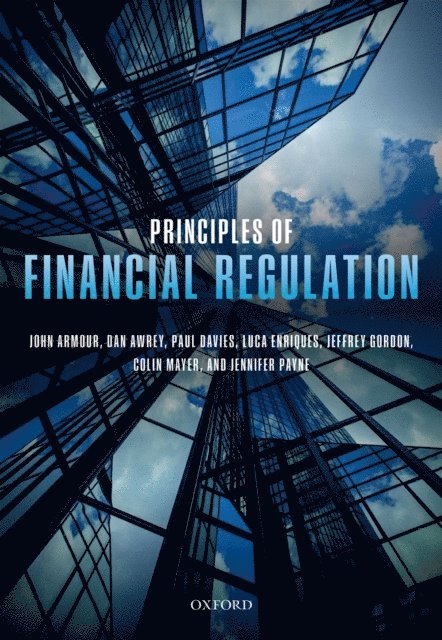
The financial crisis of 2007-9 revealed serious failings in the regulation of financial institutions and markets, and prompted a fundamental reconsideration of the design of financial regulation. As the financial system has become ever-more complex and interconnected, the pace of evolution continues to accelerate. It is now clear that regulation must focus on the financial system as a whole, but this poses significant challenges for regulators. Principles of Financial Regulation describes how to address those challenges. Examining the subject from a holistic and multidisciplinary perspective, Principles of Financial Regulation considers the underlying policies and the objectives of regulation by drawing on economics, finance, and law methodologies. The volume examines regulation in a purposive and dynamic way by framing the book in terms of what the financial system does, rather than what financial regulation is. By analysing specific regulatory measures, the book provides readers to the opportunity to assess regulatory choices on specific policy issues and encourages critical reflection on the design of regulation.
487 kr
Skickas inom 5-8 vardagar
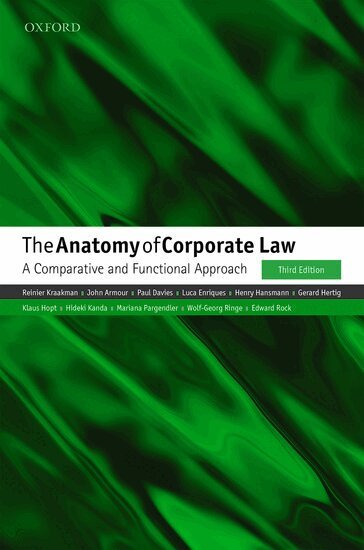
This is the long-awaited third edition of this highly regarded comparative overview of corporate law. This edition has been comprehensively revised and updated to reflect the profound changes in corporate law and governance practices that have taken place since the previous edition. These include numerous regulatory changes following the financial crisis of 2007-09 and the changing landscape of governance, especially in the US, with the ever more central role of institutional investors as (active) owners of corporations. The geographic scope of the coverage has been broadened to include an important emerging economy, Brazil. In addition, the book now incorporates analysis of the burgeoning use of corporate law to protect the interests of "external constituencies" without any contractual relationship to a company, in an attempt to tackle broader social and economic problems. The authors start from the premise that corporations (or companies) in all jurisdictions share the same key legal attributes: legal personality, limited liability, delegated management, transferable shares, and investor ownership. Businesses using the corporate form give rise to three basic types of agency problems: those between managers and shareholders as a class; controlling shareholders and minority shareholders; and shareholders as a class and other corporate constituencies, such as corporate creditors and employees. After identifying the common set of legal strategies used to address these agency problems and discussing their interaction with enforcement institutions, The Anatomy of Corporate Law illustrates how a number of core jurisdictions around the world deploy such strategies. In so doing, the book highlights the many commonalities across jurisdictions and reflects on the reasons why they may differ on specific issues. The analysis covers the basic governance structure of the corporation, including the powers of the board of directors and the shareholder meeting, both when management and when a dominant shareholder is in control. It then analyses the role of corporate law in shaping labor relationships, protection of external stakeholders, relationships with creditors, related-party transactions, fundamental corporate actions such as mergers and charter amendments, takeovers, and the regulation of capital markets. The Anatomy of Corporate Law has established itself as the leading book in the field of comparative corporate law. Across the world, students and scholars at various stages in their careers, from undergraduate law students to well-established authorities in the field, routinely consult this book as a starting point for their inquiries.
1 392 kr
Skickas inom 5-8 vardagar
This is the long-awaited third edition of this highly regarded comparative overview of corporate law. This edition has been comprehensively revised and updated to reflect the profound changes in corporate law and governance practices that have taken place since the previous edition. These include numerous regulatory changes following the financial crisis of 2007-09 and the changing landscape of governance, especially in the US, with the ever more central role of institutional investors as (active) owners of corporations. The geographic scope of the coverage has been broadened to include an important emerging economy, Brazil. In addition, the book now incorporates analysis of the burgeoning use of corporate law to protect the interests of "external constituencies" without any contractual relationship to a company, in an attempt to tackle broader social and economic problems. The authors start from the premise that corporations (or companies) in all jurisdictions share the same key legal attributes: legal personality, limited liability, delegated management, transferable shares, and investor ownership. Businesses using the corporate form give rise to three basic types of agency problems: those between managers and shareholders as a class; controlling shareholders and minority shareholders; and shareholders as a class and other corporate constituencies, such as corporate creditors and employees. After identifying the common set of legal strategies used to address these agency problems and discussing their interaction with enforcement institutions, The Anatomy of Corporate Law illustrates how a number of core jurisdictions around the world deploy such strategies. In so doing, the book highlights the many commonalities across jurisdictions and reflects on the reasons why they may differ on specific issues. The analysis covers the basic governance structure of the corporation, including the powers of the board of directors and the shareholder meeting, both when management and when a dominant shareholder is in control. It then analyses the role of corporate law in shaping labor relationships, protection of external stakeholders, relationships with creditors, related-party transactions, fundamental corporate actions such as mergers and charter amendments, takeovers, and the regulation of capital markets. The Anatomy of Corporate Law has established itself as the leading book in the field of comparative corporate law. Across the world, students and scholars at various stages in their careers, from undergraduate law students to well-established authorities in the field, routinely consult this book as a starting point for their inquiries.
2 594 kr
Skickas inom 7-10 vardagar
The financial crisis of 2007-9 revealed serious failings in the regulation of financial institutions and markets, and prompted a fundamental reconsideration of the design of financial regulation. As the financial system has become ever-more complex and interconnected, the pace of evolution continues to accelerate. It is now clear that regulation must focus on the financial system as a whole, but this poses significant challenges for regulators. Principles of Financial Regulation describes how to address those challenges. Examining the subject from a holistic and multidisciplinary perspective, Principles of Financial Regulation considers the underlying policies and the objectives of regulation by drawing on economics, finance, and law methodologies. The volume examines regulation in a purposive and dynamic way by framing the book in terms of what the financial system does, rather than what financial regulation is. By analysing specific regulatory measures, the book provides readers to the opportunity to assess regulatory choices on specific policy issues and encourages critical reflection on the design of regulation.
433 kr
Skickas inom 7-10 vardagar
Brexit is on its way. By mid 2019, the UK will no longer be a member of the European Union and its new relationship with the EU will be have taken shape. Getting to that point will involve complex negotiations untangling legal, economic and political issues. This volume brings together leading commentators to examine three crucial questions on the risk, the negotiating framework and the process.
4 166 kr
Skickas inom 10-15 vardagar
This book examines powers and remedies available to a liquidator or administrator that render 'vulnerable' the company's prior contractual commitments or proprietary dispositions so as to enhance the asset pool available to creditors. In the process,the book does two things. First, it offers comprehensive accounts of the relevant causes of action: undervalue transactions, preferences, late floating charges, unregistered charges, transactions defrauding creditors, gratuitous corporate transactions and post-petition dispositions in liquidation. Secondly, it seeks to raise issues about the context and purpose of these causes of action, many of which have not yet been fully explored in the case law or academic literature. These are considered through a discussion of their relationship to the pari passu principle; a restitutionary analysis of the remedial provisions; and issues arising specifically in cross-border and international insolvency proceedings. The book is thus a source of reference both for insolvency litigators and for transactional lawyers seeking advice on potential vulnerability.The thematic approach and rigorous analysis will also make it of interest to an academic readership.
1 927 kr
Skickas inom 10-15 vardagar
This collection of essays is a festschrift to honour Professor Dan Prentice who retired in 2008 from the Allen & Overy Professorship of Company Law in the University of Oxford. Dan Prentice has been deeply involved in corporate law from all perspectives: as a scholar, teacher, law reformer and practising member of Erskine Chambers. His interests have covered the full range of corporate law, finance and insolvency. The occasion of his retirement from his Professorship has afforded a number of leading corporate law experts from around the world, many of whom are his former students and colleagues, an opportunity to address some of the most important issues in corporate law today, in his honour. Corporate law has always been a fast-moving area, but the present pace of change seems quicker than ever. The Companies Act 2006, by some way the longest piece of legislation ever passed by the UK Parliament, is reshaping the landscape of domestic company law. At the same time, legislative and judicial developments at the European level in corporate and securities law are of unprecedented importance for corporate lawyers based in the UK.This outstanding series of papers addresses a number of the most important issues currently facing the subject, including the impact of the new Companies Act on directors' duties, shareholder litigation and capital maintenance; aspects of insolvency and banking regulation, the Capital Requirements Directive, and a new Convention on Intermediated securities. It will be essential reading for all those interested in the field.
Del 95 - Commonwealth Economic Paper Series
Prioritising the Implementation of International Financial Regulation
Häftad, Engelska, 2015
426 kr
Skickas inom 10-15 vardagar
The global financial crisis of 2007–08 triggered a plethora of regulatory reforms under the auspices of international bodies such as the G20 and Financial Stability Board. Yet the implementation of these reforms remains a task for individual countries. This paper presents a risk-based framework for implementing international financial regulation within national economies, in particular in small states. It shows how these countries can navigate the standard setting processes used by the relevant international bodies. It includes case studies to illustrate how the framework can be integrated with standard setting processes to improve outcomes for small states.