John C.Z. Woinarski – författare
1 066 kr
Läs direkt efter köp
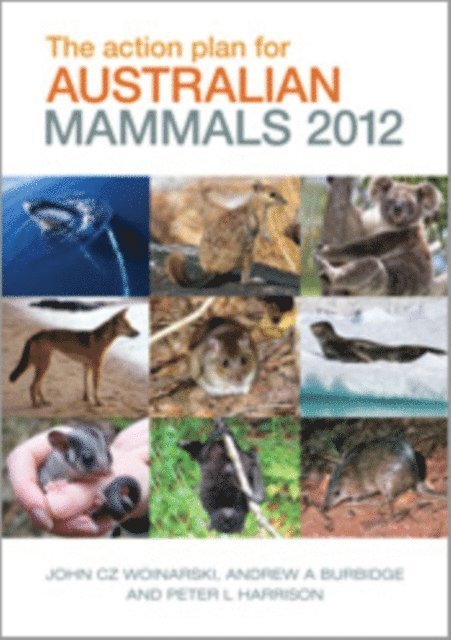
The Action Plan for Australian Mammals 2012 is the first review to assess the conservation status of all Australian mammals. It complements The Action Plan for Australian Birds 2010 (Garnett et al. 2011, CSIRO Publishing), and although the number of Australian mammal taxa is marginally fewer than for birds, the proportion of endemic, extinct and threatened mammal taxa is far greater. These authoritative reviews represent an important foundation for understanding the current status, fate and future of the nature of Australia.
This book considers all species and subspecies of Australian mammals, including those of external territories and territorial seas. For all the mammal taxa (about 300 species and subspecies) considered Extinct, Threatened, Near Threatened or Data Deficient, the size and trend of their population is presented along with information on geographic range and trend, and relevant biological and ecological data. The book also presents the current conservation status of each taxon under Australian legislation, what additional information is needed for managers, and the required management actions. Recovery plans, where they exist, are evaluated.
The voluntary participation of more than 200 mammal experts has ensured that the conservation status and information are as accurate as possible, and allowed considerable unpublished data to be included. All accounts include maps based on the latest data from Australian state and territory agencies, from published scientific literature and other sources.
The Action Plan concludes that 29 Australian mammal species have become extinct and 63 species are threatened and require urgent conservation action. However, it also shows that, where guided by sound knowledge, management capability and resourcing, and longer-term commitment, there have been some notable conservation success stories, and the conservation status of some species has greatly improved over the past few decades.
The Action Plan for Australian Mammals 2012 makes a major contribution to the conservation of a wonderful legacy that is a significant part of Australia’s heritage. For such a legacy to endure, our society must be more aware of and empathetic with our distinctively Australian environment, and particularly its marvellous mammal fauna; relevant information must be readily accessible; environmental policy and law must be based on sound evidence; those with responsibility for environmental management must be aware of what priority actions they should take; the urgency for action (and consequences of inaction) must be clear; and the opportunity for hope and success must be recognised. It is in this spirit that this account is offered.
Winner of a 2015 Whitley Awards Certificate of Commendation for Zoological Resource.
565 kr
Läs direkt efter köp
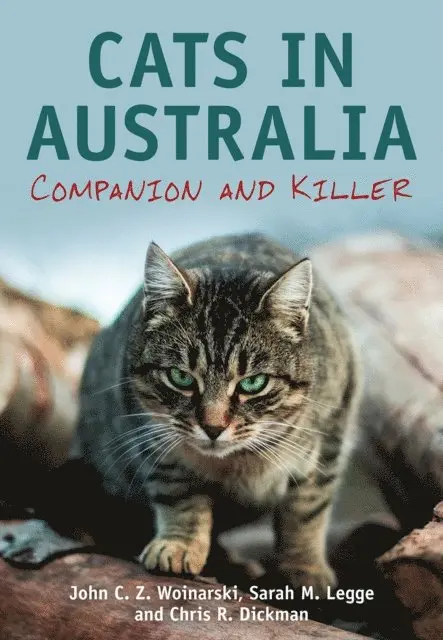
Across the world, cats are loved as pets or are kept or tolerated for their role in controlling some animal pests. But cats, both pets and feral, also kill many native animals and this toll can be enormous. Cats have been remarkably successful in Australia, spreading pervasively across the continent and many islands, occurring in all environments, and proving to be adept and adaptable hunters. A large proportion of Australia’s distinctive fauna is threatened and recent research highlights the significant role that cats play in the decline and extinction of native species.
Cats in Australia brings this research together, documenting the extent to which cats have subverted, and are continuing to subvert, Australia’s biodiversity. But the book does much more than spotlight the impacts of cats on Australian nature. It describes the origins of cats and their global spread, their long-standing and varying relationship with people, their global impacts and their ecology. It also seeks to describe the challenge of managing cats, and the options available to constrain their impacts.
Certificate of Commendation, The Royal Zoological Society of NSW 2020 Whitley Awards: Zoological Review
1 517 kr
Läs direkt efter köp
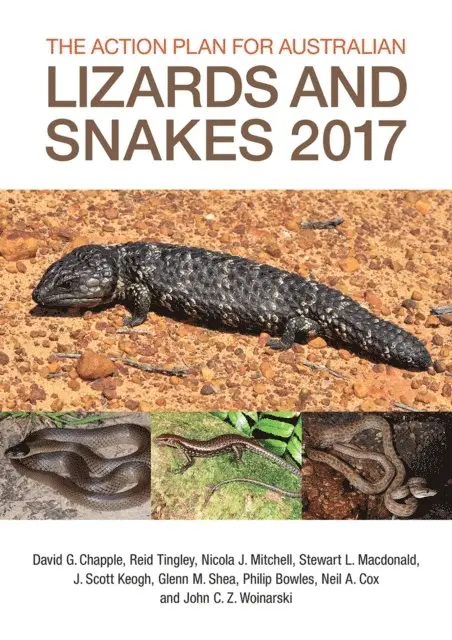
Lizards and snakes (squamate reptiles) are the most diverse vertebrate group in Australia, with approximately 1000 described species, representing about 10% of the global squamate diversity. Squamates are a vital part of the Australian ecosystem, but their conservation has been hindered by a lack of knowledge of their diversity, distribution, biology and key threats.
The Action Plan for Australian Lizards and Snakes 2017 provides the first comprehensive assessment of the conservation status of Australian squamates in 25 years. Conservation assessments are provided for 986 species of Australian lizards and snakes (including sea snakes). Over the past 25 years there has been a substantial increase in the number of species and families recognised within Australia. There has also been an increase in the range and magnitude of threatening processes with the potential to impact squamates. This has resulted in an increase in the proportion of the Australian squamate fauna that is considered Threatened. Notably over this period, the first known extinction (post-European settlement) of an Australian reptile species occurred – an indication of the increasingly urgent need for better knowledge and management of this fauna. Six key recommendations are presented to improve the conservation management and plight of Australian squamates.
This Action Plan represents an essential resource for research scientists, conservation biologists, conservation managers, environmental consultants, policy makers from Commonwealth and State/Territory governments, and the herpetological community.
736 kr
Skickas inom 5-8 vardagar
451 kr
Läs direkt efter köp
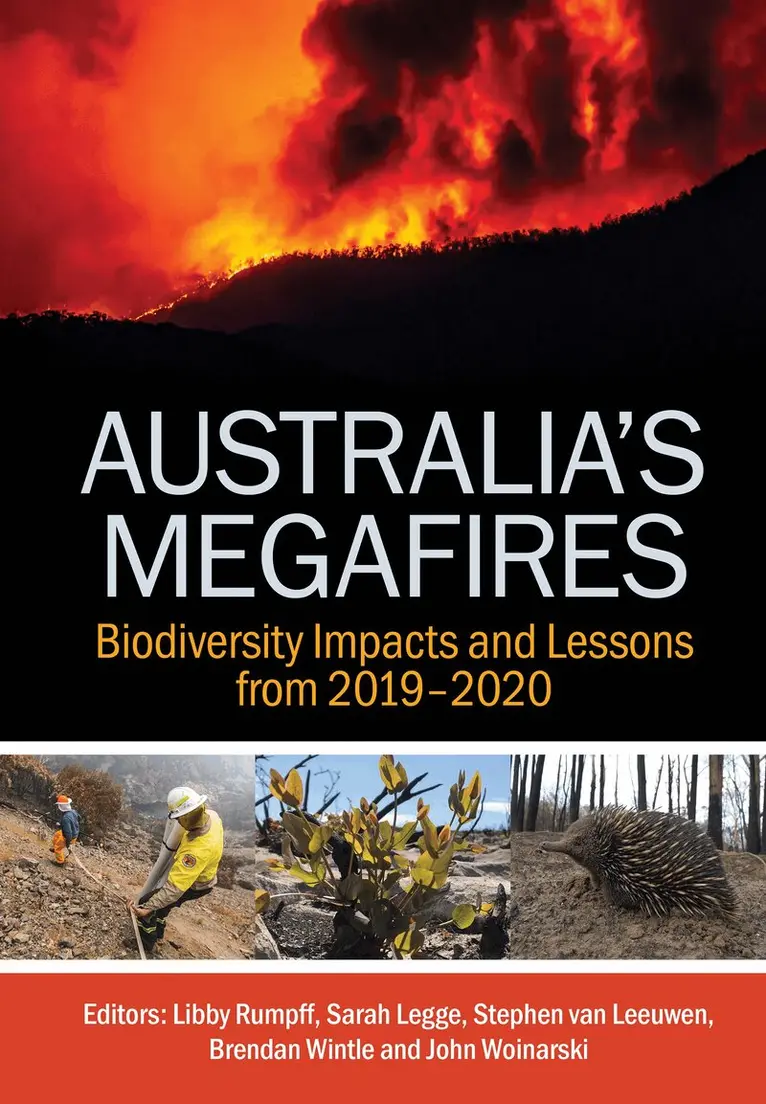
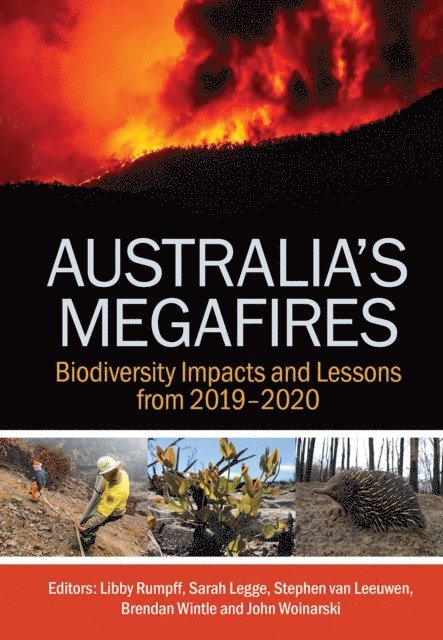
The Australian wildfires of 2019–20 (Black Summer) were devastating and unprecedented. These megafires burnt more than 10 million hectares, mostly of forests in southern and eastern Australia. Many of the fires were uncontrollable. These megafires affected many of Australia’s most important conservation areas and severely impacted threatened species and ecological communities. They were a consequence of climate change – and offered a glimpse of how this is likely to continue to affect our future.
Australia’s Megafires includes contributions by more than 200 researchers and managers with direct involvement in the management and conservation of the biodiversity affected by the Black Summer wildfires. It provides a comprehensive review of the impacts of these fires on all components of biodiversity, and on Indigenous cultural values.
These fires also triggered an extraordinary and highly collaborative response by governments, NGOs, Indigenous groups, scientists, landholders and others, seeking to recover the fire-affected species and environments – to restore Country. This book documents that response. It draws lessons that should be heeded to sustain that recovery and to be better prepared for the inevitable future comparable catastrophes. Such lessons are of global relevance, for wildfires increasingly threaten biodiversity and livelihoods across the globe.