John M. Fryxell - Böcker
Visar alla böcker från författaren John M. Fryxell. Handla med fri frakt och snabb leverans.
9 produkter
9 produkter
600 kr
Skickas inom 7-10 vardagar
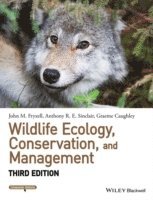
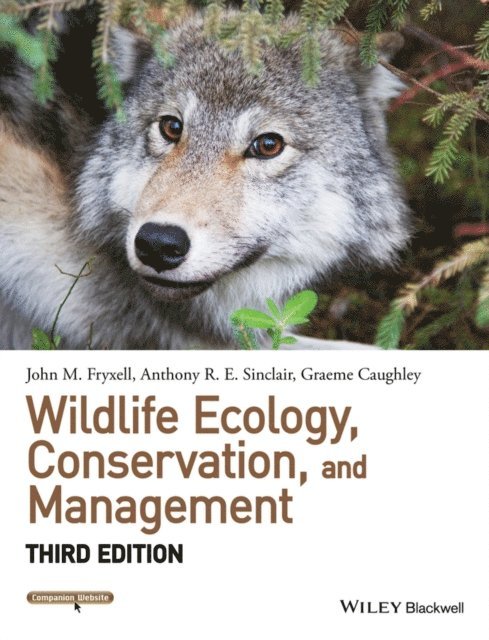
To understand modern principles of sustainable management and the conservation of wildlife species requires intimate knowledge about demography, animal behavior, and ecosystem dynamics. With emphasis on practical application and quantitative skill development, this book weaves together these disparate elements in a single coherent textbook for senior undergraduate and graduate students. It reviews analytical techniques, explaining the mathematical and statistical principles behind them, and shows how these can be used to formulate realistic objectives within an ecological framework. This third edition is comprehensive and up-to-date, and includes: Brand new chapters that disseminate rapidly developing topics in the field: habitat use and selection; habitat fragmentation, movement, and corridors; population viability. analysis, the consequences of climate change; and evolutionary responses to disturbanceA thorough updating of all chapters to present important areas of wildlife research and management with recent developments and examples.A new online study aid a wide variety of downloadable computer programs in the freeware packages R and Mathcad, available through a companion website. Worked examples enable readers to practice calculations explained in the text and to develop a solid understanding of key statistical procedures and population models commonly used in wildlife ecology and management.The first half of the book provides a solid background in key ecological concepts. The second half uses these concepts to develop a deeper understanding of the principles underlying wildlife management and conservation. Global examples of real-life management situations provide a broad perspective on the international problems of conservation, and detailed case histories demonstrate concepts and quantitative analyses. This third edition is also valuable to professional wildlife managers, park rangers, biological resource managers, and those working in ecotourism.
2 369 kr
Skickas inom 7-10 vardagar
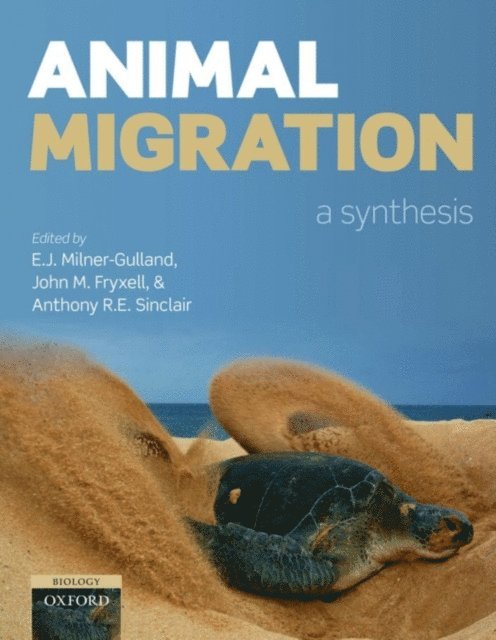
Despite the wealth of natural historical research conducted on migration over decades, there is still a dearth of hypothesis-driven studies that fully integrate theory and empirical analyses to understand the causes and consequences of migration, and a taxonomic bias towards birds in much migration research. This book takes a comparative, integrated view of animal migration, linking evolution with ecology and management, theory with empirical research, and embracing all the major migratory taxa (including human pastoralists). The scope extends beyond the target organism to consider the ecosystem-level dynamics of migration. The emphasis is on exciting new research avenues that are now opening up, whether due to advances in our understanding of migration as a biological phenomenon or through the availability of a range of new technologies. Broad themes that emerge include integrating migration into the broad spectrum of movement behaviour, the need for a comparative and cross-taxonomic approach that considers migration at a range of temporal and spatial scales, and examination of the key roles of resource uncertainty and spatial heterogeneity in driving migratory behaviour. The book identifies the potential for new tools to revolutionise the study of migration, including satellite-tracking technology, genomics, and modelling - all of which are linked to increasing computing power. We are now on the verge of a breakthrough in migration research, which is crucial given the multiple threats that face the conservation of migration as a phenomenon, including climate change.
1 027 kr
Skickas inom 7-10 vardagar
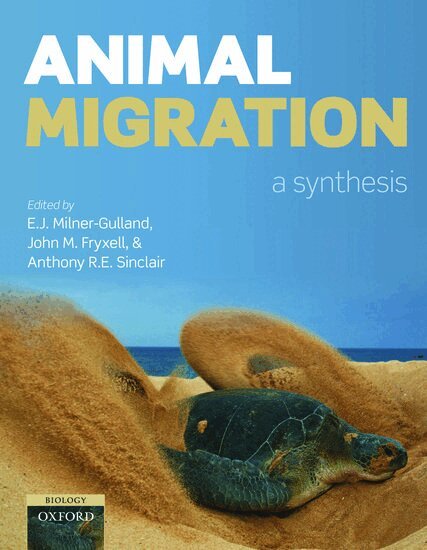
Despite the wealth of natural historical research conducted on migration over decades, there is still a dearth of hypothesis-driven studies that fully integrate theory and empirical analyses to understand the causes and consequences of migration, and a taxonomic bias towards birds in much migration research. This book takes a comparative, integrated view of animal migration, linking evolution with ecology and management, theory with empirical research, and embracing all the major migratory taxa (including human pastoralists). The scope extends beyond the target organism to consider the ecosystem-level dynamics of migration. The emphasis is on exciting new research avenues that are now opening up, whether due to advances in our understanding of migration as a biological phenomenon or through the availability of a range of new technologies. Broad themes that emerge include integrating migration into the broad spectrum of movement behaviour, the need for a comparative and cross-taxonomic approach that considers migration at a range of temporal and spatial scales, and examination of the key roles of resource uncertainty and spatial heterogeneity in driving migratory behaviour. The book identifies the potential for new tools to revolutionise the study of migration, including satellite-tracking technology, genomics, and modelling - all of which are linked to increasing computing power. We are now on the verge of a breakthrough in migration research, which is crucial given the multiple threats that face the conservation of migration as a phenomenon, including climate change.
557 kr
Skickas inom 7-10 vardagar
The vast savannas and great migrations of the Serengeti conjure impressions of a harmonious and balanced ecosystem. But in reality, the history of the Serengeti is rife with battles between human and non-human nature. Serengeti IV, the latest installment in a long-standing series on the region's ecology and biodiversity, explores our species' role as a source of both discord and balance in Serengeti ecosystem dynamics. Through chapters charting the complexities of infectious disease transmission across populations, agricultural expansion, and the many challenges of managing this ecosystem today, this book shows how the people and landscapes surrounding crucial protected areas like Serengeti National Park can and must contribute to Serengeti conservation. In order to succeed, conservation efforts must also focus on the welfare of indigenous peoples, allowing them both to sustain their agricultural practices and benefit from the natural resources provided by protected areas - an undertaking that will require the strengthening of government and education systems and, as such, will present one of the greatest conservation challenges of the next century.
1 967 kr
Skickas inom 11-20 vardagar
Serengeti National Park is one of the world's most diverse ecosystems, a natural laboratory for ecology, evolution, and conservation, with a history that dates back at least four million years to the beginnings of human evolution. The third book of a groundbreaking series, "Serengeti III" is the result of a long-term integrated research project that documents changes to this unique ecosystem every ten years.Bringing together researchers from a wide range of disciplines - ecologists, paleontologists, economists, social scientists, mathematicians, and disease specialists - this volume focuses on the interactions between the natural system and the human-dominated agricultural system. By examining how changes in rainfall, wildebeest numbers, commodity prices, and human populations have afftected the Serengeti ecosystem, the authors conclude that changes in the natural system have affected human welfare just as changes in the human system have afftected the natural world. To promote both the conservation of biota and the sustainability of human welfare, the authors recommend community-based conservation and protected-area conservation."Serengeti III" presents a timely and provocative look at the conservation status of one of earth's most renowned ecosystems.
486 kr
Skickas inom 7-10 vardagar
Serengeti National Park is one of the world's most diverse ecosystems, a natural laboratory for ecology, evolution, and conservation, with a history that dates back at least four million years to the beginnings of human evolution. The third book of a groundbreaking series, "Serengeti III" is the result of a long-term integrated research project that documents changes to this unique ecosystem every ten years.Bringing together researchers from a wide range of disciplines - ecologists, paleontologists, economists, social scientists, mathematicians, and disease specialists - this volume focuses on the interactions between the natural system and the human-dominated agricultural system. By examining how changes in rainfall, wildebeest numbers, commodity prices, and human populations have affected the Serengeti ecosystem, the authors conclude that changes in the natural system have affected human welfare just as changes in the human system have affected the natural world. To promote both the conservation of biota and the sustainability of human welfare, the authors recommend community-based conservation and protected-area conservation."Serengeti III" presents a timely and provocative look at the conservation status of one of earth's most renowned ecosystems.
1 541 kr
Skickas inom 7-10 vardagar
To understand modern principles of sustainable management and the conservation of wildlife species requires intimate knowledge about demography, animal behavior, and ecosystem dynamics. With emphasis on practical application and quantitative skill development, this book weaves together these disparate elements in a singlecoherent textbook for senior undergraduate and graduate students. It reviews analytical techniques, explaining the mathematical and statistical principles behind them, and shows how these can be used to formulaterealistic objectives within an ecological framework. This third edition is comprehensive and up-to-date, and includes: Brand new chapters that disseminate rapidly developing topics in the field: habitat use and selection; habitat fragmentation, movement, and corridors; population viability. analysis, the consequences of climate change; and evolutionary responses to disturbanceA thorough updating of all chapters to present important areas of wildlife research and management with recent developments and examples.A new online study aid – a wide variety of downloadable computer programs in the freeware packages R and Mathcad, available through a companion website. Worked examples enable readers to practice calculations explained in the text and to develop a solid understanding of key statistical procedures and population models commonly used in wildlife ecology and management.The first half of the book provides a solid background in key ecological concepts. The second half uses these concepts to develop a deeper understanding of the principles underlying wildlife management and conservation. Global examples of real-life management situations provide a broad perspective on the international problems of conservation, and detailed case histories demonstrate concepts and quantitative analyses. This third edition isalso valuable to professional wildlife managers, park rangers, biological resource managers, and thoseworking in ecotourism.
833 kr
Kommande
The latest edition of the gold standard in wildlife ecology textbooks In the fourth edition of Wildlife Ecology, Conservation and Management, two internationally recognized ecologists deliver a comprehensive treatment of key ecological concepts and principles relevant to wildlife management and conservation. The authors use globally applicable examples of real-life management situations to provide the reader with a broad perspective on international problems in conservation. The book relies on detailed case histories to demonstrate important concepts, as well as quantitative analyses to illustrate and illuminate ecological objectives and frameworks. It weaves together practical applications and ecological skill development, offering updated discussions of demographic parameter estimation, biostatistics, movement ecology, urban ecology, human-wildlife conflict, and rewilding. Readers will also find: Thorough introductions to relevant goals and decisions in wildlife ecology, as well as food and nutrition, home range, and habitat useIn-depth explorations of wildlife dispersal, dispersion, and distribution, as well as population growth and regulationComprehensive discussions of competition and facilitation between species, predation, and parasites and pathogensIn-depth examinations of ecosystem management and conservation, as well as habitat loss and metapopulation dynamicsPerfect for graduate and senior undergraduate students of ecology, Wildlife Ecology, Conservation and Management will also earn a place in the libraries of professional wildlife managers, park rangers, biological resource managers, and ecotourism professionals.
536 kr
Skickas inom 10-15 vardagar