Joseph S. Nye Jr. – författare
Visar alla böcker från författaren Joseph S. Nye Jr.. Handla med fri frakt och snabb leverans.
23 produkter
Hawks, Doves, and Owls
An Agenda for Avoiding Nuclear War
Av Graham Allison, Albert Carnesale m. fl.
Häftad, 1986
300 kr
Lägg i varukorg
The debate over national security and arms control has focused primarily on weapons—more or fewer weapons, different kinds of weapons. Hawks tend to see the immediate cause of war as one-sided weakness that tempts an aggressive adversary. For Doves, the primary cause of war lies in arms races that …
Do Morals Matter?
Presidents and Foreign Policy from FDR to Trump
E-bok, 2019
151 kr
Lägg i varukorg
A concise yet penetrating analysis of how modern American presidents have--and have not--incorporated ethics into their foreign policy. Americans constantly make moral judgments about presidents and foreign policy. Unfortunately, many of these assessments are poorly thought through. In Do Morals …
Do Morals Matter?
Presidents and Foreign Policy from FDR to Trump
E-bok, 2019
151 kr
Lägg i varukorg
A concise yet penetrating analysis of how modern American presidents have--and have not--incorporated ethics into their foreign policy. Americans constantly make moral judgments about presidents and foreign policy. Unfortunately, many of these assessments are poorly thought through. In Do Morals …
Paradox of American Power
Why the World''s Only Superpower Can''t Go It Alone
E-bok, 2002
147 kr
Lägg i varukorg
Not since the Roman Empire has any nation had as much economic, cultural, and military power as the United States does today. Yet, as has become all too evident through the terrorist attacks of September 11th and the impending threat of the acquisition of nuclear weapons by Iran, that power is not …
Paradox of American Power
Why the World''s Only Superpower Can''t Go It Alone
E-bok, 2003
147 kr
Lägg i varukorg
Not since the Roman Empire has any nation had as much economic, cultural, and military power as the United States does today. Yet, as has become all too evident through the terrorist attacks of September 11th and the impending threat of the acquisition of nuclear weapons by Iran, that power is not …
Att forstå internationella conflicter eBook
Av Fredrik Bynander, Joseph S Nye Jr.
E-bok, 2012
661 kr
Lägg i varukorg
Power in the Global Information Age
From Realism to Globalization
Inbunden, 2004
2513 kr
Lägg i varukorg
One of the most brilliant and influential international relations scholars of his generation, Joseph S. Nye Jr. is one of the few academics to have served at the very highest levels of US government. This volume collects together many of his key writings for the first time as well as new material, …
Power in the Global Information Age
From Realism to Globalization
Häftad, 2004
750 kr
Lägg i varukorg
One of the most brilliant and influential international relations scholars of his generation, Joseph S. Nye Jr. is one of the few academics to have served at the very highest levels of US government. This volume collects together many of his key writings for the first time as well as new material, …
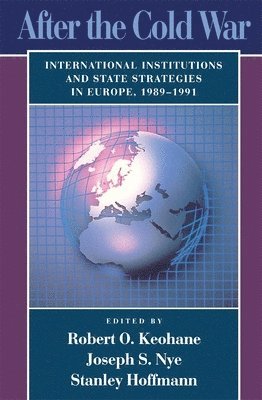
After the Cold War
International Institutions and State Strategies in Europe, 1989–1991
Av Robert O. Keohane, Joseph S. Nye Jr. m. fl.
Häftad, 1993
509 kr
Lägg i varukorg
In the fall of 1989 the world watched as the Berlin Wall came down. More than a dramatic symbol of the collapse of the Soviet bloc, the event marked the beginning of the end of the Cold War and the arrival of a whole new era in world politics. How the world powers, built upon foundations that were …
Living with Nuclear Weapons
Av Albert Carnesale, Paul Doty m. fl.
Inbunden, 1983
589 kr
Lägg i varukorg
At the request of the President of Harvard University, six Harvard scholars have joined forces to write a book that lays out the facts about nuclear weapons for all concerned citizens who want to think through the nuclear dilemma for themselves. Living with Nuclear Weapons is written by specialists …
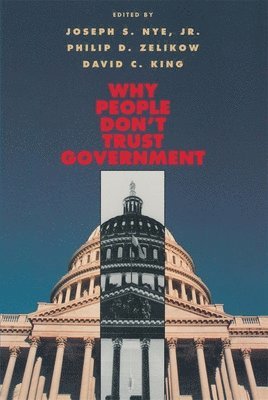
Why People Don’t Trust Government
Av Joseph S. Nye Jr., Philip D. Zelikow m. fl.
Häftad, 1997
406 kr
Lägg i varukorg
Confidence in American government has been declining for three decades. Three-quarters of Americans said they trusted the Federal government to do the right thing in 1964. Today, only a quarter do. Why the decline? Is this mistrust a healthy reflection of America's long-lasting skepticism of a …
Is the American Century Over?
Inbunden, 2015
395 kr
Lägg i varukorg
For more than a century, the United States has been the world's most powerful state. Now some analysts predict that China will soon take its place. Does this mean that we are living in a post-American world? Will China's rapid rise spark a new Cold War between the two titans?In this compelling …
Is the American Century Over?
Häftad, 2015
4,0 utav 5 stjärnor. Totalt antal röster: (3)
113 kr
Lägg i varukorg
For more than a century, the United States has been the world's most powerful state. Now some analysts predict that China will soon take its place. Does this mean that we are living in a post-American world? Will China's rapid rise spark a new Cold War between the two titans?In this compelling …
Power in the Global Information Age
From Realism to Globalization
E-bok, 2004
864 kr
Lägg i varukorg
One of the most brilliant and influential international relations scholars of his generation, Joseph S. Nye Jr. is one of the few academics to have served at the very highest levels of US government. This volume collects together many of his key writings for the first time as well as new …
Power in the Global Information Age
From Realism to Globalization
E-bok, 2004
883 kr
Lägg i varukorg
One of the most brilliant and influential international relations scholars of his generation, Joseph S. Nye Jr. is one of the few academics to have served at the very highest levels of US government. This volume collects together many of his key writings for the first time as well as new …
Presidential Leadership and the Creation of the American Era
E-bok, 2013
277 kr
Lägg i varukorg
How presidents forged the American century This book examines the foreign policy decisions of the presidents who presided over the most critical phases of America''s rise to world primacy in the twentieth century, and assesses the effectiveness and ethics of their choices. Joseph Nye, who was …
Life in the American Century
Inbunden, 2024
234 kr
Lägg i varukorg
For the past eight decades, we have lived in “the American Century” – a period during which the US has enjoyed unrivalled power – be it political, economic or military - on the global stage. Born on the cusp of this new era, Joseph S. Nye Jr. has spent a lifetime illuminating our understanding of …
Peace in Parts
Integration and Conflict in Regional Organization
Inbunden, 1987
614 kr
Tillfälligt slut
This book addresses the issue of whether nation-states can form regional islands of peace in a turbulent international system. It carefully describes the problems and prospects in forming common markets and security communities among neighboring states. After surveying various theories of peace …
Peace in Parts
Integration and Conflict in Regional Organization
Häftad, 1987
341 kr
Tillfälligt slut
This book addresses the issue of whether nation-states can form regional islands of peace in a turbulent international system. It carefully describes the problems and prospects in forming common markets and security communities among neighboring states. After surveying various theories of peace …
Primer for the Nuclear Age
CSIA Occasional Paper No. 6
Av Graham T. Allison, Robert Blackwill m. fl.
Inbunden, 1990
601 kr
Tillfälligt slut
This occasional paper is an edited version of a briefing book that was designed by members of Harvard University's Avoiding Nuclear War Project and distributed among newly appointed officials in the Bush administration. Originally designed to help combat the lack of institutional memory on nuclear …
Primer for the Nuclear Age
CSIA Occasional Paper No. 6
Av Graham T. Allison, Robert Blackwill m. fl.
Häftad, 1990
406 kr
Tillfälligt slut
This occasional paper is an edited version of a briefing book that was designed by members of Harvard University's Avoiding Nuclear War Project and distributed among newly appointed officials in the Bush administration. Originally designed to help combat the lack of institutional memory on nuclear …
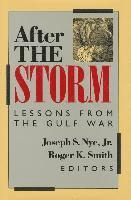
After the Storm
Inbunden, 1992
305 kr
Tillfälligt slut
Distinguished contributors discuss what we've learned from the Gulf War.
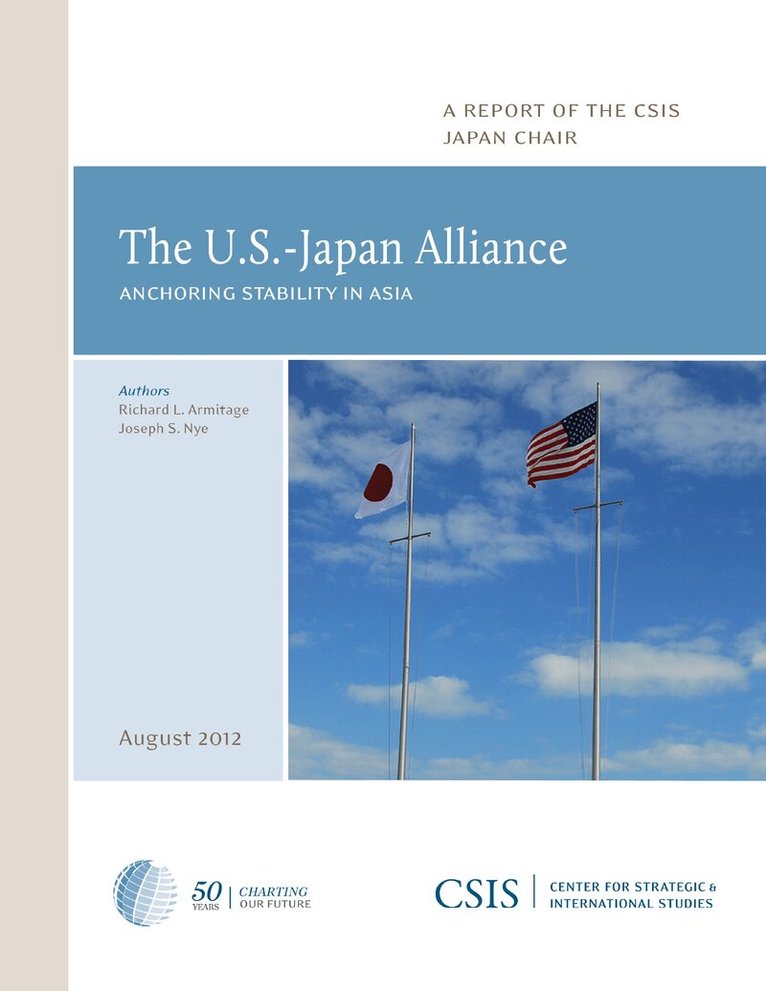
U.S.-Japan Alliance
Anchoring Stability in Asia
Av Richard L. Armitage, Joseph S. Nye Jr.
Häftad, 2012
398 kr
Tillfälligt slut
This new report on the U.S.-Japan alliance comes at a time of drift in the relationship. As leaders in both the United States and Japan face a myriad of other challenges, the health and welfare of one of the world’s most important alliances is endangered. Although the arduous efforts of Assistant …