Julia B. Rosenbaum - Böcker
Visar alla böcker från författaren Julia B. Rosenbaum. Handla med fri frakt och snabb leverans.
4 produkter
4 produkter
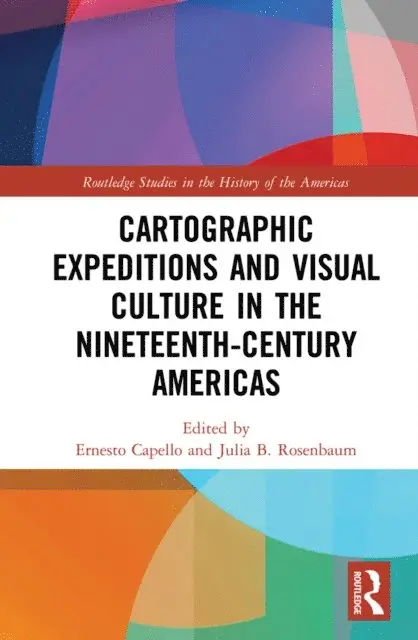
Cartographic Expeditions and Visual Culture in the Nineteenth-Century Americas
Inbunden, Engelska, 2020
2 367 kr
Skickas inom 10-15 vardagar
During the nineteenth century, gridding, graphing, and surveying proliferated as never before as nations and empires expanded into hitherto "unknown" territories. Though nominally geared toward justifying territorial claims and collecting scientific data, expeditions also produced vast troves of visual and artistic material. This book considers the explosion of expeditionary mapping and its links to visual culture across the Americas, arguing that acts of measurement are also aesthetic acts. Such visual interventions intersect with new technologies, with sociopolitical power and conflict, and with shifting public tastes and consumption practices. Several key questions shape this examination: What kinds of nineteenth-century visual practices and technologies of seeing do these materials engage? How does scientific knowledge get translated into the visual and disseminated to the public? What are the commonalities and distinctions in mapping strategies between North and South America? How does the constitution of expeditionary lines reorder space and the natural landscape itself? The volume represents the first transnational and hemispheric analysis of nineteenth-century cartographic aesthetics, and features the multi-disciplinary perspective of historians, geographers, and art historians.
Cartographic Expeditions and Visual Culture in the Nineteenth-Century Americas
Häftad, Engelska, 2022
646 kr
Skickas inom 10-15 vardagar
During the nineteenth century, gridding, graphing, and surveying proliferated as never before as nations and empires expanded into hitherto "unknown" territories. Though nominally geared toward justifying territorial claims and collecting scientific data, expeditions also produced vast troves of visual and artistic material. This book considers the explosion of expeditionary mapping and its links to visual culture across the Americas, arguing that acts of measurement are also aesthetic acts. Such visual interventions intersect with new technologies, with sociopolitical power and conflict, and with shifting public tastes and consumption practices. Several key questions shape this examination: What kinds of nineteenth-century visual practices and technologies of seeing do these materials engage? How does scientific knowledge get translated into the visual and disseminated to the public? What are the commonalities and distinctions in mapping strategies between North and South America? How does the constitution of expeditionary lines reorder space and the natural landscape itself? The volume represents the first transnational and hemispheric analysis of nineteenth-century cartographic aesthetics, and features the multi-disciplinary perspective of historians, geographers, and art historians.
465 kr
Skickas inom 7-10 vardagar
In the late nineteenth and early twentieth centuries depictions of New England flooded the American art scene. Childe Hassam, Willard Metcalf, Theodore Robinson, and Julian Weir, and other well-known artists produced images of quaint villages, agricultural labor, scenic rural churches, and the distinctive New England landscape. Julia B. Rosenbaum asks why and how a range of artists—including Impressionist and Modernist painters and sculptors—and exhibitors fashioned this particular vision of New England in their work. Against the backdrop of industrialization, immigration, and persistent post-Civil War sectionalism, many Americans yearned for national unity and identity. As Rosenbaum finds, New England emerged as symbolic of cultural and spiritual achievement and democratic values that served as an example for the nation. By addressing the struggles for national unity, the book offers a new interpretation of turn-of-the-century American art. Ultimately, Visions of Belonging demonstrates how the local became so important to the national; how art was crucial to the formation of national identity; and how internal nation building takes place within the realm of culture, as well as politics. And even as later artists, such as Georgia O'Keeffe, challenged New England's cultural hegemony, the appeal of linking regional identity to national ideals continued in distinctive ways.Beautifully illustrated with color plates and almost sixty halftones, Visions of Belonging explores the interplay between art objects and the shaping of loyalties and identities in a formative phase of American culture. It will appeal not only to art historians but also to anyone with an interest in nineteenth-century studies, the Gilded Age and Progressive Era, American studies, New England history and culture, and American cultural and intellectual history.
456 kr
Skickas inom 7-10 vardagar
Frederic Church, the leader of the much-loved group of artists known as the Hudson River School, made his name as a painter of monumental landscapes in the mid-1800s, helping to develop our vision of landscape and shaping the cultural identity of America. He applied his artistic talent to the house and property that he named Olana, known today as Olana State Historic Site and located in the heart of the beautiful Hudson River Valley. The 250-acre naturalistic landscape surrounding the house is a work of art in itself, and the magnificent views beyond Olana were an essential part of Church s composition, which he carefully designed with an artist s eye to the property s 360-degree views of neighbouring hills, valleys, the Hudson River, and distant mountains. Church was an observer of the cosmos, and Olana, set in the centre of the Hudson River Valley, was his laboratory of observation of all of nature. Spectacular photography by Larry Lederman of Olana, its landscape and house, inside and out, illustrates one of Church s greatest works of art. The images, many taken especially for this book, have been shot in all seasons and all weather, and include panoramic and aerial views, sunsets, detail shots of both the house and landscape, as well as interior views of the house. Essays will delve into Church and his inspirations and motivations, illuminating not only the estate he built but also his work as an artist.