Kashif Zia – författare
841 kr
Läs direkt efter köp
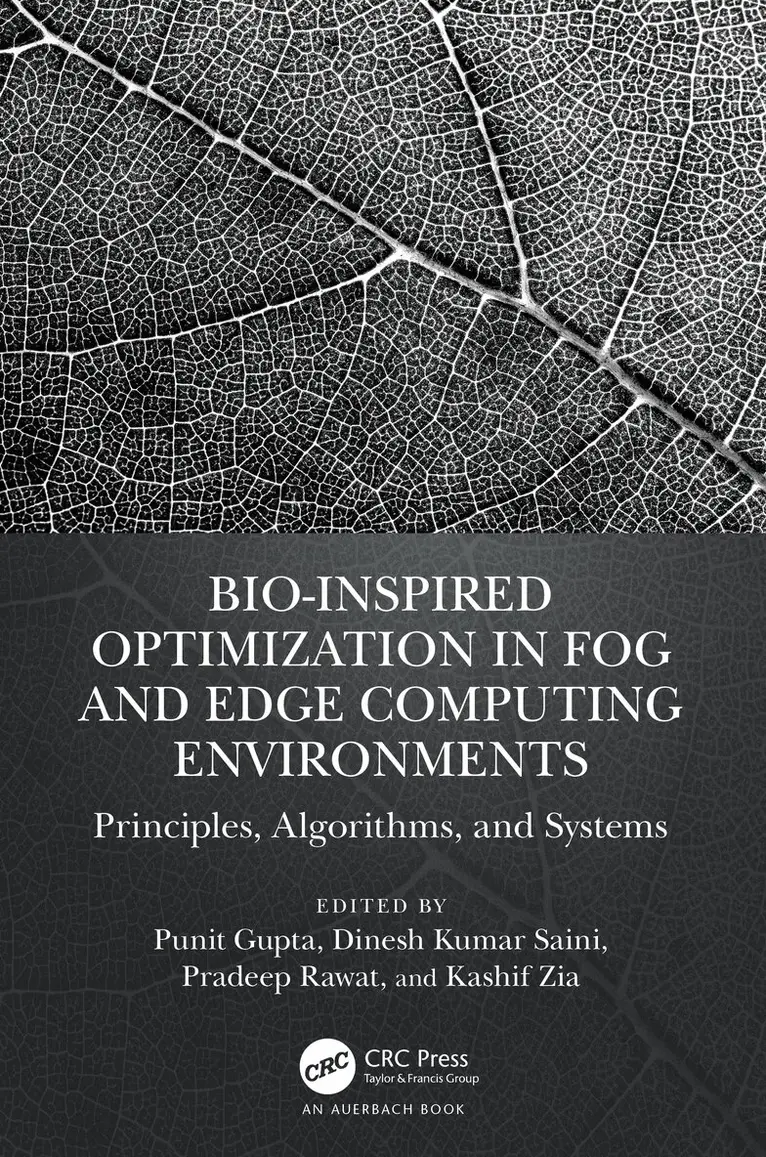
A new era of complexity science is emerging, in which nature- and bio-inspired principles are being applied to provide solutions. At the same time, the complexity of systems is increasing due to such models like the Internet of Things (IoT) and fog computing. Will complexity science, applying the principles of nature, be able to tackle the challenges posed by highly complex networked systems?
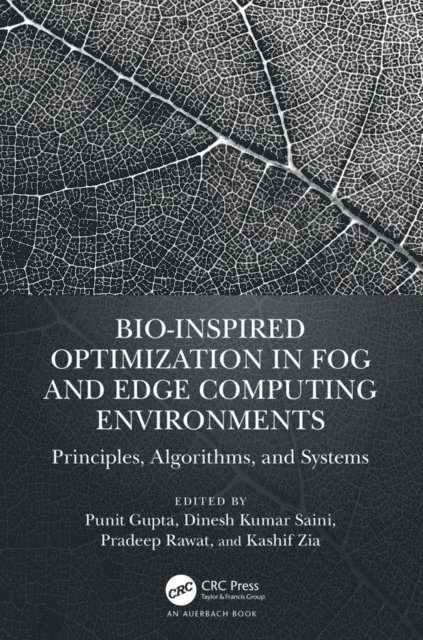
Bio-Inspired Optimization in Fog and Edge Computing: Principles, Algorithms, and Systems is an attempt to answer this question. It presents innovative, bio-inspired solutions for fog and edge computing and highlights the role of machine learning and informatics. Nature- or biological-inspired techniques are successful tools to understand and analyze a collective behavior. As this book demonstrates, algorithms, and mechanisms of self-organization of complex natural systems have been used to solve optimization problems, particularly in complex systems that are adaptive, ever-evolving, and distributed in nature.
The chapters look at ways of enhancingto enhance the performance of fog networks in real-world applications using nature-based optimization techniques. They discuss challenges and provide solutions to the concerns of security, privacy, and power consumption in cloud data center nodes and fog computing networks. The book also examines how:
The existing fog and edge architecture is used to provide solutions to future challenges. A geographical information system (GIS) can be used with fog computing to help users in an urban region access prime healthcare. An optimization framework helps in cloud resource management. Fog computing can improve the quality, quantity, long-term viability, and cost-effectiveness in agricultural production. Virtualization can support fog computing, increase resources to be allocated, and be applied to different network layers. The combination of fog computing and IoT or cloud computing can help healthcare workers predict and analyze diseases in patients.841 kr
Läs direkt efter köp
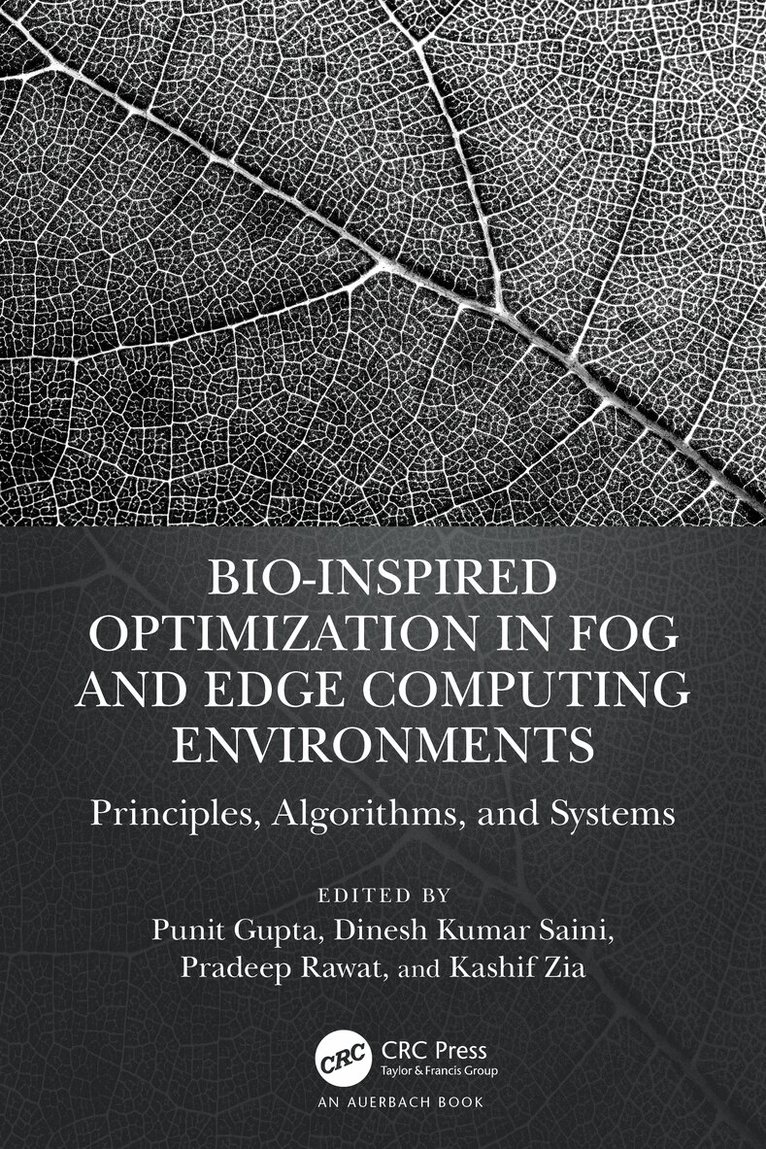
A new era of complexity science is emerging, in which nature- and bio-inspired principles are being applied to provide solutions. At the same time, the complexity of systems is increasing due to such models like the Internet of Things (IoT) and fog computing. Will complexity science, applying the principles of nature, be able to tackle the challenges posed by highly complex networked systems?
Bio-Inspired Optimization in Fog and Edge Computing: Principles, Algorithms, and Systems is an attempt to answer this question. It presents innovative, bio-inspired solutions for fog and edge computing and highlights the role of machine learning and informatics. Nature- or biological-inspired techniques are successful tools to understand and analyze a collective behavior. As this book demonstrates, algorithms, and mechanisms of self-organization of complex natural systems have been used to solve optimization problems, particularly in complex systems that are adaptive, ever-evolving, and distributed in nature.
The chapters look at ways of enhancingto enhance the performance of fog networks in real-world applications using nature-based optimization techniques. They discuss challenges and provide solutions to the concerns of security, privacy, and power consumption in cloud data center nodes and fog computing networks. The book also examines how:
The existing fog and edge architecture is used to provide solutions to future challenges. A geographical information system (GIS) can be used with fog computing to help users in an urban region access prime healthcare. An optimization framework helps in cloud resource management. Fog computing can improve the quality, quantity, long-term viability, and cost-effectiveness in agricultural production. Virtualization can support fog computing, increase resources to be allocated, and be applied to different network layers. The combination of fog computing and IoT or cloud computing can help healthcare workers predict and analyze diseases in patients.1 031 kr
Läs direkt efter köp
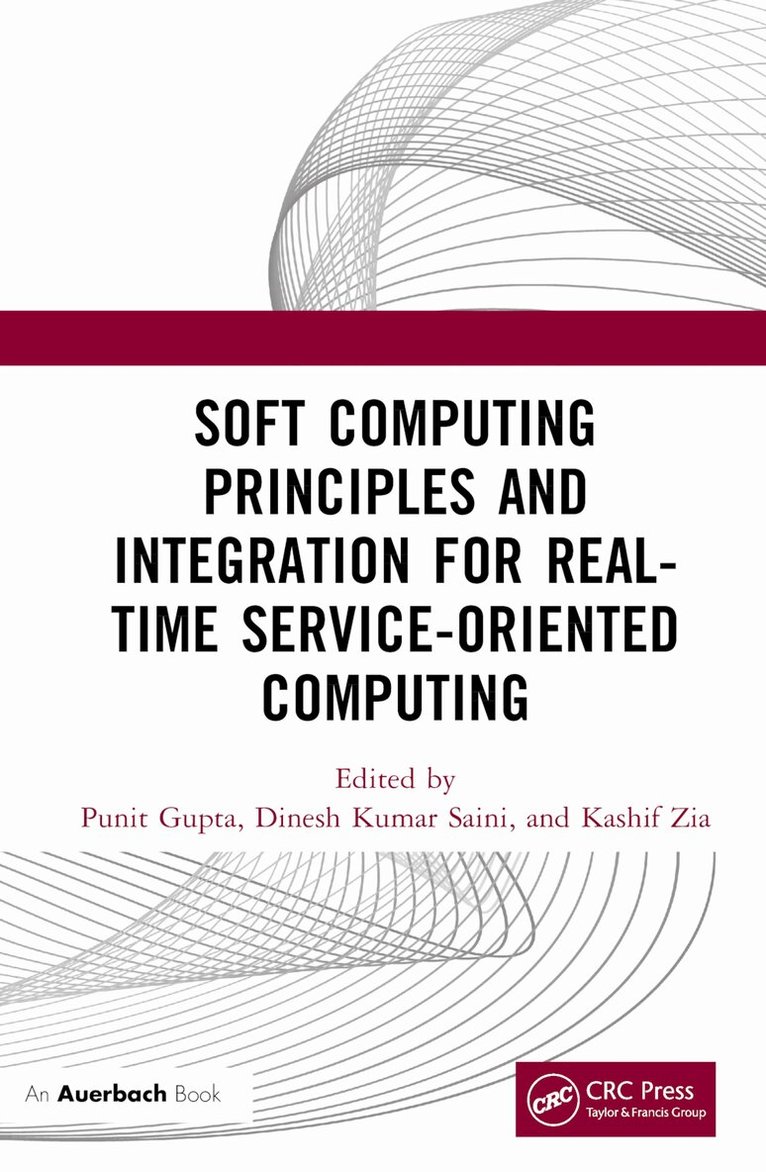
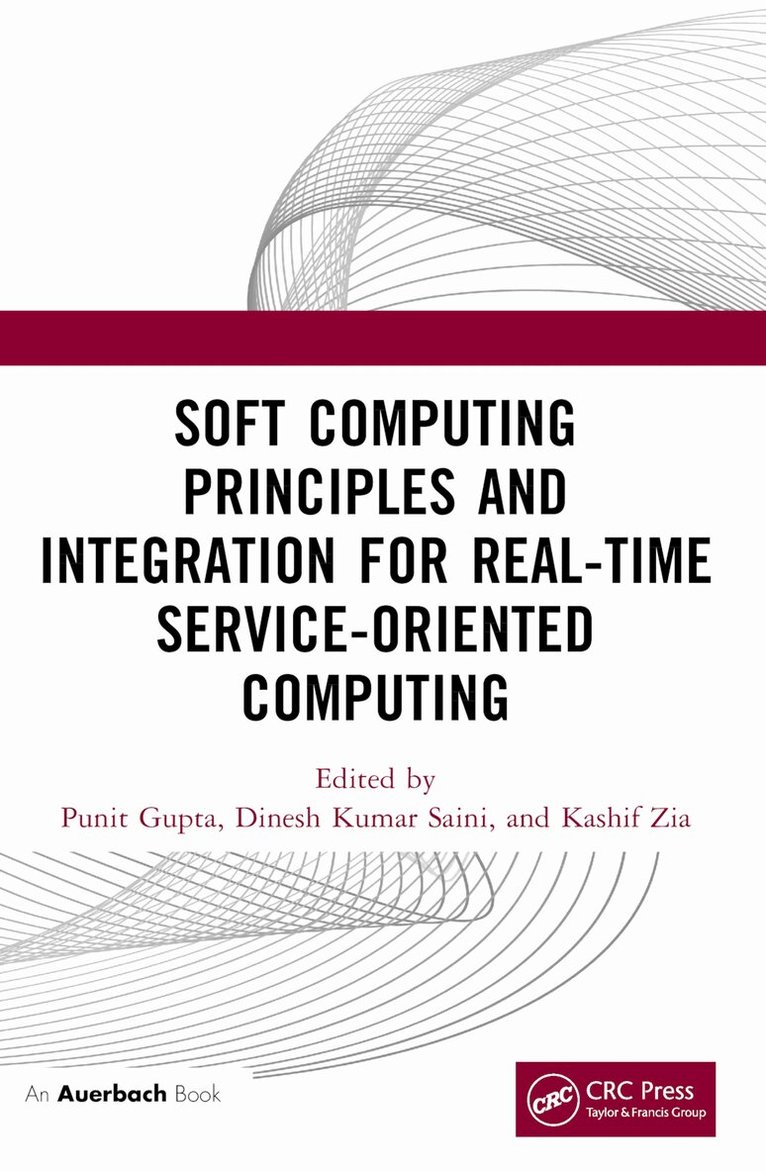
In recent years, soft computing techniques have emerged as a successful tool to understand and analyze the collective behavior of service- oriented computing software. Algorithms and mechanisms of self- organization of complex natural systems have been used to solve problems, particularly in complex systems, which are adaptive, ever- evolving, and distributed in nature across the globe. What fits more perfectly into this scenario other than the rapidly developing era of Fog, IoT, and Edge computing environment? Service- oriented computing can be enhanced with soft computing techniques embedded inside the Cloud, Fog, and IoT systems.
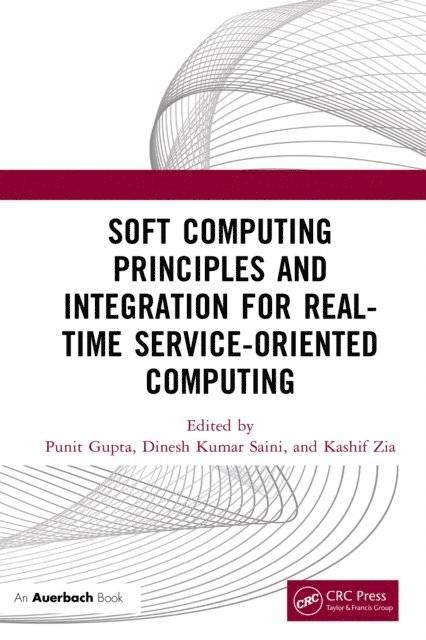
Soft Computing Principles and Integration for Real-Time Service-Oriented Computing explores soft computing techniques that have wide application in interdisciplinary areas. These soft computing techniques provide an optimal solution to the optimization problem using single or multiple objectives.The book focuses on basic design principles and analysis of soft computing techniques. It discusses how soft computing techniques can be used to improve quality-of-service in serviceoriented architectures. The book also covers applications and integration of soft computing techniques with a service- oriented computing paradigm. Highlights of the book include:
A general introduction to soft computingAn extensive literature study of soft computing techniques and emerging trends
Soft computing techniques based on the principles of artificial intelligence, fuzzy logic, and neural networks
The implementation of SOC with a focus on service composition and orchestration, quality of service (QoS) considerations, security and privacy concerns, governance challenges, and the integration of legacy systems The applications of soft computing in adaptive service composition, intelligent service recommendation, fault detection and diagnosis, SLA management, and security Such principles underlying SOC as loose coupling, reusability, interoperability, and abstraction An IoT based framework for real time data collection and analysis using soft computing1 059 kr
Läs direkt efter köp
In recent years, soft computing techniques have emerged as a successful tool to understand and analyze the collective behavior of service- oriented computing software. Algorithms and mechanisms of self- organization of complex natural systems have been used to solve problems, particularly in complex systems, which are adaptive, ever- evolving, and distributed in nature across the globe. What fits more perfectly into this scenario other than the rapidly developing era of Fog, IoT, and Edge computing environment? Service- oriented computing can be enhanced with soft computing techniques embedded inside the Cloud, Fog, and IoT systems.
Soft Computing Principles and Integration for Real-Time Service-Oriented Computing explores soft computing techniques that have wide application in interdisciplinary areas. These soft computing techniques provide an optimal solution to the optimization problem using single or multiple objectives.The book focuses on basic design principles and analysis of soft computing techniques. It discusses how soft computing techniques can be used to improve quality-of-service in serviceoriented architectures. The book also covers applications and integration of soft computing techniques with a service- oriented computing paradigm. Highlights of the book include:
A general introduction to soft computingAn extensive literature study of soft computing techniques and emerging trends
Soft computing techniques based on the principles of artificial intelligence, fuzzy logic, and neural networks
The implementation of SOC with a focus on service composition and orchestration, quality of service (QoS) considerations, security and privacy concerns, governance challenges, and the integration of legacy systems The applications of soft computing in adaptive service composition, intelligent service recommendation, fault detection and diagnosis, SLA management, and security Such principles underlying SOC as loose coupling, reusability, interoperability, and abstraction An IoT based framework for real time data collection and analysis using soft computing1 762 kr
Skickas inom 10-15 vardagar
730 kr
Skickas inom 10-15 vardagar
2 955 kr
Skickas inom 10-15 vardagar
2 659 kr
Skickas inom 10-15 vardagar
881 kr
Skickas inom 10-15 vardagar
933 kr
Skickas inom 10-15 vardagar
992 kr
Läs direkt efter köp
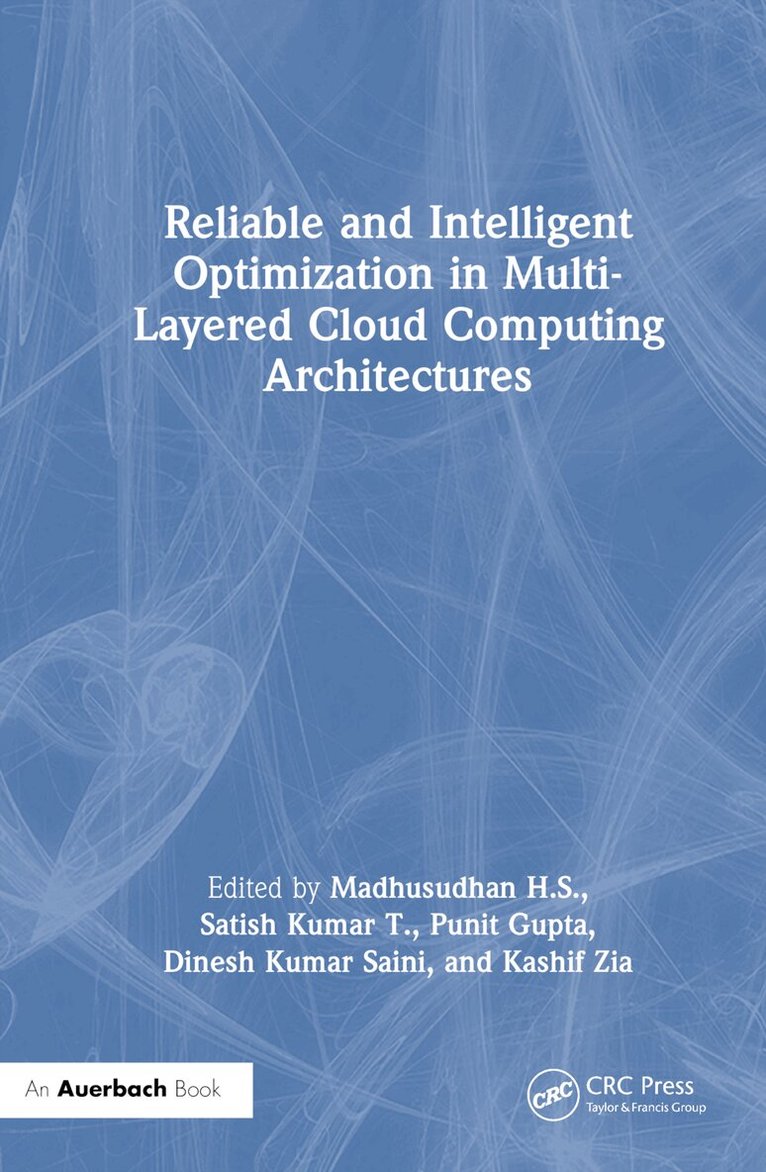
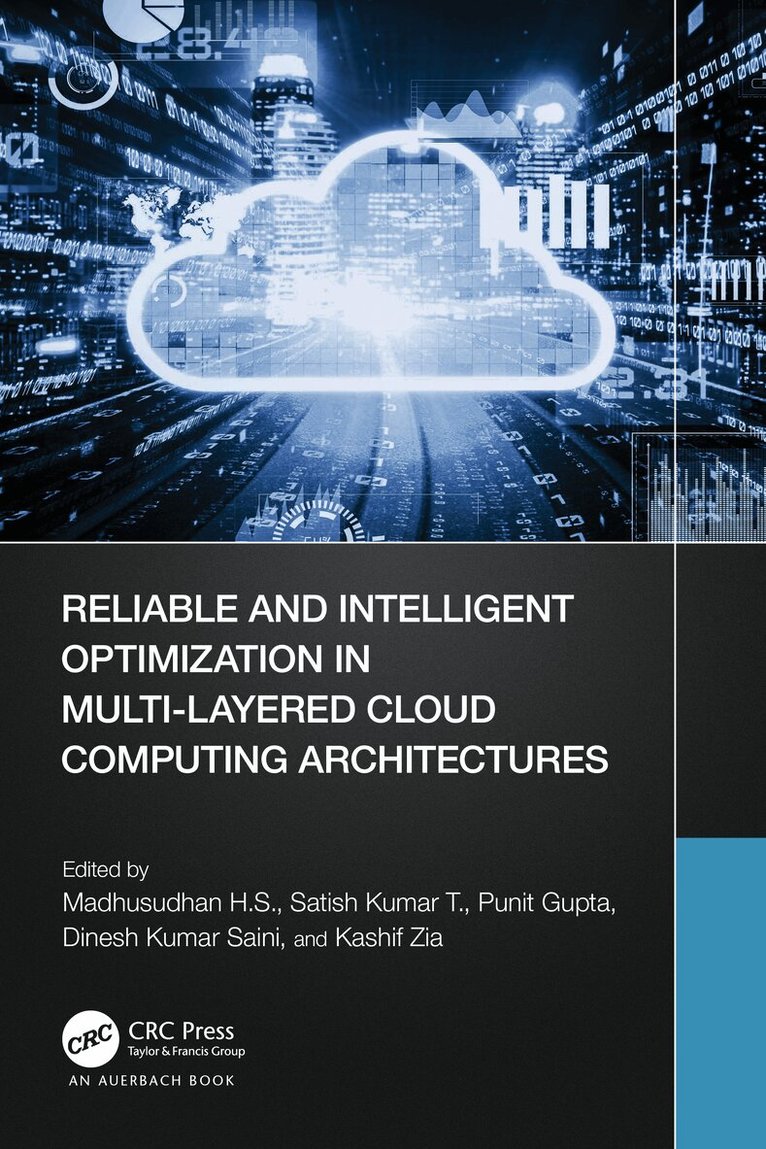
One of the major developments in the computing field has been cloud computing, which enables users to do complicated computations that local devices are unable to handle. The computing power and flexibility that have made the cloud so popular do not come without challenges. It is particularly challenging to decide which resources to use, even when they have the same configuration but different levels of performance because of the variable structure of the available resources. Cloud data centers can host millions of virtual machines, and where to locate these machines in the cloud is a difficult problem. Additionally, fulfilling optimization needs is a complex problem.
Reliable and Intelligent Optimization in Multi-Layered Cloud Computing Architectures examines ways to meet these challenges. It discusses virtual machine placement techniques and task scheduling techniques that optimize resource utilization and minimize energy consumption of cloud data centers. Placement techniques presented can provide an optimal solution to the optimization problem using multiple objectives. The book focuses on basic design principles and analysis of virtual machine placement techniques and task allocation techniques. It also looks at virtual machine placement techniques that can improve quality-of-service (QoS) in service-oriented architecture (SOA) computing. The aims of virtual machine placement include minimizing energy usage, network traffic, economical cost, maximizing performance, and maximizing resource utilization. Other highlights of the book include:
Improving QoS and resource efficiency Fault-tolerant and reliable resource optimization models A reactive fault tolerance method using checkpointing restart Cost and network-aware metaheuristics. Virtual machine scheduling and placement Electricity consumption in cloud data centersWritten by leading experts and researchers, this book provides insights and techniques to those dedicated to improving cloud computing and its services.
992 kr
Läs direkt efter köp
One of the major developments in the computing field has been cloud computing, which enables users to do complicated computations that local devices are unable to handle. The computing power and flexibility that have made the cloud so popular do not come without challenges. It is particularly challenging to decide which resources to use, even when they have the same configuration but different levels of performance because of the variable structure of the available resources. Cloud data centers can host millions of virtual machines, and where to locate these machines in the cloud is a difficult problem. Additionally, fulfilling optimization needs is a complex problem.
Reliable and Intelligent Optimization in Multi-Layered Cloud Computing Architectures examines ways to meet these challenges. It discusses virtual machine placement techniques and task scheduling techniques that optimize resource utilization and minimize energy consumption of cloud data centers. Placement techniques presented can provide an optimal solution to the optimization problem using multiple objectives. The book focuses on basic design principles and analysis of virtual machine placement techniques and task allocation techniques. It also looks at virtual machine placement techniques that can improve quality-of-service (QoS) in service-oriented architecture (SOA) computing. The aims of virtual machine placement include minimizing energy usage, network traffic, economical cost, maximizing performance, and maximizing resource utilization. Other highlights of the book include:
Improving QoS and resource efficiency Fault-tolerant and reliable resource optimization models A reactive fault tolerance method using checkpointing restart Cost and network-aware metaheuristics. Virtual machine scheduling and placement Electricity consumption in cloud data centersWritten by leading experts and researchers, this book provides insights and techniques to those dedicated to improving cloud computing and its services.