Kenneth W. Dam – författare
Visar alla böcker från författaren Kenneth W. Dam. Handla med fri frakt och snabb leverans.
10 produkter
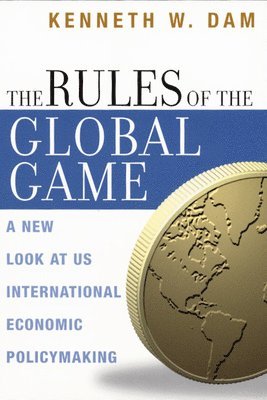
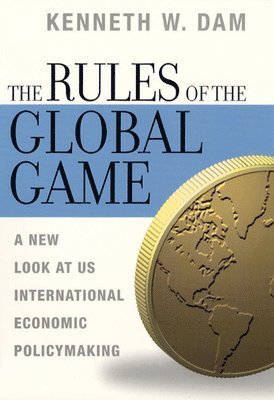
Rules of the Global Game
A New Look at US International Economic Policymaking
Häftad, 2004
287 kr
Lägg i varukorg
In The Rules of the Global Game Kenneth W. Dam provides, in clear and practical language, a comprehensive examination that helps non-economists make sense of the forces that shape U.S. international monetary policies. Elucidating both the internal structures and external ramifications of global …
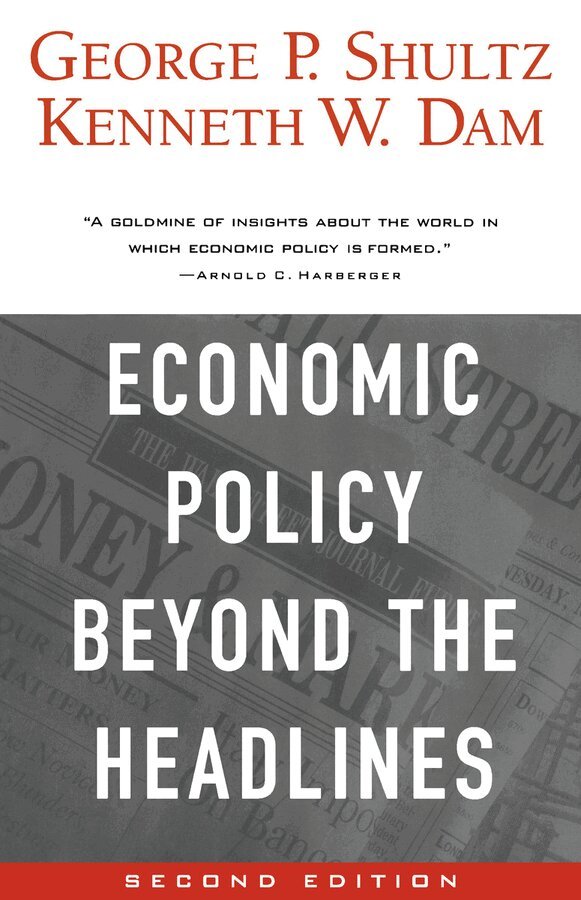
Economic Policy Beyond the Headlines
Av George P. Shultz, Kenneth W. Dam
Häftad, 1998
287 kr
Lägg i varukorg
Drawing from their experience as government insiders, George P. Shultz and Kenneth W. Dam show how economic policy is shaped at the highest levels of government. They reveal the interconnections between economic, social, and international policy, covering issues such as the advocacy system and the …
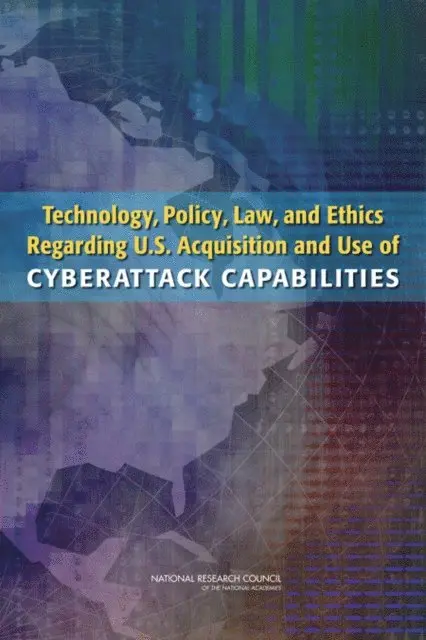
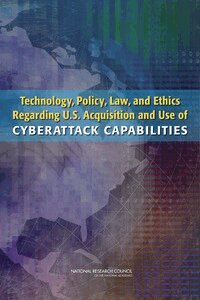
Technology, Policy, Law, and Ethics Regarding U.S. Acquisition and Use of Cyberattack Capabilities
Av Committee on Offensive Information Warfare, Computer Science and Telecommunications Board m. fl.
E-bok, 2009
650 kr
Lägg i varukorg
The United States is increasingly dependent on information and information technology for both civilian and military purposes, as are many other nations. Although there is a substantial literature on the potential impact of a cyberattack on the societal infrastructure of the United States, little …
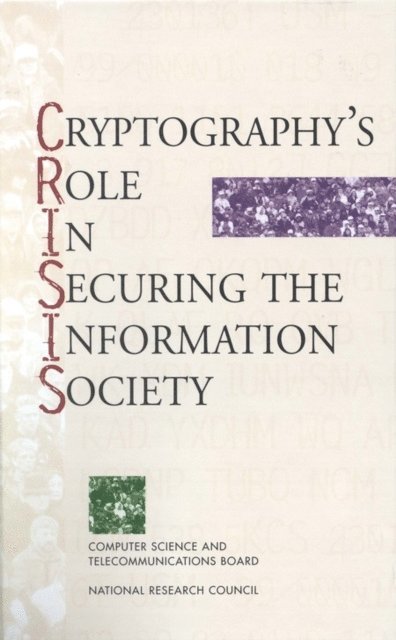
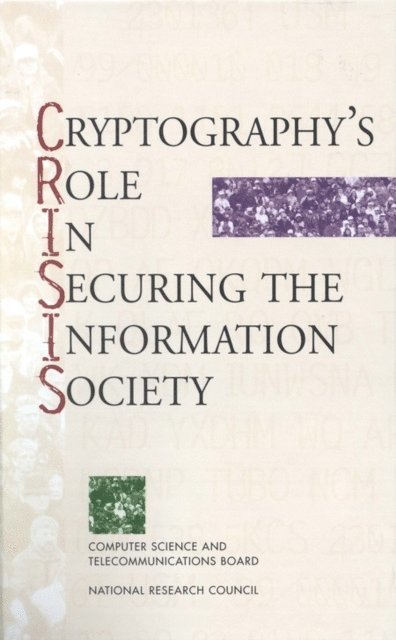
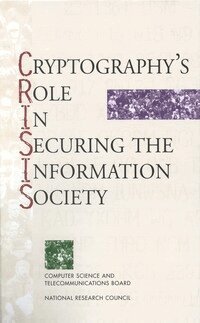
Cryptography's Role in Securing the Information Society
Av Committee to Study National Cryptography Policy, Computer Science and Telecommunications Board m. fl.
E-bok, 1996
1134 kr
Lägg i varukorg
For every opportunity presented by the information age, there is an opening to invade the privacy and threaten the security of the nation, U.S. businesses, and citizens in their private lives. The more information that is transmitted in computer-readable form, the more vulnerable we become to …
Cryptography's Role in Securing the Information Society
Av Committee to Study National Cryptography Policy, Computer Science and Telecommunications Board m. fl.
E-bok, 1996
616 kr
Lägg i varukorg
For every opportunity presented by the information age, there is an opening to invade the privacy and threaten the security of the nation, U.S. businesses, and citizens in their private lives. The more information that is transmitted in computer-readable form, the more vulnerable we become to …
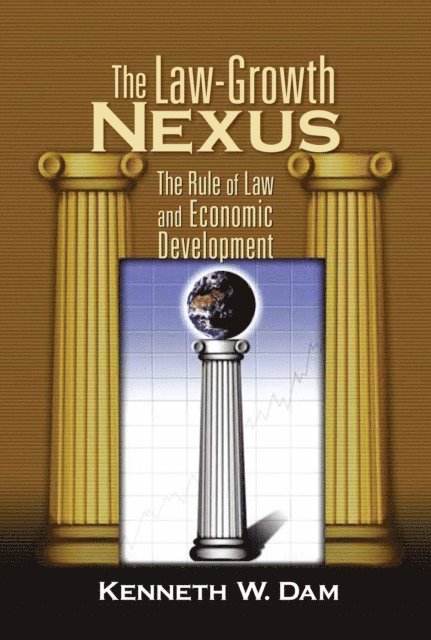
Law-Growth Nexus
The Rule of Law and Economic Development
E-bok, 2007
578 kr
Lägg i varukorg
An increasingly popular view holds that institutions--in particular, the rule of law--are the keys to unlocking the developing world's full growth potential. But what exactly does this mean? Which legal institutions matter and why? How can policymakers use this knowledge to promote growth? In The …
Law-Growth Nexus
The Rule of Law and Economic Development
Häftad, 2006
531 kr
Lägg i varukorg
An increasingly popular view holds that institutions--in particular, the rule of law--are the keys to unlocking the developing world's full growth potential. But what exactly does this mean? Which legal institutions matter and why? How can policymakers use this knowledge to promote growth? In The …
Rules of the Global Game
A New Look at US International Economic Policymaking
Inbunden, 2001
330 kr
Tillfälligt slut
In The Rules of the Global Game Kenneth W. Dam provides, in clear and practical language, a comprehensive examination that helps non-economists make sense of the forces that shape U.S. international monetary policies. Elucidating both the internal structures and external ramifications of global …
Cryptography's Role in Securing the Information Society
Av National Research Council, Division on Engineering and Physical Sciences m. fl.
Inbunden, 1996
1732 kr
Tillfälligt slut
For every opportunity presented by the information age, there is an opening to invade the privacy and threaten the security of the nation, U.S. businesses, and citizens in their private lives. The more information that is transmitted in computer-readable form, the more vulnerable we become to …
Technology, Policy, Law, and Ethics Regarding U.S. Acquisition and Use of Cyberattack Capabilities
Av National Research Council, Division on Engineering and Physical Sciences m. fl.
Häftad, 2009
763 kr
Tillfälligt slut
The United States is increasingly dependent on information and information technology for both civilian and military purposes, as are many other nations. Although there is a substantial literature on the potential impact of a cyberattack on the societal infrastructure of the United States, little …