Khaldoun Al Agha – författare
1 091 kr
Skickas inom 10-15 vardagar
1 367 kr
Läs direkt efter köp
1 123 kr
Skickas inom 10-15 vardagar
1 459 kr
Läs direkt efter köp
1 125 kr
Skickas inom 10-15 vardagar
1 459 kr
Läs direkt efter köp
The Home Networking Conference 2007 provided an international technical forum for experts from industry and academia globally to exchange ideas and present results of ongoing research in home networking.
The IFIP series publishes state-of-the-art results in the sciences and technologies of information and communication. The scope of the series includes: foundations of computer science; software theory and practice; education; computer applications in technology; communication systems; systems modeling and optimization; information systems; computers and society; computer systems technology; security and protection in information processing systems; artificial intelligence; and human-computer interaction. Proceedings and post-proceedings of refereed international conferences in computer science and interdisciplinary fields are featured. These results often precede journal publication and represent the most current research.
2 122 kr
Läs direkt efter köp
Network coding, a relatively new area of research, has evolved from the theoretical level to become a tool used to optimize the performance of communication networks – wired, cellular, ad hoc, etc. The idea consists of mixing “packets” of data together when routing them from source to destination. Since network coding increases the network performance, it becomes a tool to enhance the existing protocols and algorithms in a network or for applications such as peer-to-peer and TCP. This book delivers an understanding of network coding and provides a set of studies showing the improvements in security, capacity and performance of fixed and mobile networks. This is increasingly topical as industry is increasingly becoming more reliant upon and applying network coding in multiple applications. Many cases where network coding is used in routing, physical layer, security, flooding, error correction, optimization and relaying are given – all of which are key areas of interest. Network Coding is the ideal resource for university students studying coding, and researchers and practitioners in sectors of all industries where digital communication and its application needs to be correctly understood and implemented.
Contents
1. Network Coding: From Theory to Practice, Youghourta Benfattoum, Steven Martin and Khaldoun Al Agha. 2. Fountain Codes and Network Coding for WSNs, Anya Apavatjrut, Claire Goursaud, Katia Jaffrès-Runser and Jean-Marie Gorce. 3. Switched Code for Ad Hoc Networks: Optimizing the Diffusion by Using Network Coding, Nour Kadi and Khaldoun Al Agha. 4. Security by Network Coding, Katia Jaffrès-Runser and Cédric Lauradoux. 5. Security for Network Coding, Marine Minier, Yuanyuan Zhang and Wassim Znaïdi. 6. Random Network Coding and Matroids, Maximilien Gadouleau. 7. Joint Network-Channel Coding for the Semi-Orthogonal MARC: Theoretical Bounds and Practical Design, Atoosa Hatefi, Antoine O. Berthet and Raphael Visoz. 8. Robust Network Coding, Lana Iwaza, Marco Di Renzo and Michel Kieffer. 9. Flow Models and Optimization for Network Coding, Eric Gourdin and Jeremiah Edwards.
2 122 kr
Läs direkt efter köp
Network coding, a relatively new area of research, has evolved from the theoretical level to become a tool used to optimize the performance of communication networks – wired, cellular, ad hoc, etc. The idea consists of mixing “packets” of data together when routing them from source to destination. Since network coding increases the network performance, it becomes a tool to enhance the existing protocols and algorithms in a network or for applications such as peer-to-peer and TCP. This book delivers an understanding of network coding and provides a set of studies showing the improvements in security, capacity and performance of fixed and mobile networks. This is increasingly topical as industry is increasingly becoming more reliant upon and applying network coding in multiple applications. Many cases where network coding is used in routing, physical layer, security, flooding, error correction, optimization and relaying are given – all of which are key areas of interest. Network Coding is the ideal resource for university students studying coding, and researchers and practitioners in sectors of all industries where digital communication and its application needs to be correctly understood and implemented.
Contents
1. Network Coding: From Theory to Practice, Youghourta Benfattoum, Steven Martin and Khaldoun Al Agha. 2. Fountain Codes and Network Coding for WSNs, Anya Apavatjrut, Claire Goursaud, Katia Jaffrès-Runser and Jean-Marie Gorce. 3. Switched Code for Ad Hoc Networks: Optimizing the Diffusion by Using Network Coding, Nour Kadi and Khaldoun Al Agha. 4. Security by Network Coding, Katia Jaffrès-Runser and Cédric Lauradoux. 5. Security for Network Coding, Marine Minier, Yuanyuan Zhang and Wassim Znaïdi. 6. Random Network Coding and Matroids, Maximilien Gadouleau. 7. Joint Network-Channel Coding for the Semi-Orthogonal MARC: Theoretical Bounds and Practical Design, Atoosa Hatefi, Antoine O. Berthet and Raphael Visoz. 8. Robust Network Coding, Lana Iwaza, Marco Di Renzo and Michel Kieffer. 9. Flow Models and Optimization for Network Coding, Eric Gourdin and Jeremiah Edwards.
2 325 kr
Läs direkt efter köp
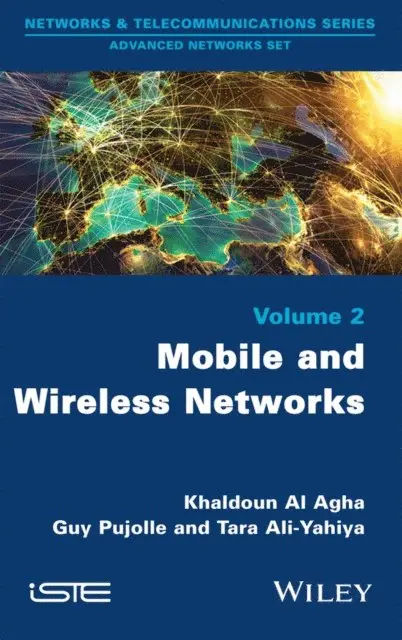
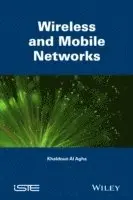
This book presents the state of the art in the field of mobile and wireless networks, and anticipates the arrival of new standards and architectures. It focuses on wireless networks, starting with small personal area networks and progressing onto the very large cells of wireless regional area networks, via local area networks dominated by WiFi technology, and finally metropolitan networks. After a description of the existing 2G and 3G standards, with LTE being the latest release, LTE-A is addressed, which is the first 4G release, and a first indication of 5G is provided as seen through the standardizing bodies. 4G technology is described in detail along with the different LTE extensions related to the massive arrival of femtocells, the increase to a 1 Gbps capacity, and relay techniques. 5G is also discussed in order to show what can be expected in the near future.
The Internet of Things is explained in a specific chapter due to its omnipresence in the literature, ad hoc and mesh networks form another important chapter as they have made a comeback after a long period of near hibernation, and the final chapter discusses a particularly recent topic: Mobile-Edge Computing (MEC) servers.
2 244 kr
Läs direkt efter köp
This book presents the state of the art in the field of mobile and wireless networks, and anticipates the arrival of new standards and architectures. It focuses on wireless networks, starting with small personal area networks and progressing onto the very large cells of wireless regional area networks, via local area networks dominated by WiFi technology, and finally metropolitan networks. After a description of the existing 2G and 3G standards, with LTE being the latest release, LTE-A is addressed, which is the first 4G release, and a first indication of 5G is provided as seen through the standardizing bodies. 4G technology is described in detail along with the different LTE extensions related to the massive arrival of femtocells, the increase to a 1 Gbps capacity, and relay techniques. 5G is also discussed in order to show what can be expected in the near future.
The Internet of Things is explained in a specific chapter due to its omnipresence in the literature, ad hoc and mesh networks form another important chapter as they have made a comeback after a long period of near hibernation, and the final chapter discusses a particularly recent topic: Mobile-Edge Computing (MEC) servers.
2 053 kr
Läs direkt efter köp
The Internet of Edges is a new paradigm whose objective is to keep data and processing close to the user. This book presents three different levels of Edge networking: MEC (Multi-access Edge Computing), Fog and Far Edge (sometimes called Mist or Skin). It also reviews participatory networks, in which user equipment provides the resources for the Edge network.
Edge networks can be disconnected from the core Internet, and the interconnection of autonomous edge networks can then form the Internet of Edges.
This book analyzes the characteristics of Edge networks in detail, showing their capacity to replace the imposing Clouds of core networks due to their superior server response time, data security and energy saving.
1 981 kr
Läs direkt efter köp
The Internet of Edges is a new paradigm whose objective is to keep data and processing close to the user. This book presents three different levels of Edge networking: MEC (Multi-access Edge Computing), Fog and Far Edge (sometimes called Mist or Skin). It also reviews participatory networks, in which user equipment provides the resources for the Edge network.
Edge networks can be disconnected from the core Internet, and the interconnection of autonomous edge networks can then form the Internet of Edges.
This book analyzes the characteristics of Edge networks in detail, showing their capacity to replace the imposing Clouds of core networks due to their superior server response time, data security and energy saving.
Mobile and Wireless Communications Networks
IFIP TC6 / WG6.8 Conference on Mobile and Wireless Communication Networks (MWCN 2004) October 25-27, 2004 Paris, France
1 091 kr
Skickas inom 10-15 vardagar
Ad-Hoc Networking
IFIP 19th World Computer Congress, TC-6, IFIP Interactive Conference on Ad-Hoc Networking, August 20-25, 2006, Santiago, Chile
1 123 kr
Skickas inom 10-15 vardagar
Home Networking
First IFIP WG 6.2 Home Networking Conference (IHN'2007), Paris, France, December 10-12, 2007
1 123 kr
Skickas inom 10-15 vardagar
1 735 kr
Skickas inom 5-8 vardagar
2 412 kr
Skickas inom 5-8 vardagar
1 919 kr
Skickas inom 11-20 vardagar
1 977 kr
Skickas inom 5-8 vardagar
3 310 kr
Tillfälligt slut