Kirsten M. A. Revell - Böcker
Visar alla böcker från författaren Kirsten M. A. Revell. Handla med fri frakt och snabb leverans.
7 produkter
7 produkter
Designing Interaction and Interfaces for Automated Vehicles
User-Centred Ecological Design and Testing
Inbunden, Engelska, 2021
2 104 kr
Skickas inom 10-15 vardagar
Driving automation and autonomy are already upon us and the problems that were predicted twenty years ago are beginning to appear. These problems include shortfalls in expected benefits, equipment unreliability, driver skill fade, and error-inducing equipment designs. Designing Interaction and Interfaces for Automated Vehicles: User-Centred Ecological Design and Testing investigates the difficult problem of how to interface drivers with automated vehicles by offering an inclusive, human-centred design process that focusses on human variability and capability in interaction with interfaces. This book introduces a novel method that combines both systems thinking and inclusive user-centred design. It models driver interaction, provides design specifications, concept designs, and the results of studies in simulators on the test track, and in road going vehicles. This book is for designers of systems interfaces, interactions, UX, Human Factors and Ergonomics researchers and practitioners involved with systems engineering and automotive academics._"In this book, Prof Stanton and colleagues show how Human Factors methods can be applied to the tricky problem of interfacing human drivers with vehicle automation. They have developed an approach to designing the human-automation interaction for the handovers between the driver and the vehicle. This approach has been tested in driving simulators and, most interestingly, in real vehicles on British motorways. The approach, called User-Centred Ecological Interface Design, has been validated against driver behaviour and used to support their ongoing work on vehicle automation. I highly recommend this book for anyone interested, or involved, in designing human-automation interaction in vehicles and beyond." Professor Michael A. Regan, University of NSW Sydney, AUSTRALIA
Designing Interaction and Interfaces for Automated Vehicles
User-Centred Ecological Design and Testing
Häftad, Engelska, 2024
667 kr
Skickas inom 10-15 vardagar
Driving automation and autonomy are already upon us and the problems that were predicted twenty years ago are beginning to appear. These problems include shortfalls in expected benefits, equipment unreliability, driver skill fade, and error-inducing equipment designs. Designing Interaction and Interfaces for Automated Vehicles: User-Centred Ecological Design and Testing investigates the difficult problem of how to interface drivers with automated vehicles by offering an inclusive, human-centred design process that focusses on human variability and capability in interaction with interfaces. This book introduces a novel method that combines both systems thinking and inclusive user-centred design. It models driver interaction, provides design specifications, concept designs, and the results of studies in simulators on the test track, and in road going vehicles. This book is for designers of systems interfaces, interactions, UX, Human Factors and Ergonomics researchers and practitioners involved with systems engineering and automotive academics._"In this book, Prof Stanton and colleagues show how Human Factors methods can be applied to the tricky problem of interfacing human drivers with vehicle automation. They have developed an approach to designing the human-automation interaction for the handovers between the driver and the vehicle. This approach has been tested in driving simulators and, most interestingly, in real vehicles on British motorways. The approach, called User-Centred Ecological Interface Design, has been validated against driver behaviour and used to support their ongoing work on vehicle automation. I highly recommend this book for anyone interested, or involved, in designing human-automation interaction in vehicles and beyond." Professor Michael A. Regan, University of NSW Sydney, AUSTRALIA
Digitising Command and Control
A Human Factors and Ergonomics Analysis of Mission Planning and Battlespace Management
Inbunden, Engelska, 2009
2 298 kr
Skickas inom 10-15 vardagar
This book presents a human factors and ergonomics evaluation of a digital Mission Planning and Battle-space Management (MP/BM) system. An emphasis was placed on the activities at the Brigade (Bde) and the Battle Group (BG) headquarters (HQ) levels. The analysts distributed their time evenly between these two locations. The human factors team from Brunel University, as part of the HFI DTC, undertook a multi-faceted approach to the investigation, including: - observation of people using the traditional analogue MP/BM processes in the course of their work - cognitive work analysis of the digital MP/BM system - analysis of the tasks and goal structure required by the digital MP/BM - assessment against a usability questionnaire - analysis of the distributed situation awareness - an environmental survey. The book concludes with a summary of the research project's findings and offers many valuable insights. For example, the recommendations for short-term improvements in the current generation of digital MP/BM system address general design improvements, user-interface design improvements, hardware improvements, infrastructure improvements and support improvements. In looking forward to the next generation digital MP/BM systems, general human factors design principles are presented and human factors issues in digitising mission planning are considered.
1 766 kr
Skickas inom 10-15 vardagar
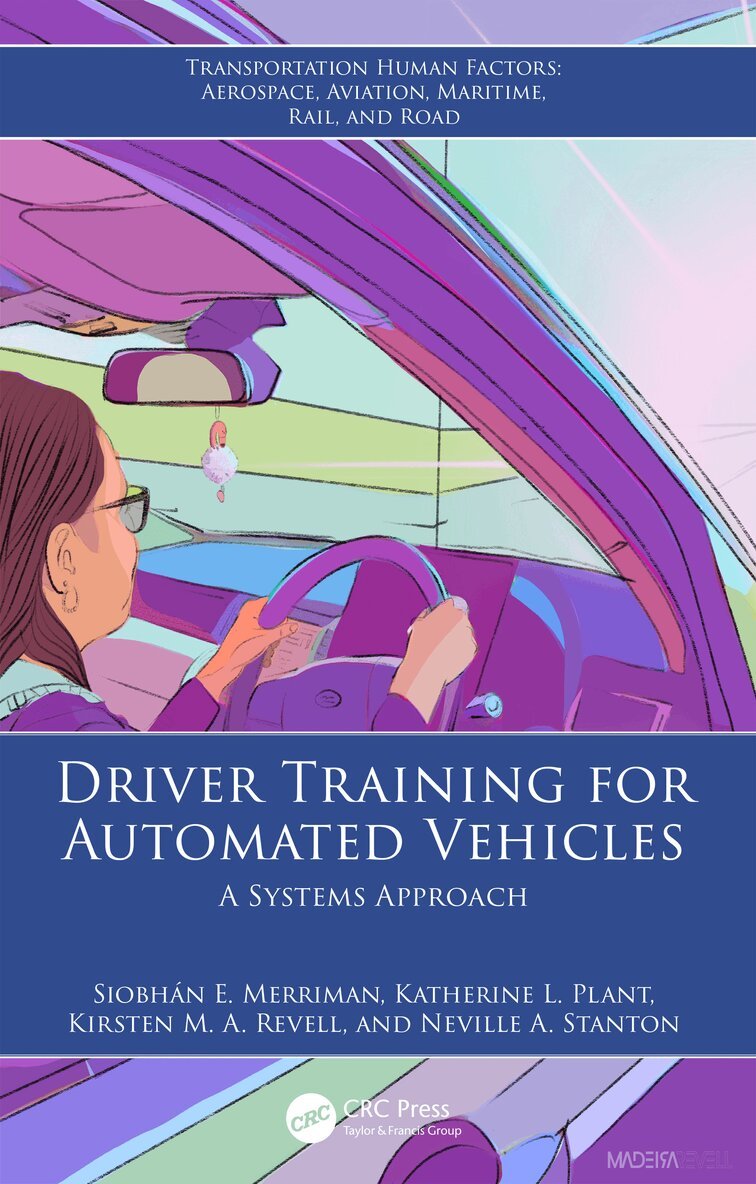
Since the introduction of Automated Vehicles (AVs) on roads, there have been a number of high-profile collisions, which have highlighted significant driver challenges. These include challenges associated with drivers’ trust in the automation, their knowledge and awareness of the AV’s capabilities and limitations and their reduced situation awareness of the road environment and the vehicle. Solutions are needed to overcome these challenges, so that the expected benefits of AVs can be realised.Driver Training for Automated Vehicles: A Systems Approach identifies the training requirements for drivers of AVs and takes a systematic approach to design, develop, implement and evaluate a comprehensive training package to address these requirements. This book explores how training can overcome the driver challenges associated with AVs by improving drivers’ mental models, trust in automation, decisions and behaviour when activating a Level 4 AV. It presents a systematic approach to the training lifecycle, by first presenting the current state of research into AVs, identifying the challenges and training requirements for drivers of AVs, and then developing and evaluating a training programme to achieve these requirements. This fascinating title highlights the need for drivers to undergo training for AVs, and takes us a step closer to this need. It walks readers through a systematic, four-step process and provides practical guidance to develop and evaluate an effective training programme. The reader will develop a thorough understanding of the current driver challenges with AVs and the methods and systems to mitigate them through current knowledge and research.This book is an ideal read for practitioners, designers and academics with a professional or research interest in AVs. Its appeal extends to those in the fields of automotive design, Systems Engineering, Human Factors and education and training.
724 kr
Skickas inom 10-15 vardagar
Since the introduction of Automated Vehicles (AVs) on roads, there have been a number of high-profile collisions, which have highlighted significant driver challenges. These include challenges associated with drivers’ trust in the automation, their knowledge and awareness of the AV’s capabilities and limitations and their reduced situation awareness of the road environment and the vehicle. Solutions are needed to overcome these challenges, so that the expected benefits of AVs can be realised.Driver Training for Automated Vehicles: A Systems Approach identifies the training requirements for drivers of AVs and takes a systematic approach to design, develop, implement and evaluate a comprehensive training package to address these requirements. This book explores how training can overcome the driver challenges associated with AVs by improving drivers’ mental models, trust in automation, decisions and behaviour when activating a Level 4 AV. It presents a systematic approach to the training lifecycle, by first presenting the current state of research into AVs, identifying the challenges and training requirements for drivers of AVs, and then developing and evaluating a training programme to achieve these requirements. This fascinating title highlights the need for drivers to undergo training for AVs, and takes us a step closer to this need. It walks readers through a systematic, four-step process and provides practical guidance to develop and evaluate an effective training programme. The reader will develop a thorough understanding of the current driver challenges with AVs and the methods and systems to mitigate them through current knowledge and research.This book is an ideal read for practitioners, designers and academics with a professional or research interest in AVs. Its appeal extends to those in the fields of automotive design, Systems Engineering, Human Factors and education and training.
Digitising Command and Control
A Human Factors and Ergonomics Analysis of Mission Planning and Battlespace Management
Häftad, Engelska, 2017
859 kr
Skickas inom 10-15 vardagar
This book presents a human factors and ergonomics evaluation of a digital Mission Planning and Battle-space Management (MP/BM) system. An emphasis was placed on the activities at the Brigade (Bde) and the Battle Group (BG) headquarters (HQ) levels. The analysts distributed their time evenly between these two locations. The human factors team from Brunel University, as part of the HFI DTC, undertook a multi-faceted approach to the investigation, including: - observation of people using the traditional analogue MP/BM processes in the course of their work - cognitive work analysis of the digital MP/BM system - analysis of the tasks and goal structure required by the digital MP/BM - assessment against a usability questionnaire - analysis of the distributed situation awareness - an environmental survey. The book concludes with a summary of the research project's findings and offers many valuable insights. For example, the recommendations for short-term improvements in the current generation of digital MP/BM system address general design improvements, user-interface design improvements, hardware improvements, infrastructure improvements and support improvements. In looking forward to the next generation digital MP/BM systems, general human factors design principles are presented and human factors issues in digitising mission planning are considered.
Mental Models
Design of User Interaction and Interfaces for Domestic Energy Systems
Inbunden, Engelska, 2017
1 749 kr
Skickas inom 10-15 vardagar
There is a resurgence of interest in mental models due to advances in our understanding of how they can be used to help design and due to the development of practical methods to elicit them. This book brings both areas together with a focus on reducing domestic energy consumption. The book focuses on how mental models can be applied in design to bring out behaviour change resulting in increased achievement of home heating goals (reduced waste and improved comfort). This book also offers a method to extract and apply mental models to interface design. The approach enables mental models to be applied across domains when behaviour change was sought, and is validated as a useful design method.