Knut Helskog – författare
Visar alla böcker från författaren Knut Helskog. Handla med fri frakt och snabb leverans.
6 produkter
6 produkter
E-bok
Engelska, 2021122 kr
Läs direkt efter köp
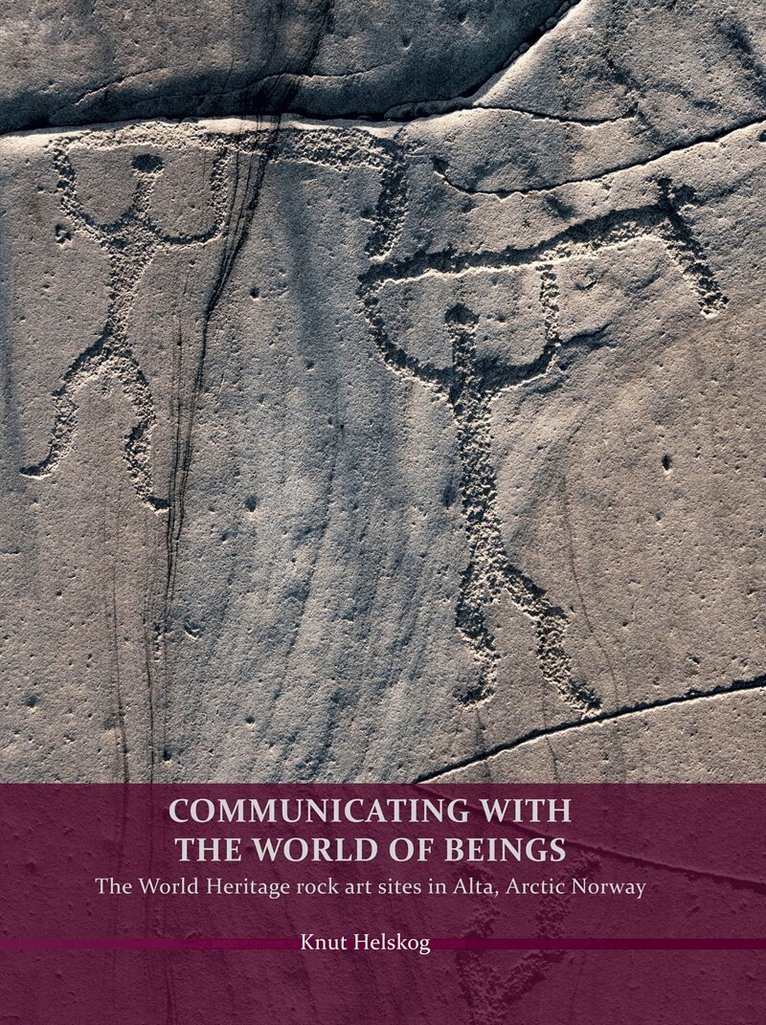
The rock art found in the World Heritage sites in the Alta area, Arctic Norway, comprise thousands of images including reindeer and elk as well as fish, birds, boats, humans and geometric patterns. They contain information about peoples who lived in this northern area from about 5000 BC up until the birth of Christ; such as possible social organizations, hunting and trapping, beliefs, rituals,stories, legends, myths, cultural changes and continuities.Communicating with the world of beings addresses an understanding of the rock art in terms of communication with other people and other than-human beings. The figures could have been seen and experienced as symbols in rituals or as expressions of identity, position, power and rights, as depictions of real events and perhaps for use in storytelling. Through rock art, people might also have been able to communicate with other-than-human beings who ruled parts of the environment – in order to petition favors for themselves or others. These other-than-human beings may have been perceived as good and evil powers and spirits of the different worlds of the universe; the dead or souls; which also included the animals depicted or were even embodied in the stone.This communication may have been based on a belief that both living beings and inert objects and natural phenomena had souls, a belief that may have existed ever since the earliest settlements. Such an animistic belief means that everything was seen as having a consciousness and identity of its own, independent and imbued with a will. Therefore, it was essential that the different participants communicated with one another as equal partners.In this beautifully illustrated book Knut Helskog provides a lyrical and personal interpretation of the chronology, patterning and possible meanings behind this extraordinary landscape of prehistoric rock art.
Häftad, Engelska, 2012
380 kr
Skickas inom 5-8 vardagar
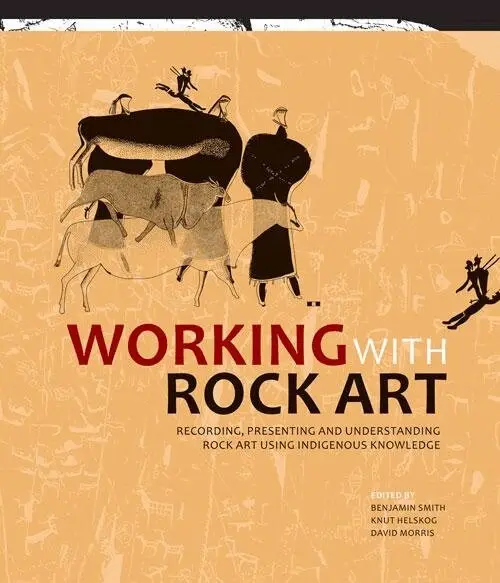
Cutting edge contributions that consider new approaches to the documentation of rock art; its interpretation using indigenous knowledge; and the presentation of rock art. This volume contains contributions that consider new approaches to three areas: the documentation of rock art; its interpretation using indigenous knowledge; and the presentation of rock art. Working with Rock Art is the first edited volume to consider each of these areas in a theoretical rather than a technical fashion, and it therefore makes a significant contribution to the discipline. The volume aims to promote the sharing of new experiences between leading researchers in the field. While the geographic focus is truly global, there is a dominant north-south axis with strong representation from researchers in southern Africa and northern Europe, two leading centres for new approaches in rock art research. Working with Rock Art opens up a long overdue dialogue about shared experiences between these two centres, and a number of the chapters are the first published results of new collaborative research. Since this volume covers the recording, interpretation and presentation of rock art, it will attract a wide audience of researchers, heritage managers and students, as well as anyone interested in the field of rock art studies.
E-bok
PDF, Engelska, 2012384 kr
Läs direkt efter köp
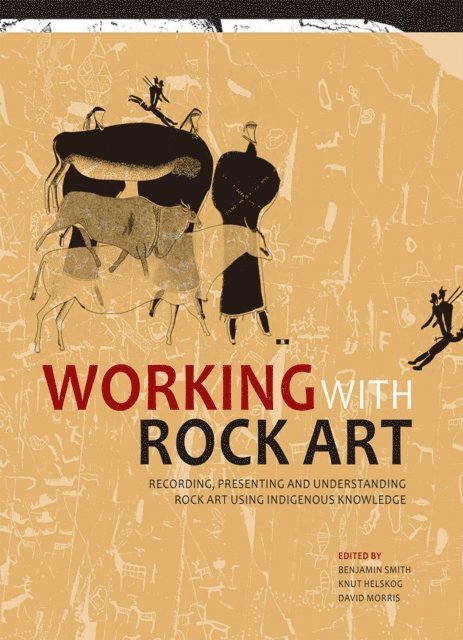
This volume contains contributions that consider new approaches to three areas: the documentation of rock art; its interpretation using indigenous knowledge; and the presentation of rock art. Working with Rock Art is the first edited volume to consider each of these areas in a theoretical rather than a technical fashion, and it therefore makes a significant contribution to the discipline. The volume aims to promote the sharing of new experiences between leading researchers in the field. While the geographic focus is truly global, there is a dominant north-south axis with strong representation from researchers in southern Africa and northern Europe, two leading centres for new approaches in rock art research. Working with Rock Art opens up a long overdue dialogue about shared experiences between these two centres, and a number of the chapters are the first published results of new collaborative research. Since this volume covers the recording, interpretation and presentation of rock art, it will attract a wide audience of researchers, heritage managers and students, as well as anyone interested in the field of rock art studies.
E-bok
PDF, Engelska, 2010443 kr
Läs direkt efter köp
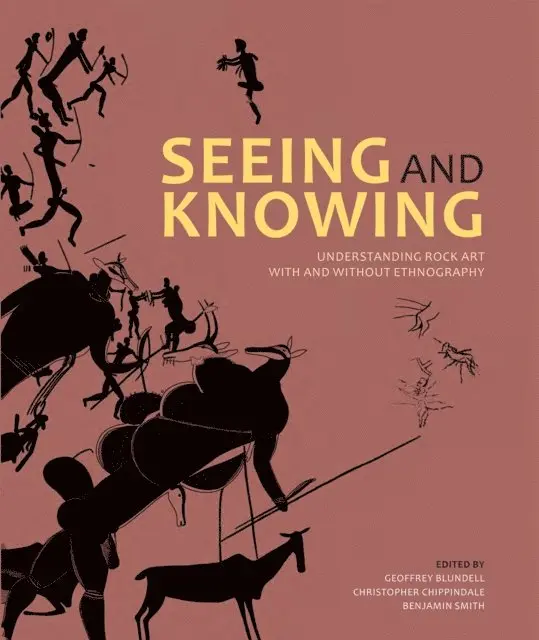
It is largely through the work of David Lewis-Williams that San rock art has come to be understood so well, as a complex symbolic and metaphoric representation of San religious beliefs and practices. The purpose of this volume is to demonstrate the depth and wide geographical impact of Lewis-Williams’ contribution, with particular emphasis on the use of theory and methodology drawn from ethnography that he has used with inspirational effect in understanding the meaning and context of rock art in various parts of the world. Seeing and Knowing explores how to understand and learn from rock art with and without ethnography. Because many of the chapters are based on solid fieldwork and ethnographic research, they offer a new body of work that provides the evidence for differentiation between knowing and simply seeing. This volume is unique in that it focuses exclusively on rock art and ethnography, and covers such a wide geographic range of examples on this topic, from southern Africa, to Scandinavia, to the United States. Many of the chapters explore studies in rock art regions of the world where variation and constancy can be observed and explored across distances both in space and in time. The editors have entitled the book Seeing and Knowing to echo Lewis-Williams’ Believing and Seeing published almost thirty years ago; they say ‘seeing’ again because looking at rock art is and will always be central, and then what is seen when human eyes and minds look; they say ‘knowing’ in recognition that, by his work and by his example, archaeologists now know a little more than they knew before. Even so, as Lewis-Williams will be the first to say, we still know only a fraction.
E-bok
Engelska, 2010447 kr
Läs direkt efter köp
It is largely through the work of David Lewis-Williams that San rock art has come to be understood so well, as a complex symbolic and metaphoric representation of San religious beliefs and practices. The purpose of this volume is to demonstrate the depth and wide geographical impact of Lewis-Williams’ contribution, with particular emphasis on the use of theory and methodology drawn from ethnography that he has used with inspirational effect in understanding the meaning and context of rock art in various parts of the world. Seeing and Knowing explores how to understand and learn from rock art with and without ethnography. Because many of the chapters are based on solid fieldwork and ethnographic research, they offer a new body of work that provides the evidence for differentiation between knowing and simply seeing. This volume is unique in that it focuses exclusively on rock art and ethnography, and covers such a wide geographic range of examples on this topic, from southern Africa, to Scandinavia, to the United States. Many of the chapters explore studies in rock art regions of the world where variation and constancy can be observed and explored across distances both in space and in time. The editors have entitled the book Seeing and Knowing to echo Lewis-Williams’ Believing and Seeing published almost thirty years ago; they say ‘seeing’ again because looking at rock art is and will always be central, and then what is seen when human eyes and minds look; they say ‘knowing’ in recognition that, by his work and by his example, archaeologists now know a little more than they knew before. Even so, as Lewis-Williams will be the first to say, we still know only a fraction.
E-bok
Engelska, 2012384 kr
Läs direkt efter köp
This volume contains contributions that consider new approaches to three areas: the documentation of rock art; its interpretation using indigenous knowledge; and the presentation of rock art. Working with Rock Art is the first edited volume to consider each of these areas in a theoretical rather than a technical fashion, and it therefore makes a significant contribution to the discipline. The volume aims to promote the sharing of new experiences between leading researchers in the field. While the geographic focus is truly global, there is a dominant north-south axis with strong representation from researchers in southern Africa and northern Europe, two leading centres for new approaches in rock art research. Working with Rock Art opens up a long overdue dialogue about shared experiences between these two centres, and a number of the chapters are the first published results of new collaborative research. Since this volume covers the recording, interpretation and presentation of rock art, it will attract a wide audience of researchers, heritage managers and students, as well as anyone interested in the field of rock art studies.