Lars Olav Eik – författare
Visar alla böcker från författaren Lars Olav Eik. Handla med fri frakt och snabb leverans.
10 produkter
10 produkter
Inbunden, Engelska, 2020
1 616 kr
Skickas inom 10-15 vardagar
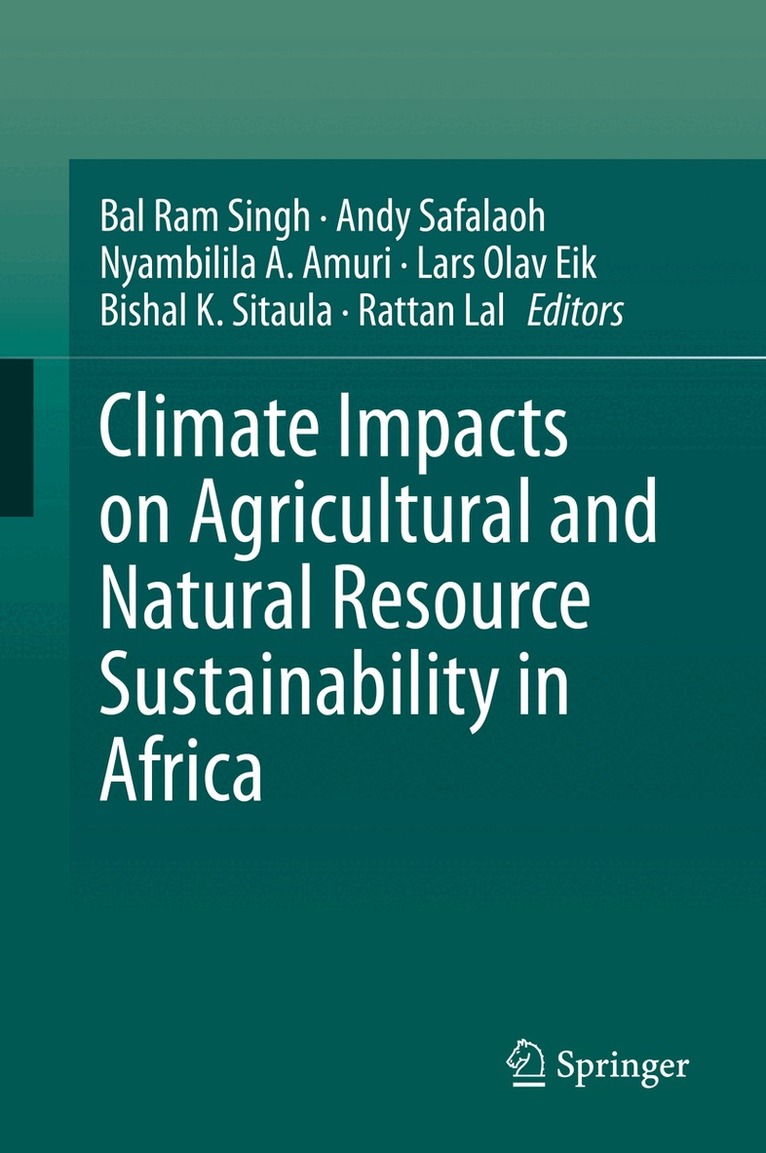
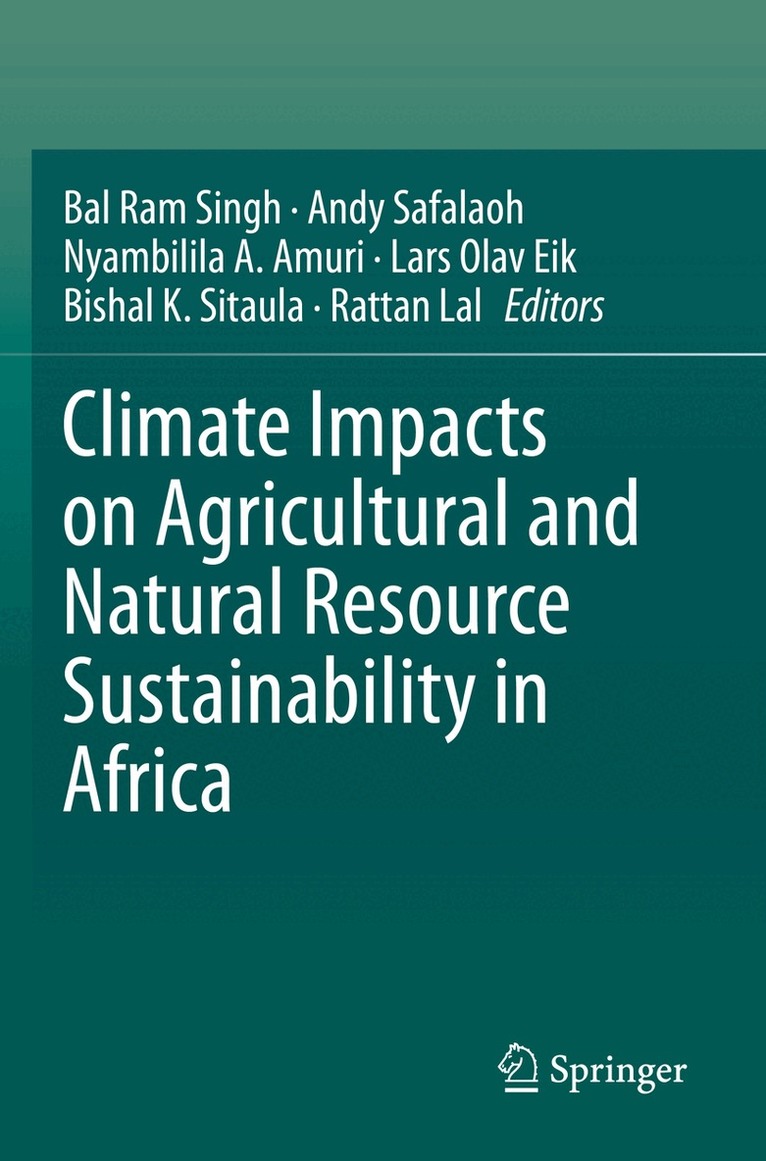
This book discusses knowledge-based sustainable agro-ecological and natural resource management systems and best practices for sustained agricultural productivity and ecosystem resilience for better livelihoods under a changing climate. With a focus on agriculture in Africa, the book assesses innovative technologies for use on smallholder farms, and addresses some of the key Sustainable Development Goals to guide innovative responses and enhanced adaptation methods for coping with climate change.Contributions are based on 'Capacity Building for Managing Climate Change in Malawi' (CABMACC), a five-year program with an overall goal to improve livelihoods and food security through innovative responses and enhanced capacity of adaptation to climate change. Readers will discover more about sustainable crop production, climate smart agriculture, on-farm energy supply from biogas and the potential of soil carbon sequestration in crop-livestock systems.
2 049 kr
Läs direkt efter köp
This book discusses knowledge-based sustainable agro-ecological and natural resource management systems and best practices for sustained agricultural productivity and ecosystem resilience for better livelihoods under a changing climate. With a focus on agriculture in Africa, the book assesses innovative technologies for use on smallholder farms, and addresses some of the key Sustainable Development Goals to guide innovative responses and enhanced adaptation methods for coping with climate change.Contributions are based on ''Capacity Building for Managing Climate Change in Malawi'' (CABMACC), a five-year program with an overall goal to improve livelihoods and food security through innovative responses and enhanced capacity of adaptation to climate change. Readers will discover more about sustainable crop production, climate smart agriculture, on-farm energy supply from biogas and the potential of soil carbon sequestration in crop-livestock systems.
Häftad, Engelska, 2021
1 616 kr
Skickas inom 10-15 vardagar
This book discusses knowledge-based sustainable agro-ecological and natural resource management systems and best practices for sustained agricultural productivity and ecosystem resilience for better livelihoods under a changing climate. With a focus on agriculture in Africa, the book assesses innovative technologies for use on smallholder farms, and addresses some of the key Sustainable Development Goals to guide innovative responses and enhanced adaptation methods for coping with climate change.Contributions are based on 'Capacity Building for Managing Climate Change in Malawi' (CABMACC), a five-year program with an overall goal to improve livelihoods and food security through innovative responses and enhanced capacity of adaptation to climate change. Readers will discover more about sustainable crop production, climate smart agriculture, on-farm energy supply from biogas and the potential of soil carbon sequestration in crop-livestock systems.
Inbunden, Engelska, 2026
559 kr
Skickas inom 10-15 vardagar
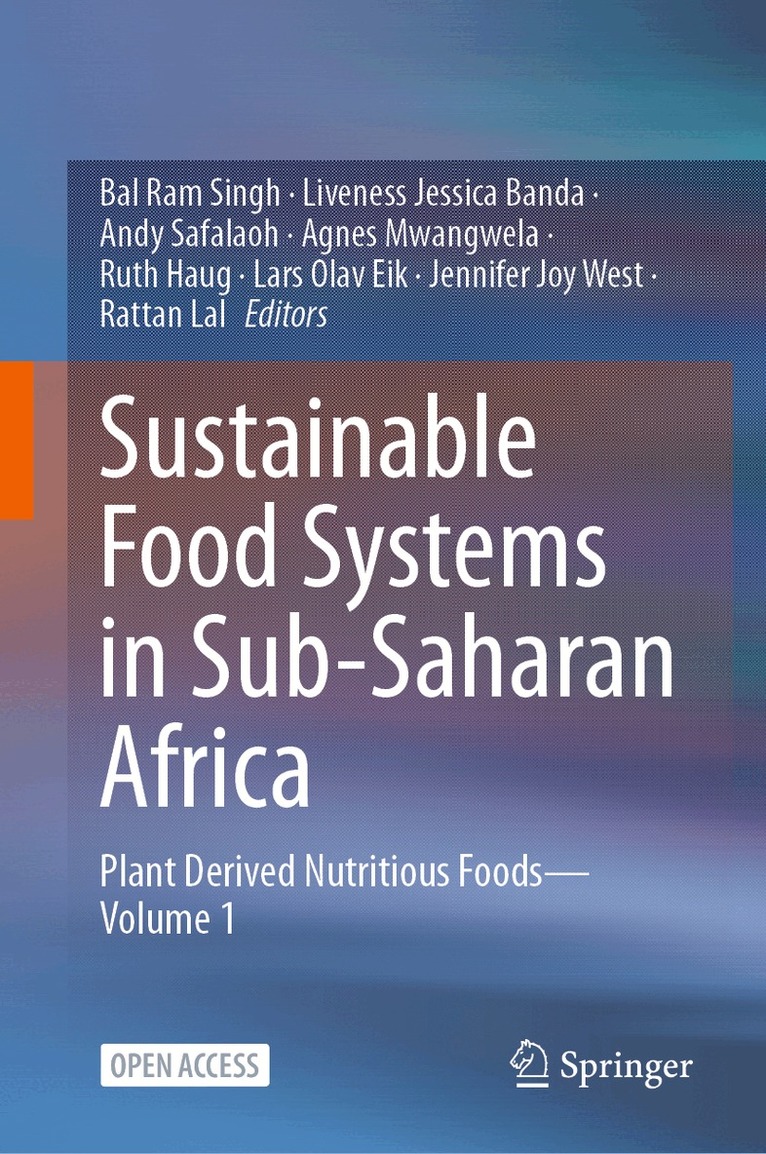
This open access book provides a synthesis of the knowledge generated on relevant and adaptive technologies for the betterment of farmer’s livelihood. The book is based on contribution made primarily by researchers from Africa and especially from Malawi. However, other experts and especially in the fields of human nutrition and biofortified foods from other parts of the world have also contributed to this book. The population of Sub-Saharan Africa (SSA) was 179 M in 1950 and 1.09 B in 2020 and may reach 2.12 B by 2050 and 3.78 B by 2100. More than 60% of population of SSA is engaged in agriculture, dominated by smallholders (< 2 ha), and they constitute approximately 80% of all farms in SSA and employ about 175 million people directly. In many SSA countries, women comprise at least half of the labour force. Another increasing concern is declining land resources due to rapid soil degradation, harsh and uncertain climate as over 75% of arable land (Montpellier Panel Report, 2014) is degraded due to continuous cropping with minimal or no investment in soil improvement or even maintenance and often soil mining of nutrients. Smallholders, as the main rural actors in SSA, are frequently the most food insecure and malnourished because they face an array of challenges. Malnourishment, being the highest among developing regions, has reached currently to 218 million people in SSA (FAO et al.,2020). Under malnutrition, micronutrient deficiencies remain widespread and have significant functional implications and poor human health. Africa bears a greater share of all forms of malnutrition, because more than one third of all stunted children under 5 live in Africa. Furthermore, in Sub-Sahara Africa, 50 % of people suffer due to Zn deficiency and 57 % of pregnant women in Africa suffer from iron deficiency anaemia. Furthermore, nearly 30% of people globally are deficient in zinc and iodine (WHO et al.,2019). Therefore, enhancing production capacities with nutrient-rich food at smallholder farms and their economic and social resilience may improve food and nutrition security at different levels.
Inbunden, Engelska, 2014
1 616 kr
Skickas inom 10-15 vardagar
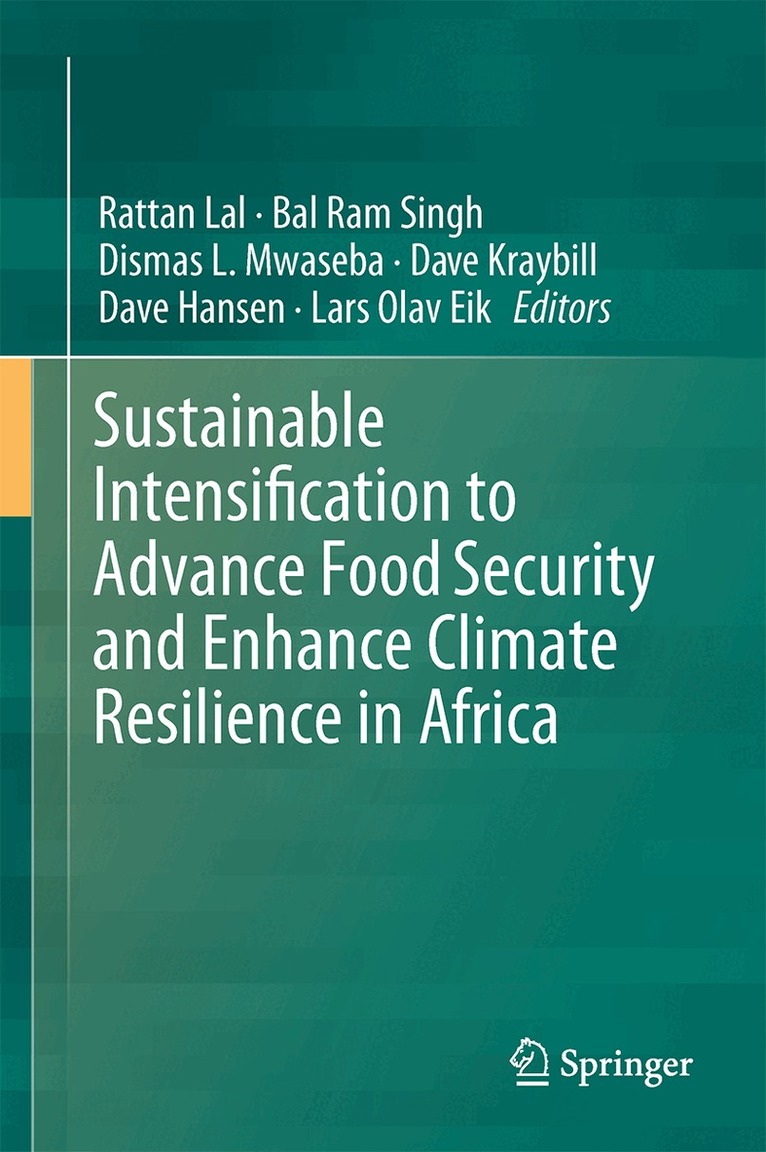
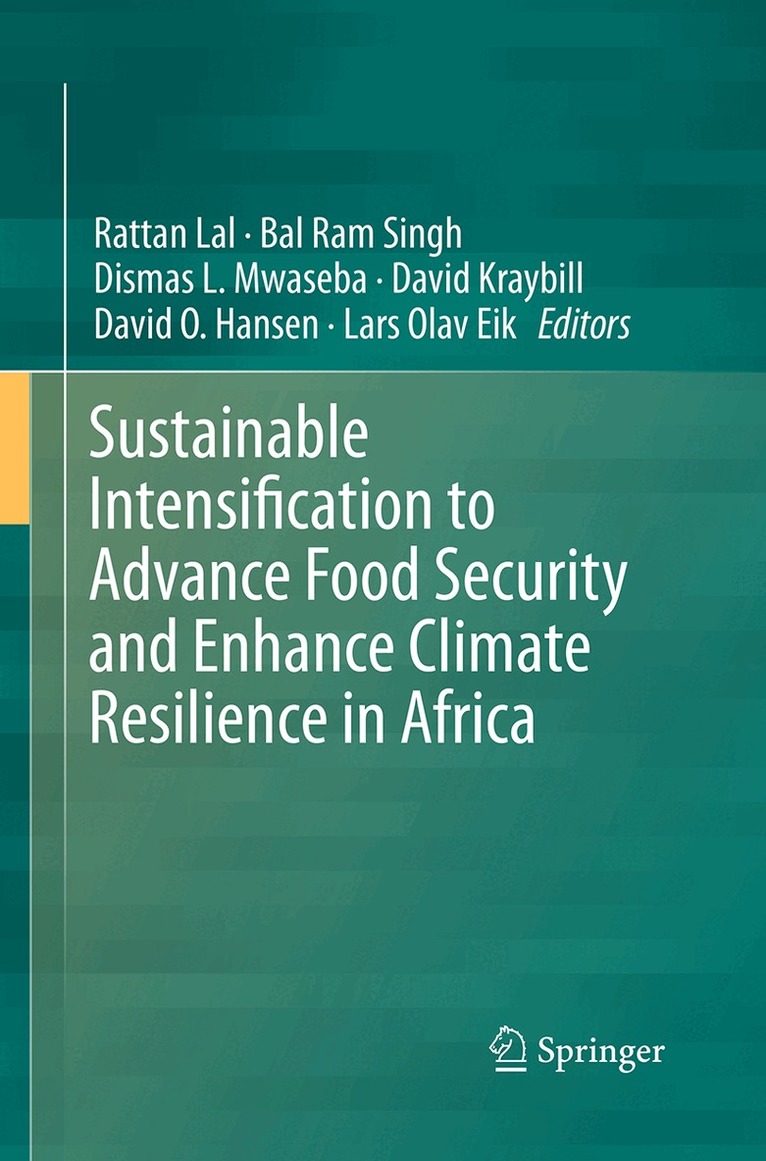
This 32-chapter volume represents the core of several oral and poster presentations made at the conference. In addition to Introduction and Conclusion sections, the book is thematically divided into 7 sections, namely, 1) Land Use and Farming Systems, 2) Effects of Climate Change on Crop Yield, 3) Soil Nutrient and Water Management for Carbon Sequestration, 4) Rehabilitation of Degraded Lands through Forestry and Agroforestry, 5) Management of Animal Production for Greenhouse Gas Emissions, 6) Smallholder Adaptation to Climate Change, and 7) Economic, Social and Policy Issues. It addresses these themes in the context of sustainable intensification (SI). It implies increasing agronomic production from the existing land while improving/restoring its quality and decreasing the C or environmental footprint. Simply put, SI means producing more from less.
E-bok
PDF, Engelska, 20141 519 kr
Läs direkt efter köp
This 32-chapter volume represents the core of several oral and poster presentations made at the conference. In addition to Introduction and Conclusion sections, the book is thematically divided into 7 sections, namely, 1) Land Use and Farming Systems, 2) Effects of Climate Change on Crop Yield, 3) Soil Nutrient and Water Management for Carbon Sequestration, 4) Rehabilitation of Degraded Lands through Forestry and Agroforestry, 5) Management of Animal Production for Greenhouse Gas Emissions, 6) Smallholder Adaptation to Climate Change, and 7) Economic, Social and Policy Issues. It addresses these themes in the context of sustainable intensification (SI). It implies increasing agronomic production from the existing land while improving/restoring its quality and decreasing the C or environmental footprint. Simply put, SI means producing more from less.
Häftad, Engelska, 2016
1 187 kr
Skickas inom 10-15 vardagar
This 32-chapter volume represents the core of several oral and poster presentations made at the conference. In addition to Introduction and Conclusion sections, the book is thematically divided into 7 sections, namely, 1) Land Use and Farming Systems, 2) Effects of Climate Change on Crop Yield, 3) Soil Nutrient and Water Management for Carbon Sequestration, 4) Rehabilitation of Degraded Lands through Forestry and Agroforestry, 5) Management of Animal Production for Greenhouse Gas Emissions, 6) Smallholder Adaptation to Climate Change, and 7) Economic, Social and Policy Issues. It addresses these themes in the context of sustainable intensification (SI). It implies increasing agronomic production from the existing land while improving/restoring its quality and decreasing the C or environmental footprint. Simply put, SI means producing more from less.
Inbunden, Engelska, 2016
2 152 kr
Skickas inom 10-15 vardagar
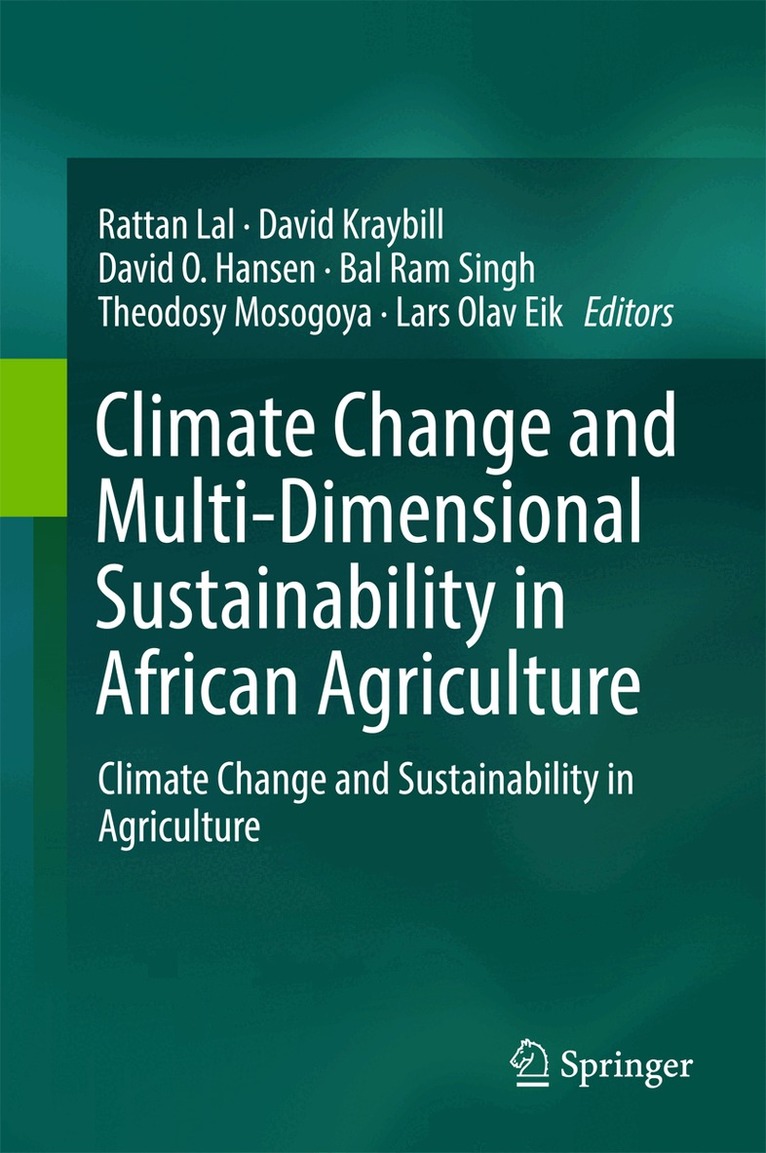
This 35-chapter book is based on several oral and poster presentations including both invited and contributory chapters. The book is thematically based on four pillars of sustainability, with focus on sub-Saharan Africa (SSA): Environment, Economic, Social and Institutional. The environmental sustainability, which determines economic and social/institutional sustainability, refers to the rate of use of natural resources (soil, water, landscape, vegetation) which can be continued indefinitely without degrading their quality, productivity and ecosystem services for different ecoregions of SSA. This book will help achieve the Sustainable Development Goals of the U.N. in SSA. Therefore, the book is of interest to agriculturalists, economists, social scientists, policy makers, extension agents, and development/bilateral organizations. Basic principles explained in the book can be pertinent to all development organizations.
E-bok
PDF, Engelska, 20162 741 kr
Läs direkt efter köp
This 35-chapter book is based on several oral and poster presentations including both invited and contributory chapters. The book is thematically based on four pillars of sustainability, with focus on sub-Saharan Africa (SSA): Environment, Economic, Social and Institutional. The environmental sustainability, which determines economic and social/institutional sustainability, refers to the rate of use of natural resources (soil, water, landscape, vegetation) which can be continued indefinitely without degrading their quality, productivity and ecosystem services for different ecoregions of SSA. This book will help achieve the Sustainable Development Goals of the U.N. in SSA. Therefore, the book is of interest to agriculturalists, economists, social scientists, policy makers, extension agents, and development/bilateral organizations. Basic principles explained in the book can be pertinent to all development organizations.
Häftad, Engelska, 2018
2 152 kr
Skickas inom 10-15 vardagar
This 35-chapter book is based on several oral and poster presentations including both invited and contributory chapters. The book is thematically based on four pillars of sustainability, with focus on sub-Saharan Africa (SSA): Environment, Economic, Social and Institutional. The environmental sustainability, which determines economic and social/institutional sustainability, refers to the rate of use of natural resources (soil, water, landscape, vegetation) which can be continued indefinitely without degrading their quality, productivity and ecosystem services for different ecoregions of SSA. This book will help achieve the Sustainable Development Goals of the U.N. in SSA. Therefore, the book is of interest to agriculturalists, economists, social scientists, policy makers, extension agents, and development/bilateral organizations. Basic principles explained in the book can be pertinent to all development organizations.