Lawrence E. Susskind - Böcker
Visar alla böcker från författaren Lawrence E. Susskind. Handla med fri frakt och snabb leverans.
9 produkter
9 produkter
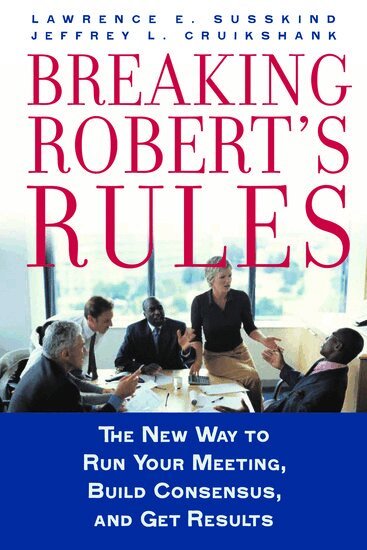
Breaking Robert's Rules
The New Way to Run Your Meeting, Build Consensus, and Get Results
Häftad, Engelska, 2006
199 kr
Skickas inom 5-8 vardagar
Robert's Rules of Order, written more than 150 years ago by a military man, are no longer relevant. America needs a new guide that spells out how to work together effectively in groups of all kinds, one that takes account of recent developments in the field of consensus building and dispute resolution. Enter the concensus-building approach, as introduced and explained in a step-by-step approach using realistic scenarios, by Susskind and Cruickshank.
Breaking Robert's Rules
The New Way to Run Your Meeting, Build Consensus, and Get Results
Inbunden, Engelska, 2006
783 kr
Skickas inom 5-8 vardagar
Every day in communities across America hundreds of committees, boards, church groups, and social clubs hold meetings where they spend their time engaged in shouting matches and acrimonious debate. Whether they are aware of it or not, the procedures that most such groups rely on to reach decisions were first laid out as Robert's Rules more than 150 years ago by an officer in the U.S. Army's Corps of Engineers. Its arcane rituals of parliamentary procedure and majority rule usually produce a victorious majority and a very dissatisfied minority that expects to raise its concerns, again, at the next possible meeting.Breaking Robert's Rules clearly spells out how any group can work together effectively. After briefly explaining the problems created by Robert's Rules, the guide outlines the five key steps toward consensus building, and addresses the specific problems that often get in the way of a group's progress. Appendices include a basic one page "Handy Guide" that can be distributed at meetings and a case study demonstrating how the ideas presented in the book can also be applied in a corporate context.Written in a non-technical and engaging style, and containing clear ideas and instructions that anyone can understand and use, this one-of-a-kind guide will prove an essential tool for any group desperate to find ways of making their meetings more effective. In addition, neighborhood associations, ad hoc committees, social clubs, and other informal groups lacking a clear hierarchy will find solid advice on how to move forward without resorting to "majority rules" or bickering over who will take leadership positions. Bound to become a classic, Breaking Robert's Rules will change the way you hold meetings forever, paving the way for efficiency, efficacy, and peaceful decision making.
1 697 kr
Skickas inom 5-8 vardagar
International environmental agreements have increased exponentially within the last five decades. However, decisions on policies to address key issues such as biodiversity loss, climate change, ozone depletion, hazardous waste transport and numerous other planetary challenges require individual countries to adhere to international norms. What have been the successes and failures in the environmental treaty-making arena? How has the role of civil society and scientific consensus contributed to this maturing process? Why have some treaties been more enforceable than others and which theories of international relations can further inform efforts in this regard? Addressing these questions with renewed emphasis on close case analysis makes this volume a timely and thorough postscript to the Rio-Plus 20 summit's celebrated invocation document, The Future We Want, towards sustainable development.Environmental Diplomacy: Negotiating More Effective Global Agreements provides an accessible narrative on understanding the geopolitics of negotiating international environmental agreements and clear guidance on improving the current system. In this book, authors Lawrence Susskind and Saleem Ali expertly observe international environmental negotiations to effectively inform the reader on the geopolitics of protecting our planet. This second edition offers an additional perspective from the Global South as well as providing a broader analysis of the role of science in environmental treaty-making. It provides a unique contribution as a panoramic analysis of the process of environmental treaty-making.
759 kr
Skickas inom 5-8 vardagar
International environmental agreements have increased exponentially within the last five decades. However, decisions on policies to address key issues such as biodiversity loss, climate change, ozone depletion, hazardous waste transport and numerous other planetary challenges require individual countries to adhere to international norms. What have been the successes and failures in the environmental treaty-making arena? How has the role of civil society and scientific consensus contributed to this maturing process? Why have some treaties been more enforceable than others and which theories of international relations can further inform efforts in this regard? Addressing these questions with renewed emphasis on close case analysis makes this volume a timely and thorough postscript to the Rio-Plus 20 summit's celebrated invocation document, The Future We Want, towards sustainable development.Environmental Diplomacy: Negotiating More Effective Global Agreements provides an accessible narrative on understanding the geopolitics of negotiating international environmental agreements and clear guidance on improving the current system. In this book, authors Lawrence Susskind and Saleem Ali expertly observe international environmental negotiations to effectively inform the reader on the geopolitics of protecting our planet. This second edition offers an additional perspective from the Global South as well as providing a broader analysis of the role of science in environmental treaty-making. It provides a unique contribution as a panoramic analysis of the process of environmental treaty-making.
3 019 kr
Skickas inom 3-6 vardagar
Whether you work in the corporate world, a nonprofit organization, or the government sector, you likely face the need to work with others to solve problems and make decisions on a daily basis. And you′ve undoubtedly been frustrated by how laborious and conflict-ridden such group efforts can be. At all levels – from neighborhood block associations to boards of directors of multinational corporations – the consensus building process is highly effective in an increasingly fragmented, contentious society. In addition, the old top-down methods such as Robert′s Rules of Orders often prompt more problems then they solve. Consensus helps you to implement better, more creative solutions. It provides a winning alternative to top-down decision making – and even parliamentary procedure. By learning to build consensus, stakeholders come to understand and respect one another′s perspectives. The consensus building process allows participants to find solutions and forge agreements that meet everyone′s needs – and provides a meaningful basis for effective, long-range implementation of decisions. The Consensus Building Handbook provides a blueprint to help make the process work in your organization, including a practical, quick-reference Short Guide. Plus, you′ll find in-depth commentary and seventeen case studies with in-depth commentaries to provide the theoretical basis for this new approach. CASE STUDIES INCLUDE: Activating a Policy Network: The Case of Mainport Schiphol The Northern Oxford County Coalition: Four Maine Towns Tackle a Public Health Mystery The Chelsea Charter Consensus Process Resolving Science-Intensive Public Policy Disputes: Reflections on the New York Bight Initiative Negotiation Superfund Cleanup at the Massachusetts Military Reservation RuleNet: An Experiment in Online Consensus Building Regulatory Negotiations: The Native American Experience The Chattanooga Process: A City′s Vision Is Realized From City Hall to the Streets: A Community Plan Meets the Real World The Catron County Citizens Group: A Case Study in Community Collaboration Facilitating Statewide HIV/AIDS Policies and Priorities in Colorado Building Consensus for Change Within a Major Corporation: The Case of Levi-Strauss & Company
Del 1 - Negotiation and Dispute Resolution
Negotiating on Behalf of Others
Advice to Lawyers, Business Executives, Sports Agents, Diplomats, Politicians, and Everybody Else
Häftad, Engelska, 1999
2 661 kr
Skickas inom 3-6 vardagar
Negotiating on Behalf of Others offers a framework for understanding the complexity and effects of negotiating on behalf of others and explores how current negotiation theory can be modified to account for negotiation agents. Negotiation agents are broadly defined to include legislators, diplomats, salespersons, sports agents, attorneys, and committee chairs—anyone who represents others in a negotiation. Five major negotiation arenas are examined in depth: labor-management relations, international diplomacy, sports agents, legislative process, and agency law. The book concludes with suggestions for future research and specific advice for practitioners. Chapter authors and commentators are leading figures in the field of negotiation. Negotiating on Behalf of Others is a must read for professional negotiators, graduate students, and scholars in the areas of business, public policy, law, international relations, sports, and economics. Negotiating on Behalf of Others is the result of the first of a series of seminars conducted by the faculty of the Program on Negotiation at Harvard on "complicating factors" in negotiations. The first of these complicating factors selected for study was the effect of the presence of an agent on the negotiating process.
10 652 kr
Tillfälligt slut
Winner of the International Association for Conflict Management Outstanding Book Award 2008-2009Multiparty negotiation is a rapidly developing but complex field whose literature is scattered across a broad range of disciplines and sources. This four-volume collection consolidates this knowledge by bringing together classic works and cutting-edge papers from law, environmental studies, international relations, diplomacy and organization studies. It is a vital resource for researchers and students of politics, industrial relations, business, public administration and more. The articles have been selected and arranged according to the following themes: Volume One: Multiparty Negotiation: An Introduction to Theory and PracticeVolume Two: Theory and Practice of Public Dispute ResolutionVolume Three: Complex Legal TransactionsVolume Four: Organizational and International Negotiation
1 954 kr
Skickas inom 10-15 vardagar
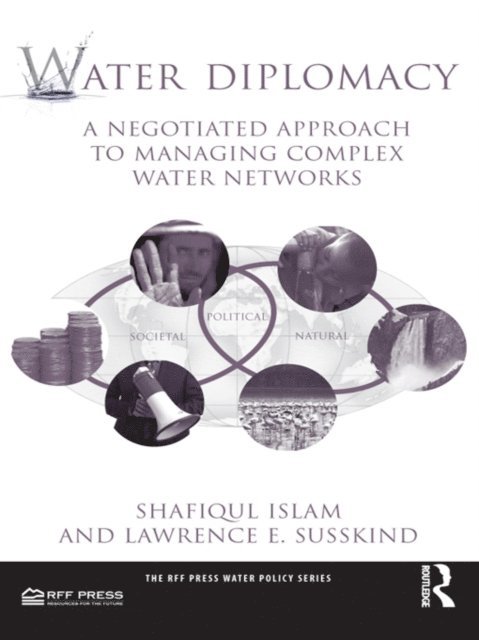
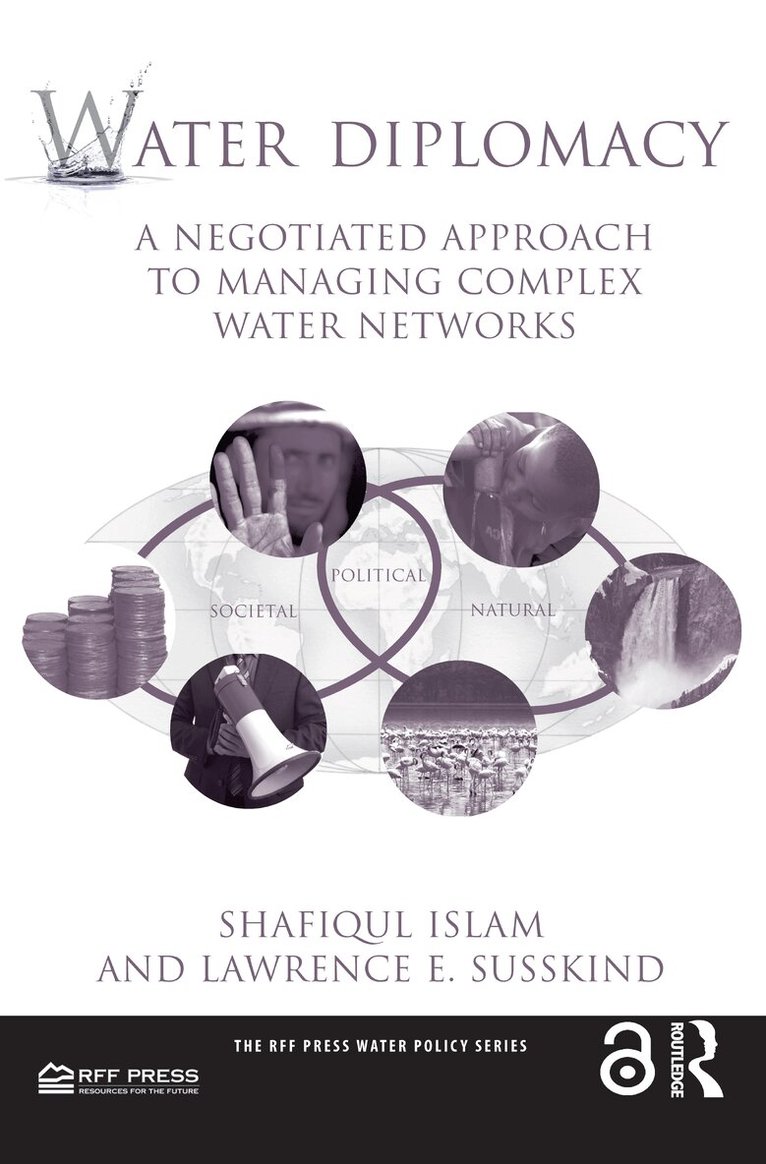
Water is the resource that will determine the wealth, welfare, and stability of many countries in the twenty-first century. This book offers a new approach to managing water that will overcome the conflicts that emerge when the interactions among natural, societal, and political forces are overlooked. At the heart of these conflicts are complex water networks. In managing them, science alone is insufficient and so is policy-making that doesn't take science into account. Solutions will only emerge if a negotiated or diplomatic approach that blends science, policy, and politics is used to manage water networks. The authors show how open and constantly changing water networks can be managed successfully using collaborative adaptive techniques to build informed agreements among disciplinary experts, water users with conflicting interests, and governmental bodies with countervailing claims. Shafiqul Islam is an engineer with over twenty-five years of practical experience in addressing water issues. Lawrence Susskind is founder of MIT's Environmental Policy and Planning Program and a leader of the Program on Negotiation at Harvard Law School. Together they have developed a text that is relevant for students and experienced professionals working in a variety of engineering, science, and applied social science fields. They show how new thinking about water conflict can replace the zero-sum battles that pit experts, politicians, and stakeholders against each other in counter-productive ways. Their volume not only presents the key elements of a theory of water diplomacy; it includes excerpts and commentary from more than two dozen seminal readings as well as practice exercises that challenge readers to apply what they have learned.
549 kr
Skickas inom 10-15 vardagar
Water is the resource that will determine the wealth, welfare, and stability of many countries in the twenty-first century. This book offers a new approach to managing water that will overcome the conflicts that emerge when the interactions among natural, societal, and political forces are overlooked. At the heart of these conflicts are complex water networks. In managing them, science alone is insufficient and so is policy-making that doesn't take science into account. Solutions will only emerge if a negotiated or diplomatic approach that blends science, policy, and politics is used to manage water networks. The authors show how open and constantly changing water networks can be managed successfully using collaborative adaptive techniques to build informed agreements among disciplinary experts, water users with conflicting interests, and governmental bodies with countervailing claims. Shafiqul Islam is an engineer with over twenty-five years of practical experience in addressing water issues. Lawrence Susskind is founder of MIT's Environmental Policy and Planning Program and a leader of the Program on Negotiation at Harvard Law School. Together they have developed a text that is relevant for students and experienced professionals working in a variety of engineering, science, and applied social science fields. They show how new thinking about water conflict can replace the zero-sum battles that pit experts, politicians, and stakeholders against each other in counter-productive ways. Their volume not only presents the key elements of a theory of water diplomacy; it includes excerpts and commentary from more than two dozen seminal readings as well as practice exercises that challenge readers to apply what they have learned.