Lee J. Mathers - Böcker
Visar alla böcker från författaren Lee J. Mathers. Handla med fri frakt och snabb leverans.
2 produkter
2 produkter
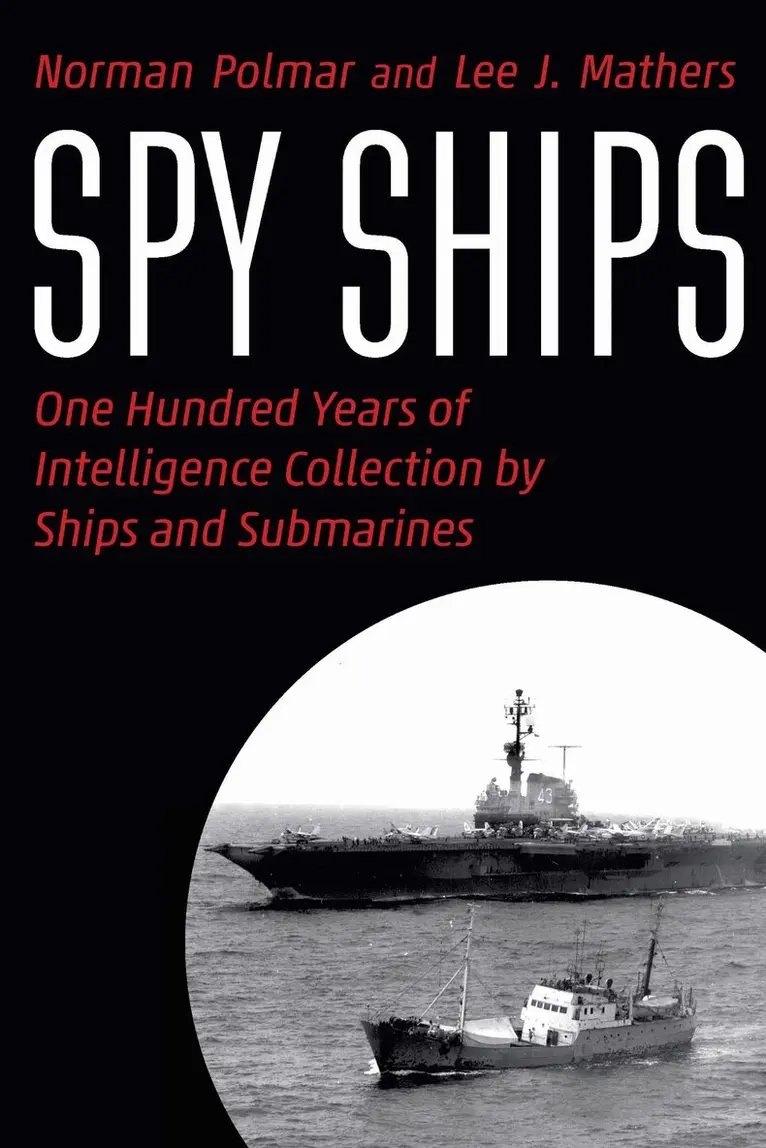
Spy Ships
One Hundred Years of Intelligence Collection by Ships and Submarines
Inbunden, Engelska, 2023
386 kr
Skickas inom 7-10 vardagar
Almost from the first days of seafaring, men have used ships for “spying” and intelligence collection. Since early in the twentieth century, with the technological advancements of radio and radar, the U.S. Navy and other government agencies and many other navies have used increasingly specialized ships and submarines to ferret out the secrets of other nations. The United States and the Soviet Union/Russia have been the leaders in those efforts, especially during the forty-five years of the Cold War. But, as Norman Polmar and Lee J. Mathers reveal, so has China, which has become a major maritime power in the twenty-first century, with special interests in the South China Sea and with increasing hostility toward the United States.Through extensive, meticulous research and through the lens of such notorious spy ship events as the Israeli attack on the USS Liberty, the North Korean capture of the USS Pueblo, and the U.S. Central Intelligence Agency’s success in clandestinely salvaging part of a Soviet submarine with the Hughes Glomar Explorer, Spy Ships is a fascinating and valuable resource for understanding maritime intelligence collection and what we have learned from it.
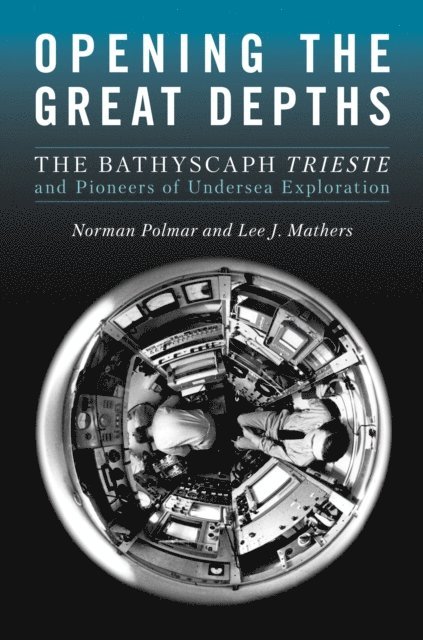
Opening the Great Depths
The Bathyscaph Trieste and Pioneers of Undersea Exploration
Inbunden, Engelska, 2021
454 kr
Tillfälligt slut
We were certainly pioneers as the Trieste was one of only two such vehicles in the world--the French Navy's bathyscaphe FNRS-3 was the other. It meant that we had to 'write the book' about deep submergence operations in terms of technique and technologies. We learned by doing and by failures, although very few of the latter were serious. For example, if we needed a piece of equipment we would have to design it and make it. There were no commercial vendors who catered to deep submergence technology requirements. The market was far too small." --From the foreword by Capt. Don Walsh, USN (Ret.), PhD, U.S. Navy Submersible Pilot No. 1 Developed by French physicist Auguste Piccard and his son Jacques, the bathyscaph Trieste was a scientific marvel that allowed unprecedented scientific, technical, and military feats in the ocean depths. France and the United States both acquired and subsequently developed variants of the original bathyscaph. While both France and the United States employed the bathyscaph as a tool for scientific investigation of the deepest ocean depths, the U.S. Navy developed and employed the Trieste for military missions as well. From its earliest years, participants in the Trieste program realized that they were making history, blazing a trail into previously unexplored and unexploited depths, developing new capabilities and opening a new frontier. Comparisons with developments in space and the space-race between the United States and the Soviet Union often were made concerning the Trieste program and contemporary developments in undersea technologies and capabilities. The Trieste opened the entire oceans to exploration, exploitation, and operations. The bathyscaph was a first-generation system, a "Model-T" that spawned an entirely new industry and encouraged new concepts for deep-ocean naval operations. Advances in deep-sea technologies lacked the "gee-whiz" factor of the concurrent space race, but were highly significant in the development of new technology, new knowledge, and new military capabilities. Opening the Great Depths is the story of the three Trieste deep-ocean vehicles, their officers and enlisted men, and the civilians, often told in their own words, documenting for the first time the earliest years of humanity's probing into Earth's final frontier.