Leen Van Molle - Böcker
Visar alla böcker från författaren Leen Van Molle. Handla med fri frakt och snabb leverans.
8 produkter
8 produkter
2 155 kr
Skickas inom 10-15 vardagar
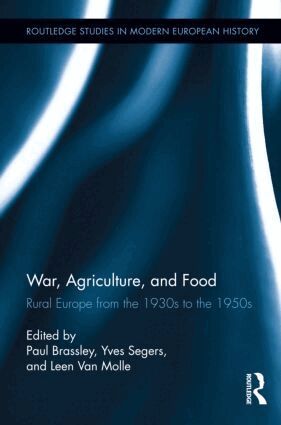
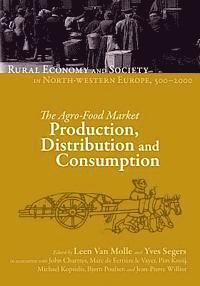
Between the 1930s and the 1950s rural life in Europe underwent profound changes, partly as a result of the Second World War, and partly as a result of changes which had been in progress over many years. This book examines a range of European countries, from Scandinavia to Spain and Ireland to Hungary, during this crucial period, and identifies the common pressures to which they all responded and the features that were unique to individual countries. In particular, it examines the processes of agricultural development over western Europe as a whole, the impact of the war on international trading patterns, the relationships between states and farmers, and the changing identities of rural populations. It presents a bold attempt to write rural history on a European scale, and will be of interest not only to historians and historical geographers, but also to those interested in the historical background to the Common Agricultural Policy of the European Union, to which the changes discussed here provided a dramatic prologue.
705 kr
Skickas inom 10-15 vardagar
Between the 1930s and the 1950s rural life in Europe underwent profound changes, partly as a result of the Second World War, and partly as a result of changes which had been in progress over many years. This book examines a range of European countries, from Scandinavia to Spain and Ireland to Hungary, during this crucial period, and identifies the common pressures to which they all responded and the features that were unique to individual countries. In particular, it examines the processes of agricultural development over western Europe as a whole, the impact of the war on international trading patterns, the relationships between states and farmers, and the changing identities of rural populations. It presents a bold attempt to write rural history on a European scale, and will be of interest not only to historians and historical geographers, but also to those interested in the historical background to the Common Agricultural Policy of the European Union, to which the changes discussed here provided a dramatic prologue.
Del 2 - Boydell Studies in Rural History
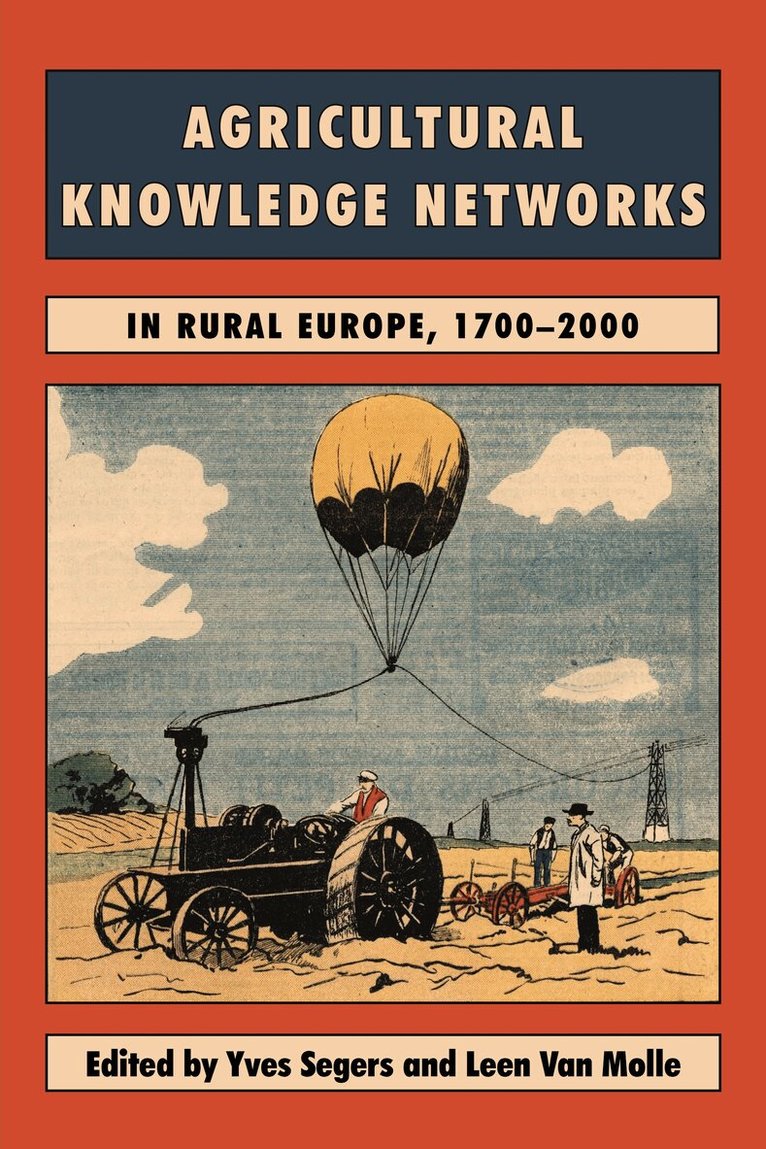
Agricultural Knowledge Networks in Rural Europe, 1700-2000
Inbunden, Engelska, 2022
1 195 kr
Skickas inom 7-10 vardagar
An examination of how farming expertise could be shared and extended, over four centuries.All kinds of knowledge, from traditional know-how to modern science, are socially contingent and the product of an age-long and permanent social struggle. This book unravels the creation and the exchange of agronomic knowledge in rural Europe, from the early eighteenth century up until the end of the twentieth. It explores the spreading of knowing through the lens of "knowledge networks": where did agricultural knowledge come from and how did one learn to run a farm? Who was involved in this process of knowledge exchange? Which strategies and communicative methods were employed and what kind of networks were active? The answers to these questions mirror, as the book illustrates, the inventiveness of the actors on the scene: the creativity of a French naturalist in establishing links with local farmers to stop the circulation of a devastating grain moth, the power of the agricultural press to instill "proper values" into Hungarian farming practices or to shape the identity of the Galician agrarian movement, and the agency of post-war British farmers in selecting their own information, from sources such as lectures to the Young Farmers' Club, visits by public advisors and representatives of commercial firms, and radio programs.From the start of the agricultural Enlightenment, increasingly farmers have been besieged by a growing army of experts, telling them what to do, when and how. In a sense farming has become one of the most patronised professions. But farmers can resist and carve their own path. The chapters here reveal the continuous tensions between science-based agriculture and practice-based farming, between the expert image of an ideal agriculture and the (less known) self-image of being a good farmer. The dominant process, as this book shows, is that of an instrumental top-down transmission of knowledge from "the lab to the field". But between these two poles, complex and flourishing networks developed, functioning as trading zones in which knowledge and experience could be circulated, put to the test, forgotten, altered, rejected - and sometimes imposed.
1 956 kr
Skickas inom 3-6 vardagar
Asceticism, so it is argued in this volume, is a modern category. The ubiquitous cult of the body, of fitness and diet equally evokes the ongoing success of ascetic practices and beliefs. Nostalgic memories of hardship and discipline in the army, youth movements or boarding schools remain as present as the fashionable irritation with the presumed modern-day laziness. In the very texture of contemporary culture, age-old asceticism proves to be remarkably alive. Old ascetic forms were remoulded to serve modern desires for personal authenticity, an authenticity that disconnected asceticism in the course of the nineteenth century from two traditions that had underpinned it since classical antiquity: the public, republican austerity of antiquity and the private, religious asceticism of Christianity. Exploring various aspects such as the history of the body, of aesthetics, science, and social thought in several European countries (Great Britain, France, Germany, Austria and Belgium), the authors show that modern asceticism remains a deeply ambivalent category. Apart from self-realisation, classical and religious examples continue to haunt the ascetic mind.
849 kr
Skickas inom 5-8 vardagar
1 356 kr
Kommande
1 355 kr
Skickas inom 5-8 vardagar
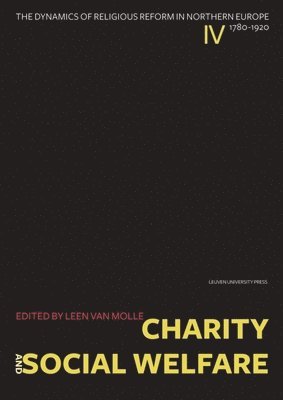
Charity and Social Welfare
The Dynamics of Religious Reform in Northern Europe, 1780–1920
Inbunden, Engelska, 2017
823 kr
Tillfälligt slut
How churches in Northern Europe reinvented their role as providers of social relief. Charity is a word that fits well in the history of religion and churches, whereas the concept of social reform seems to belong more to the vocabulary of the modern welfare states. Christian charity found itself, during the long nineteenth century, within the maelstrom of social turmoil. In this context of social unrest, although charity managed to confirm its relevance, it was also subjected to fierce criticism, as well as to substitute state-run forms of social care and insurance. The history of the welfare states remained all too blind to religion. This fourth volume in the series ‘Dynamics of Religious Reform’ unravels how the churches in Britain and Ireland, Denmark, Sweden and Norway, Germany, the Netherlands and Belgium shaped and adjusted their understanding of poverty. It reveals how they struggled with the ‘social question’ and often also with the modern nation states to which they belonged. Either in the periphery of public assistance or in a dynamic interplay with the state, political parties and society at large, the churches reinvented their tradition as providers of social relief. This publication is GPRC-labeled (Guaranteed Peer-Reviewed Content). Contributors: Andreas Holzem (Universität Tübingen), Dáire Keogh (St Patrick’s College, Dublin City University), Frances Knight (The University of Nottingham), Nina Koefoed (Aarhus Universitet), Katharina Kunter (Germany), Bernhard Schneider (Universität Trier), Aud V. Tønnessen (Universitetet Oslo), Annelies van Heijst (Tilburg University), H.D. van Leeuwen and M.H.D. van Leeuwen (Universiteit Utrecht), Leen Van Molle (KU Leuven).