Leimin Tian - Böcker
Visar alla böcker från författaren Leimin Tian. Handla med fri frakt och snabb leverans.
3 produkter
3 produkter
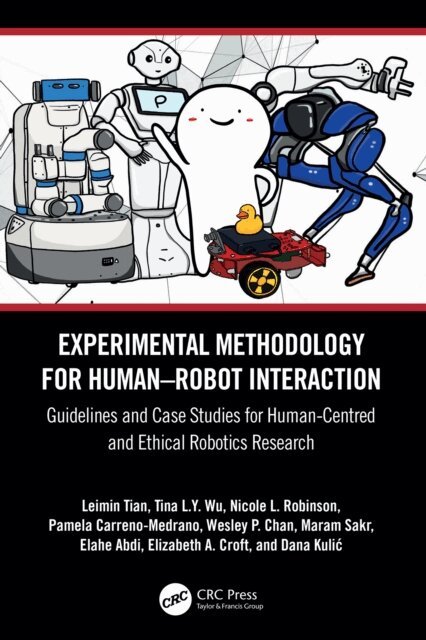
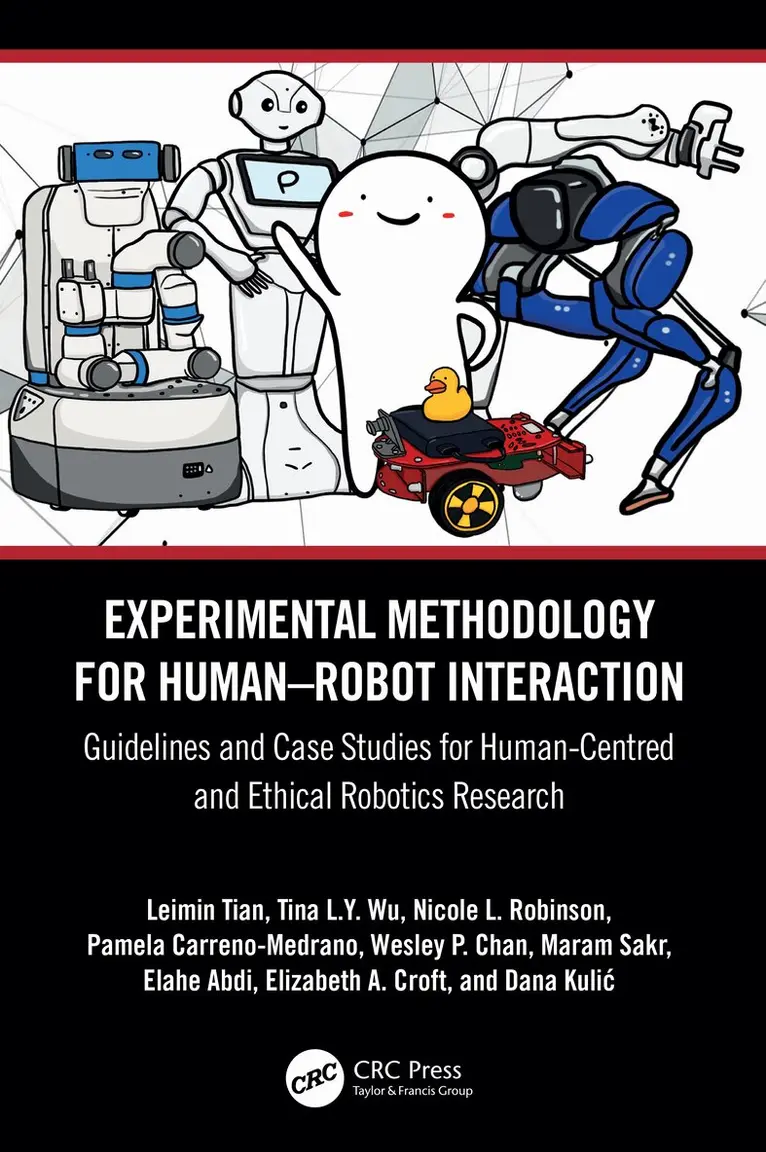
Experimental Methodology for Human–Robot Interaction
Guidelines and Case Studies for Human-Centred and Ethical Robotics Research
Inbunden, Engelska, 2025
2 155 kr
Skickas inom 10-15 vardagar
Leading figures in Australian robotics research provide an overview and guidance for human–robot interaction (HRI) experimental design and evaluation methodologies that consider the ethical implications of the research and its applications from a human-centred and contextual perspective. The authors explain introductory and advanced topics in HRI with a focus on human-centred evaluation and ethical practices. They also provide an online interactive checklist tool for novice HRI researchers and students to deploy when designing their own studies.The book is structured into three parts. In Part I, the authors first review fundamental methodologies and provide an interactive checklist tool of the HRI experimental study life cycle to guide beginners to the field. Part II introduces an expanded set of approaches to support researchers and practitioners to create high-quality study designs that draw on practices from human-computer interaction, human-centred artificial intelligence, psychology and social science, and advance ethical HRI research. Finally, in Part III, the authors discuss a selection of HRI studies as examples of how the introduced methodologies are adopted, which will support the readers to further understand the fundamental and advanced methodologies described in Parts I and II. The diverse collection of case studies enables readers to grasp the state of the art and apply what they have learned in their own practices.This book is a vital resource for both students new to the field and experienced researchers and practitioners. The book’s practical focus and clear elucidation of relevant case studies, from its introduction to the HRI experimental study life cycle through to advanced methods emerging in the field, ensures that this will greatly benefit progress in the field with human-centred and ethical experimental methodology.
1 118 kr
Skickas inom 7-10 vardagar
Affective computing is a nascent field situated at the intersection of artificial intelligence with social and behavioral science. It studies how human emotions are perceived and expressed, which then informs the design of intelligent agents and systems that can either mimic this behavior to improve their intelligence or incorporate such knowledge to effectively understand and communicate with their human collaborators. Affective computing research has recently seen significant advances and is making a critical transformation from exploratory studies to real-world applications in the emerging research area known as applied affective computing.This book offers readers an overview of the state-of-the-art and emerging themes in affective computing, including a comprehensive review of the existing approaches to affective computing systems and social signal processing. It provides in-depth case studies of applied affective computing in various domains, such as social robotics and mental well-being. It also addresses ethical concerns related to affective computing and how to prevent misuse of the technology in research and applications. Further, this book identifies future directions for the field and summarizes a set of guidelines for developing next-generation affective computing systems that are effective, safe, and human-centered.For researchers and practitioners new to affective computing, this book will serve as an introduction to the field to help them in identifying new research topics or developing novel applications. For more experienced researchers and practitioners, the discussions in this book provide guidance for adopting a human-centered design and development approach to advance affective computing.
901 kr
Skickas inom 7-10 vardagar
Affective computing is a nascent field situated at the intersection of artificial intelligence with social and behavioral science. It studies how human emotions are perceived and expressed, which then informs the design of intelligent agents and systems that can either mimic this behavior to improve their intelligence or incorporate such knowledge to effectively understand and communicate with their human collaborators. Affective computing research has recently seen significant advances and is making a critical transformation from exploratory studies to real-world applications in the emerging research area known as applied affective computing.This book offers readers an overview of the state-of-the-art and emerging themes in affective computing, including a comprehensive review of the existing approaches to affective computing systems and social signal processing. It provides in-depth case studies of applied affective computing in various domains, such as social robotics and mental well-being. It also addresses ethical concerns related to affective computing and how to prevent misuse of the technology in research and applications. Further, this book identifies future directions for the field and summarizes a set of guidelines for developing next-generation affective computing systems that are effective, safe, and human-centered.For researchers and practitioners new to affective computing, this book will serve as an introduction to the field to help them in identifying new research topics or developing novel applications. For more experienced researchers and practitioners, the discussions in this book provide guidance for adopting a human-centered design and development approach to advance affective computing.