Sharon Oviatt – författare
2 326 kr
Skickas inom 10-15 vardagar
716 kr
Skickas inom 10-15 vardagar
874 kr
Läs direkt efter köp
The Design of Future Educational Interfaces provides a new multidisciplinary synthesis of educational interface research. It explains how computer interfaces can be redesigned to better support our ability to produce ideas, think, and solve problems successfully in national priority areas such as science and mathematics. Based on first-hand research experience, the author offers a candid analysis of emerging technologies and their impact, highlighting communication interfaces that stimulate thought. The research results will surprise readers and challenge their assumptions about existing technology and its ability to support our performance.
In spite of a rapid explosion of interest in educational technologies, there remains a poor understanding of what constitutes an effective educational interface for student cognition and learning. This book provides valuable insights into why recent large-scale evaluations of existing educational technologies have frequently not shown demonstrable improvements in student performance. The research presented here is grounded in cognitive science and experimental psychology, linguistic science and communications, cross-cultural cognition and language, computer science and human interface design, and the learning sciences and educational technology.
874 kr
Läs direkt efter köp
The Design of Future Educational Interfaces provides a new multidisciplinary synthesis of educational interface research. It explains how computer interfaces can be redesigned to better support our ability to produce ideas, think, and solve problems successfully in national priority areas such as science and mathematics. Based on first-hand research experience, the author offers a candid analysis of emerging technologies and their impact, highlighting communication interfaces that stimulate thought. The research results will surprise readers and challenge their assumptions about existing technology and its ability to support our performance.
In spite of a rapid explosion of interest in educational technologies, there remains a poor understanding of what constitutes an effective educational interface for student cognition and learning. This book provides valuable insights into why recent large-scale evaluations of existing educational technologies have frequently not shown demonstrable improvements in student performance. The research presented here is grounded in cognitive science and experimental psychology, linguistic science and communications, cross-cultural cognition and language, computer science and human interface design, and the learning sciences and educational technology.
1 157 kr
Skickas inom 5-8 vardagar
933 kr
Skickas inom 5-8 vardagar
721 kr
Läs direkt efter köp
Affective computing is a nascent field situated at the intersection of artificial intelligence with social and behavioral science. It studies how human emotions are perceived and expressed, which then informs the design of intelligent agents and systems that can either mimic this behavior to improve their intelligence or incorporate such knowledge to effectively understand and communicate with their human collaborators. Affective computing research has recently seen significant advances and is making a critical transformation from exploratory studies to real-world applications in the emerging research area known as applied affective computing.
This book offers readers an overview of the state-of-the-art and emerging themes in affective computing, including a comprehensive review of the existing approaches to affective computing systems and social signal processing. It provides in-depth case studies of applied affective computing in various domains, such as social robotics and mental well-being. It also addresses ethical concerns related to affective computing and how to prevent misuse of the technology in research and applications. Further, this book identifies future directions for the field and summarizes a set of guidelines for developing next-generation affective computing systems that are effective, safe, and human-centered.
For researchers and practitioners new to affective computing, this book will serve as an introduction to the field to help them in identifying new research topics or developing novel applications. For more experienced researchers and practitioners, the discussions in this book provide guidance for adopting a human-centered design and development approach to advance affective computing.
748 kr
Läs direkt efter köp
Affective computing is a nascent field situated at the intersection of artificial intelligence with social and behavioral science. It studies how human emotions are perceived and expressed, which then informs the design of intelligent agents and systems that can either mimic this behavior to improve their intelligence or incorporate such knowledge to effectively understand and communicate with their human collaborators. Affective computing research has recently seen significant advances and is making a critical transformation from exploratory studies to real-world applications in the emerging research area known as applied affective computing.
This book offers readers an overview of the state-of-the-art and emerging themes in affective computing, including a comprehensive review of the existing approaches to affective computing systems and social signal processing. It provides in-depth case studies of applied affective computing in various domains, such as social robotics and mental well-being. It also addresses ethical concerns related to affective computing and how to prevent misuse of the technology in research and applications. Further, this book identifies future directions for the field and summarizes a set of guidelines for developing next-generation affective computing systems that are effective, safe, and human-centered.
For researchers and practitioners new to affective computing, this book will serve as an introduction to the field to help them in identifying new research topics or developing novel applications. For more experienced researchers and practitioners, the discussions in this book provide guidance for adopting a human-centered design and development approach to advance affective computing.
1 163 kr
Skickas inom 5-8 vardagar
1 108 kr
Läs direkt efter köp
918 kr
Läs direkt efter köp
1 402 kr
Skickas inom 5-8 vardagar
1 163 kr
Skickas inom 5-8 vardagar
1 069 kr
Läs direkt efter köp
1 011 kr
Läs direkt efter köp
1 402 kr
Skickas inom 5-8 vardagar
1 402 kr
Skickas inom 5-8 vardagar
1 042 kr
Läs direkt efter köp
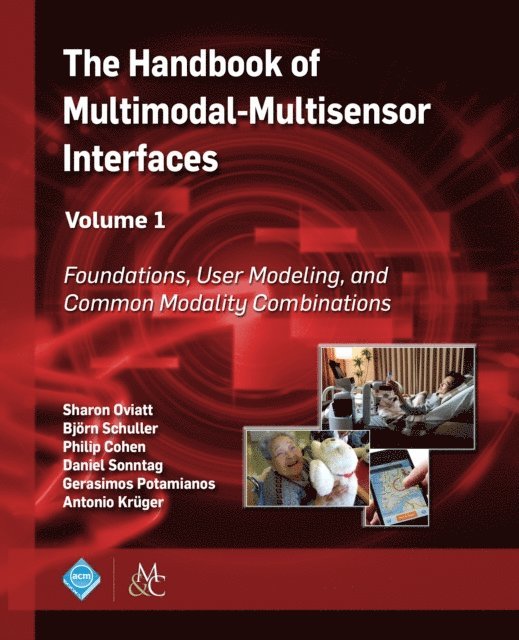
The Handbook of Multimodal-Multisensor Interfaces provides the first authoritative resource on what has become the dominant paradigm for new computer interfaces-user input involving new media (speech, multi-touch, hand and body gestures, facial expressions, writing) embedded in multimodal-multisensor interfaces.
This three-volume handbook is written by international experts and pioneers in the field. It provides a textbook, reference, and technology roadmap for professionals working in this and related areas.
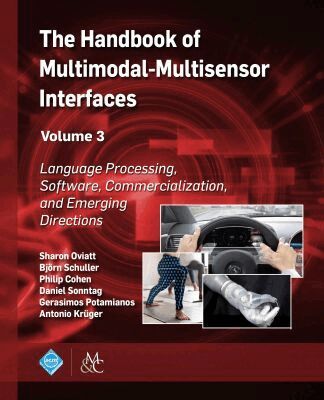
This third volume focuses on state-of-the-art multimodal language and dialogue processing, including semantic integration of modalities. The development of increasingly expressive embodied agents and robots has become an active test bed for coordinating multimodal dialogue input and output, including processing of language and nonverbal communication. In addition, major application areas are featured for commercializing multimodal-multisensor systems, including automotive, robotic, manufacturing, machine translation, banking, communications, and others. These systems rely heavily on software tools, data resources, and international standards to facilitate their development. For insights into the future, emerging multimodal-multisensor technology trends are highlighted in medicine, robotics, interaction with smart spaces, and similar areas. Finally, this volume discusses the societal impact of more widespread adoption of these systems, such as privacy risks and how to mitigate them. The handbook chapters provide a number of walk-through examples of system design and processing, information on practical resources for developing and evaluating new systems, and terminology and tutorial support for mastering this emerging field. In the final section of this volume, experts exchange views on a timely and controversial challenge topic, and how they believe multimodal-multisensor interfaces need to be equipped to most effectively advance human performance during the next decade.
1 011 kr
Läs direkt efter köp
The Handbook of Multimodal-Multisensor Interfaces provides the first authoritative resource on what has become the dominant paradigm for new computer interfaces-user input involving new media (speech, multi-touch, hand and body gestures, facial expressions, writing) embedded in multimodal-multisensor interfaces.
This three-volume handbook is written by international experts and pioneers in the field. It provides a textbook, reference, and technology roadmap for professionals working in this and related areas.
This third volume focuses on state-of-the-art multimodal language and dialogue processing, including semantic integration of modalities. The development of increasingly expressive embodied agents and robots has become an active test bed for coordinating multimodal dialogue input and output, including processing of language and nonverbal communication. In addition, major application areas are featured for commercializing multimodal-multisensor systems, including automotive, robotic, manufacturing, machine translation, banking, communications, and others. These systems rely heavily on software tools, data resources, and international standards to facilitate their development. For insights into the future, emerging multimodal-multisensor technology trends are highlighted in medicine, robotics, interaction with smart spaces, and similar areas. Finally, this volume discusses the societal impact of more widespread adoption of these systems, such as privacy risks and how to mitigate them. The handbook chapters provide a number of walk-through examples of system design and processing, information on practical resources for developing and evaluating new systems, and terminology and tutorial support for mastering this emerging field. In the final section of this volume, experts exchange views on a timely and controversial challenge topic, and how they believe multimodal-multisensor interfaces need to be equipped to most effectively advance human performance during the next decade.
1 628 kr
Skickas inom 5-8 vardagar
565 kr
Skickas inom 10-15 vardagar
734 kr
Läs direkt efter köp