Lena Dallywater - Böcker
Visar alla böcker från författaren Lena Dallywater. Handla med fri frakt och snabb leverans.
6 produkter
6 produkter
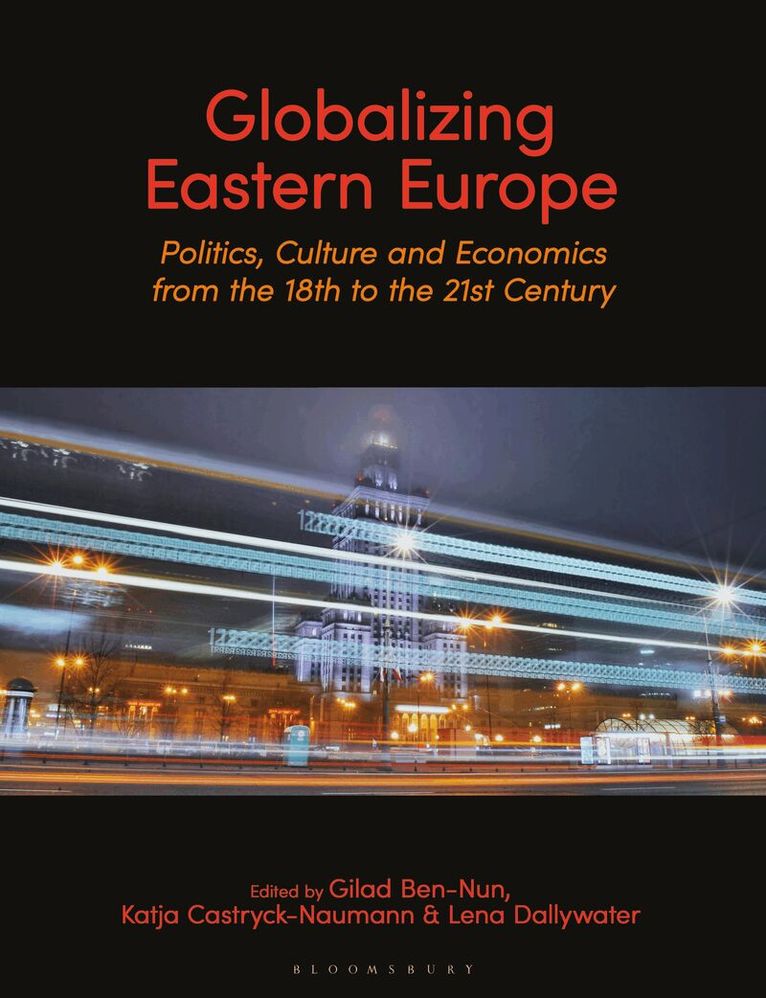
Globalizing Eastern Europe
Politics, Culture and Economics from the 18th to the 21st Century
Inbunden, Engelska, 2025
875 kr
Skickas inom 10-15 vardagar
For far too long, views of Eastern Europe as a negligible and peripheral region have shaped popular perceptions of this part of the world. Presenting new research, Globalizing Eastern Europe: Politics, Culture and Economics from the 18th to the 21st Century offers refreshing arguments to counter such misconceptions. Global politics and international law have been profoundly shaped by the experiences and expertise that emanated from this region. Migration to and from Eastern Europe, has fostered deep ties with neighbouring and distant societies, as have this area’s literature and music. The importance of its agricultural development has reverberated in the global economy. This volume recasts Eastern Europe as a global region. It shows how people from this part of the world shaped the 'global', and how in turn, the 'global' shaped them. Authors from a range of disciplines, chart century-long traditions of entanglements and contemporary interactions. In doing so, this book further enriches the perennial debates regarding this region’s spatial boundaries.
Globalizing Eastern Europe
Politics, Culture and Economics from the 18th to the 21st Century
Häftad, Engelska, 2025
296 kr
Skickas inom 7-10 vardagar
For far too long, views of Eastern Europe as a negligible and peripheral region have shaped popular perceptions of this part of the world. Presenting new research, Globalizing Eastern Europe: Politics, Culture and Economics from the 18th to the 21st Century offers refreshing arguments to counter such misconceptions. Global politics and international law have been profoundly shaped by the experiences and expertise that emanated from this region. Migration to and from Eastern Europe, has fostered deep ties with neighbouring and distant societies, as have this area’s literature and music. The importance of its agricultural development has reverberated in the global economy. This volume recasts Eastern Europe as a global region. It shows how people from this part of the world shaped the 'global', and how in turn, the 'global' shaped them. Authors from a range of disciplines, chart century-long traditions of entanglements and contemporary interactions. In doing so, this book further enriches the perennial debates regarding this region’s spatial boundaries.
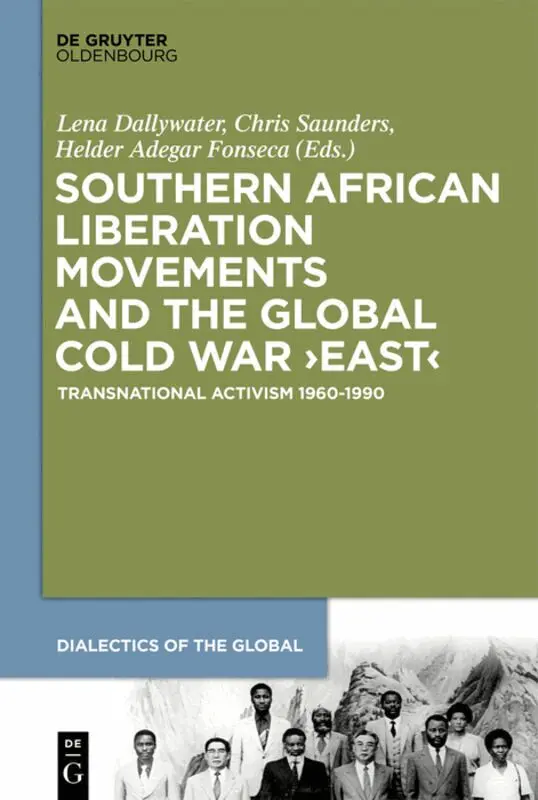
Southern African Liberation Movements and the Global Cold War ‘East’
Transnational Activism 1960–1990
Inbunden, Engelska, 2019
1 379 kr
Skickas inom 5-8 vardagar
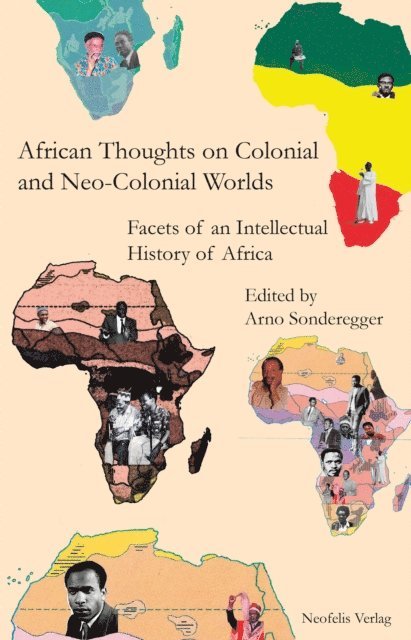
In the global context of the Cold War, the relationship between liberation movements and Eastern European states obviously changed and transformed. Similarly, forms of (material) aid and (ideological) encouragement underwent changes over time. The articles assembled in this volume argue that the traditional Cold War geography of bi-polar competition with the United States is not sufficient to fully grasp these transformations. The question of which side of the ideological divide was more successful (or lucky) in impacting actors and societies in the global south is still relevant, yet the Cold War perspective falls short in unfolding the complex geographies of connections and the multipolarity of actions and transactions that exists until today. Acknowledging the complexities of liberation movements in globalization processes, the papers thus argue that activities need to be understood in their local context, including personal agendas and internal conflicts, rather than relying primarily on the traditional frame of Cold War competition. They point to the agency of individual activists in both "Africa" and "Eastern Europe" and the lessons, practices and languages that were derived from their often contradictory encounters. In Southern African Liberation Movements, authors from South Africa, Portugal, Austria and Germany ask: What role did actors in both Southern Africa and Eastern Europe play? What can we learn by looking at biographies in a time of increasing racial and international conflict? And which "creative solutions" need to be found, to combine efforts of actors from various ideological camps? Building on archival sources from various regions in different languages, case studies presented in the edition try to encounter the lack of a coherent state of the art. They aim at combining the sometimes scarce sources with qualitative interviews to give answers to the many open questions regarding Southern African liberation movements and their connections to the "East".
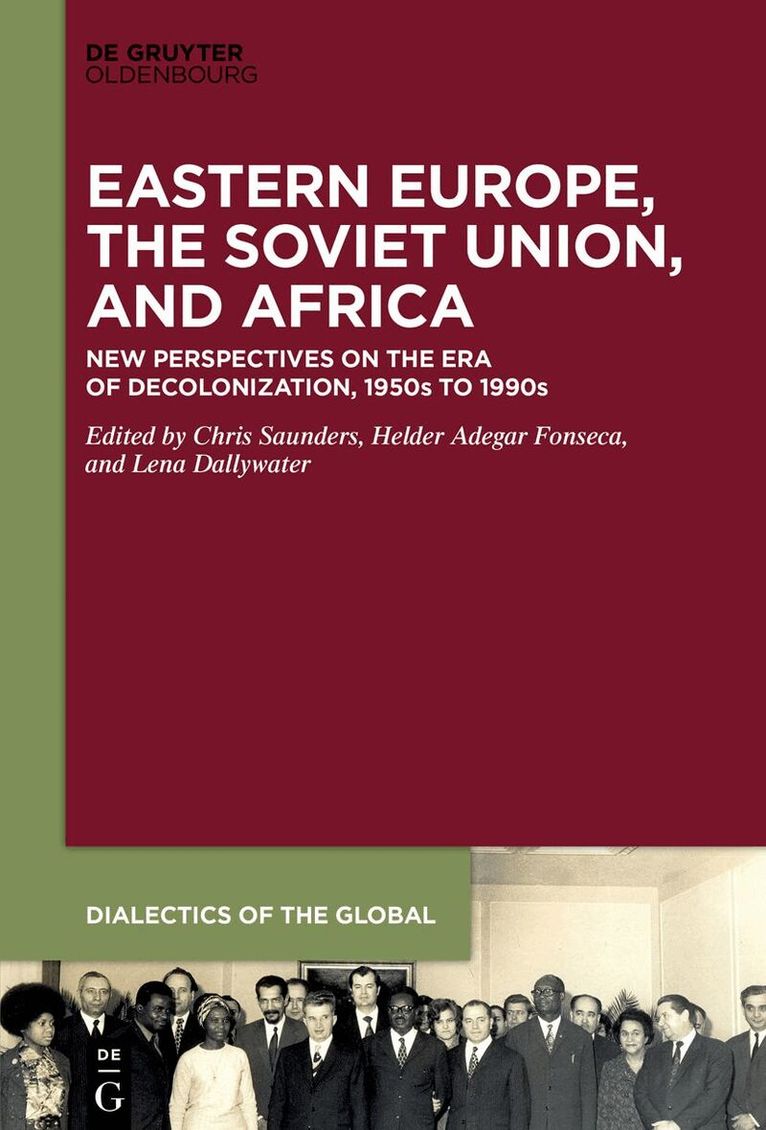
Eastern Europe, the Soviet Union, and Africa
New Perspectives on the Era of Decolonization, 1950s to 1990s
Inbunden, Engelska, 2023
1 251 kr
Skickas inom 5-8 vardagar
It is now widely recognised that a Cold War perspective falls short in unfolding the complex geographies of connections and the multipolarity of actions and transactions that were shaped through the movement of individuals and ideas from Africa to the "East" and from the "East" to Africa in the decades in which African countries moved to independence. Adopting an interdisciplinary, transregional perspective, this volume casts new light on aspects of the role of Eastern Europe and the Soviet Union in the decolonisation of Africa. Taking further themes explored in a collection of essays published by the editors in 2019, the twelve case studies by authors from South Africa, Czech Republic, Portugal, Russia, Hungary, Italy, Canada, Serbia, and Germany draw on new sources to explore the history of the ties that existed between African liberation movements and the socialist bloc, some of which continue to influence relationships today. Chapters contribute to three relevant main themes that resonate in a number of scholarly fields of inquiry, ranging from Global Studies, Transregional Studies, Cold War Studies, (Global) History to African Studies, Eastern European, Russian and Slavic Studies: Reconsiderations, Resources, and Reverberations. Drawing upon newly opened archives and combining transregional perspectives with sources in different languages, chapters explicitly point out the shortcomings of past research and debates in the respective field. They highlight new avenues which have been developing and which need to be further developed (Reconsiderations). Selected case studies address the resources of those being active and involved in decolonisation processes, be it in East, North, West and South. They reveal: Which resources (both material and intellectual) are the actors drawing upon? On the other hand: From which resources are individuals on one side or the other reciprocally or intermittently (intentionally) kept away? (Resources). Finally, the third theme puts an emphasis on the historicity of the processes depicted. Studies point to the gaps and dead ends of international support, the paths that peter out, but also to repercussions and reverberations up until today. (Reverberations) Taken these three themes together, the individual chapters contribute to the overall question of: Which general historical narratives about the second half of the 20th century are changing based on these new research findings?
Del 22 - Dialectics of the Global
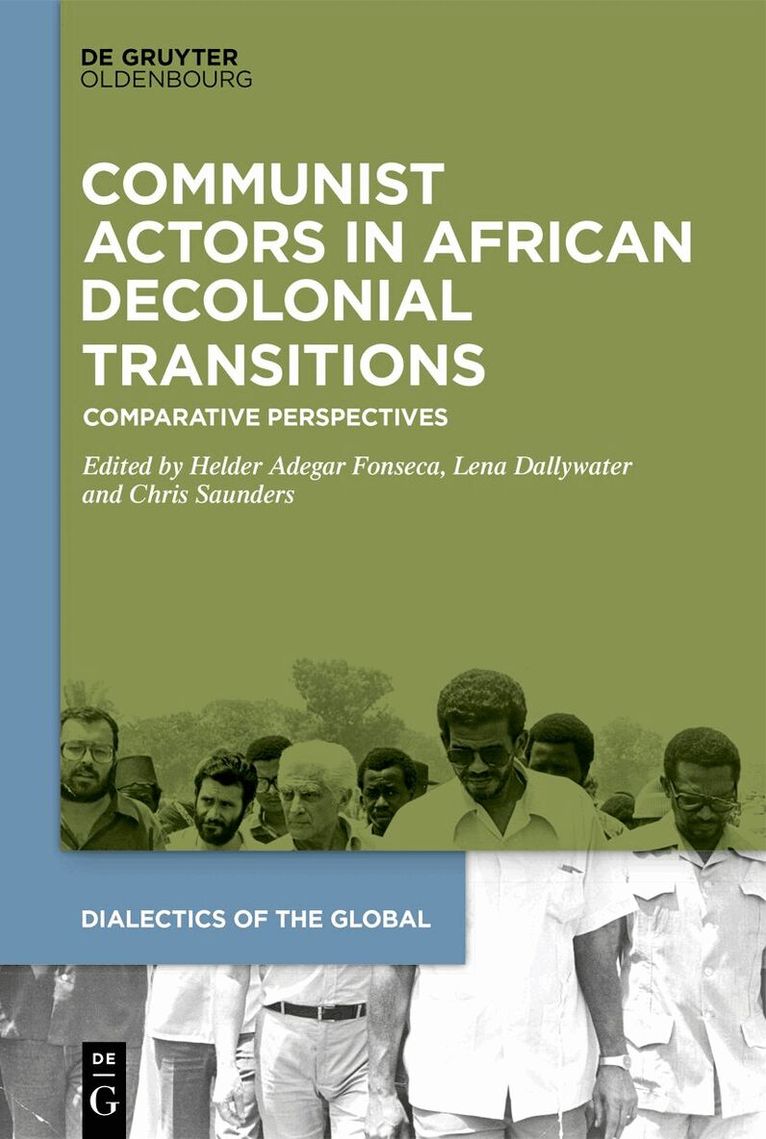
Communist Actors in African Decolonial Transitions
Comparative Perspectives
Inbunden, Engelska, 2025
888 kr
Skickas inom 3-6 vardagar
In the long and protracted process of decolonization in sub-Saharan Africa (1957–1994), three key moments in the transitions from colonial/white-ruled states to independent majority-ruled states can be identified: 1957–1965, 1974–1980, and 1988–1994. These transitional phases of decolonization in sub-Saharan Africa – the beginnings of the process, a crucial turning-point in that process, and its endings – are worthy of reappraisal and invite comparisons of various kinds. The existing literature does not consider the roles of communist actors in these transitions from a comparative perspective. This is the main focus of this volume, which will be an essential work for scholars of African decolonization and will interest anyone concerned with the history of communism and the external activities of the countries of the Soviet bloc and other communist actors.
Del 19 - Dialectics of the Global
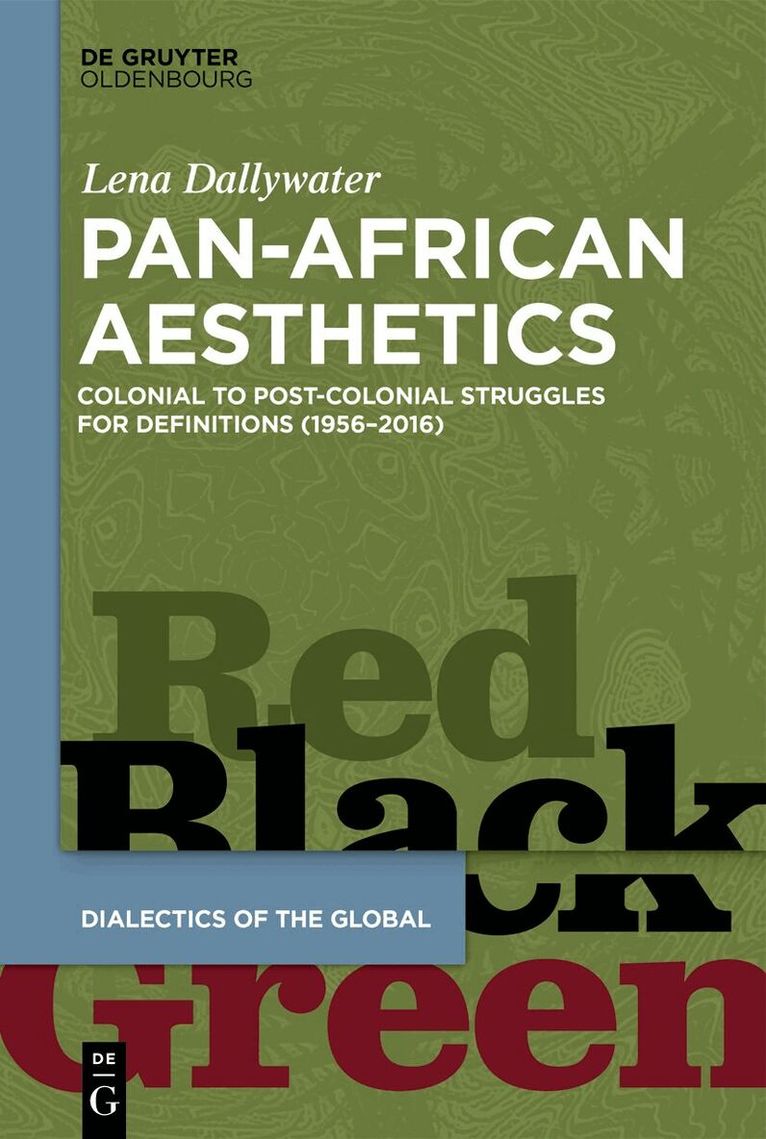
Pan-African Aesthetics
Colonial to Postcolonial Struggles for Definitions (1956–2016)
Inbunden, Engelska, 2026
1 012 kr
Skickas inom 3-6 vardagar
Pan-Africanism has been a global project aiming to unite people of African descent since the late nineteenth century. Notions of Black and African arts and aesthetics have functioned as a bridge and brought positive identification across national, ethnic, or class divides even when rifts have appeared unbridgeable. They were able to mediate Africanity positively, both prior to and during the struggle for liberation and at times when the dream of a unified African nation died. This study explores central aspects, proponents, and opponents of Pan-African aesthetics and shows that conceptualizations of Black, African, and Afrocentric aesthetics form a kaleidoscope that is constantly changing. Based on historical sources, in-depth reading and qualitative interviews, the study illustrates what happened to the discussions in the postcolonial era. The story unfolds along the life paths and approaches of four intellectuals from Anglophone and Francophone Africa. Their framings can tell us more about the underlying themes, contestations, and contradictions of emancipatory projects in the mid-twentieth century and show us that the study of Pan-Africanism is not yet exhausted; neither is the history of the idea and the movement.