Leona Schauble - Böcker
Visar alla böcker från författaren Leona Schauble. Handla med fri frakt och snabb leverans.
4 produkter
4 produkter
2 039 kr
Skickas inom 10-15 vardagar
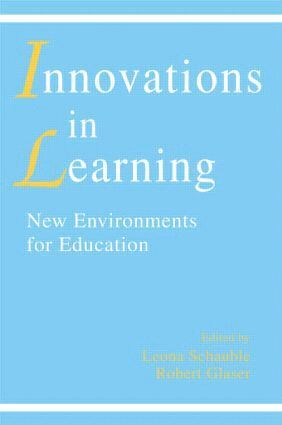
This volume documents the growth of a new kind of interdisciplinary teamwork that is evolving among practitioners, researchers, teacher educators, and community partners. Its premise: the design of learning environments and the development of theory must proceed in a mutually supportive fashion. Scientific researchers have learned that a prerequisite to studying the kinds of learning that matter is helping to shoulder the responsibility for ensuring that these forms of learning occur. To support and study learning, researchers are increasingly making major and long-term investments in the design and maintenance of contexts for learning. Practitioners are assuming new roles as well, reflecting an increasing awareness of the need to move beyond skillful doing. If developing learning contexts are to be protected within and expanded beyond the systems that surround them, it is necessary to foster professional communities that will support reflection about practice, including the generation and evaluation of rich and flexible environments for student thinking. One consequence of recent reforms is that teachers are increasingly regarding such tasks as central to their professional development.Innovations in Learning: New Environments for Education describes coordinated interaction between educational design on the one hand, and the development of learning theory on the other, through a series of examples. These examples have been chosen because they are continuing, proven programs with evidence of success. Contributors to the volume are researchers and practitioners who have played a role in inventing these programs and have guided their development over a period of years. Rather than choosing illustrations of a pipeline or "application model of research" from research and then to practice, the editors of this volume have selected interventions in which researchers and practitioners work together persistently to forge common understanding. Such activity is necessarily interdisciplinary, often encompassing long spans of time, and is more akin to engineering in the field than to laboratory science. The common themes that emerge from this activity -- for example, the role of tools, talk, and community -- belong exclusively neither to theory nor to practice, but to their intersection in commitment to specific contexts of learning and continuing contributions to practice and underlying theory.This volume is organized into three sections that reflect different levels and kinds of learning contexts. Each of these levels has been the focus of recent cognitive and reform applications to learning and schooling. The first offers examples of effective learning in informal settings; the second discusses innovative approaches to schooling at the classroom level; and the third reviews reforms that regard the entire school as the appropriate unit of change.
827 kr
Skickas inom 10-15 vardagar
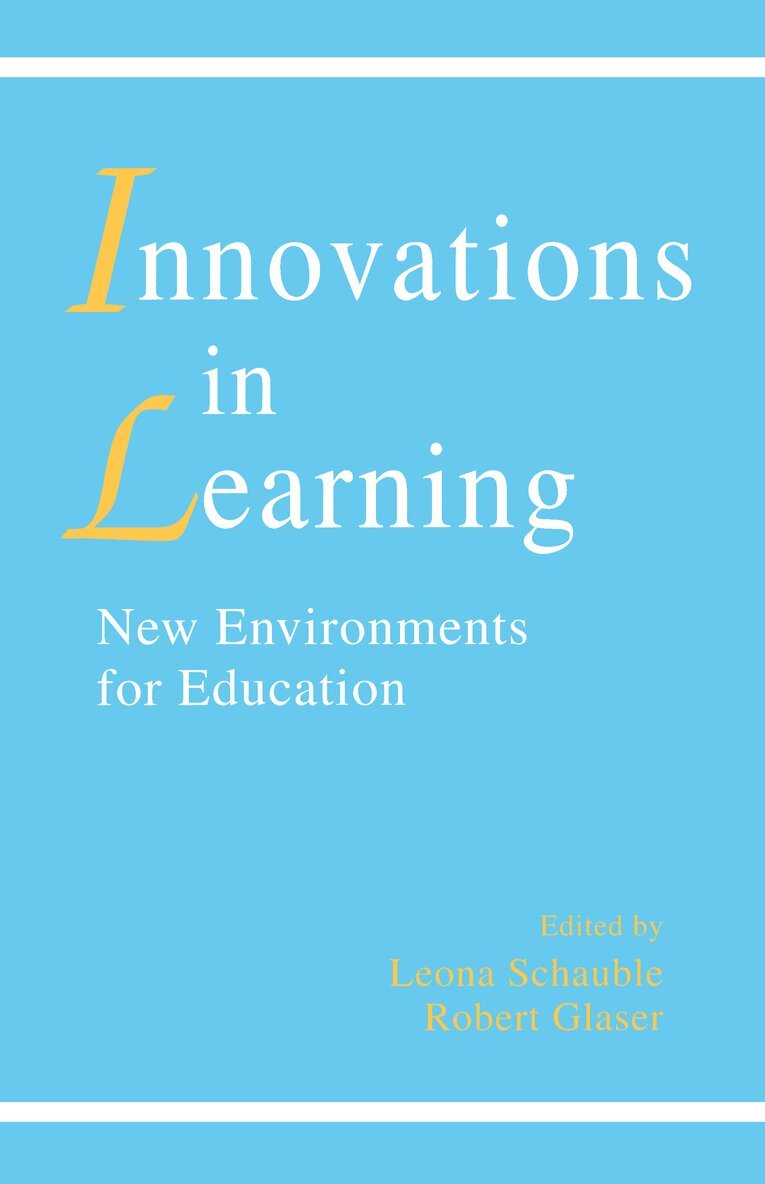
This volume documents the growth of a new kind of interdisciplinary teamwork that is evolving among practitioners, researchers, teacher educators, and community partners. Its premise: the design of learning environments and the development of theory must proceed in a mutually supportive fashion. Scientific researchers have learned that a prerequisite to studying the kinds of learning that matter is helping to shoulder the responsibility for ensuring that these forms of learning occur. To support and study learning, researchers are increasingly making major and long-term investments in the design and maintenance of contexts for learning. Practitioners are assuming new roles as well, reflecting an increasing awareness of the need to move beyond skillful doing. If developing learning contexts are to be protected within and expanded beyond the systems that surround them, it is necessary to foster professional communities that will support reflection about practice, including the generation and evaluation of rich and flexible environments for student thinking. One consequence of recent reforms is that teachers are increasingly regarding such tasks as central to their professional development.Innovations in Learning: New Environments for Education describes coordinated interaction between educational design on the one hand, and the development of learning theory on the other, through a series of examples. These examples have been chosen because they are continuing, proven programs with evidence of success. Contributors to the volume are researchers and practitioners who have played a role in inventing these programs and have guided their development over a period of years. Rather than choosing illustrations of a pipeline or "application model of research" from research and then to practice, the editors of this volume have selected interventions in which researchers and practitioners work together persistently to forge common understanding. Such activity is necessarily interdisciplinary, often encompassing long spans of time, and is more akin to engineering in the field than to laboratory science. The common themes that emerge from this activity -- for example, the role of tools, talk, and community -- belong exclusively neither to theory nor to practice, but to their intersection in commitment to specific contexts of learning and continuing contributions to practice and underlying theory.This volume is organized into three sections that reflect different levels and kinds of learning contexts. Each of these levels has been the focus of recent cognitive and reform applications to learning and schooling. The first offers examples of effective learning in informal settings; the second discusses innovative approaches to schooling at the classroom level; and the third reviews reforms that regard the entire school as the appropriate unit of change.
549 kr
Skickas inom 10-15 vardagar
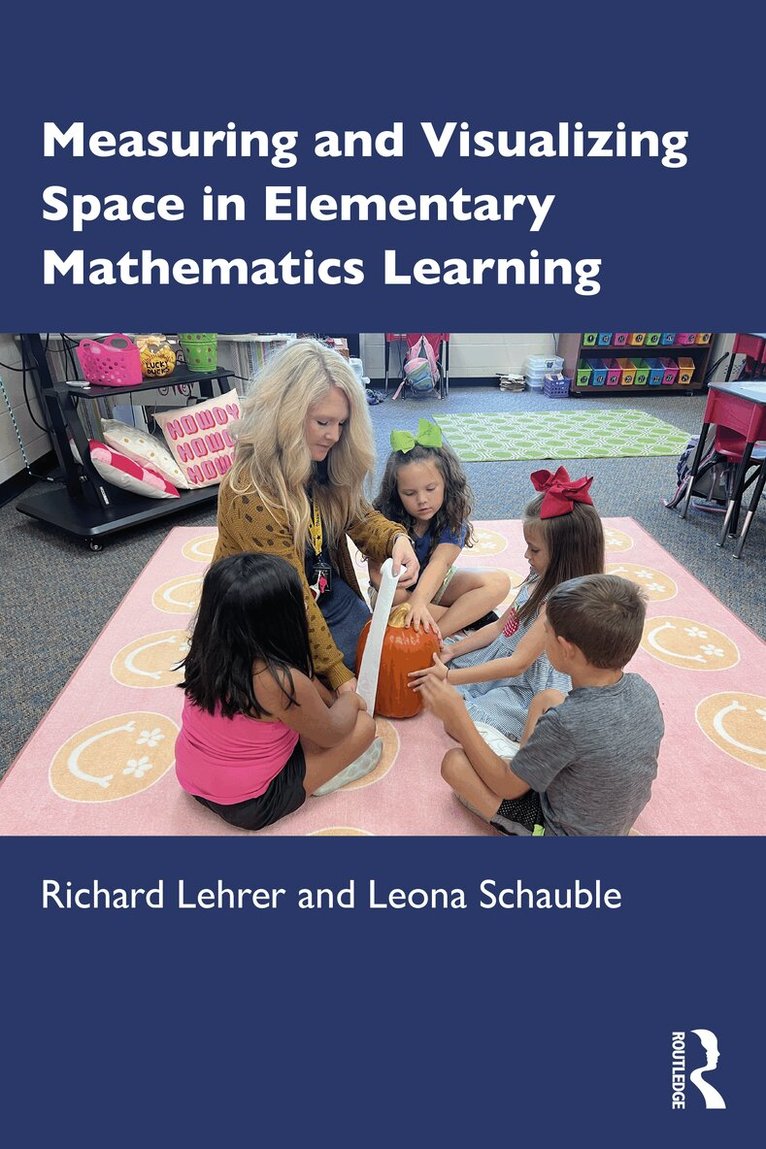
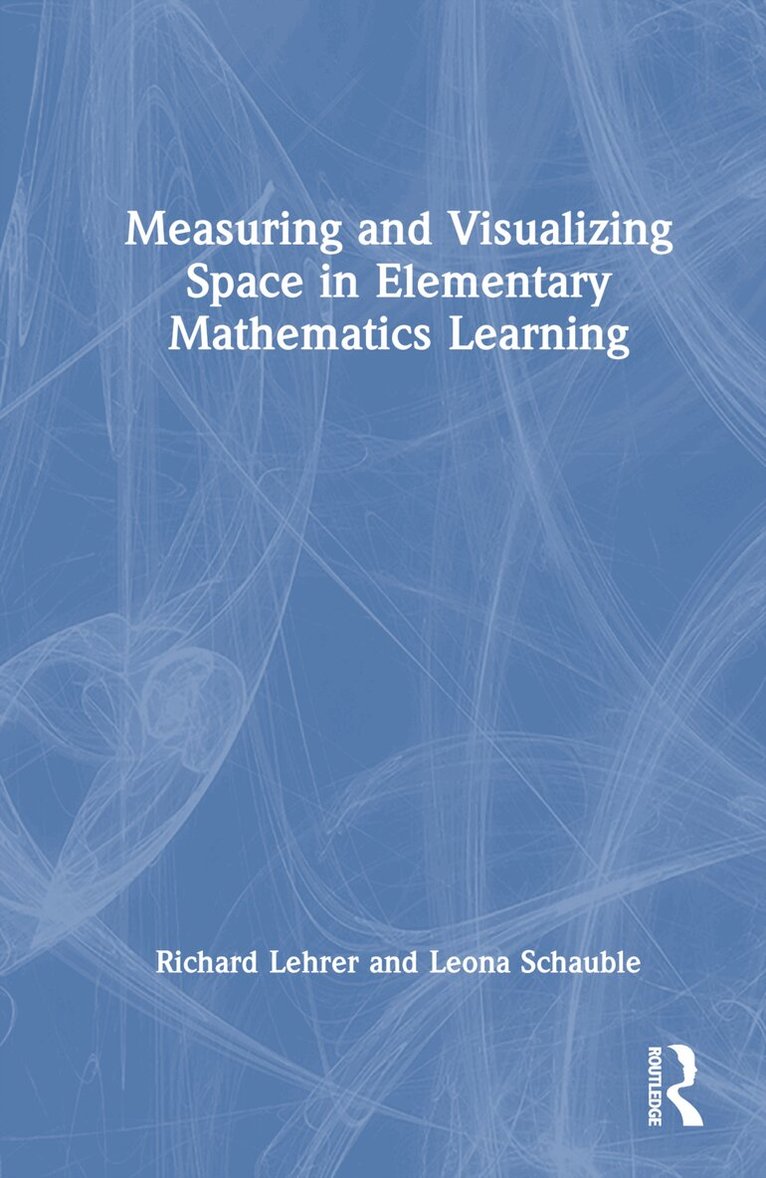
Measuring and Visualizing Space in Elementary Mathematics Learning explores the development of elementary students’ understanding of the mathematics of measure, and demonstrates how measurement can serve as an anchor for supporting a deeper understanding of number operations and rational numbers.The concept of measurement is centrally implicated in a number of mathematical operations, yet is not often given the placement it deserves in the elementary mathematics curriculum. By drawing on K-5 classroom research, authors Lehrer and Schauble have been able to articulate a learning progression that describes benchmarks of student learning about measure in length, angle, area, volume, and rational number, exploring related concepts, classroom experiences, and instructional practices at each stage.Offering a unique, research driven resource for helping students develop a deep understanding of measurement to further enhance mathematical understanding, as well as further learning in other STEM disciplines; the book will be relevant for scholars, teacher educators, and specialists in math education.The book is accompanied by online resources developed for practitioners, including instructional guides, examples of student thinking, and other teacher-focused materials, helping clarify how to bring concepts of measure and rational number to life in classrooms.
1 886 kr
Skickas inom 10-15 vardagar
Measuring and Visualizing Space in Elementary Mathematics Learning explores the development of elementary students’ understanding of the mathematics of measure, and demonstrates how measurement can serve as an anchor for supporting a deeper understanding of number operations and rational numbers.The concept of measurement is centrally implicated in a number of mathematical operations, yet is not often given the placement it deserves in the elementary mathematics curriculum. By drawing on K-5 classroom research, authors Lehrer and Schauble have been able to articulate a learning progression that describes benchmarks of student learning about measure in length, angle, area, volume, and rational number, exploring related concepts, classroom experiences, and instructional practices at each stage.Offering a unique, research driven resource for helping students develop a deep understanding of measurement to further enhance mathematical understanding, as well as further learning in other STEM disciplines; the book will be relevant for scholars, teacher educators, and specialists in math education.The book is accompanied by online resources developed for practitioners, including instructional guides, examples of student thinking, and other teacher-focused materials, helping clarify how to bring concepts of measure and rational number to life in classrooms.