Robert Glaser - Böcker
Visar alla böcker från författaren Robert Glaser. Handla med fri frakt och snabb leverans.
16 produkter
16 produkter
853 kr
Tillfälligt slut
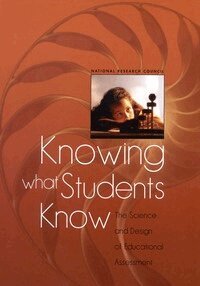
Education is a hot topic. From the stage of presidential debates to tonight's dinner table, it is an issue that most Americans are deeply concerned about. While there are many strategies for improving the educational process, we need a way to find out what works and what doesn't work as well. Educational assessment seeks to determine just how well students are learning and is an integral part of our quest for improved education. The nation is pinning greater expectations on educational assessment than ever before. We look to these assessment tools when documenting whether students and institutions are truly meeting education goals. But we must stop and ask a crucial question: What kind of assessment is most effective? At a time when traditional testing is subject to increasing criticism, research suggests that new, exciting approaches to assessment may be on the horizon. Advances in the sciences of how people learn and how to measure such learning offer the hope of developing new kinds of assessments-assessments that help students succeed in school by making as clear as possible the nature of their accomplishments and the progress of their learning.Knowing What Students Know essentially explains how expanding knowledge in the scientific fields of human learning and educational measurement can form the foundations of an improved approach to assessment. These advances suggest ways that the targets of assessment-what students know and how well they know it-as well as the methods used to make inferences about student learning can be made more valid and instructionally useful. Principles for designing and using these new kinds of assessments are presented, and examples are used to illustrate the principles. Implications for policy, practice, and research are also explored. With the promise of a productive research-based approach to assessment of student learning, Knowing What Students Know will be important to education administrators, assessment designers, teachers and teacher educators, and education advocates.
717 kr
Skickas inom 3-6 vardagar
Education is a hot topic. From the stage of presidential debates to tonight's dinner table, it is an issue that most Americans are deeply concerned about. While there are many strategies for improving the educational process, we need a way to find out what works and what doesn't work as well. Educational assessment seeks to determine just how well students are learning and is an integral part of our quest for improved education. The nation is pinning greater expectations on educational assessment than ever before. We look to these assessment tools when documenting whether students and institutions are truly meeting education goals. But we must stop and ask a crucial question: What kind of assessment is most effective? At a time when traditional testing is subject to increasing criticism, research suggests that new, exciting approaches to assessment may be on the horizon. Advances in the sciences of how people learn and how to measure such learning offer the hope of developing new kinds of assessments-assessments that help students succeed in school by making as clear as possible the nature of their accomplishments and the progress of their learning.Knowing What Students Know essentially explains how expanding knowledge in the scientific fields of human learning and educational measurement can form the foundations of an improved approach to assessment. These advances suggest ways that the targets of assessment-what students know and how well they know it-as well as the methods used to make inferences about student learning can be made more valid and instructionally useful. Principles for designing and using these new kinds of assessments are presented, and examples are used to illustrate the principles. Implications for policy, practice, and research are also explored. With the promise of a productive research-based approach to assessment of student learning, Knowing What Students Know will be important to education administrators, assessment designers, teachers and teacher educators, and education advocates.
563 kr
Skickas inom 10-15 vardagar
The chapters in this collection illustrate how current concepts and principles from various disciplines can be viewed from the perspective of their value to educational process thinking. While not providing specific prescriptions for educational problems, the articles provide relevant experimental and theoretical knowledge has accumulated in many fields including learning theory, cognitive development, motivation, and intellectual abilities and attitudes.
1 645 kr
Skickas inom 10-15 vardagar
Due largely to developments made in artificial intelligence and cognitive psychology during the past two decades, expertise has become an important subject for scholarly investigations. The Nature of Expertise displays the variety of domains and human activities to which the study of expertise has been applied, and reflects growing attention on learning and the acquisition of expertise. Applying approaches influenced by such disciplines as cognitive psychology, artificial intelligence, and cognitive science, the contributors discuss those conditions that enhance and those that limit the development of high levels of cognitive skill.
1 264 kr
Skickas inom 10-15 vardagar
The contributors to this volume address reasoning and problem solving as fundamental to learning and teaching and to modern literacy. The research on expertise and the development of competence makes it clear that structures of knowledge and cognitive process should be tightly linked throughout education to attain high levels of ability. The longstanding pedagogical assumption that the attainment of useful knowledge proceeds from lower level learning based on the practice of fundamental skills that demand little thought, to higher level competence in which problem solving finally plays an increasing role, is no longer tenable. It is now clear that thinking is not an outcome of basic learning, but is part of the basic acquisition of knowledge and skill. In learning to read, for example, decoding the printed word and understanding simple texts is an act of problem solving, requiring inference and elaboration by the reader. The prevalence of reasoning with information at all levels makes the details of its involvement a fundamental influence on learning and instruction -- a recurring theme in each of the chapters.A rich variety of topics is addressed including:*an analysis of the components of teaching competence*the evolution of a learner's mathematical understanding*the use of causal models for generating scientific explanations*the facilitation of meaningful learning through text illustrations*the competence of children in argumentative interaction that results in conceptual change.
International Perspectives on the Design of Technology-supported Learning Environments
Häftad, Engelska, 1996
205 kr
Skickas inom 10-15 vardagar
In recent years, the use of technology for the purposes of improving and enriching traditional instructional practices has received a great deal of attention. However, few works have explicitly examined cognitive, psychological, and educational principles on which technology-supported learning environments are based. This volume attempts to cover the need for a thorough theoretical analysis and discussion of the principles of system design that underlie the construction of technology-enhanced learning environments. It presents examples of technology-supported learning environments that cover a broad range of content domains, from the physical sciences and mathematics to the teaching of language and literacy.The emphasis in this book is not on the design of educational software but on the design of learning environments. A great deal of research on learning and instruction has recently moved out of the laboratory into the design of applications in instructional settings. By designing technology-supported learning environments instructional scientists attempt to better understand the theories and principles that are explicit in their theories of learning. The contributors to this volume examine how factors such as social interaction, the creation of meaningful activities, the use of multiple perspectives, and the construction of concrete representations influence the acquisition of new information and transfer.
International Perspectives on the Design of Technology-supported Learning Environments
Inbunden, Engelska, 1996
523 kr
Skickas inom 10-15 vardagar
In recent years, the use of technology for the purposes of improving and enriching traditional instructional practices has received a great deal of attention. However, few works have explicitly examined cognitive, psychological, and educational principles on which technology-supported learning environments are based. This volume attempts to cover the need for a thorough theoretical analysis and discussion of the principles of system design that underlie the construction of technology-enhanced learning environments. It presents examples of technology-supported learning environments that cover a broad range of content domains, from the physical sciences and mathematics to the teaching of language and literacy.The emphasis in this book is not on the design of educational software but on the design of learning environments. A great deal of research on learning and instruction has recently moved out of the laboratory into the design of applications in instructional settings. By designing technology-supported learning environments instructional scientists attempt to better understand the theories and principles that are explicit in their theories of learning. The contributors to this volume examine how factors such as social interaction, the creation of meaningful activities, the use of multiple perspectives, and the construction of concrete representations influence the acquisition of new information and transfer.
2 039 kr
Skickas inom 10-15 vardagar
This volume documents the growth of a new kind of interdisciplinary teamwork that is evolving among practitioners, researchers, teacher educators, and community partners. Its premise: the design of learning environments and the development of theory must proceed in a mutually supportive fashion. Scientific researchers have learned that a prerequisite to studying the kinds of learning that matter is helping to shoulder the responsibility for ensuring that these forms of learning occur. To support and study learning, researchers are increasingly making major and long-term investments in the design and maintenance of contexts for learning. Practitioners are assuming new roles as well, reflecting an increasing awareness of the need to move beyond skillful doing. If developing learning contexts are to be protected within and expanded beyond the systems that surround them, it is necessary to foster professional communities that will support reflection about practice, including the generation and evaluation of rich and flexible environments for student thinking. One consequence of recent reforms is that teachers are increasingly regarding such tasks as central to their professional development.Innovations in Learning: New Environments for Education describes coordinated interaction between educational design on the one hand, and the development of learning theory on the other, through a series of examples. These examples have been chosen because they are continuing, proven programs with evidence of success. Contributors to the volume are researchers and practitioners who have played a role in inventing these programs and have guided their development over a period of years. Rather than choosing illustrations of a pipeline or "application model of research" from research and then to practice, the editors of this volume have selected interventions in which researchers and practitioners work together persistently to forge common understanding. Such activity is necessarily interdisciplinary, often encompassing long spans of time, and is more akin to engineering in the field than to laboratory science. The common themes that emerge from this activity -- for example, the role of tools, talk, and community -- belong exclusively neither to theory nor to practice, but to their intersection in commitment to specific contexts of learning and continuing contributions to practice and underlying theory.This volume is organized into three sections that reflect different levels and kinds of learning contexts. Each of these levels has been the focus of recent cognitive and reform applications to learning and schooling. The first offers examples of effective learning in informal settings; the second discusses innovative approaches to schooling at the classroom level; and the third reviews reforms that regard the entire school as the appropriate unit of change.
827 kr
Skickas inom 10-15 vardagar
This volume documents the growth of a new kind of interdisciplinary teamwork that is evolving among practitioners, researchers, teacher educators, and community partners. Its premise: the design of learning environments and the development of theory must proceed in a mutually supportive fashion. Scientific researchers have learned that a prerequisite to studying the kinds of learning that matter is helping to shoulder the responsibility for ensuring that these forms of learning occur. To support and study learning, researchers are increasingly making major and long-term investments in the design and maintenance of contexts for learning. Practitioners are assuming new roles as well, reflecting an increasing awareness of the need to move beyond skillful doing. If developing learning contexts are to be protected within and expanded beyond the systems that surround them, it is necessary to foster professional communities that will support reflection about practice, including the generation and evaluation of rich and flexible environments for student thinking. One consequence of recent reforms is that teachers are increasingly regarding such tasks as central to their professional development.Innovations in Learning: New Environments for Education describes coordinated interaction between educational design on the one hand, and the development of learning theory on the other, through a series of examples. These examples have been chosen because they are continuing, proven programs with evidence of success. Contributors to the volume are researchers and practitioners who have played a role in inventing these programs and have guided their development over a period of years. Rather than choosing illustrations of a pipeline or "application model of research" from research and then to practice, the editors of this volume have selected interventions in which researchers and practitioners work together persistently to forge common understanding. Such activity is necessarily interdisciplinary, often encompassing long spans of time, and is more akin to engineering in the field than to laboratory science. The common themes that emerge from this activity -- for example, the role of tools, talk, and community -- belong exclusively neither to theory nor to practice, but to their intersection in commitment to specific contexts of learning and continuing contributions to practice and underlying theory.This volume is organized into three sections that reflect different levels and kinds of learning contexts. Each of these levels has been the focus of recent cognitive and reform applications to learning and schooling. The first offers examples of effective learning in informal settings; the second discusses innovative approaches to schooling at the classroom level; and the third reviews reforms that regard the entire school as the appropriate unit of change.
Advances in instructional Psychology, Volume 5
Educational Design and Cognitive Science
Inbunden, Engelska, 2000
2 104 kr
Skickas inom 10-15 vardagar
Investigators have moved back and forth between design efforts and basic studies in cognition to improve both application and fundamental knowledge. This volume's theme is this interaction between practice and science with the opportunity for reflecting on findings in order to understand them and suggesting improved forms of application and their underlying explanation. This is seen in various arenas including theory-based computer-assisted instruction for teaching mathematics, the design of communities of learning in elementary schools, teaching in the context of problem-solving situations and reasoning with models, self-explanation as a highly effective learning activity, conceptual change in medical training and health education, and workplace training in electronic troubleshooting. The results of extensive long-term experience and analysis in each of these areas are insightfully reported by the well-known contributors to this volume. Special features of this fifth edition include: * The work of eminent cognitive scientists in the design and evaluation of educational and training environments to increase current understanding of learning and development, as this understanding is applied to innovative instructional programs and teaching methods. * A description of learning theory and principles as well as implications and examples on research and development on educational application. * A presentation on the 10-year change in perspective on research and development in problem solving environments that invite inquiry about academic information and skills in the context of instruction of elementary school children. * An innovative approach to math and science instruction in which teaching is oriented around constructing, evaluating, and revising models. * An examination of the process of self-explaining, which involves explaining to one's self in an attempt to make sense of a new situation. * A description of a long-term program of cognitive task analysis and instructional design on problem solving in the operation of complex equipment. * An investigation on the acquisition of clinical reasoning skills and the understanding of biomedical concepts in both professional medicine and the health practices of the lay population.
602 kr
Skickas inom 10-15 vardagar
An adjunct to the increased emphasis on developing students' critical thinking and higher order skills is the need for methods to monitor and evaluate these abilities. These papers provide insight into current techniques and examine possibilities for the future. The contributors to Diagnostic Monitoring of Skill and Knowledge Acquisition focus on two beliefs: that new kinds of tests and assessment methods are needed; and that instruction and learning can be improved by developing new assessment methods based on work in cognitive science.
2 039 kr
Skickas inom 10-15 vardagar
Due largely to developments made in artificial intelligence and cognitive psychology during the past two decades, expertise has become an important subject for scholarly investigations. The Nature of Expertise displays the variety of domains and human activities to which the study of expertise has been applied, and reflects growing attention on learning and the acquisition of expertise. Applying approaches influenced by such disciplines as cognitive psychology, artificial intelligence, and cognitive science, the contributors discuss those conditions that enhance and those that limit the development of high levels of cognitive skill.
Advances in instructional Psychology, Volume 5
Educational Design and Cognitive Science
Häftad, Engelska, 2015
695 kr
Skickas inom 10-15 vardagar
Investigators have moved back and forth between design efforts and basic studies in cognition to improve both application and fundamental knowledge. This volume's theme is this interaction between practice and science with the opportunity for reflecting on findings in order to understand them and suggesting improved forms of application and their underlying explanation. This is seen in various arenas including theory-based computer-assisted instruction for teaching mathematics, the design of communities of learning in elementary schools, teaching in the context of problem-solving situations and reasoning with models, self-explanation as a highly effective learning activity, conceptual change in medical training and health education, and workplace training in electronic troubleshooting. The results of extensive long-term experience and analysis in each of these areas are insightfully reported by the well-known contributors to this volume. Special features of this fifth edition include: * The work of eminent cognitive scientists in the design and evaluation of educational and training environments to increase current understanding of learning and development, as this understanding is applied to innovative instructional programs and teaching methods. * A description of learning theory and principles as well as implications and examples on research and development on educational application. * A presentation on the 10-year change in perspective on research and development in problem solving environments that invite inquiry about academic information and skills in the context of instruction of elementary school children. * An innovative approach to math and science instruction in which teaching is oriented around constructing, evaluating, and revising models. * An examination of the process of self-explaining, which involves explaining to one's self in an attempt to make sense of a new situation. * A description of a long-term program of cognitive task analysis and instructional design on problem solving in the operation of complex equipment. * An investigation on the acquisition of clinical reasoning skills and the understanding of biomedical concepts in both professional medicine and the health practices of the lay population.
338 kr
Skickas inom 10-15 vardagar
The chapters in this collection illustrate how current concepts and principles from various disciplines can be viewed from the perspective of their value to educational process thinking. While not providing specific prescriptions for educational problems, the articles provide relevant experimental and theoretical knowledge has accumulated in many fields including learning theory, cognitive development, motivation, and intellectual abilities and attitudes.
321 kr
Skickas inom 3-6 vardagar
1 247 kr
Skickas inom 5-8 vardagar
Written in a clear and understandable manner, this book provides a comprehensive, yet non-mathematical, treatment of the topic, covering the basic principles of symmetry and the important spectroscopic techniques used to probe molecular structure.The chapters are extensively illustrated and deal with such topics as symmetry elements, operations and descriptors, symmetry guidelines, high-fidelity pseudosymmetry, crystallographic symmetry, molecular gears, and experimental techniques, including X-ray crystallography and NMR spectroscopy. As an additional feature, 3D animations of most of the structures and molecules covered are available online at wiley.com. As a result, chemists learn how to understand and predict molecular structures and reactivity.Authored by a renowned expert with numerous publications and an excellent track record in research and teaching, this is a useful source for graduate students and researchers working in the field of organic synthesis, physical chemistry, biochemistry, and crystallography, while equally serving as supplementary reading for courses on stereochemistry, organic synthesis, or crystallography.