• Fri frakt över 249 kr
  • •
  • Snabba leveranser
  • •
  • Billiga böcker
Kundservice

Du är på sajten för privatpersoner.

Företag, bibliotek eller offentlig verksamhet?

Du handlar på classic.bokus.com, där alla dina funktioner finns intakta.
Till classic.bokus.com
Bokus logotyp. Gå till startsidan.
  • Erbjudanden
  • Nyheter
  • Student
  • Topplistor
  • Barn & ungdom
  • Bokus Play
  • E-böcker
  • Pocketböcker
  • Spel & pussel

10% rabatt på allt med kod: NYSTART10 →

Sidfot

Mina sidor

    Hjälp

    • Kundservice
    • Vanliga frågor och svar
    • Frakt och leverans
    • Retur vid ångerrätt
    • Reklamera vara
    • Betalning
    • Köpvillkor
    • Allmänna villkor
    • Information om webbplatsens tillgänglighet

    Om Bokus

    • Om oss
    • Pressrum
    • För studenter
    • För företag
    • För bibliotek och offentlig verksamhet
    • För leverantörer
    • Hållbarhet

    Populärt

    • Aktuella erbjudanden
    • Presentkort
    • Studentlitteratur
    • Nya böcker
    • Topplistor
    • Signerade böcker
    • Engelska böcker

    Inspiration

    • Boktips
    • BookTok
    • Populära bokserier
    • Barnbokskaraktärer
    • Populära författare
    Logotyp för Bokus
    Följ oss på Facebook (extern länk)Följ oss på Instagram (extern länk)Följ oss på YouTube (extern länk)Följ oss på TikTok (extern länk)
    bokus @ CookiesAnpassa cookiesIntegritetspolicyKöpvillkor
    Till Citymail hemsida (extern länk)Till Budbee hemsida (extern länk)Till Postnord hemsida (extern länk)Till Schenker hemsida (extern länk)Till Early Bird hemsida (extern länk)Till Walleys hemsida (extern länk)
    1. Data och IT
    2. Systemvetenskap och AI

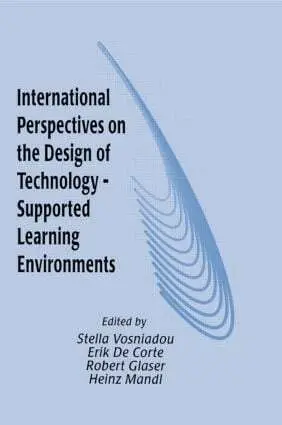
    International Perspectives on the Design of Technology-supported Learning Environments

    AvStella Vosniadou,Erik De Corte

    Häftad, Engelska, 1996

    225 kr

    Beställningsvara. Skickas inom 10-15 vardagar. Fri frakt över 249 kr.

    Beskrivning

    In recent years, the use of technology for the purposes of improving and enriching traditional instructional practices has received a great deal of attention. However, few works have explicitly examined cognitive, psychological, and educational principles on which technology-supported learning environments are based. This volume attempts to cover the need for a thorough theoretical analysis and discussion of the principles of system design that underlie the construction of technology-enhanced learning environments. It presents examples of technology-supported learning environments that cover a broad range of content domains, from the physical sciences and mathematics to the teaching of language and literacy.The emphasis in this book is not on the design of educational software but on the design of learning environments. A great deal of research on learning and instruction has recently moved out of the laboratory into the design of applications in instructional settings. By designing technology-supported learning environments instructional scientists attempt to better understand the theories and principles that are explicit in their theories of learning. The contributors to this volume examine how factors such as social interaction, the creation of meaningful activities, the use of multiple perspectives, and the construction of concrete representations influence the acquisition of new information and transfer.

    Produktinformation

    • Utgivningsdatum:1996-02-01
    • Mått:152 x 229 x 22 mm
    • Vikt:750 g
    • Format:Häftad
    • Språk:Engelska
    • Antal sidor:408
    • Förlag:Taylor & Francis Inc
    • ISBN:9780805818536

    Utforska kategorier

    • Systemvetenskap och AI inom Data och IT
    • Material och digital teknik i undervisningen inom Psykologi och pedagogik
    • Utbildningsstrategier och utbildningspolitik inom Psykologi och pedagogik

    Mer om författaren

    Robert Glaser, Stella Vosniadou, Erik De Corte, Heinz Mandl

    Recensioner i media

    "...introduces the reader to some of the key international developers who are designing instructional settings to improve education and add to our knowledge of instructional-learning theory....through the many applications presented in the 18 chapters, the reader can appreciate the bidirectional effect of research on new developments in both practice and theory....this book is full of new approaches to learning and instruction and is an important addition to your personal library."—Journal of Computing in Higher Education"The editors of this fine book have been working cooperatively on topics in instructional psychology and technology for a long time. I recommend this book for use in seminars dealing with instructional design and technology. Each chapter presents foundational information that is valuable for the novice reader while presenting case studies for the advanced scientist. As such, the book serves as a reference guide for the international instructional design field."—Journal of Educational Computing Research"There is much here that is of interest, importance, and relevance for a wide range of educationists and researchers....it is likely to that many of those involved in the design and use of technology-supported learning environments will find useful reading here."—British Educational Research Journal

    Innehållsförteckning

    • Contents: Preface. R. Glaser, E.L. Ferguson, S. Vosniadou, Introduction: Cognition and the Design of Environments for Learning. Part I: Representation.S. Vosniadou, Learning Environments for Representational Growth and Cognitive Flexibility. J. Bliss, Externalizing Thinking Through Modeling: ESRC Tools for Exploratory Learning Research Program. R. Kozma, J. Russell, T. Jones, N. Marx, J. Davis, The Use of Multiple, Linked Representations to Facilitate Science Understanding. B. Schwarz, M.J. Nathan, L.B. Resnick, Acquisition of Meaning for Arithmetic Structures with the Planner. K. Reusser, From Cognitive Modeling to the Design of Pedagogical Tools. E. Lehtinen, S. Repo, Activity, Social Interaction, and Reflective Abstraction: Learning Advanced Mathematical Concepts in a Computer Environment. E. De Corte, Changing Views of Computer-Suppported Learning Environments for the Acquistion of Knowledge and Thinking Skills. Part II: Social Interaction.M. Scardamalia, C. Bereiter, Adaptation and Understanding: A Case for New Cultures of Schooling. P. Dillenbourg, Distributing Cognition Over Humans and Machines. G. Kanselaar, G. Erkens, Interactivity in Cooperative Problem Solving with Computers. J. Torney-Purta, Conceptual Change Among Adolescents Using Computer Networks and Peer Collaboration in Studying International Political Issues. Part III: Meaningful Contexts and Multiple Perspectives.J.D. Bransford et al., MOST Environments for Accelerating Literacy Development. S.R. Goldman et al., Anchoring Science Instruction in Multimedia Learning Environments. Cognition and Technology Group at Vanderbilt, Multimedia Environments for Enhancing Learning in Mathematics. H. Mandl, H. Gruber, A. Renkl, Learning to Apply: From "School Garden Instruction" to Techonolgy-Based Learning Environments. P. Mendelsohn, Mapping Models of Cognitive Development to Design Principles of Learning Environments. Part IV: Principles of System Design.A. Collins, Design Issues for Learning Environments. G. Salomon, Studying Novel Learning Environments as Patterns of Change.