Leopoldo Bertossi – författare
1 114 kr
Skickas inom 10-15 vardagar
1 408 kr
Läs direkt efter köp
Fourth IFIP International Conference on Theoretical Computer Science - TCS 2006
IFIP 19th World Computer Congress, TC-1, Foundations of Computer Science, August 23-24, 2006, Santiago, Chile
1 114 kr
Skickas inom 10-15 vardagar
372 kr
Skickas inom 10-15 vardagar
441 kr
Läs direkt efter köp
Reasoning Web. Causality, Explanations and Declarative Knowledge
18th International Summer School 2022, Berlin, Germany, September 27–30, 2022, Tutorial Lectures
646 kr
Skickas inom 5-8 vardagar
786 kr
Läs direkt efter köp
644 kr
Skickas inom 5-8 vardagar
Rule Technologies. Research, Tools, and Applications
10th International Symposium, RuleML 2016, Stony Brook, NY, USA, July 6-9, 2016. Proceedings
1 114 kr
Skickas inom 10-15 vardagar
1 408 kr
Läs direkt efter köp
This book constitutes the refereed proceedings of the 10th International RuleML Symposium, RuleML 2016, held in New York, NY, USA during July 2016.
The 19 full papers, 1 short paper, 2 keynote abstracts, 2 invited tutorial papers, 1 invited standard paper, presented were carefully reviewed and selected from 36 submissions. RuleML is a leading conference aiming to build bridges between academia and industry in the field of rules and its applications, especially as part of the semantic technology stack. It is devoted to rule-based programming and rule-based systems including production rule systems, logic programming rule engines, and business rule engines and business rule management systems, Semantic Web rule languages and rule standards and technologies, and research on inference rules, transformation rules, decision rules, and ECA rules.Reasoning Web. Semantic Interoperability on the Web
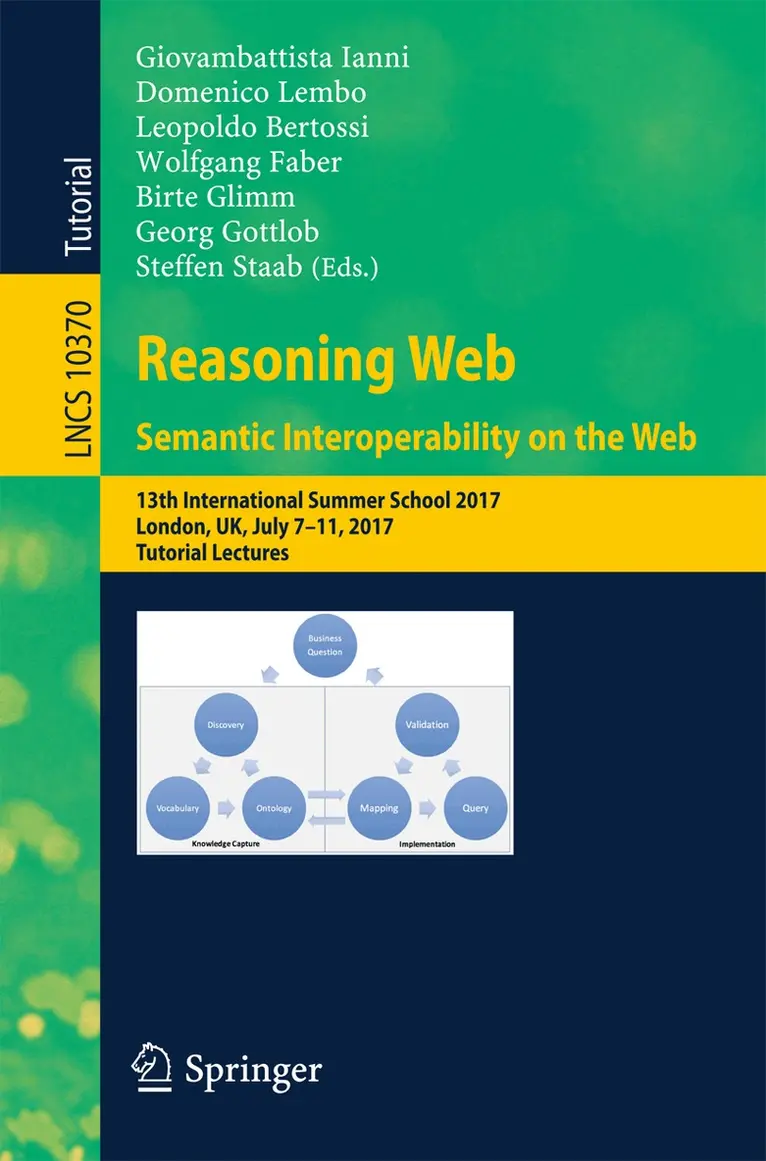
13th International Summer School 2017, London, UK, July 7-11, 2017, Tutorial Lectures
561 kr
Skickas inom 10-15 vardagar
708 kr
Läs direkt efter köp
This volume contains the lecture notes of the 13th Reasoning Web Summer School, RW 2017, held in London, UK, in July 2017.
In 2017, the theme of the school was "Semantic Interoperability on the Web", which encompasses subjects such as data integration, open data management, reasoning over linked data, database to ontology mapping, query answering over ontologies, hybrid reasoning with rules and ontologies, and ontology-based dynamic systems. The papers of this volume focus on these topics and also address foundational reasoning techniques used in answer set programming and ontologies.
561 kr
Skickas inom 10-15 vardagar
561 kr
Skickas inom 10-15 vardagar
708 kr
Läs direkt efter köp
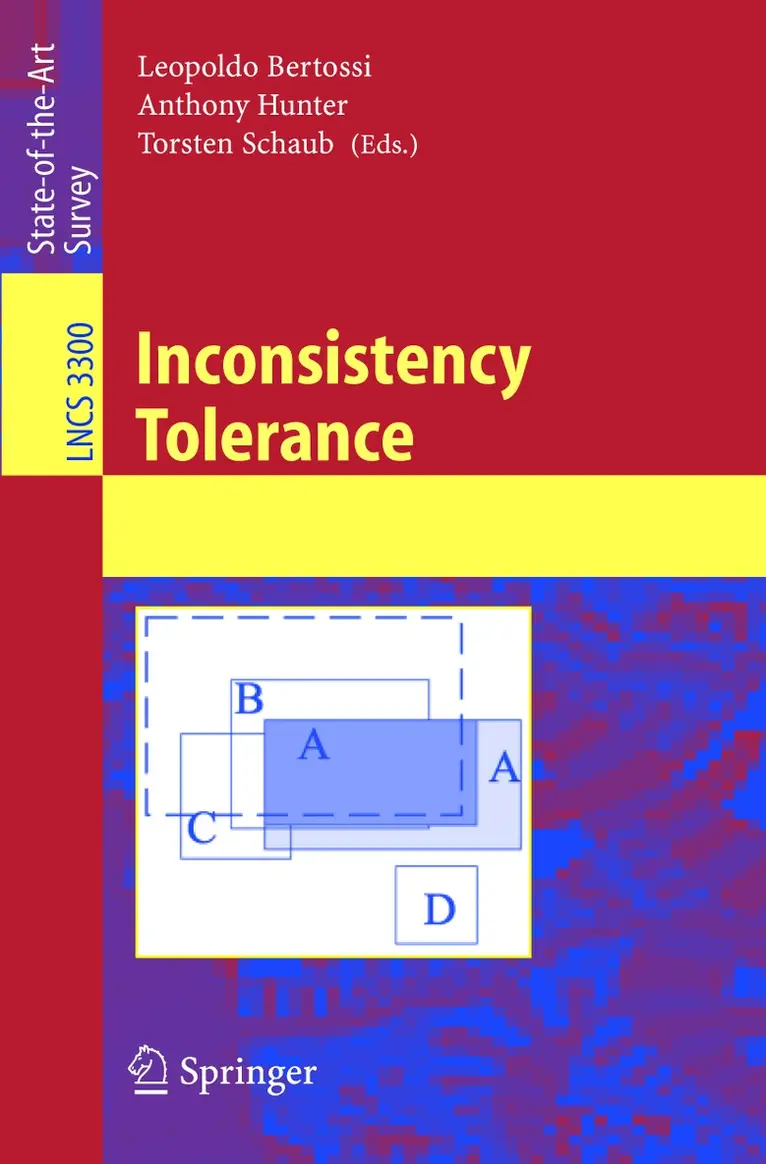
Inconsistency arises in many areas in advanced computing. Often inconsistency is unwanted, for example in the specification for a plan or in sensor fusion in robotics; however, sometimes inconsistency is useful. Whether inconsistency is unwanted or useful, there is a need to develop tolerance to inconsistency in application technologies such as databases, knowledge bases, and software systems. To address this situation, inconsistency tolerance is being built on foundational technologies for identifying and analyzing inconsistency in information, for representing and reasoning with inconsistent information, for resolving inconsistent information, and for merging inconsistent information.
The idea for this book arose out of a Dagstuhl Seminar on the topic held in summer 2003. The nine chapters in this first book devoted to the subject of inconsistency tolerance were carefully invited and anonymously reviewed. The book provides an exciting introduction to this new field.
687 kr
Läs direkt efter köp
This book constitutes the thoroughly refereed post-proceedings of the Second International Workshop on Semantics in Databases, held in Dagstuhl Castle, Germany, in January 2001.
The 10 revised full papers presented together with an introduction by the volume editors were carefully selected during two rounds of reviewing. Among the aspects of database semantics discussed are semantic constraints, paraconsistency, logic foundations of databases, ER modeling, type hierarchies, null values, consistency enforcement, logic-based pattern languages, and semantic classification of queries. Among the classes of databases dealt with are deductive databases, relational databases, distributed information systems, and tree-structured data.