Lijun Chen - Böcker
Visar alla böcker från författaren Lijun Chen. Handla med fri frakt och snabb leverans.
4 produkter
4 produkter
820 kr
Skickas inom 10-15 vardagar
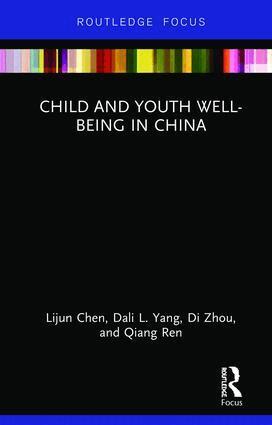
The true measure of any society is how it treats its children, who are in turn that society’s future. Making use of data from the longitudinal Chinese Family Panel Studies survey, the authors of this timely study provide a multi-faceted description and analysis of China’s younger generations. They assess the economic, physical, and social-emotional well-being as well as the cognitive performance and educational attainment of China's children and youth. They pay special attention to the significance of family and community contexts, including the impact of parental absence on millions of left-behind children. Throughout the volume, the authors delineate various forms of disparities, especially the structural inequalities maintained by the Chinese Party-state and the vulnerabilities of children and youth in fragile families and communities. They also analyze the social attitudes and values of Chinese youth. Having grown up in a period of sustained prosperity and greater individual choice, the younger Chinese cohorts are more independent in spirit, more open-minded socially, and significantly less deferential to authority than older cohorts. There is growing recognition in China of the importance of investing in children’s future and of helping the less advantaged. Substantial improvements in child and youth well-being have been achieved in a time of growing economic prosperity. Strong political commitment is needed to sustain existing efforts and to overcome the many obstacles that remain. This book will be of considerable interest to researchers of Chinese society and development.
332 kr
Skickas inom 10-15 vardagar
The true measure of any society is how it treats its children, who are in turn that society’s future. Making use of data from the longitudinal Chinese Family Panel Studies survey, the authors of this timely study provide a multi-faceted description and analysis of China’s younger generations. They assess the economic, physical, and social-emotional well-being as well as the cognitive performance and educational attainment of China's children and youth. They pay special attention to the significance of family and community contexts, including the impact of parental absence on millions of left-behind children. Throughout the volume, the authors delineate various forms of disparities, especially the structural inequalities maintained by the Chinese Party-state and the vulnerabilities of children and youth in fragile families and communities. They also analyze the social attitudes and values of Chinese youth. Having grown up in a period of sustained prosperity and greater individual choice, the younger Chinese cohorts are more independent in spirit, more open-minded socially, and significantly less deferential to authority than older cohorts. There is growing recognition in China of the importance of investing in children’s future and of helping the less advantaged. Substantial improvements in child and youth well-being have been achieved in a time of growing economic prosperity. Strong political commitment is needed to sustain existing efforts and to overcome the many obstacles that remain. This book will be of considerable interest to researchers of Chinese society and development.
1 887 kr
Skickas inom 10-15 vardagar
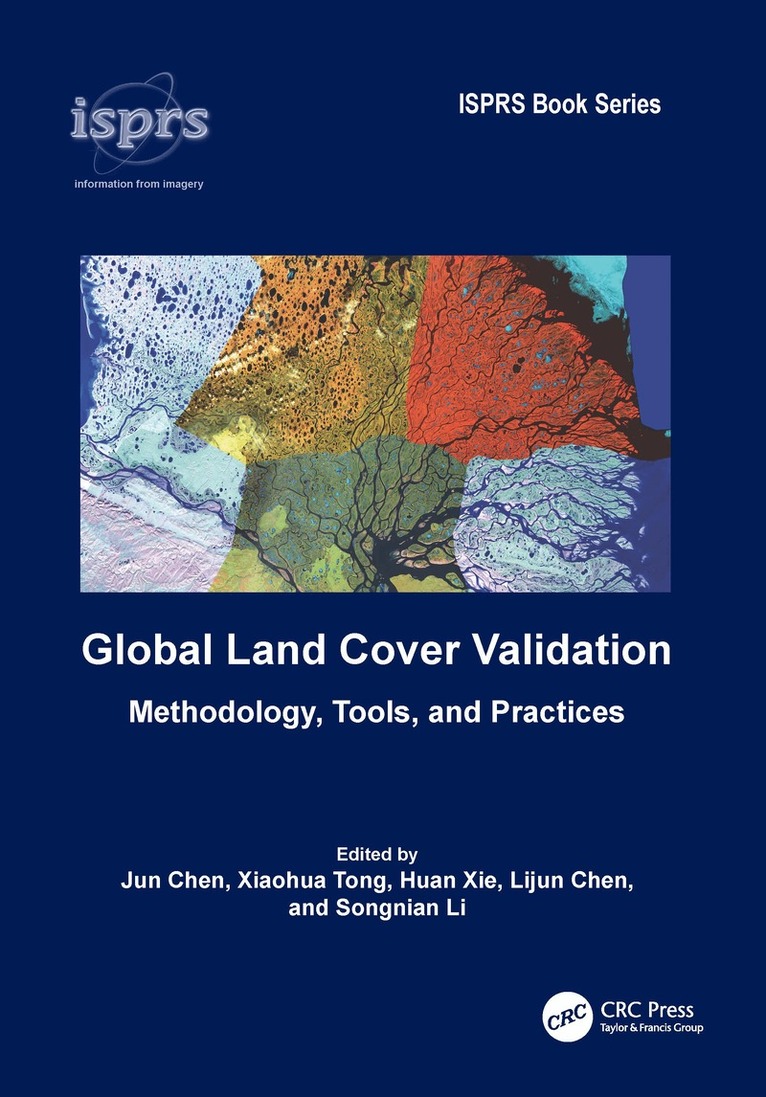
This book aims to summarize and report the major research achievements and validation results under the global land cover (GLC) initiative led by the Group Earth Observation (GEO). The first part of the book introduces the major tasks and challenges facing the validation of finer-resolution GLC maps and presents the concepts and overall framework of the GEO-led initiative. Chapters 2-5 provide systematic introductions to the major methodology of finer-resolution GLC map validation, including sampling design, reference data collection, sample labeling, and accuracy assessment. Chapter 6 introduces the online validation tools that have been developed, including their design, considerations, and functionalities. Chapter 7 presents the international validation practices and the results of validating GlobeLand30 at country, regional, and global scales. Future directions are also discussed in the Conclusion chapter.FeaturesPresents complete coverage of land cover validation, from concepts, methodology, and col laborative tools to applications.Details algorithms, techniques, and methods for land cover validation, including sampling, judgment, and accuracy assessment.Reviews some of the software tools that can be used for GLC validation and discusses the issues related to the design, usability, efficiency, and limitations of these tools.Highlights case studies of validation at global, regional, and national scales, which can serve as great references for researchers.Provides an extensive bibliography covering the whole scope of land cover validationGlobal Land Cover Validation: Methodology, Tools, and Practices serves as a reference for those engaged in land cover validation, especially at a global scale, including students, professionals, researchers, and general practitioners. It is also an excellent resource for professionals involved in sustainable development monitoring, environmental change studies, natural resource management, disaster assessment and mitigation, and many other applications.
1 146 kr
Tillfälligt slut
Despite many studies on the situation of children in China, there is a dearth of a proper and complete study of the conditions in which these children live. This book, based on national household survey data, offers a comprehensive analysis of the conditions. This book covers all major aspects of child development, including physical health, mental and psychological well-being, and their cognitive and educational development. It focuses on examining the developmental disparities between children of rural and urban regions and those with different living arrangements, for instance, left-behind children and migrant children. It reveals variations in the ecological contexts of these children i.e., different conditions of their families and communities that may have contributed to the children's developmental trajectories.