Linda Kalof - Böcker
Visar alla böcker från författaren Linda Kalof. Handla med fri frakt och snabb leverans.
17 produkter
17 produkter
2 193 kr
Skickas inom 5-8 vardagar
Intellectual struggles with the "animal question"-- how humans can rethink and reconfigure their relationships with other animals-- first began to take hold in the 1970s. Over the next forty years, scholars from a wide range of fields would make sweeping reevaluations of the relationship between humans and other animals. The Oxford Handbook of Animal Studies brings these diverse evaluations together for the first time, paying special attention to the commodification of animals, the degradation of the natural world and a staggering loss of animal habitat and species extinction, and the increasing need for humans to coexist with other animals in urban, rural and natural contexts. Linda Kalof maps these themes into the five major categories that structure this volume: Animals in the Landscape of Law, Politics and Public Policy; Animal Intentionality, Agency and Reflexive Thinking; Animals as Objects in Science, Food, Spectacle and Sport; Animals in Cultural Representations; and Animals in Ecosystems. Written by international scholars with backgrounds in philosophy, law, history, English, art, sociology, geography, archaeology, environmental studies, cultural studies, and animal advocacy, the thirty chapters in this handbook investigate key issues and concepts central to understanding our current relationship with other animals and the potential for coexistence in an ecological community of living beings.
617 kr
Kommande
This book compiles, discusses, and explains 126 key concepts relating to animals in sustainability in an easy-to-navigate A–Z format.Essential Concepts of Animals in Sustainability is a roadmap of concepts that trace the connections of the planet with all its inhabitants – humans, non-human animals, other organisms, and ecosystems. This book provides an interdisciplinary introduction, drawing on the social, ecological and physical sciences, to examine the place of animals as members of communities in relation to humans, other organisms and the physical environment. Entries address the important role individual animals and species play in ecosystem management and environmental well-being, as well as addressing negative impacts on the environment, such as the methane produced by cattle. The book also focuses on the philosophical and ethical arguments that support protecting animals from human exploitation, including questions around emotion and sentience. Overall, this book provides students with a clear picture of the animal question in sustainability and will demonstrate that the ability to coexist is essential to the entire biophysical world.This book will be of great interest to students and scholars of animal studies, zoology, conservation biology, environmental studies, ecosystem services, environmental humanities and sustainability.
2 258 kr
Kommande
This book compiles, discusses, and explains 126 key concepts relating to animals in sustainability in an easy-to-navigate A–Z format.Essential Concepts of Animals in Sustainability is a roadmap of concepts that trace the connections of the planet with all its inhabitants – humans, non-human animals, other organisms, and ecosystems. This book provides an interdisciplinary introduction, drawing on the social, ecological and physical sciences, to examine the place of animals as members of communities in relation to humans, other organisms and the physical environment. Entries address the important role individual animals and species play in ecosystem management and environmental well-being, as well as addressing negative impacts on the environment, such as the methane produced by cattle. The book also focuses on the philosophical and ethical arguments that support protecting animals from human exploitation, including questions around emotion and sentience. Overall, this book provides students with a clear picture of the animal question in sustainability and will demonstrate that the ability to coexist is essential to the entire biophysical world.This book will be of great interest to students and scholars of animal studies, zoology, conservation biology, environmental studies, ecosystem services, environmental humanities and sustainability.
2 289 kr
Skickas inom 10-15 vardagar
The Animals Reader brings together classic and contemporary writings from philosophy, ethics, sociology, cultural studies, anthropology, environmental studies, history, law and science. Providing readers with both an understanding of the multidisciplinary field of animal studies and a clear sense of how the role of animals in human society has been understood and critiqued through time, this second edition has been expanded to reflect key developments in theory and research that have emerged in recent years.Forty-two chapters are divided into six parts. Favourite entries from the first edition have been retained, and are joined by sixteen new readings covering topics such as equality, animal rights and citizenship, zoos, death and killing, and embodied communication and empathy.The second edition begins with a new prologue by acclaimed wildlife photographer and photojournalist Britta Jaschinski. Updated pedagogical features include a new general introduction by the editors, revised introductions to each part and each reading, as well as new suggestions for further reading at the end of each section.As such, The Animals Reader is an invaluable collection for students across the humanities and social sciences, and is also suitable for general readers with an interest in human-animal relations.
563 kr
Skickas inom 10-15 vardagar
The Animals Reader brings together classic and contemporary writings from philosophy, ethics, sociology, cultural studies, anthropology, environmental studies, history, law and science. Providing readers with both an understanding of the multidisciplinary field of animal studies and a clear sense of how the role of animals in human society has been understood and critiqued through time, this second edition has been expanded to reflect key developments in theory and research that have emerged in recent years.Forty-two chapters are divided into six parts. Favourite entries from the first edition have been retained, and are joined by sixteen new readings covering topics such as equality, animal rights and citizenship, zoos, death and killing, and embodied communication and empathy.The second edition begins with a new prologue by acclaimed wildlife photographer and photojournalist Britta Jaschinski. Updated pedagogical features include a new general introduction by the editors, revised introductions to each part and each reading, as well as new suggestions for further reading at the end of each section.As such, The Animals Reader is an invaluable collection for students across the humanities and social sciences, and is also suitable for general readers with an interest in human-animal relations.
513 kr
Skickas inom 7-10 vardagar
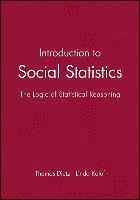
Introduction to Social Statistics is a basic statistics text with a focus on the use of models for thinking through statistical problems, an accessible and consistent structure with ongoing examples across chapters, and an emphasis on the tools most commonly used in contemporary research. Lively introductory textbook that uses three strategies to help students master statistics: use of models throughout; repetition with variation to underpin pedagogy; and emphasis on the tools most commonly used in contemporary research Demonstrates how more than one statistical method can be used to approach a research question Enhanced learning features include a ‘walk-through’ of statistical concepts, applications, features, advanced topics boxes, and a ‘What Have We Learned’ section at the end of each chapter Supported by a website containing instructor materials including chapter-by-chapter PowerPoint slides, answers to exercises, and an instructor guideVisit www.wiley.com/go/dietz for additional student and instructor resources.
645 kr
Tillfälligt slut
Introduction to Social Statistics is a basic statistics text with a focus on the use of models for thinking through statistical problems, an accessible and consistent structure with ongoing examples across chapters, and an emphasis on the tools most commonly used in contemporary research. Lively introductory textbook that uses three strategies to help students master statistics: use of models throughout; repetition with variation to underpin pedagogy; and emphasis on the tools most commonly used in contemporary researchDemonstrates how more than one statistical method can be used to approach a research questionEnhanced learning features include a 'walk-through' of statistical concepts, applications, features, advanced topics boxes, and a ‘What Have We Learned’ section at the end of each chapterSupported by a website containing instructor materials including chapter-by-chapter PowerPoint slides, answers to exercises, and an instructor guideVisit www.wiley.com/go/dietz for additional student and instructor resources.
447 kr
Skickas inom 10-15 vardagar
The Christian, Jewish, and Muslim communities of medieval western Europe conceived of the human body in manifold ways. The body was not a fixed or unmalleable mass of flesh, but an entity that changed its character depending on its age, its interactions with its environment, and its diet. For example, a slave would have been marked by her language, her name, her religion, or even by a sign burned onto her skin, not by her color alone. Covering the period from 500 to 1500 and using sources that range across the full spectrum of medieval literary, scientific, medical, and artistic production, this volume explores the rich variety of medieval views of both the real and the metaphorical body. A Cultural History of the Human Body in the Medieval Age presents an overview of the period with essays on the centrality of the human body in birth and death, health and disease, sexuality, beauty and concepts of the ideal, bodies marked by gender, race, class and disease, cultural representations and popular beliefs, and self and society.
447 kr
Skickas inom 10-15 vardagar
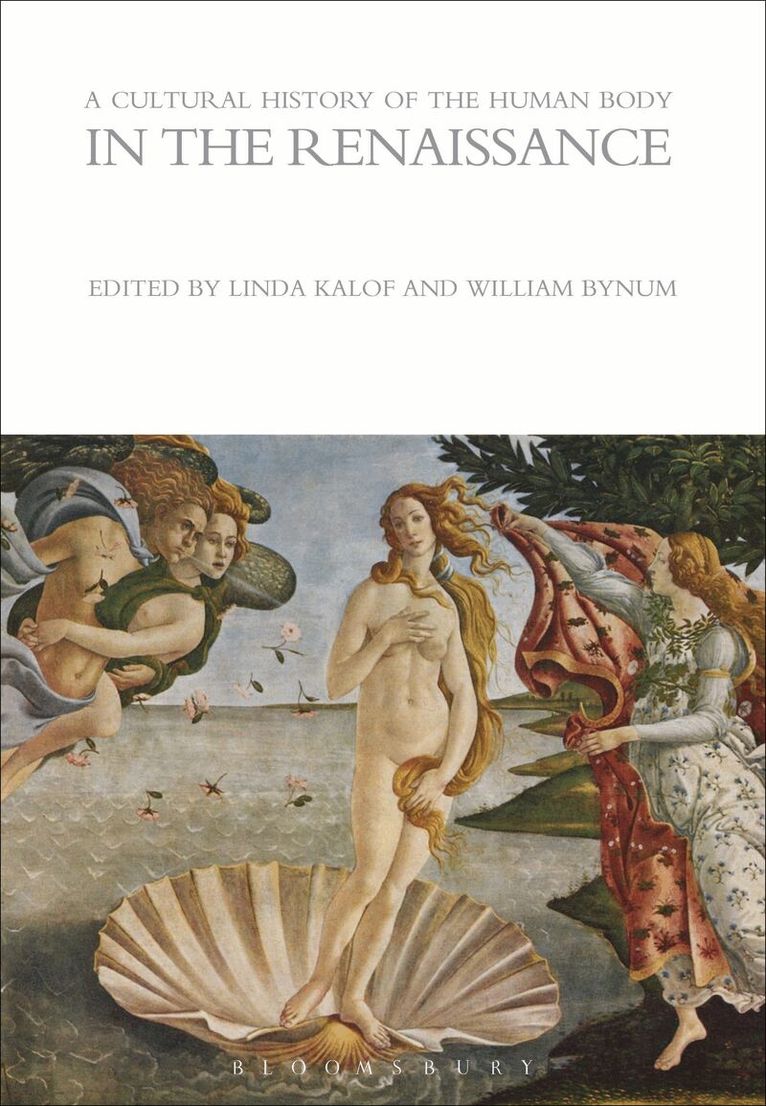
The Renaissance was a time of immense change in the social, political, economic, intellectual, and artistic arenas of the Western world. The cultural construction of the human body occupied a pivotal role in those transformations. The social and cultural meanings of embodiment revolutionized the intellectual, political, and emotional ideologies of the period. Covering the period from 1400 to 1650, this volume examines the flexible and shifting categories of the body at an unparalleled time of growth in geographical exploration, science, technology, and commerce. A Cultural History of the Human Body in the Renaissance presents an overview of the period with essays on the centrality of the human body in birth and death, health and disease, sexuality, beauty and concepts of the ideal, bodies marked by gender, race, class and disease, cultural representations and popular beliefs, and self and society.
530 kr
Skickas inom 7-10 vardagar
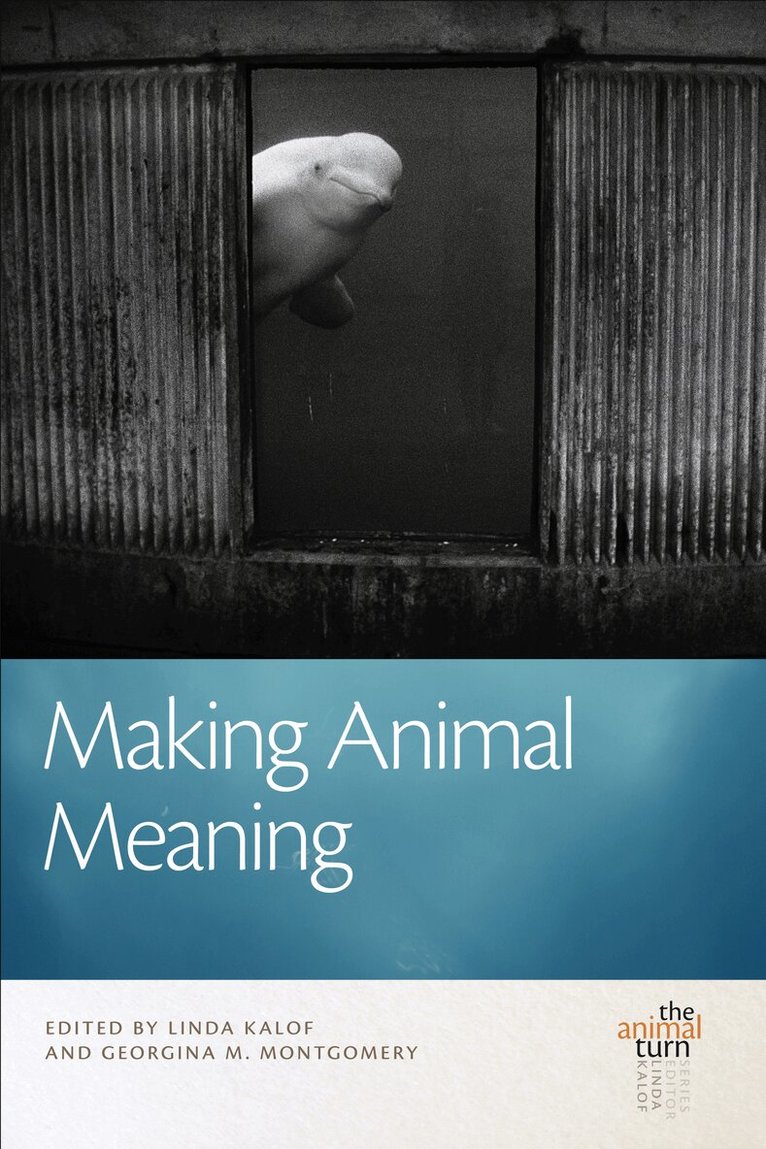
An elucidating collection of ten original essays, Making Animal Meaning reconceptualizes methods for researching animal histories and rethinks the contingency of the human-animal relationship. The vibrant and diverse field of animal studies is detailed in these interdisciplinary discussions, which include voices from a broad range of scholars and have an extensive chronological and geographical reach. These exciting discourses capture the most compelling theoretical underpinnings of animal significance while exploring meaning-making through the study of specific spaces, species, and human-animal relations. A deeply thoughtful collection — vital to understanding central questions of agency, kinship, and animal consumption — these essays tackle the history and philosophy of constructing animal meaning.
2 490 kr
Skickas inom 10-15 vardagar
This comprehensive reader offers in-depth analyses of critical developments in environmental values, bringing together in one volume the most influential scholarship in the field. Each carefully selected contribution assesses some of the most pressing questions of our time, focusing on the relationship between human values, world views and preferences, and the natural world. As the first reader of its kind in a rapidly expanding multidisciplinary field, this text provides students with a valuable framework for understanding the intellectual progress and future development of the study of environmental values. The book clearly emphasizes that environmental values must be understood not only as economic, benefit-cost or 'willingness to pay' considerations, but also as normative principles that are fundamental to behaviour and management practices.
657 kr
Skickas inom 10-15 vardagar
This comprehensive reader offers in-depth analyses of critical developments in environmental values, bringing together in one volume the most influential scholarship in the field. Each carefully selected contribution assesses some of the most pressing questions of our time, focusing on the relationship between human values, world views and preferences, and the natural world. As the first reader of its kind in a rapidly expanding multidisciplinary field, this text provides students with a valuable framework for understanding the intellectual progress and future development of the study of environmental values. The book clearly emphasizes that environmental values must be understood not only as economic, benefit-cost or 'willingness to pay' considerations, but also as normative principles that are fundamental to behaviour and management practices.
1 520 kr
Skickas inom 10-15 vardagar
Choice Outstanding Academic Title, 2008 Animals had a ubiquitous and central presence in the ancient world. A Cultural History of Animals In Antiquity presents an extraordinarily broad assessment of animal cultures from 2500 BC to 1000 AD, describing how animals were an intrinsic part of the spiritual life of ancient society, how they were hunted, domesticated and used for entertainment, and the roles animals played in ancient science and philosophy. Since much of what we know about animals in antiquity is gleaned from the images left by our ancestors, the book presents a wealth of illustrations. Seminal ancient narratives about animals - including works from Aristotle, Plutarch, Ovid and Pliny the Elder - are also drawn upon to illustrate contemporary ideas about and attitudes towards animals. As with all the volumes in the illustrated Cultural History of Animals, this volume presents an overview of the period and continues with essays on the position of animals in contemporary Symbolism, Hunting, Domestication, Sports and Entertainment, Science, Philosophy, and Art Volume 1 in the Cultural History of Animals edited by Linda Kalof and Brigitte Resl
10 481 kr
Tillfälligt slut
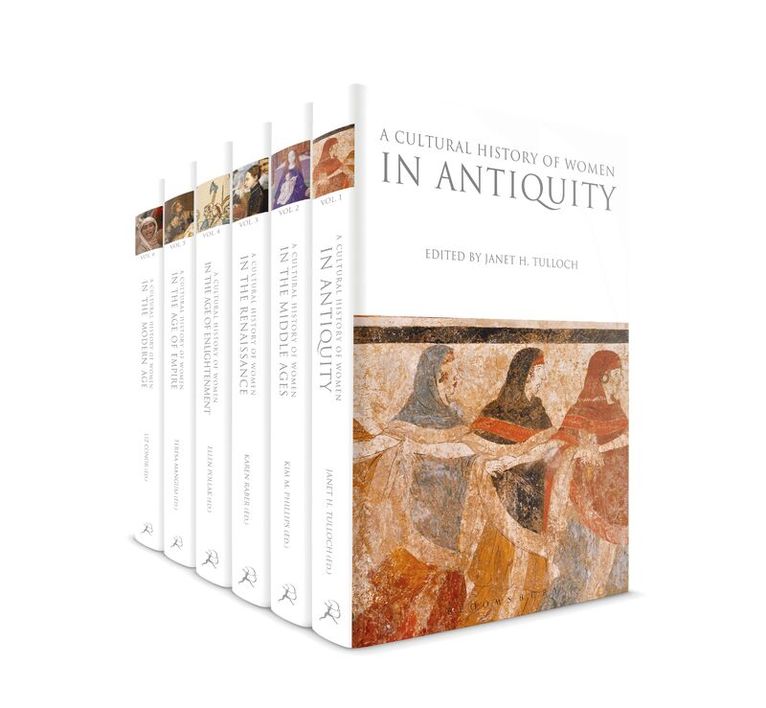
A Cultural History of Women presents an authoritative survey from ancient times to the present. With six volumes covering 2500 years, this is the most authoritative history available of women in Western cultures.1. A Cultural History of Women in Antiquity2. A Cultural History of Women in the Middle Ages3. A Cultural History of Women in the Renaissance4. A Cultural History of Women in the Age of Enlightenment5. A Cultural History of Women in the Age of Empire 6. A Cultural History of Women in the Modern AgeEach volume discusses the same themes in its chapters: the Life Cycle; Bodies and Sexuality; Religion and Popular Beliefs; Medicine and Disease; Public and Private Worlds; Education and Work; Power; and Artistic Representation. This means readers can either have a broad overview of a period by reading a volume or follow a theme through history by reading the relevant chapter in each volume.Superbly illustrated, the full six volume set combines to present the most authoritative and comprehensive survey available on women through history.
1 520 kr
Skickas inom 10-15 vardagar
The Christian, Jewish and Muslim communities of medieval Western Europe conceived of the human body in manifold ways. The body was not a fixed or unmalleable mass of flesh but an entity that changed its character depending on its age, its interactions with its environment and its diet. For example, a slave would have been marked by her language, her name, her religion or even by a sign burned onto her skin, not by her color alone.Covering the period from 500 to 1500 and using sources that range across the full spectrum of medieval literary, scientific, medical and artistic production, this volume explores the rich variety of medieval views of both the real and the metaphorical body.A Cultural History of the Human Body in the Medieval Age presents an overview of the period with essays on the centrality of the human body in birth and death, health and disease, sexuality, beauty and concepts of the ideal, bodies marked by gender, race, class and age, cultural representations and popular beliefs and the self and society.
1 520 kr
Skickas inom 10-15 vardagar
The Renaissance was a time of immense change in the social, political, economic, intellectual and artistic arenas of the Western world. The cultural construction of the human body occupied a pivotal role in those transformations. The social and cultural meanings of embodiment revolutionized the intellectual, political and emotional ideologies of the period.Covering the years from 1400 to 1650, this volume examines the flexible and shifting categories of the body at an unparalleled time of growth in geographical exploration, science, technology and commerce.A Cultural History of the Human Body in the Renaissance presents an overview of the period with essays on the centrality of the human body in birth and death, health and disease, sexuality, beauty and concepts of the ideal, bodies marked by gender, race, class and age, cultural representations and popular beliefs and the self and society.
447 kr
Skickas inom 10-15 vardagar
A Choice Outstanding Academic Title, 2008 Animals had a ubiquitous and central presence in the ancient world. A Cultural History of Animals In Antiquity presents an extraordinarily broad assessment of animal cultures from 2500 BCE to 1000 CE, describing how animals were an intrinsic part of the spiritual life of ancient society, how they were hunted, domesticated and used for entertainment, and the roles animals played in ancient science and philosophy. Since much of what we know about animals in antiquity is gleaned from the images left by our ancestors, the book presents a wealth of illustrations. Seminal ancient narratives about animals - including works from Aristotle, Plutarch, Ovid and Pliny the Elder - are also drawn upon to illustrate contemporary ideas about and attitudes towards animals. A Cultural History of Animals in Antiquity presents an overview of the period and continues with essays on the position of animals in contemporary symbolism, hunting, domestication, sports and entertainment, science, philosophy, and art.