Line Algoed – författare
387 kr
Skickas inom 5-8 vardagar
324 kr
Skickas inom 5-8 vardagar
124 kr
Skickas inom 5-8 vardagar
133 kr
Skickas inom 5-8 vardagar
143 kr
Skickas inom 5-8 vardagar
153 kr
Läs direkt efter köp
When the first community land trusts (CLTs) began appearing in the United States during the 1970s, all were located in rural areas. By the 1980s and 1990s, this innovative form of tenure was spreading into cities, suburbs, and towns. Homeownership remained a priority for urban CLTs, but other applications got added to the mix: revitalizing distressed neighborhoods; preventing displacement in gentrifying neighborhoods; and developing multiple types of affordable housing beyond the detached, single-family houses that had been the programmatic focus of CLTs in more rural areas.
Urban CLTs also went beyond housing. On scattered parcels of land which they owned and stewarded on a community''s behalf, CLTs sponsored stores, restaurants, clinics, community centers, and facilities for other nonprofit organizations, providing a variety of goods and services for local residents. A few urban CLTs made lands available for greenhouses, community gardens, and commercial agriculture.
Today, as community land trusts have spread far beyond the United States, most are urban. There are still countries where new CLTs are being formed in rural areas, but the greatest growth in the global CLT movement is occurring in the densely populated neighborhoods and inner-ring suburbs of cities. Most of this growth has happened in the Global North, with cities like Boston, Brussels, Denver, London, Montreal, and Toronto leading the way. More recently, urban CLTs have begun appearing in the Global South as well. The Fideicomiso de la Tierra del Caño Martín Peña in San Juan, Puerto Rico and the ongoing efforts to seed CLTs in the favelas of Rio de Janeiro are pointing the way.
Urban CLTs operate at the intersection of two world-wide movements for social change. The first is happening where people who occupy acreage under some form an informal landholding system are struggling to gain security of tenure. Many of these informal settlements are at the center or on the periphery of major cities in Africa, Asia, Latin America, and the Caribbean.
CLTs are also aligned with a rising tide of advocacy around housing rights, happening in cities across the world. The strategies championed by this amorphous movement for a "right to the city" include rent control, the production of housing that remains permanently affordable, and resistance to the removal of classes and races from areas experiencing government investment in major infrastructure or private investment in upscale development.
Urban issues and actions like these provided the backdrop for a collection of twenty-six original essays published by Terra Nostra Press, On Common Ground: International Perspectives on the Community Land Trust.
124 kr
Skickas inom 5-8 vardagar
159 kr
Läs direkt efter köp
As community land trusts (CLTs) have grown in number and spread around the world, the model itself has changed. There are now many variations of what is sometimes known as the "classic" CLT. What has not changed, however, is the dynamic tension between impactful development and community empowerment that was baked into the structure and purpose of the CLT from the very beginning.
Every community land trust attempts to gain control over enough land, housing, and other land-based assets to make a difference in the lives of low-income and moderate-income people. At the same time as it is expanding its portfolio of real estate, a CLT is also dedicated to expanding and engaging its social base--continuously organizing, informing, and involving members of its chosen community in guiding and governing the CLT itself. Ownership and empowerment go hand-in-hand.
These dual goals are often seen as incompatible within the larger field of community development. Even within the smaller world of CLTs, there is an ongoing debate as to whether there exists an inevitable tradeoff between going to scale versus ceding control to the community served by a CLT.
That debate is the focus of the present monograph. Although several contributors take one side or the other, most portray the CLT as occupying a rhetorical and practical middle ground between impact and empowerment. They provide examples of successful CLTs in which involving residents in guiding and governing the organization has been the basis for increasing a CLT''s holdings of land and housing, rather than being a barrier to growth. In these organizations, the dual goals of a CLT are reconciled and brought skillfully, sustainably into balance.
All of the chapters in the present monograph, except for the opening essay by Emily Thaden and Tony Pickett, were selected from On Common Ground: International Perspectives on the Community Land Trust. This earlier collection of twenty-six original essays was published by Terra Nostra Press in June 2020.
143 kr
Skickas inom 5-8 vardagar
153 kr
Läs direkt efter köp
During the fifty years since the first community land trust (CLT) was founded by African-American civil rights activists in the United States, CLTs have spread far beyond their country of origin. Most of this growth has occurred in the Global North, but CLTs are now also being formed in a growing number of countries in the Global South.
The fertile seedbed for CLT development in this part of the world has been informal settlements. These are residential areas where people have built their own homes, usually without regard for whatever governmental standards, codes, or regulations that might exist. They have sited their self-built homes, moreover, on lands to which they lack a legal right of ownership or occupancy. Many of these settlements have existed for several generations. Buildings, community ties, and a way of life have become firmly established, even as the residents'' tenure has remained precarious.
Community land trusts are being promoted by community activists in the Global South as a resident-led strategy for formalizing tenure and securing people''s homes in communities like these. Several chapters in the present monograph focus on the formation or exploration of CLTs in urban areas, including densely populated informal settlements in San Juan, Puerto Rico; Rio de Janeiro, Brazil; Voi, Kenya; Karachi, Pakistan; and Dhaka, Bangladesh. Another chapter focuses on a remote rural area of Honduras, where a CLT is working to secure the watersheds on which widely dispersed mountain villages depend.
All of the monograph''s chapters, except for the opening essay by Patricia De Toledo Basile and Meagan M. Ehlenz, were selected from On Common Ground: International Perspectives on the Community Land Trust. This earlier collection of twenty-six original essays was published by Terra Nostra Press in June 2020.
389 kr
Skickas inom 5-8 vardagar
299 kr
Skickas inom 5-8 vardagar
475 kr
Läs direkt efter köp
La Vivienda representa más que un techo bajo el cual vivir. La vivienda digna es necesaria para el ejercicio de derechos fundamentales como la salud y la educación. Atado a la vivienda está el tema de la tenencia de la tierra. Millones de personas a la altura del siglo 21 viven en asentamientos informales y carecen de vivienda digna. Este libro explora el crecimiento global de los fideicomisos comunitarios de tierra y cómo esta forma de tenencia colectiva de la tierra y vivienda asequible a perpetuidad ha provisto hogares dignos para familias de ingresos bajos y moderados. Veintiséis ensayos de autores de una docena de países evidencian tal crecimiento y la participación de las comunidades para que los fideicomisos respondan a sus necesidades específicas.
Land that is owned and managed for the common good is a hallmark of community land trusts. CLTs are locally controlled, nonprofit organizations that steward permanently affordable housing (and other assets) for people of modest means. This book explores the global growth of CLTs in twenty-six original essays by authors from a dozen countries.
135 kr
Skickas inom 5-8 vardagar
159 kr
Läs direkt efter köp
El fideicomiso comunitario de tierras es una estrategia transformadora en la que el desarrollo es dirigido por la comunidad en terrenos comunitarios. Esta estrategia está tomando auge a través de comunidades en el norte global y también se está comenzando a conocer en el sur global. Los fideicomisos comunitarios de tierras producen y mantienen viviendas, espacios comerciales, tierras para la agricultura urbana (y rural) y una variedad de instalaciones comunitarias a precios asequibles-todas desarrolladas con el auspicio de la comunidad; y todas administradas para mantenerse asequibles a perpetuidad para personas de ingresos bajos o moderados. Cuando los gobiernos, organizaciones caritativas u otras organizaciones no gubernamentales emprenden el mejoramiento de una comunidad surgen preguntas sobre ¿quién decide lo que se hará? y ¿quién se beneficiará? Debido a la manera en que estos fideicomisos administran sus activos y debido a su gobernanza participativa, estos ofrecen nuevas contestaciones a dichas preguntas.
No todos los fideicomisos comunitarios de tierras son iguales. Entre los cientos fideicomisos comunitarios establecidos en una docena de diferentes países existen variaciones sobre cómo se estructuran estas organizaciones, qué uso dan a sus tierras, cómo realizan los desarrollos, y cómo se administran y cuidan los activos para futuras generaciones. Pueden diferenciarse de una localidad a otra. No empece la falta de uniformidad, las personas que abogan por este tipo de estrategia y la ponen en práctica han podido desarrollar argumentos consistentes a favor de ésta. Esencialmente expresan que: Cuando la tierra se posee para el bienestar de una comunidad, presente y futura; cuando el desarrollo lo realiza una organización creada por la comunidad, cimentada en tal comunidad, con sentido de responsabilidad hacia ésta, y guiada por ésta; cuando la administración es deliberada, diligente y duradera ... es más probable que el desarrollo sea tanto equitativo como sostenible, especialmente en lugares cuya población se encuentra en desventaja y carente de poder.
Los ensayos contenidos en este monográfico provienen de un libro titulado En terreno común: Perspectivas internacionales sobre los fideicomisos comunitarios de tierras. La mayoría de los veintiséis capítulos contenidos en dicho libro se enfocan en la descripción de las condiciones, organización, y políticas que dieron lugar a la creación de un fideicomiso comunitario de tierras tanto en el escenario urbano como rural. Un número de los capítulos también ofrecen un análisis de la filosofía detrás de este acercamiento no convencional a la tenencia de la tierra. Exploran justificaciones de carácter ético, político, y práctico para la creación de un fideicomiso comunitario de tierras. Son estos ensayos los que componen este monográfico. En conjunto, proveen una justificación coherente y convincente de la razón por la cual los fideicomisos comunitarios de tierras son dignos de consideración, implementación y apoyo.
128 kr
Skickas inom 5-8 vardagar
153 kr
Läs direkt efter köp
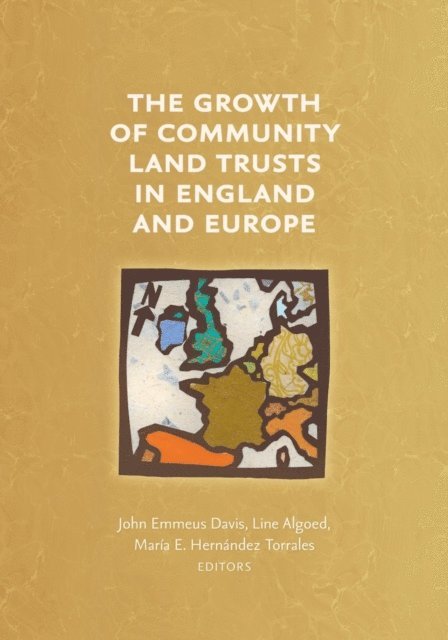
During the past two decades, as markets have pushed the price of land and housing beyond the reach of low- and middle-income families, governments in England and Europe have struggled to provide effective policy responses. Problems of affordable housing, social displacement, and degradation of the existing housing stock have grown steadily worse. This has prompted NGOs and community activists to seek innovative solutions of their own, looking beyond conventional approaches to housing provision long promoted by either the market or the state. One promising innovation, in particular, has attracted an increasing amount of attention and support: the community land trust (CLT).
The first community land trusts in England were developed in the early 2000s. The first CLT on the European continent was established in Brussels in 2012. The first Organismes de Foncier Solidaire, the French version of a CLT, was established in Lille in 2017. Interest in the model has grown ever since, both within these countries and in those nearby.
This growth has been seeded and supported by national CLT networks in England and France and by a cross-national partnership funded by the European Union, known as Sustainable Housing for Inclusive and Cohesive Cities (SHICC). Founded in 2017, SHICC has raised the profile of CLTs among policymakers and housing activists across North-West Europe and has provided essential resources for CLT projects.
Featured in the present monograph are local, national, and cross-national efforts to grow the CLT movement in this part of the world. The monograph''s chapters were selected from On Common Ground: International Perspectives on the Community Land Trust, a collection of twenty-six original essays published in June 2020 by Terra Nostra Press. But in the years since these essays were written, there have been significant changes among CLTs in London, Brussels, England, and Europe -- and within the networks supporting them. Postscripts have been added to this monograph''s chapters, therefore, bringing the story of community land trusts in these cities and countries up to date.
178 kr
Skickas inom 5-8 vardagar