Lorraine T. Benuto – författare
Visar alla böcker från författaren Lorraine T. Benuto. Handla med fri frakt och snabb leverans.
16 produkter
16 produkter
Inbunden, Engelska, 2012
1 667 kr
Skickas inom 10-15 vardagar
Several chapters are dedicated to specialized assessment, including neuropsychological assessment, forensic assessment, and school-based assessment, overall creating the most comprehensive, up-to-date, research-based compendium of psychological assessment measures for use with Hispanic clients.
Inbunden, Engelska, 2013
3 328 kr
Skickas inom 10-15 vardagar
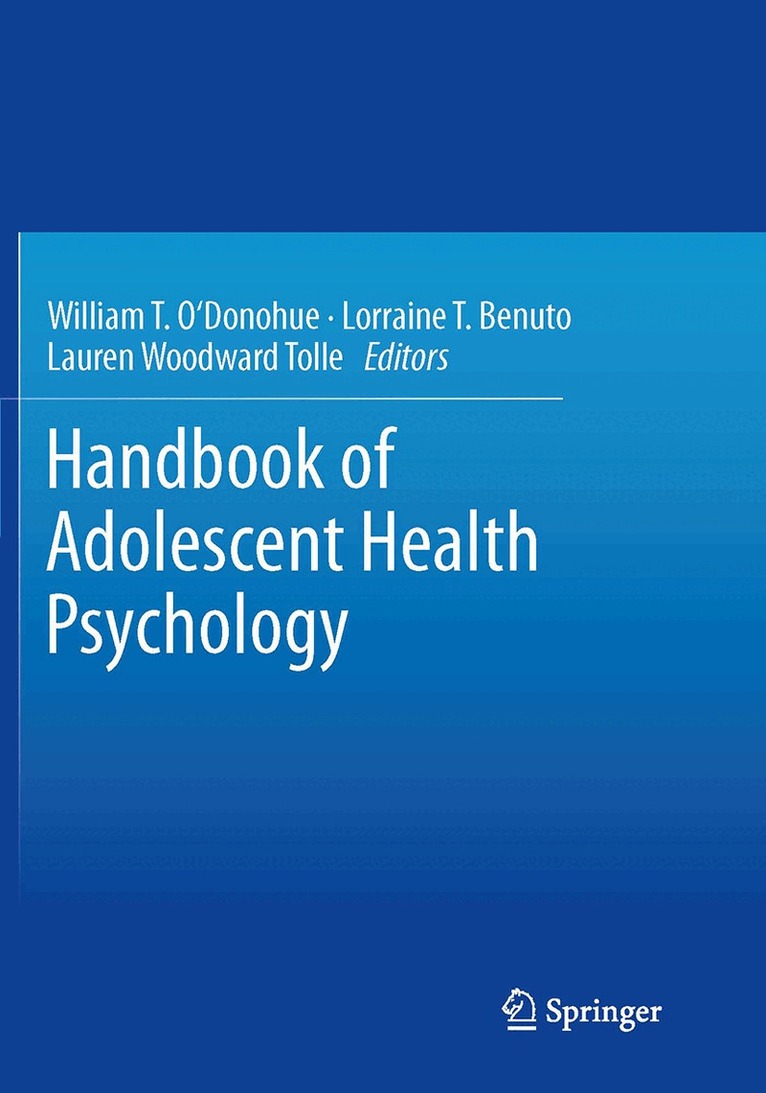
Adolescence is a pivotal period of development with respect to health and illness. It is during adolescence that many positive health behaviors are consolidated and important health risk behaviors are first evident; thus, adolescence is a logical time period for primary prevention. In addition, the predominant causes of morbidity and mortality in adolescence are quite different from those of adults, indicating that early identification and treatment of adolescent health problems must be directed to a unique set of targets in this age group. Moreover, because of the particular developmental issues that characterize adolescence, intervention efforts designed for adults are often inappropriate or ineffective in an adolescent population. Even when chronic illnesses are congenital or begin in childhood, the manner in which the transition from childhood to adolescence to young adulthood is negotiated has important implications for disease outcomes throughout the remainder of the person’s life span.Organized in five major sections (General Issues, Developmental Issues, Treatment and Training, Mental Health, and Physical Health) and 44 chapters, Handbook of Adolescent Health Psychology addresses the common and not so common health issues that tend to affect adolescents. Coverage includes:▪ Context and perspectives in adolescent health psychology▪ Health literacy, health maintenance, and disease prevention in adolescence▪ Physical disorders such as asthma, obesity, physical injury, and chronic pain▪ Psychological disorders such as substance abuse, attention deficit hyperactivity disorder, depression, and eating disorders▪ Congenital chronic diseases such as type 1 diabetes and spina bifidaHandbook of Adolescent Health Psychology is the definitive reference for pediatricians, family physicians, health psychologists, clinical social workers, rehabilitation specialists, and all practitioners and researchers working with adolescents.
Häftad, Engelska, 2016
1 194 kr
Skickas inom 5-8 vardagar
Several chapters are dedicated to specialized assessment, including neuropsychological assessment, forensic assessment, and school-based assessment, overall creating the most comprehensive, up-to-date, research-based compendium of psychological assessment measures for use with Hispanic clients.
Inbunden, Engelska, 2014
561 kr
Skickas inom 10-15 vardagar
To effectively serve minority clients, clinicians require a double understanding: of both evidence-based practice and the cultures involved. This particularly holds true when working with Asian-Americans, a diverse and growing population.The Guide to Psychological Assessment with Asians synthesizes real-world challenges, empirical findings, clinical knowledge and common-sense advice to create a comprehensive framework for practice. This informed resource is geared toward evaluation of first-generation Asian Americans and recent immigrants across assessment methods (self-report measures, projective tests), settings (school, forensic) and classes of disorders (eating, substance, sexual). While the Guide details cross-cultural considerations for working with Chinese-, Japanese-, Korean and Indian-American clients, best practices are also included for assessing members of less populous groups without underestimating, overstating or stereotyping the role of ethnicity in the findings. In addition, contributors discuss diversity of presentation within groups and identify ways that language may present obstacles to accurate evaluation. Among the areas covered in this up-to-date reference:Structured and semi-structured clinical interviews.Assessment of acculturation, enculturation and culture.IQ testing.Personality disorders.Cognitive decline and dementia.Mood disorders and suicidality.Neuropsychological assessment of children, adolescents and adults.Culture-bound syndromes.Designed for practitioners new to working with Asian clients as well as those familiar with the population, the Guide to Psychological Assessment with Asians is exceedingly useful to neuropsychologists, clinical psychologists, health psychologists and clinical social workers.
Inbunden, Engelska, 2014
581 kr
Skickas inom 10-15 vardagar
The movements toward cultural sensitivity and evidence-based practice are watershed developments in clinical psychology. As a population with a long history of substandard treatment from mental health systems, African Americans have especially benefitted from these improvements. But as with other racial and ethnic minorities, finding relevant test measures in most psychological domains presents clinicians with an ongoing challenge. The Guide to Psychological Assessment with African Americans aims to close the evaluation/therapy gap by giving practitioners the tools to choose appropriate instruments while respecting client individuality. Expert contributors analyze scarce and far-flung data, identify strengths and limitations of measures and norms in their use with African-American clients, and advise on avoiding biases in interpreting results. The editors advocate for a theory-based hypothesis-testing approach to assessment when empirical evidence is lacking, and offer guidelines for decision-making that is effective as well as ethnically aware. The Guide's findings, insights, and practical information cover the gamut of test and diagnostic areas, including: IQ and personality.Generalized anxiety disorder, panic, and phobias.Neuropsychological assessment, cognitive decline, and dementia.Mood disorders and suicidality.Forensic assessment, risk, and recidivism.Measures specific to children and adolescents.Plus PTSD, substance disorders, eating pathology, and more. Expertly complementing cross-cultural treatment texts, the Guide to Psychological Assessment with African Americans stands out as a trustworthy resource for treatment planning useful to clinical psychologists, neuropsychologists, and clinical social workers.
Häftad, Engelska, 2016
616 kr
Skickas inom 10-15 vardagar
The movements toward cultural sensitivity and evidence-based practice are watershed developments in clinical psychology. As a population with a long history of substandard treatment from mental health systems, African Americans have especially benefitted from these improvements. But as with other racial and ethnic minorities, finding relevant test measures in most psychological domains presents clinicians with an ongoing challenge. The Guide to Psychological Assessment with African Americans aims to close the evaluation/therapy gap by giving practitioners the tools to choose appropriate instruments while respecting client individuality. Expert contributors analyze scarce and far-flung data, identify strengths and limitations of measures and norms in their use with African-American clients, and advise on avoiding biases in interpreting results. The editors advocate for a theory-based hypothesis-testing approach to assessment when empirical evidence is lacking, and offer guidelines for decision-making that is effective as well as ethnically aware. The Guide's findings, insights, and practical information cover the gamut of test and diagnostic areas, including: IQ and personality.Generalized anxiety disorder, panic, and phobias.Neuropsychological assessment, cognitive decline, and dementia.Mood disorders and suicidality.Forensic assessment, risk, and recidivism.Measures specific to children and adolescents.Plus PTSD, substance disorders, eating pathology, and more. Expertly complementing cross-cultural treatment texts, the Guide to Psychological Assessment with African Americans stands out as a trustworthy resource for treatment planning useful to clinical psychologists, neuropsychologists, and clinical social workers.
Häftad, Engelska, 2016
3 328 kr
Skickas inom 10-15 vardagar
Adolescence is a pivotal period of development with respect to health and illness. It is during adolescence that many positive health behaviors are consolidated and important health risk behaviors are first evident; thus, adolescence is a logical time period for primary prevention. In addition, the predominant causes of morbidity and mortality in adolescence are quite different from those of adults, indicating that early identification and treatment of adolescent health problems must be directed to a unique set of targets in this age group. Moreover, because of the particular developmental issues that characterize adolescence, intervention efforts designed for adults are often inappropriate or ineffective in an adolescent population. Even when chronic illnesses are congenital or begin in childhood, the manner in which the transition from childhood to adolescence to young adulthood is negotiated has important implications for disease outcomes throughout the remainder of the person’s life span.Organized in five major sections (General Issues, Developmental Issues, Treatment and Training, Mental Health, and Physical Health) and 44 chapters, Handbook of Adolescent Health Psychology addresses the common and not so common health issues that tend to affect adolescents. Coverage includes:▪ Context and perspectives in adolescent health psychology▪ Health literacy, health maintenance, and disease prevention in adolescence▪ Physical disorders such as asthma, obesity, physical injury, and chronic pain▪ Psychological disorders such as substance abuse, attention deficit hyperactivity disorder, depression, and eating disorders▪ Congenital chronic diseases such as type 1 diabetes and spina bifidaHandbook of Adolescent Health Psychology is the definitive reference for pediatricians, family physicians, health psychologists, clinical social workers, rehabilitation specialists, and all practitioners and researchers working with adolescents.
Häftad, Engelska, 2016
561 kr
Skickas inom 10-15 vardagar
To effectively serve minority clients, clinicians require a double understanding: of both evidence-based practice and the cultures involved. This particularly holds true when working with Asian-Americans, a diverse and growing population.The Guide to Psychological Assessment with Asians synthesizes real-world challenges, empirical findings, clinical knowledge and common-sense advice to create a comprehensive framework for practice. This informed resource is geared toward evaluation of first-generation Asian Americans and recent immigrants across assessment methods (self-report measures, projective tests), settings (school, forensic) and classes of disorders (eating, substance, sexual). While the Guide details cross-cultural considerations for working with Chinese-, Japanese-, Korean and Indian-American clients, best practices are also included for assessing members of less populous groups without underestimating, overstating or stereotyping the role of ethnicity in the findings. In addition, contributors discuss diversity of presentation within groups and identify ways that language may present obstacles to accurate evaluation. Among the areas covered in this up-to-date reference:Structured and semi-structured clinical interviews.Assessment of acculturation, enculturation and culture.IQ testing.Personality disorders.Cognitive decline and dementia.Mood disorders and suicidality.Neuropsychological assessment of children, adolescents and adults.Culture-bound syndromes.Designed for practitioners new to working with Asian clients as well as those familiar with the population, the Guide to Psychological Assessment with Asians is exceedingly useful to neuropsychologists, clinical psychologists, health psychologists and clinical social workers.
Inbunden, Engelska, 2020
1 114 kr
Skickas inom 10-15 vardagar
Having the knowledge and capacity to deliver therapy to a diverse population is recognized as benefiting client-therapist relationships and producing positive clinical outcomes. In fact, the APA requires that psychologists be aware of and respect the cultural characteristics of their clients which includes psychologists being aware of any biases and prejudice they may hold. Being aware of cultural characteristics, which include age, gender, ethnicity, race, religion and other cultural factors, is important. In the United States, minority ethnic groups are growing substantially, with 28% of the U.S. population identifying as races other than white (U.S. Census, 2016). Additionally, approximately 65 million people in America speak a foreign language that is not English, with over 25 million people having limited English language proficiency. With a diverse pool of clients, helping professionals should be better prepared to work with diverse clients. This handbook offers clinicians a comprehensive resource with which to work with diverse populations.The myriad discussions among the chapters include:Ethical guidelines for working with culturally diverse clientsCultural considerations in psychological assessment and evaluation Behavioral health service delivery with culturally diverse clientsCross-cultural factors in the treatment of trauma related disordersCultural considerations in the assessment and behavioral treatmentof substance use disorders Handbook of Cultural Factors in Behavioral Health expertly offers clinicians a comprehensive set of resources and tools that will assist them working with diverse clients. Clinicians working with culturally diverse clients, as well as researchers and students learning about how cultural factors are relevant to the helping profession will all find this volume an integral addition to their library.
Häftad, Engelska, 2021
1 003 kr
Skickas inom 10-15 vardagar
Having the knowledge and capacity to deliver therapy to a diverse population is recognized as benefiting client-therapist relationships and producing positive clinical outcomes. In fact, the APA requires that psychologists be aware of and respect the cultural characteristics of their clients which includes psychologists being aware of any biases and prejudice they may hold. Being aware of cultural characteristics, which include age, gender, ethnicity, race, religion and other cultural factors, is important. In the United States, minority ethnic groups are growing substantially, with 28% of the U.S. population identifying as races other than white (U.S. Census, 2016). Additionally, approximately 65 million people in America speak a foreign language that is not English, with over 25 million people having limited English language proficiency. With a diverse pool of clients, helping professionals should be better prepared to work with diverse clients. This handbook offers clinicians a comprehensive resource with which to work with diverse populations.The myriad discussions among the chapters include:Ethical guidelines for working with culturally diverse clientsCultural considerations in psychological assessment and evaluation Behavioral health service delivery with culturally diverse clientsCross-cultural factors in the treatment of trauma related disordersCultural considerations in the assessment and behavioral treatmentof substance use disorders Handbook of Cultural Factors in Behavioral Health expertly offers clinicians a comprehensive set of resources and tools that will assist them working with diverse clients. Clinicians working with culturally diverse clients, as well as researchers and students learning about how cultural factors are relevant to the helping profession will all find this volume an integral addition to their library.
Inbunden, Engelska, 2020
3 660 kr
Skickas inom 10-15 vardagar
This book addresses the ways in which clinical psychologists ought to conceptualize and respond to the prejudice and oppression that their clients experience.
Häftad, Engelska, 2021
2 653 kr
Skickas inom 10-15 vardagar
This book addresses the ways in which clinical psychologists ought to conceptualize and respond to the prejudice and oppression that their clients experience.
Inbunden, Engelska, 2016
1 003 kr
Skickas inom 10-15 vardagar
This timely volume examines the potential of integrated care in providing effective, accessible behavioral healthcare for Latino clients. The integrated care model is discussed in practical terms, with guidelines for the addressing the needs of Latinos in a coordinated, patient-focused setting. Specific points of attention include common behavioral and medical/mental health conditions (e.g., depression, chronic pain, tobacco use), special considerations in working with Puerto Rican and Cuban clients, and recommendations for working with children. These important issues are considered against the backdrop of opportunities and challenges inherent in integrated care and its implementation, in addition to the relevance of evidence-based interventions for this large and diverse population.Among the topics covered:Latino trends and health policy: from walking on eggshells to commitmentIntegrated health care for Latino immigrants and refugees: what do they need?Using a translator in integrated care settingsEnhancing and improving treatment engagement with Hispanic patientsIntegrated depression care among LatinosChronic disease management and integrated care among Hispanic populationsHealth psychologists, social workers, family physicians, and clinical psychologists will find Enhancing Behavioral Health in Latino Populations an important resource for their professional development, as well as part of the ongoing movement toward reduced disparities and more inclusive and culturally attuned care.
Inbunden, Engelska, 2018
1 999 kr
Skickas inom 10-15 vardagar
This timely practical reference addresses the lack of Spanish-language resources for mental health professionals to use with their Latino clients. Geared toward both English- and Spanish-speaking practitioners in a variety of settings, this volume is designed to minimize misunderstandings between the clinician and client, and with that the possibility of inaccurate diagnosis and/or ineffective treatment. Coverage for each topic features a discussion of cultural considerations, guidelines for evidence-based best practices, a review of available findings, a treatment plan, plus clinical tools and client handouts, homework sheets, worksheets, and other materials. Chapters span a wide range of disorders and problems over the life-course, and include reproducible resources for:Assessing for race-based trauma.Using behavioral activation and cognitive interventions to treat depression among Latinos.Treating aggression, substance use, abuse, and dependence among Latino Adults.Treating behavioral problems among Latino adolescents. Treating anxiety among Latino children.Working with Latino couples.Restoring legal competency with Latinos. The Toolkit for Counseling Spanish-Speaking Clients fills a glaring need in behavioral service delivery, offering health psychologists, social workers, clinical psychologists, neuropsychologists, and other helping professionals culturally-relevant support for working with this under served population. The materials included here are an important step toward dismantling barriers to mental health care.
Häftad, Engelska, 2018
727 kr
Skickas inom 10-15 vardagar
This timely volume examines the potential of integrated care in providing effective, accessible behavioral healthcare for Latino clients. The integrated care model is discussed in practical terms, with guidelines for the addressing the needs of Latinos in a coordinated, patient-focused setting. Specific points of attention include common behavioral and medical/mental health conditions (e.g., depression, chronic pain, tobacco use), special considerations in working with Puerto Rican and Cuban clients, and recommendations for working with children. These important issues are considered against the backdrop of opportunities and challenges inherent in integrated care and its implementation, in addition to the relevance of evidence-based interventions for this large and diverse population.Among the topics covered:Latino trends and health policy: from walking on eggshells to commitmentIntegrated health care for Latino immigrants and refugees: what do they need?Using a translator in integrated care settingsEnhancing and improving treatment engagement with Hispanic patientsIntegrated depression care among LatinosChronic disease management and integrated care among Hispanic populationsHealth psychologists, social workers, family physicians, and clinical psychologists will find Enhancing Behavioral Health in Latino Populations an important resource for their professional development, as well as part of the ongoing movement toward reduced disparities and more inclusive and culturally attuned care.
Häftad, Engelska, 2019
1 446 kr
Skickas inom 10-15 vardagar
This timely practical reference addresses the lack of Spanish-language resources for mental health professionals to use with their Latino clients. Geared toward both English- and Spanish-speaking practitioners in a variety of settings, this volume is designed to minimize misunderstandings between the clinician and client, and with that the possibility of inaccurate diagnosis and/or ineffective treatment. Coverage for each topic features a discussion of cultural considerations, guidelines for evidence-based best practices, a review of available findings, a treatment plan, plus clinical tools and client handouts, homework sheets, worksheets, and other materials. Chapters span a wide range of disorders and problems over the life-course, and include reproducible resources for:Assessing for race-based trauma.Using behavioral activation and cognitive interventions to treat depression among Latinos.Treating aggression, substance use, abuse, and dependence among Latino Adults.Treating behavioral problems among Latino adolescents. Treating anxiety among Latino children.Working with Latino couples.Restoring legal competency with Latinos. The Toolkit for Counseling Spanish-Speaking Clients fills a glaring need in behavioral service delivery, offering health psychologists, social workers, clinical psychologists, neuropsychologists, and other helping professionals culturally-relevant support for working with this under served population. The materials included here are an important step toward dismantling barriers to mental health care.