Louis Emmerij - Böcker
Visar alla böcker från författaren Louis Emmerij. Handla med fri frakt och snabb leverans.
4 produkter
4 produkter
323 kr
Skickas inom 10-15 vardagar
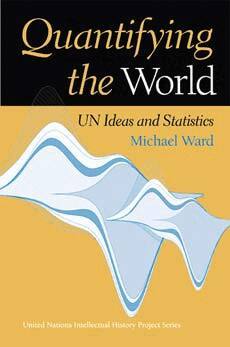
Good data, Michael Ward argues, serve to enhance a perception about life as well as to deepen an understanding of reality. This history of the UN's role in fostering international statistics in the postwar period demonstrates how statistics have shaped our understanding of the world. Drawing on well over 40 years of experience working as a statistician and economist in more than two dozen countries around the world, Ward traces the evolution of statistical ideas and how they have responded to the needs of policy while unraveling the question of why certain data were considered important and why other data and concerns were not. The book explores the economic, social, and environmental dimensions of the UN's statistical work and how each dimension has provided opportunities for describing the well-being of the world community. Quantifying the World also reveals some of the missed opportunities for pursuing alternative models.
421 kr
Skickas inom 10-15 vardagar
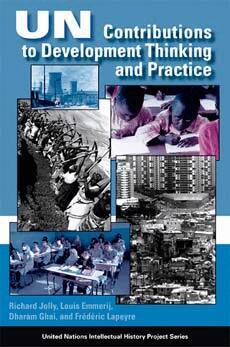
UN Contributions to Development Thinking and Practice is at once a history of the ideas and realities of international development, from the classical economists to the recent emphasis on human rights, and a history of the UN's role in shaping and implementing development paradigms over the last half century. The authors, all prominent in the field of development studies, argue that the UN's founding document, the UN Charter, is infused with the human values and human concerns that are at the center of the UN's thinking on economic and human development today. In the intervening period, the authors show how the UN's approach to development evolved from mainstream areas of economic development to include issues of employment, poverty reduction, fairer distribution of the benefits of growth, equality of men and women, child development, social justice, and environmental sustainability.
309 kr
Skickas inom 7-10 vardagar
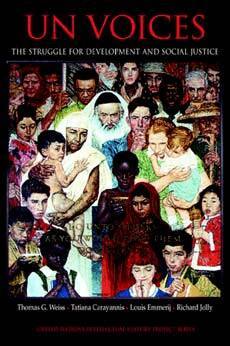
"The authors have cajoled, intrigued, or reassured their 73 'voices' into telling a fascinating story of the UN and its institutions, which is also a story of 73 individual lives, of women and men . . . with their own complicated histories of emigration and education, family relationships and professional choices, hopes and successes." —from the Foreword by Emma Rothschild"Far from being a distant bureaucracy, the UN is composed of individuals who are reshaped by vital experiences. UN Voices gives international civil servants human faces and shows how ideas drive the grand experiment. It is a fascinating book." —Arthur Schlesinger, Jr.UN Voices presents the human and moving stories of an extraordinary group of individuals who contributed to the economic and social record of the UN's life and activities. Drawing from extensive interviews, the book presents in their own words the experiences of 73 individuals from around the globe who have spent much of their professional lives engaged in United Nations affairs. We hear from secretaries-general and presidents, ministers and professors, social workers and field workers, as well as diplomats and executive heads of UN agencies. Among those interviewed are noted figures such as Kofi Annan, Boutros Boutros-Ghali, Alister McIntyre, Conor Cruise O'Brien, Javier Pérez de Cuéllar, and Kurt Waldheim, as well as many less well known UN professional men and women who have made significant contributions to the international struggle for a better world. Their personal accounts also engage their contributions in dealing with such events and issues as the UN's founding, decolonization, the rise and fall of the Berlin Wall, human rights, the environment, and September 11, 2001.
257 kr
Skickas inom 7-10 vardagar
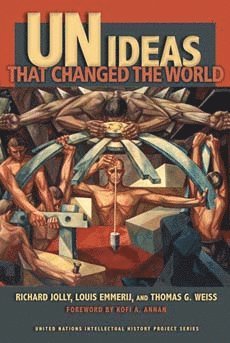
Ideas and concepts have been a driving force in human progress, and they may be the most important legacy of the United Nations. UN ideas have set past, present, and future international agendas in many global economic and social arenas and have also led to initiatives and actions that have improved the quality of human life. This capstone volume draws upon findings of the other 14 books in the acclaimed United Nations Intellectual History Project Series. The authors not only assess the development and implementation of UN ideas regarding sustainable economic development and human security, but also apply lessons learned to suggest ways in which the United Nations can play a fuller role in confronting the challenges of human survival with dignity in the 21st century.